Post inflammatory erythema can feel like acne that never left.
The pimple is flat. The pain is gone. There is no whitehead, no swelling, no obvious active breakout. But the red or pink mark stays, sometimes for weeks or months, and every new breakout adds another spot to the map.
The most important distinction is this: post inflammatory erythema is a color change, not the same thing as an indented scar. That difference affects what helps, how long it takes, and when procedures are worth discussing.
Quick answer
Post inflammatory erythema, often shortened to PIE, is a flat pink, red, or purplish mark left after inflammation, commonly acne. It is more visible in lighter skin tones but can occur across skin tones. It is different from post inflammatory hyperpigmentation, which is brown or gray-brown pigment, and different from indented acne scars, which change texture.
PIE often improves with time, sun protection, acne control, barrier repair, and gentle anti-inflammatory skincare. Persistent redness or textural scarring may need dermatologist evaluation. Vascular lasers and other procedures are sometimes discussed for stubborn redness, but they should be matched to your skin and risk profile by a qualified clinician.
What PIE looks like
PIE is usually flat. That is the key.
It can look:
- Pink.
- Red.
- Purple-red.
- More obvious after exercise, heat, or irritation.
- Brighter when the skin barrier is damaged.
- Less visible when the skin is calm and moisturized.
If you run clean fingers lightly over the area and feel a dip, raised scar, or rough texture, there may be scarring or active acne too. Many people have a mix of active pimples, red marks, brown marks, and texture.
PIE vs dark marks vs scars
| Concern | Color | Texture | Common plan |
|---|---|---|---|
| PIE | Pink, red, purple-red | Flat | Time, sunscreen, barrier care, redness-focused options |
| Post-inflammatory hyperpigmentation | Brown, tan, gray-brown | Flat | Sunscreen, pigment-focused topicals, time |
| Boxcar or ice-pick scars | Skin-colored or discolored | Indented | Dermatology procedures |
| Active acne | Red, swollen, whitehead, tender | Raised or inflamed | Acne treatment |
This distinction saves money and frustration. A brightening serum might help uneven tone but will not lift an indented scar. A scar procedure might be premature if the main issue is redness from recent inflammation.
Why PIE happens
Inflammation affects tiny blood vessels and healing signals in the skin. After the acne lesion flattens, redness can remain because the area is still recovering.
PIE is more likely or more noticeable when:
- Acne was inflamed.
- You picked or squeezed.
- The skin barrier is irritated.
- You use harsh actives too often.
- You skip sunscreen.
- You get repeated acne in the same area.
- You flush easily.
The mark is not proof that the pimple is still active. It is often proof that the skin is still healing.
What helps most at home
The biggest at-home levers are boring:
- Prevent new acne.
- Stop picking.
- Wear sunscreen.
- Repair the barrier.
- Avoid unnecessary irritation.
Sunscreen matters because UV exposure can make post-breakout discoloration look more stubborn and can keep the surrounding skin inflamed. Barrier care matters because irritated skin looks redder. Acne control matters because new pimples create new marks.
Ingredients that can support redness-prone acne marks
Azelaic acid is a useful category for blemish-prone skin and post-breakout discoloration. The Ordinary Azelaic Acid Suspension 10% and Shani Darden Rescue Serum are examples of azelaic-focused products.
Niacinamide can support barrier function and visible redness for some people. Retinoids can help prevent clogged pores and support overall skin renewal, though they can worsen redness if introduced too quickly. A moisturizer such as Skinfix Barrier Restoring Gel Cream can make active routines more tolerable.
Do not stack azelaic acid, retinoids, exfoliating acids, and benzoyl peroxide all at once if your face is already red. PIE care is usually a calm routine, not a war.
What makes PIE worse
Picking is the obvious one. It turns inflammation into more inflammation.
Other common triggers:
- Scrubs.
- Strong peels.
- Daily exfoliating acids on sensitive skin.
- Overusing benzoyl peroxide.
- Skipping moisturizer.
- Heat exposure that triggers flushing.
- Sun exposure without protection.
- Applying actives to raw skin.
If every product stings, pause the brightening plan and repair first. Redness is easier to improve when the skin is not constantly irritated.
How long it takes
PIE can fade slowly. Some marks improve in weeks. Others take months. The timeline depends on inflammation depth, picking, skin tone, acne control, sun exposure, and how reactive your skin is.
Track progress with consistent photos:
- Same lighting.
- Same angle.
- Same distance.
- Same time of day if possible.
- No filter.
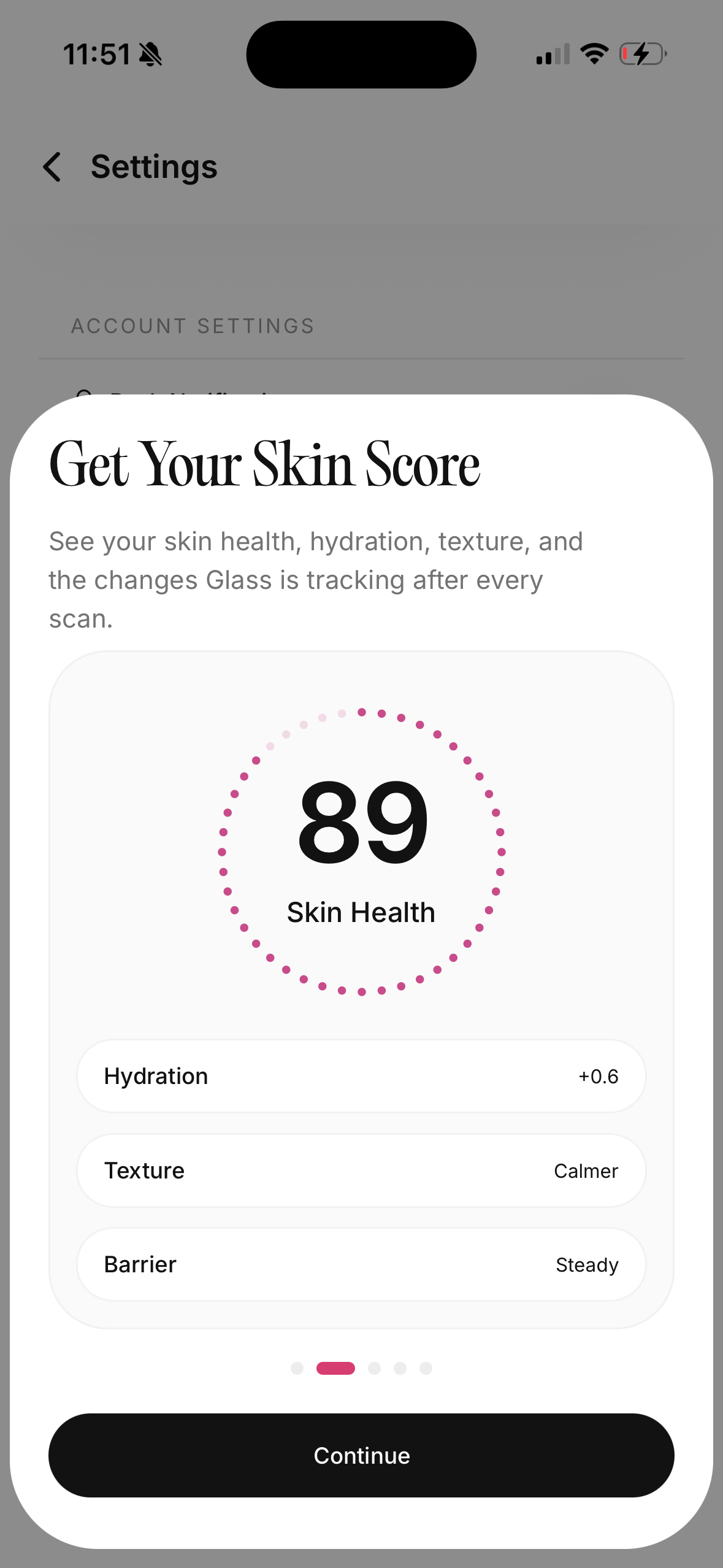
Glass can help keep this consistent so you do not judge healing from random bathroom lighting. Red marks can look dramatically different from one room to another.
Why the same mark looks different all day
PIE is tied to visible redness, so it can change with blood flow and irritation. A mark can look calmer in the morning, brighter after a hot shower, redder after exercise, or more obvious after a strong active. That does not always mean the mark is permanently worsening. It can mean the skin is flushed or irritated in that moment.
This is another reason consistent photos matter. Judge the trend from similar conditions, not from the harshest mirror you saw that week.
When procedures come up
Persistent PIE is sometimes treated with vascular lasers or light-based procedures by dermatology professionals. These treatments target redness differently than pigment-focused products or texture-focused scar procedures.
This is not a casual step. Procedure choice depends on skin tone, tendency toward hyperpigmentation, active acne, medications, budget, downtime, and provider experience. If a mark is flat redness, ask specifically whether the plan targets redness, pigment, texture, or a combination.
PIE with active acne
If new acne keeps forming, treating PIE alone will feel endless. Every new inflamed bump can create another mark.
Focus first on acne control:
- Benzoyl peroxide for inflamed pimples if tolerated.
- Salicylic acid for clogged pores.
- Azelaic acid for blemish-prone redness.
- Retinoids for prevention.
- Prescription care for persistent, painful, or scarring acne.
The AAD supports different acne treatments depending on severity, including stronger prescription options for severe or treatment-resistant acne. If acne is leaving marks every month, a dermatologist visit can prevent future damage.
Makeup over PIE
It is fine to cover red marks if makeup helps you feel more comfortable. Use thin layers, avoid rubbing hard over healing skin, and remove makeup fully at night. Green-toned correctors can reduce visible redness for some people, but they are optional. The bigger rule is not to let coverage become another irritation source.
If concealer clings to flakes, repair the barrier instead of adding more powder. A smoother, calmer surface usually covers better than angry overtreated skin.
If a mark looks brighter after removing makeup, check whether cleansing is too rough. Friction alone can make healing redness look louder for hours, even when the underlying mark is slowly improving.
Red flags
See a dermatologist if:
- Red marks are paired with indented scars.
- Acne is painful, cystic, or scarring.
- Redness is spreading or rash-like.
- You have burning, scaling, or flushing that suggests another skin condition.
- Marks are not improving and are affecting your quality of life.
- You are considering lasers or procedures.
Get urgent care for signs of infection such as warmth, swelling, fever, pus, or rapidly spreading redness.
A simple 2026 routine
Morning:
- Gentle cleanse or rinse.
- Azelaic acid or niacinamide if tolerated.
- Moisturizer.
- Sunscreen.
Night:
- Cleanse.
- Retinoid, azelaic acid, or acne treatment on a schedule your skin tolerates.
- Moisturizer.
If this is too much, simplify. A routine that keeps the barrier calm beats an ambitious routine that makes the redness brighter.
The bottom line
Post inflammatory erythema is frustrating because it lingers after the breakout is technically gone. But it is not hopeless, and it is not the same as a permanent dent.
Control new acne. Protect from sun. Stop picking. Keep the barrier calm. Track photos consistently. Then, if redness persists or texture is involved, talk to a dermatologist about options that match the actual problem.
The difference I would keep repeating
Post inflammatory erythema is redness after inflammation, not the same thing as a dent and not the same thing as brown hyperpigmentation. That distinction matters because the plan changes. I would not scrub red marks or chase them with every brightening product at once. I would focus on preventing new acne, wearing sunscreen, keeping the barrier calm, and giving the skin time. If redness lingers, spreads, burns, or sits beside actual texture changes, I would ask a dermatologist what the mark really is. Treating the wrong category is how people lose months to products that were never meant for the problem. The calmer you keep new inflammation, the easier those red marks become to understand. Patience is part of treatment.