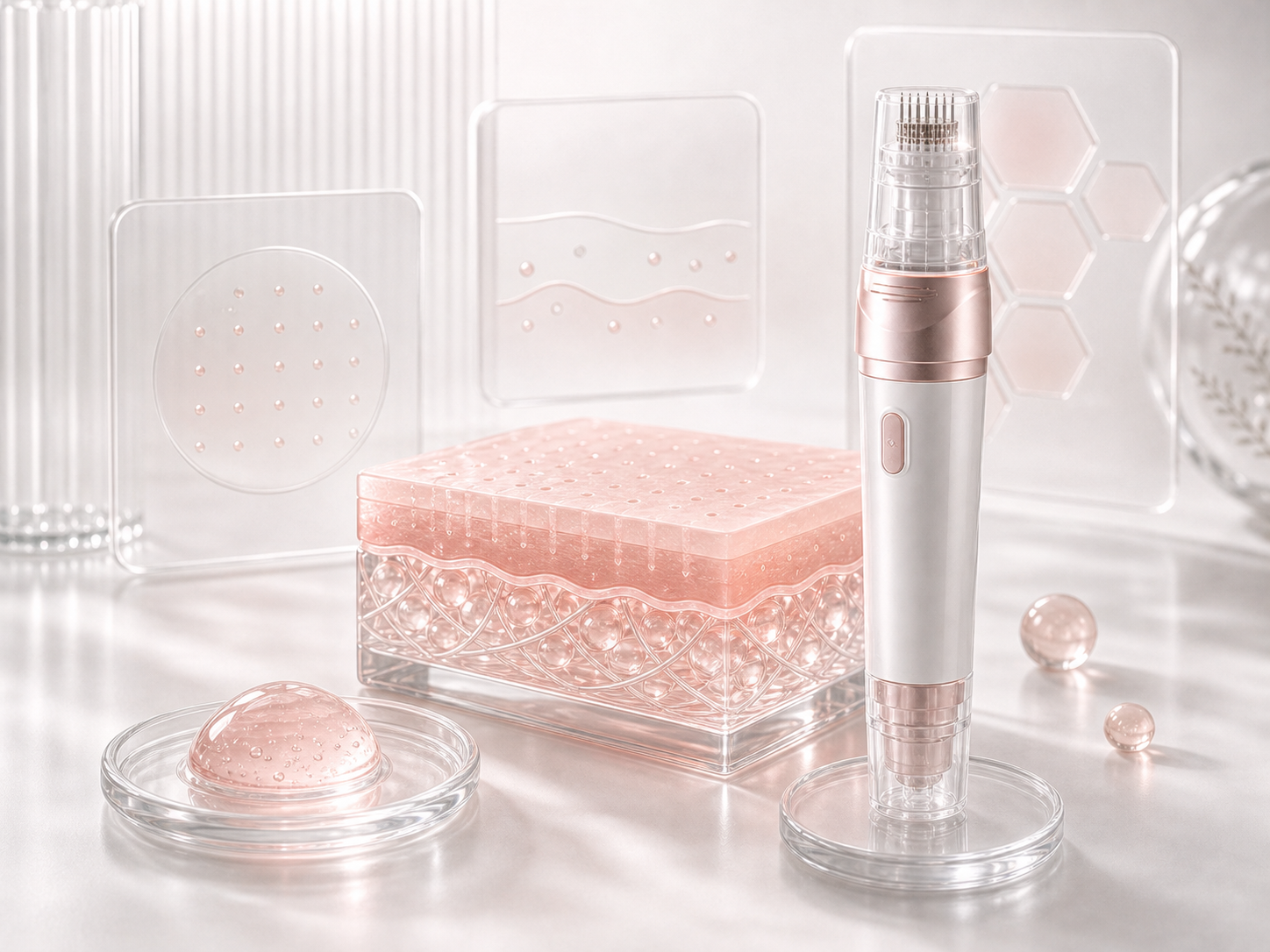
Boxcar scars are the acne scars with edges.
That is the easiest way to recognize them. They are depressed scars, but unlike rolling scars, they often have a visible border. The skin drops down, then comes back up. In harsh light, the rim can cast a shadow that makes the scar look deeper than it looked a minute earlier.
In 2026, the useful way to think about boxcar scars is not "which cream removes them?" It is "how deep are they, how sharp are the edges, are they mixed with other scars, and what treatment is meant to soften that specific structure?"
The quick recognition test
A boxcar scar usually looks like a round, oval, or irregular depression with a defined edge. It is wider than a classic ice-pick scar and more sharply outlined than a rolling scar.
Look at the scar in side lighting. If you can see a border where the surface drops, boxcar scarring may be part of the pattern. If the area looks more like a broad wave with no clear rim, rolling scars may be more relevant. If it is a tiny narrow puncture, ice-pick scarring may be a better label.
Real cheeks are often mixed, so do not force every depression into one category.
Why the edge matters
The edge is the boxcar problem. A flat brown mark can fade and still be flat. A boxcar scar has contour. The rim catches light, foundation may settle at the base, and the shadow changes when you turn your face.
That is why a general brightening routine may improve the surrounding color but leave the scar looking the same in angled light. The skin around the scar can be healthier while the depression remains.
Cleveland Clinic describes acne scars as sometimes forming from tissue loss, which leaves indentations. Boxcar scars sit in that depressed-scar family.
Shallow boxcar scars versus deep boxcar scars
Depth changes expectations.
Shallow boxcar scars may respond better to resurfacing or collagen-stimulating approaches because the depression is closer to the surface. Deeper boxcar scars can be more stubborn, especially when the walls are steep or the base is broad.
This is why before-and-after photos can mislead. A person with shallow, newer, softer-edged boxcar scars may improve more visibly than someone with deep, sharply walled scars, even if both choose the same treatment name.
You need the treatment to match the scar depth, not just the scar label.
Boxcar scars are often mixed with color marks
Many boxcar scars sit next to red or brown marks from newer acne. That can make the scar look worse because color contrast draws attention to the depression.
Separate the two parts:
| Concern | What it changes | Typical support |
|---|---|---|
| Brown or red color around the scar | Contrast | Sunscreen, calming care, pigment-support products |
| The actual depression | Shadow and texture | Professional scar procedures for meaningful change |
| Active acne nearby | Future scarring risk | Acne control first |
If the color improves, the scar may bother you less. But color improvement is not the same as lifting the dent.
Why skincare has a ceiling
Skincare can still be useful around boxcar scars. It can reduce active acne, support the barrier, improve dryness, and soften uneven tone. It can also prepare skin for a dermatologist plan if your clinician wants a stable routine before procedures.
But a topical product cannot reliably raise a boxcar depression. A retinoid may help acne control and long-term skin quality. Azelaic acid may help blemish-prone uneven tone. Sunscreen can reduce darkening around scars. Moisturizer can make texture look less harsh when dryness is exaggerating it.
None of that replaces structural scar revision.
A routine while you are deciding
Keep the routine simple enough that your skin is calm when you get evaluated.
Morning:
- Gentle cleanse or rinse.
- Tone-support step if tolerated.
- Moisturizer.
- Broad-spectrum sunscreen.
Night:
- Cleanser.
- Retinoid or acne treatment if appropriate.
- Moisturizer.
Shani Darden Retinol Reform is an example of a retinol product in the texture-support lane, though acne treatment often needs clinician-directed options. Shani Darden Rescue Serum fits a tone-support role. Do not start multiple strong steps at once if your skin is reactive.

Resurfacing conversations
Resurfacing treatments are often discussed for boxcar scars because the scar edge and surrounding texture are part of what makes them visible. A dermatologist may discuss fractional laser resurfacing, chemical peels, microneedling, or radiofrequency microneedling depending on skin tone, scar depth, downtime, and risk tolerance.
The American Academy of Dermatology describes acne-scar care as individualized. That matters here. A shallow boxcar scar with surface roughness is not the same as a deep scar with steep edges.
Ask what the treatment is expected to do: soften the rim, improve background texture, stimulate collagen, reduce color, or treat active acne. Those are different goals.
Punch techniques and selected scars
Some sharply defined deeper scars may lead to a discussion of punch excision or punch elevation. These are targeted techniques, not broad resurfacing. The idea is to address selected scars that may not respond enough to surface approaches alone.
They also create their own healing considerations. You are trading one type of scar problem for a controlled repair that needs skill and aftercare. That can be appropriate for some scars and wrong for others.
This is the kind of decision that belongs in a dermatologist visit, especially on the face.
Microneedling and RF microneedling
Microneedling and radiofrequency microneedling are commonly marketed for acne scars. They can be helpful for some people, but the result depends on scar depth, treatment settings, number of sessions, healing response, and provider judgment.
For boxcar scars, ask whether the goal is collagen remodeling, edge softening, or general texture improvement. Ask how many sessions are realistic and how long results take to settle. Collagen remodeling is slow; early swelling can temporarily make scars look better than the final result.
At-home rollers are not the same thing as controlled medical treatment. Deep at-home needling can worsen scars or pigmentation.
Lasers, peels, and pigment risk
Lasers and peels can be powerful, but they are not casual choices. Heat, injury depth, aftercare, and sun exposure all matter. Deeper skin tones, melasma-prone skin, and anyone who develops dark marks after irritation should ask about post-inflammatory hyperpigmentation risk before agreeing to aggressive treatment.
This does not mean darker skin cannot be treated. It means provider experience, settings, prep, and aftercare matter. A conservative plan is not a weak plan if it reduces the chance of trading texture for pigment.
Subcision or filler when scars are mixed
Pure boxcar scarring is one thing. Mixed boxcar and rolling scars are another.
If broad tethered texture sits around sharply edged scars, the conversation may include subcision or filler in addition to resurfacing. Subcision is more often associated with tethered rolling scars, but mixed patterns are common. Filler may be considered for selected depressions when volume support makes sense.
Ask the clinician to point out which scars are true boxcar scars and which are rolling or tethered. The combined plan should be based on the map of your skin, not a single label.
What a realistic plan sounds like
A realistic plan has sequence. It might sound like: calm active acne first, keep sunscreen consistent, treat the most visible scar type, allow healing time, reassess, then decide whether another modality is worth it.
It should include downtime, pigment risk, cost range, number of sessions, aftercare, and what improvement would count as success. If the plan promises perfect skin, be skeptical. Improvement is a better target than erasure.
The best boxcar-scar plan usually respects limits. Some scars soften. Some remain visible but less harsh. Some need targeted treatment. Some are not worth treating if the tradeoff is too high.
Consult questions for boxcar scars
Bring direct questions:
- Are these boxcar scars, or are they mixed with rolling or ice-pick scars?
- Which scars are shallow and which are deep?
- What is the first treatment meant to change?
- Would resurfacing alone be enough?
- Are any scars candidates for punch techniques?
- Do I need acne control first?
- What pigment risk applies to my skin tone?
- How many sessions are typical?
- What downtime should I plan for?
- What result would be realistic after six months?
The answer should be specific enough that you understand why the treatment was chosen.
How to track boxcar-scar change
Use side lighting. Boxcar scars are edge-driven, so front-facing photos can hide the thing you are trying to measure.
Take photos every four to six weeks in the same room, with the same angle, distance, and expression. Include one straight-on photo and one angled photo from each side. Track treatment dates, swelling, peeling, makeup settling, acne flares, and product changes.
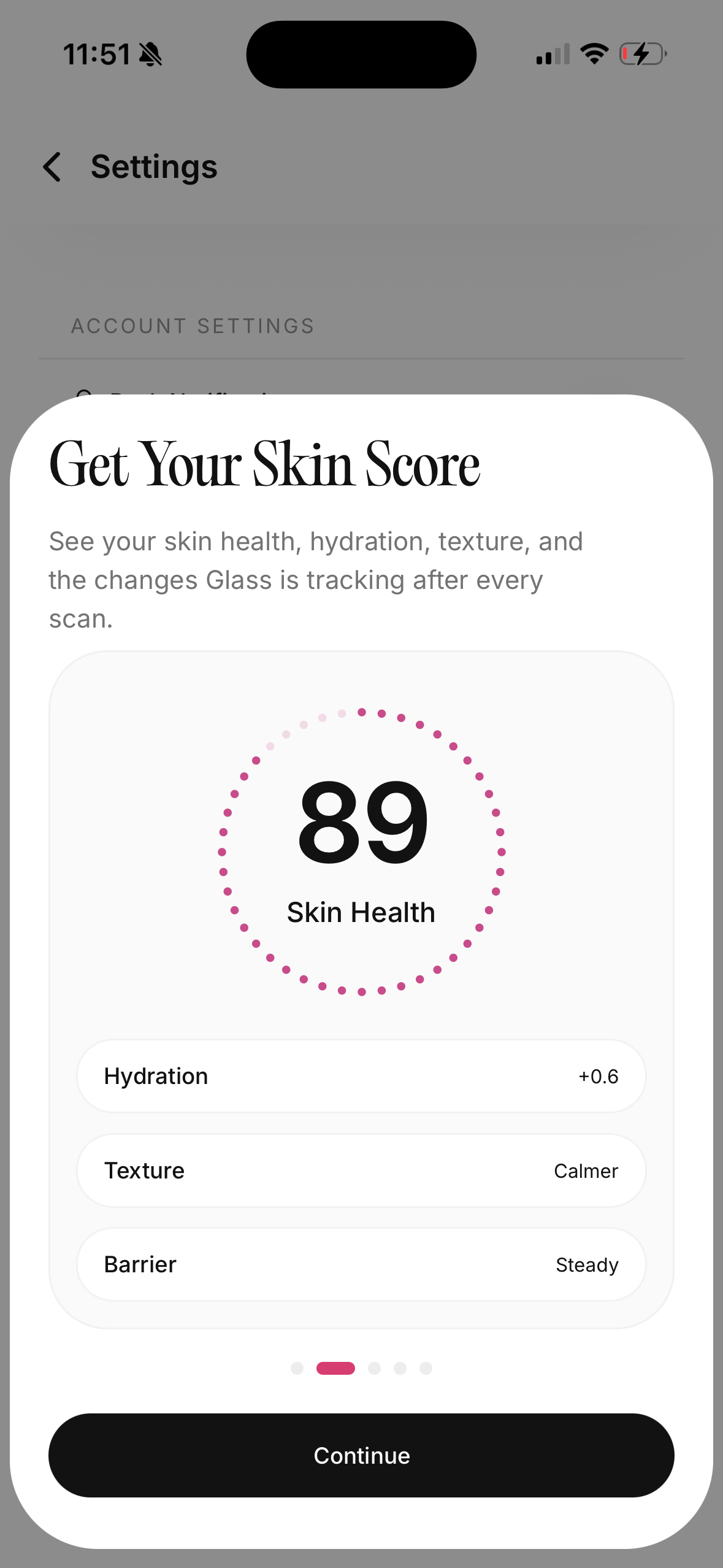
Glass can keep progress photos and routine shifts together, which helps you avoid comparing a swollen post-treatment week to a dry, irritated week later.
What to avoid
Avoid aggressive at-home peels, deep needling, picking, harsh scrubs, acids on broken skin, tanning, and product stacking. Do not treat a healing pimple like a finished scar. Do not keep irritating active acne while planning scar procedures.
Also avoid buying a package before the provider explains your scar mix. A device is not a diagnosis.
The bottom line
Boxcar scars are sharply edged acne depressions. The visible rim is the reason they cast shadows and respond differently from flat marks or broad rolling texture. Skincare can support acne control, tone, sunscreen habits, and barrier health, but meaningful change to the depression usually needs professional evaluation.
In 2026, the strongest plan is specific: identify depth and edges, separate color from texture, control active acne, ask about resurfacing or targeted techniques when appropriate, and expect gradual improvement rather than perfect erasure.
Useful references: Cleveland Clinic on acne scars, AAD acne scar treatment guidance, and Cleveland Clinic on scars.