Do not book the package first.
Book the consult.
That is the rule I would use if I were searching for microneedling near me in May 2026. The treatment can sound simple from the outside: tiny needles, controlled injury, collagen, smoother skin. But the real decision is not whether microneedling can help texture.
The real decision is whether your provider knows when to do it, when to wait, how deep to go, how to protect your skin tone, and how to explain the difference between regular microneedling and RF microneedling without turning the whole consult into a sales script.
I would be especially careful if the goal is acne scars, enlarged pores, uneven texture, stretch marks, melasma-prone skin, deeper skin tone, active breakouts, or a tighter look along the lower face. Those are exactly the situations where the right plan can help and the wrong plan can leave you frustrated for months.
The best local provider is not always the one with the most dramatic before-and-after.
It is the one who slows the room down.
The fast filter
If a provider cannot clearly explain needle depth, device type, sanitation, numbing, skin-tone risk, aftercare, downtime, and what would make them postpone your appointment, I would not book the treatment that day.
Microneedling is not a glow facial. It is controlled skin injury. That does not make it scary, but it does make provider judgment matter.
Cleveland Clinic describes microneedling as a procedure that uses tiny needles to create micro-injuries in the skin, which can support new collagen and elastin. The American Academy of Dermatology notes that microneedling may help scars and uneven tone, but also warns that poor technique can increase the risk of infection, scarring, and lasting discoloration.
That is the whole decision in one sentence.
Microneedling can be useful. It should still be treated with respect.
1. Am I looking for regular microneedling or RF microneedling?
Start here.
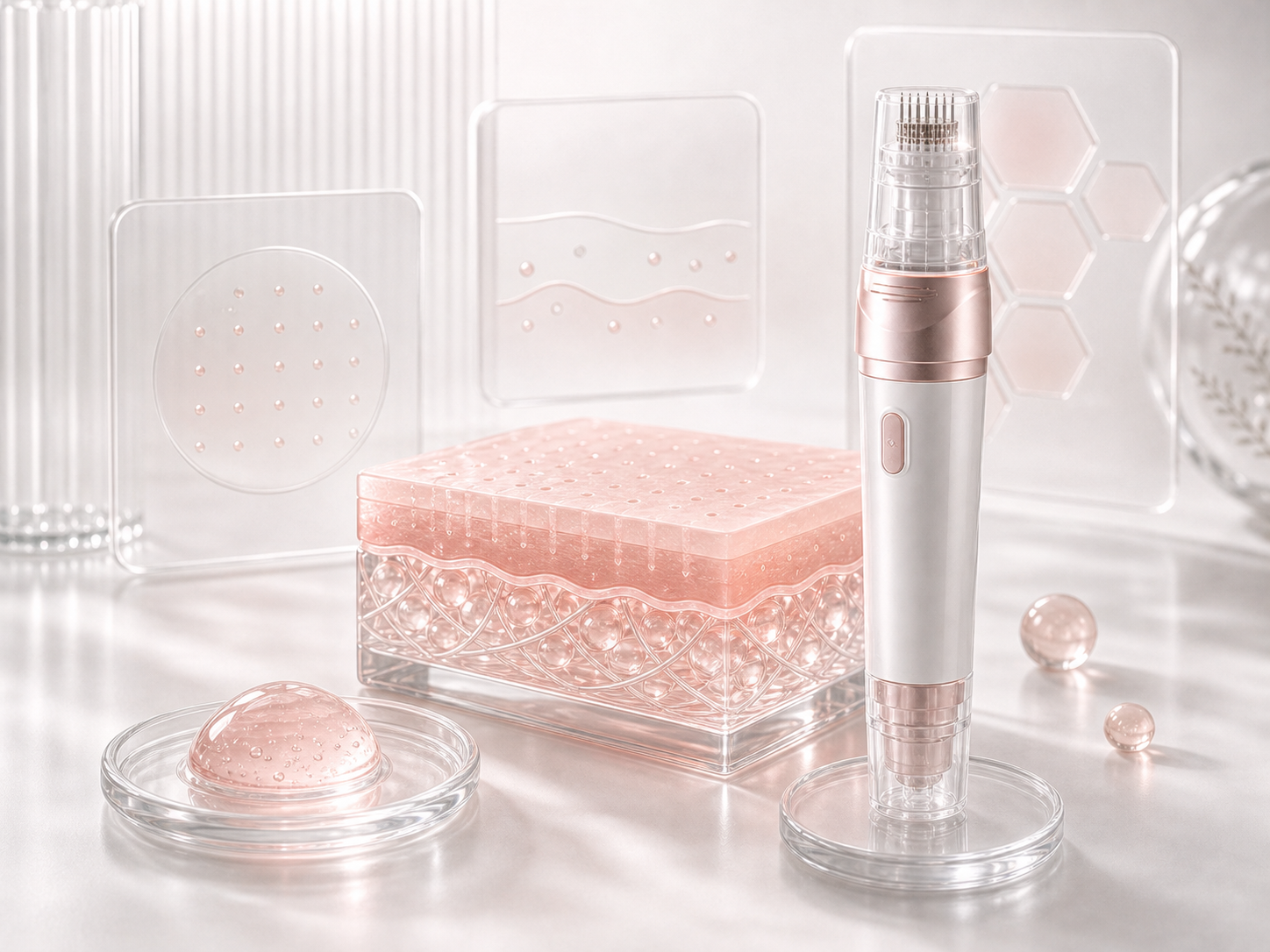
Regular microneedling uses needles to create controlled channels in the skin. RF microneedling adds radiofrequency energy, which brings heat into the treatment. The promise sounds stronger: texture, tightening, collagen support, acne scars, pores, and sometimes more visible remodeling.
The tradeoff is that RF is a bigger decision.
The FDA issued a safety communication in 2025 about potential risks with certain uses of RF microneedling and says people considering the procedure should seek care from a licensed health care provider with training and experience using RF microneedling devices. The FDA also says to ask which device will be used.
That would be my first split:
| Treatment type | I would consider it when... | I would slow down when... |
|---|---|---|
| Regular microneedling | The goal is acne-scar texture, general roughness, pores, or gradual collagen support with less heat involved | The provider cannot explain needle depth, sterilization, contraindications, or aftercare |
| RF microneedling | The goal may include texture plus firmer-looking skin or deeper remodeling | The provider treats it like a simple facial or cannot name the device, settings philosophy, and complication plan |
| At-home needling | I would skip anything that punctures skin at home | Infection, scarring, pigment changes, and bad technique are not worth the gamble |
I would not let a provider blur those lanes.
If they recommend RF, I want to know why heat belongs in my plan. If they recommend regular microneedling, I want to know why it is enough. If they recommend a series before even seeing my skin closely, I would pause.
2. What exact concern are we treating?
"Better skin" is too vague.
Microneedling needs a target.
Acne scars are different from active acne. Enlarged-looking pores are different from ice-pick scars. Loose skin is different from rough texture. Brown marks are different from dents. Melasma is different from post-breakout discoloration.
If I were in the consult, I would say the quiet part clearly:
"I am here because of this texture on my cheeks."
"I am here because makeup catches on these indented marks."
"I am here because my pores look stretched, but I do not want my skin irritated."
"I am here because I want to know whether microneedling is even the right treatment."
That last sentence matters.
Mayo Clinic lists microneedling among acne-scar treatment options, but acne scars are not all the same. Some scars need a different approach, or a combination plan. A provider who treats every scar like the same scar is not thinking carefully enough.
3. What kind of scars or texture do I actually have?
This is where the consult should become specific.
Indented acne scars may be rolling, boxcar, ice-pick, or mixed. Some marks are not scars at all. They are pigment left behind after inflammation. Some roughness is clogged pores and buildup. Some texture is active dermatitis, irritation, or a damaged barrier.
Microneedling may be more relevant for depressed texture than for flat discoloration alone. If the main issue is brown or red post-acne marks, the plan might involve sunscreen, pigment-safe actives, time, peels, lasers, or dermatologist care instead of going straight to needles.
I would ask the provider to point to my skin and explain what they see.
Not in a shaming way.
In a mapping way.
Where are the deeper scars? Where is pigment? Where is active acne? Where is the skin too irritated to treat? Which areas should be avoided? Which areas are realistic?
If they cannot separate those pieces, I would not trust the plan.
4. What needle depth would you use, and why?
Needle depth is not trivia.
It is the treatment.
A shallow pass for general glow is not the same thing as a deeper acne-scar plan. The forehead, cheeks, nose, upper lip, and neck do not all deserve the same approach. Thin skin and bony areas need different judgment than thicker scarred areas.
I would ask:
- What depth would you use on my cheeks?
- Would you change depth by area?
- What depth would you avoid on my skin?
- How do you decide between conservative and aggressive settings?
- How do you reduce the risk of track marks, scratches, or excess inflammation?
The answer does not need to sound academic.
It needs to sound considered.
I would be wary of anyone who says, "We just do our standard setting." Your face is not a standard setting.
5. How many people with my skin tone have you treated?
This question should not feel awkward.
Ask it anyway.
AAD notes that microneedling can be used in people with darker skin tones, but the provider still matters because poor technique can cause long-lasting discoloration. The FDA also notes that people with darker skin type may have a risk of darkening or lightening of the skin after treatment with microneedling devices.
That does not mean darker skin should avoid microneedling. It means the provider should respect pigment risk.
I would ask:
- How do you adjust your plan for my skin tone?
- How do you think about post-inflammatory hyperpigmentation?
- Would you do a test area?
- Would you avoid RF heat for me, or use it more conservatively?
- What aftercare do you require to reduce pigment risk?
The wrong answer is anything dismissive.
"Everyone does fine" is not an answer.
I want a provider who talks about history: melasma, easy dark marks, tanning, recent sun exposure, inflammation, acne activity, and whether my routine is already irritating my skin.
6. Is my skin calm enough today?
This question saves appointments.
Microneedling on irritated skin can turn a small problem into a bigger one. If your skin is sunburned, raw, rashy, peeling, infected, inflamed, recently waxed, recently lasered, or flaring with active acne, the right answer may be "not today."
I would trust that answer.
A provider who postpones a paid treatment because your skin is not ready is showing judgment. That is the kind of person I want near my face.
If my routine had been chaotic, I would bring the details:
- retinoids
- exfoliating acids
- benzoyl peroxide
- scrubs
- vitamin C
- at-home peel pads
- new acne prescriptions
- recent waxing
- recent tanning
- cold sore history
- recent filler, Botox, peel, or laser
Use Glass to track what changed over the last few weeks if your routine is hard to remember. When irritation starts slowly, the timeline matters more than the product label you blame first.
7. What should I stop before treatment?
I would want written instructions.
Not a rushed sentence at checkout.
Microneedling creates channels in the skin. That makes the before-and-after routine more important than people think. Too many actives before treatment can make skin reactive. Too much too soon afterward can make the recovery messy.
I would ask exactly when to stop:
- retinoids
- exfoliating acids
- benzoyl peroxide
- harsh scrubs
- waxing
- tanning
- self-tanner
- acne spot treatments
- strong brightening products
- other aesthetic procedures
I would also ask what to do if I accidentally used something too close to the appointment. A good provider should not make you feel embarrassed. They should tell you whether to proceed, adjust, or reschedule.
The safest answer is sometimes inconvenient.
That is still better than forcing the appointment.
8. What will my face look like that night, the next day, and one week later?
"Little to no downtime" is too vague.
I want the calendar version.
Will I be red? Swollen? Pinpoint bleeding? Dry? Tight? Rough? Will there be grid marks? Can I work the next day? Can I wear makeup? Can I go to dinner? Can I exercise? Can I sit outside? When should redness peak? When should it be mostly calm? What would be abnormal?
Regular microneedling may involve redness and sensitivity for a shorter window. RF microneedling may bring swelling, heat, dots, roughness, and more visible recovery depending on the device and settings. Some people look fine quickly. Some do not.
I would not book my first session right before a wedding, vacation, photoshoot, beach weekend, work event, or heavy outdoor week.
Even a good treatment can look bad before it looks good.
9. What aftercare is non-negotiable?
Aftercare should be boring.
That is a good sign.
Gentle cleanser. Bland moisturizer. Sunscreen. No picking. No scrubs. No acids. No retinoid restart until the provider says it is time. No sauna. No hot yoga. No sweaty workout right away. No random new serum because your skin looked smooth for six hours.
I would ask:
- What do I cleanse with tonight?
- What moisturizer should I use?
- When can I wear makeup?
- When can I exercise?
- When can I restart retinoids?
- When can I restart exfoliating acids?
- What sunscreen do you want me using?
- What signs should make me call you?
If the provider gives you a product bundle, ask which items are required and which are optional. I do not mind paying for the right recovery product. I do mind being sold a shelf without a reason.
10. How many sessions are realistic?
One session can be useful.
It is rarely the whole story for scars.
I would expect a provider to talk in ranges, not miracles. Acne-scar texture often needs a series. Collagen remodeling takes time. The visible result may build slowly. If someone promises dramatic scar revision from one appointment, I would be skeptical.
Ask for the plan:
- How many sessions would you start with?
- How far apart?
- When should I expect early changes?
- When should I judge the result?
- What would make you change the plan?
- When would you refer me to a dermatologist or plastic surgeon?
The last question matters.
A strong provider knows where their lane ends.
11. What will the full plan cost?
The session price is not the full price.
Microneedling can involve consult fees, numbing, add-ons, PRP or exosomes, post-care products, multiple sessions, and follow-ups. RF microneedling usually costs more than regular microneedling. Scar work may require a longer plan than general glow.
I would ask for the honest number before starting:
| Cost question | Why I would ask |
|---|---|
| What is one session? | Lets you compare the actual appointment |
| What is the likely series cost? | Prevents a one-session quote from hiding the real plan |
| Is numbing included? | Comfort should not be a surprise fee |
| Are add-ons optional? | PRP, exosomes, serums, or recovery kits should be explained |
| What happens if my skin reacts? | Follow-up policy matters when the skin is healing |
I would rather do fewer thoughtful treatments than buy a discounted package that pressures me to keep going even if my skin is not responding well.
12. Who is actually performing the treatment?
Do not assume.
Ask.
The person doing the consult may not be the person holding the device. The medical director may not be in the building. The provider may be experienced with facials but newer to microneedling. The business may have great branding and uneven operator skill.
I would ask:
- Who performs the treatment?
- What license or training do they have?
- How often do they perform microneedling?
- How often do they perform RF microneedling, if that is the plan?
- Who supervises them?
- What happens if there is a complication?
- Do they have experience with my exact concern?
This is not rude.
It is your face.
13. When would you tell me not to do microneedling?
This is my favorite question.
It reveals the provider's judgment fast.
I would listen for real reasons: active infection, inflamed acne, irritated barrier, recent sunburn, unrealistic expectations, pregnancy considerations, certain medications, poor aftercare fit, keloid history, recent procedures, or a concern that would respond better to another treatment.
If the provider cannot name reasons to say no, I would not trust their yes.
Microneedling should not be the default answer to every texture problem. Sometimes a dermatologist visit is smarter. Sometimes acne needs to be controlled first. Sometimes pigment needs a gentler plan. Sometimes your skin just needs two calm weeks and a better moisturizer.
When I would choose microneedling
I would consider microneedling when the problem is texture that skin care alone cannot reasonably fix.
That usually means acne-scar texture, roughness, enlarged-looking pores, shallow scars, or gradual collagen support. I would be more open to it when my skin is calm, my sunscreen habits are strong, my provider is specific, and I understand the recovery.
I would not choose it because I felt impatient.
Impatience is expensive in skin care.
When I would skip it for now
I would skip microneedling if my skin was actively angry.
I would also pause if I had an event coming up, if I had not been consistent with sunscreen, if I was still breaking out in the area, if I was using too many actives, if the provider could not explain their device, or if the plan sounded more like a package than a diagnosis.
If the main issue is quick glow, compare gentler options first: facials near you, Hydrafacial providers, or chemical peel providers. If the main issue is collagen, scars, or deeper texture, start with microneedling providers near you and judge the consult carefully.
If you are still sorting the broader treatment lane, I would also read my guide to choosing glowing skin treatments near you before booking anything with downtime.
My May 2026 rule
I would book microneedling only after the provider has made the treatment feel less mysterious, not more glamorous.
I want the device named.
I want the depth explained.
I want the risks discussed without drama.
I want aftercare in writing.
I want the provider to tell me what they would not do.
That is what makes me trust the yes.
Useful references: Cleveland Clinic on microneedling, American Academy of Dermatology on microneedling for scars, FDA microneedling device information, FDA RF microneedling safety communication, and Mayo Clinic on acne scar treatment options.