Do not book the peel first.
Book the consult.
That is the rule I would use if I were searching for a chemical peel near me in May 2026. The treatment sounds simple from the outside. A provider applies a solution. The skin exfoliates. You get smoother, brighter skin. But the real decision is not whether chemical peels work.
The real decision is whether the peel, the provider, your skin, and your calendar all make sense together.
I would be especially careful if the goal is dark spots, melasma, acne marks, uneven texture, deeper skin tone, sensitive skin, or a quick glow before an event. Those are exactly the situations where a good peel plan can help, and also where a careless peel can create a longer problem than the one you started with.
The best local provider is not always the one with the most dramatic before-and-after.
It is the one who asks better questions than you do.
The fast filter
If a provider cannot clearly explain peel depth, downtime, pigment risk, pre-care, aftercare, and what would make them postpone your appointment, I would not book the peel.
I would look for someone who treats chemical peels like controlled skin resurfacing, not like a casual facial upgrade. Light peels can be approachable. Medium and deep peels are different decisions. The word "peel" covers too much range to trust a vague menu description.
1. What depth are you recommending?
This is the first question.
Not the brand name.
Not the package price.
Depth.
A superficial peel usually works closer to the outer layer of skin. A medium peel goes deeper and usually asks more from your recovery. A deep peel is medical territory and should not be treated like a casual lunch-break service. The same person who is fine with a light lactic or mandelic peel may be a poor candidate for a stronger TCA plan, especially without preparation.
When I hear "chemical peel," I want to know the lane:
| Peel depth | What I would expect | Where I would be careful |
|---|---|---|
| Light or superficial | Mild stinging, possible dryness or flaking, lower downtime | Expecting it to erase deep scars or stubborn pigment in one visit |
| Medium | More visible peeling, redness, swelling, and recovery planning | Event timing, deeper skin tones, melasma, cold sore history, poor aftercare |
| Deep | More serious resurfacing with medical oversight | Treating it like a med-spa add-on instead of a major procedure |
Mayo Clinic notes that chemical peels can vary by depth, and after any peel the skin may be red, tight, irritated, or swollen. That is a useful reminder because the word "peel" can make people imagine one predictable experience. It is not one predictable experience.
If a provider says, "It is just our signature peel," I would ask again.
What depth?
What acid?
Why that choice for my skin?
2. Is my skin calm enough for a peel today?
This question saves people.
Skin can look normal in a selfie and still be a bad candidate that week. Maybe you overused retinoids. Maybe your cleanser has been stripping you. Maybe you are sunburned. Maybe your barrier is irritated from a new vitamin C, benzoyl peroxide, exfoliating toner, or at-home peel pad.
If my skin felt tight, shiny, raw, hot, rashy, or unusually reactive, I would not want a provider to push through anyway.
I would want them to say, "Not today."
That answer builds trust.
A chemical peel on already irritated skin can turn a manageable issue into burning, peeling, pigment, and weeks of repair. The strongest provider is not the one who always performs the service. It is the one who knows when to wait.
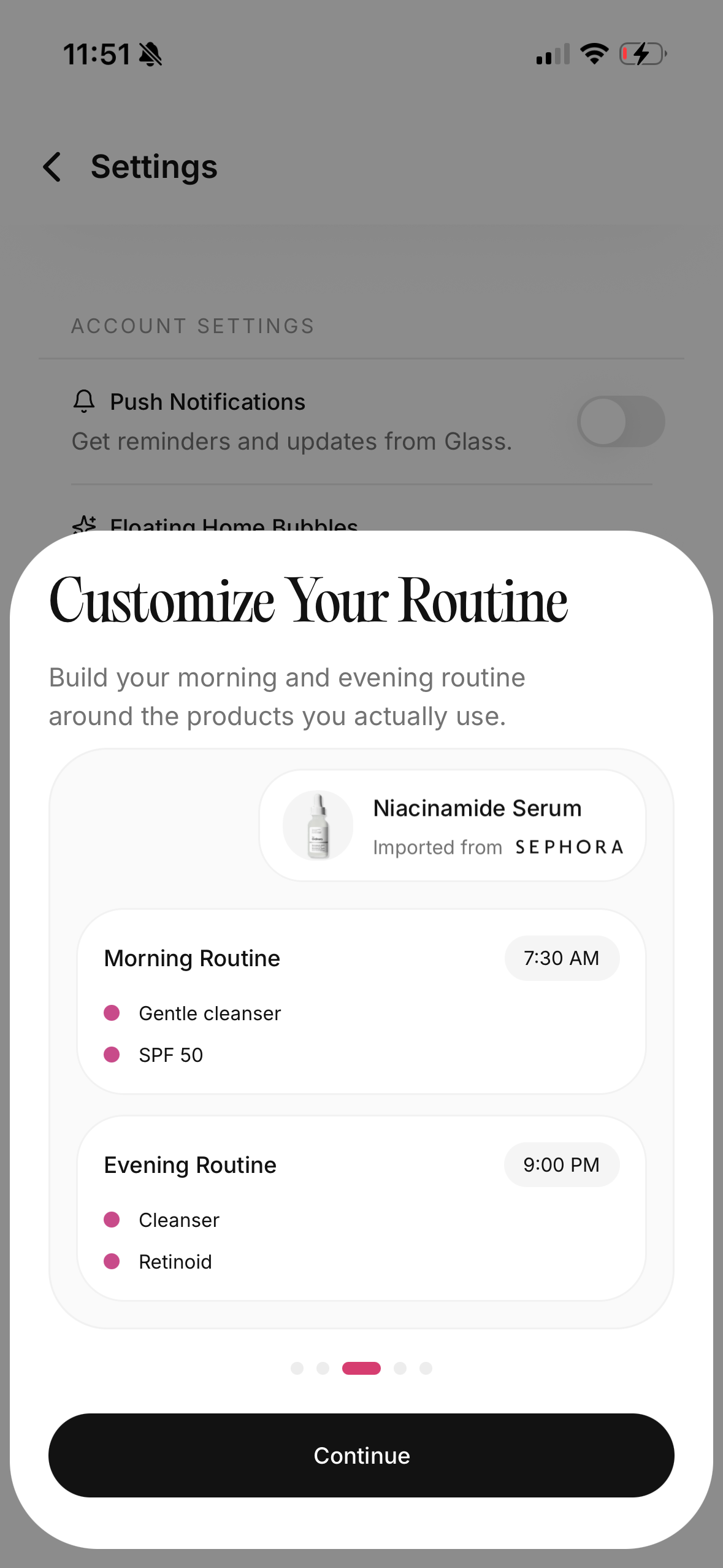
If you are unsure whether your routine is already too aggressive, use Glass to track what changed over the last two weeks: acids, retinoids, scrubs, sunscreen, dryness, redness, and new breakouts. A pattern is easier to see when it is not living only in your head.
3. What results are realistic after one peel?
One peel can make skin look brighter.
It can make texture feel smoother.
It can help with dull buildup.
But one peel should not be sold as a total reset for acne scars, melasma, deep wrinkles, or years of discoloration. A light peel may be a smart first step, but first step is the key phrase.
I would trust a provider who separates immediate glow from long-term correction.
For post-acne marks, uneven tone, and rough texture, I would expect a plan. That might mean a series of light peels, home-care changes, sunscreen discipline, or a different treatment entirely. If the provider promises that one appointment will fix everything, I would treat that as a red flag.
Good treatment planning sounds less exciting than marketing.
It is also safer.
4. How does my skin tone change the plan?
This question matters.
The American Academy of Dermatology says people with skin of color can safely have chemical peels, but they should see a dermatologist with expertise using peels on darker skin tones. That is not a tiny detail. If your skin creates dark marks easily after acne, scratches, burns, bug bites, waxing, or irritation, a peel plan should take pigment seriously.
I would ask:
- How many peels have you performed on people with my skin coloring?
- Which peel depths do you avoid for my skin tone?
- How do you reduce the risk of post-inflammatory hyperpigmentation?
- What would make you choose a gentler series instead of a stronger peel?
The wrong answer is anything that dismisses the concern.
"Everyone does fine" is not specific enough.
I want the provider to talk about skin history, melasma, sun exposure, medication, pre-care, and aftercare. I want them to explain why they are choosing that peel for that face, not just that menu.
5. What should I stop before the appointment?
This is where a lot of bad peel experiences start.
People keep using retinoids, exfoliating acids, scrubs, acne treatments, peel pads, brightening serums, and harsh cleansers right up until the appointment because no one told them to stop. Then the peel lands on skin that is already stressed.
Mayo Clinic lists several pre-peel considerations, including avoiding too much sun exposure before the procedure and stopping certain cosmetic treatments or hair removal around the treated area. Cleveland Clinic also emphasizes avoiding tanning and direct sun exposure before treatment.
I would ask the provider for written pre-care instructions, not a quick verbal blur at checkout.
The list may vary, but I would want clarity around:
- retinoids
- exfoliating acids
- benzoyl peroxide
- vitamin C
- scrubs
- waxing or depilatories
- tanning
- recent laser or facial treatments
- cold sore history
- acne medications
If they cannot tell me what to stop, I would not trust them to manage what happens after.
6. What will recovery look like on day 1, day 3, and day 7?
"Minimal downtime" is too vague.
I want the calendar version.
Can I go back to work the next day? Will I be red? Will I flake? Will I peel around my mouth first? Can I wear makeup? Will my face feel tight? When does peeling usually peak? When would redness be unusual? When should I call?
Light peels may heal quickly for some people. Medium peels can bring several days of visible recovery. Mayo Clinic notes treated areas from a light peel may take about one to seven days to heal, while medium peels can involve more swelling, redness, and stinging.
That range matters when you have a wedding, beach trip, photo shoot, presentation, vacation, or heavy outdoor week coming up.
I would not schedule my first peel right before something important.
Even a good peel can make you look worse before you look better.
7. What should I use afterward?
Aftercare should sound boring.
Gentle cleanser. Moisturizer. Sunscreen. No picking. No rubbing. No trying to speed up peeling with acids. No starting a new retinoid because the skin looked good for twelve hours.
The American Academy of Dermatology says some patients need a pre-peel care plan for two to four weeks. That tells me the home routine is not a side note. It is part of the treatment.
I would ask exactly what to use after:
- cleanser
- moisturizer
- sunscreen
- ointment if needed
- what to avoid
- when to restart actives
- when to exercise
- when to wear makeup
- what symptoms deserve a call
If the provider sells products, I would ask which products are essential and which are optional. A good provider should be able to explain the role of each one. I do not mind buying the right support product. I do mind being rushed into a shelf without understanding why.
8. How much will the full plan cost?
The appointment price is not the full price.
A chemical peel may need pre-care, post-care, sunscreen, follow-up visits, and a series of sessions. A cheap single peel can become expensive if it is the wrong peel, if it causes a pigment problem, or if it leads to a repair routine you did not plan for.
I would ask:
- What is the cost of one peel?
- How many sessions do you expect?
- How far apart are they?
- Do I need a follow-up?
- What home-care products are required?
- What happens if my skin reacts poorly?
The American Society of Plastic Surgeons notes that chemical peel cost can vary by provider experience, procedure type, and location. That is why local prices can feel scattered. A light peel at one med spa is not the same purchase as a deeper peel performed with physician oversight.
I would rather pay for a thoughtful consult than get a discount on a rushed treatment.
9. Who is actually performing the peel?
Do not assume.
Ask.
The person doing the consult and the person applying the peel may not be the same. The supervising clinician may or may not be involved. The provider's training, peel experience, and escalation plan matter, especially if your skin has a history of pigment, scarring, sensitivity, cold sores, or reactions.
I would ask:
- Who performs the peel?
- What license or training do they have?
- Who supervises them?
- What happens if there is a complication?
- How often do they perform this specific peel?
- Do they have experience with my skin concern and skin tone?
This is not about being difficult.
It is about knowing who is responsible for your face.
The American Society of Plastic Surgeons describes chemical peels as generally safe when performed by a qualified and experienced provider, and recommends telling the physician about keloids or unusual scarring tendencies. That kind of history should be part of the conversation before anything touches your skin.
10. What would make you say no to me?
This is my favorite consult question.
It forces the provider to show judgment.
A provider who never says no is not safer. They are just easier to book.
I would want to hear reasons like recent sun exposure, active rash, open skin, uncontrolled irritation, pregnancy considerations, recent isotretinoin or relevant medication history, cold sore risk, unrealistic expectations, upcoming travel, poor sunscreen habits, or a routine that is already too harsh.
The exact contraindications depend on the peel and provider scope, but the provider should have a real answer. They should not act surprised that you asked.
A good no can save your skin.
11. What is the backup plan if my skin reacts badly?
Most people ask about results.
I would also ask about problems.
What if I get prolonged redness? What if the skin darkens? What if I get blisters? What if I have signs of infection? What if I develop a cold sore? What if the peeling feels wrong? What if the skin burns after I use the recommended product?
You do not need fear-based care.
You need a plan.
The provider should tell you how to contact them, what photos to send, when to come in, and what symptoms should not wait. If the only plan is "it is normal," I would be cautious. Some tightness, dryness, flaking, and redness may be expected. Severe pain, spreading swelling, pus, blistering, fever, or worsening discoloration should not be brushed off.
When I would skip a chemical peel for now
I would wait if my skin were actively irritated, sunburned, peeling from retinoids, reacting to a new product, or breaking out in a way that felt unusual. I would also wait if I could not avoid sun, could not commit to sunscreen, had a major event in a few days, or felt pressured during the consult.
I would be more cautious with melasma, deeper skin tone, a history of keloids, cold sores, recent cosmetic treatments, active acne inflammation, or any medical condition or medication that changes healing. Those do not always mean "never." They mean the provider needs to be qualified and careful.
If the concern is mostly clogged pores or quick glow, compare a peel with gentler options like HydraFacial providers or facials near you. If the concern is deeper texture or acne scarring, compare peel advice with microneedling providers and dermatologist guidance.
The right treatment is the one that matches the problem, not the one that sounds most intense.
How I would compare local providers
I would start with chemical peel providers near me, then narrow by the provider's actual consult behavior.
Pretty rooms are nice.
Clear judgment is better.
I would look for local providers who explain the peel depth, do not rush stronger options, show experience with my skin tone, give written pre-care and aftercare, and talk honestly about what one session can and cannot do.
I would be careful with:
- unclear peel names
- no pre-care instructions
- no aftercare plan
- pressure to book same-day
- no discussion of pigment risk
- no question about medications or cold sores
- dramatic promises from one treatment
- no clear person responsible if something goes wrong
If you are still deciding between treatment types, I would read my chemical peel, HydraFacial, and microdermabrasion comparison before choosing a lane.
My May 2026 booking rule
I would book the provider who slows the decision down just enough.
Not the provider who scares me.
Not the provider who sells me a miracle.
The one who looks at my skin, asks what I use, explains the depth, respects my skin tone, gives me aftercare, and tells me what would make them postpone.
That is the person I want.
A chemical peel can be a smart treatment for dullness, texture, post-breakout marks, and uneven tone. It can also be the wrong move when the skin is not ready or the provider is not careful.
Start with the consult.
Ask better questions.
Then decide whether the peel still makes sense.
Useful references: Mayo Clinic on chemical peels, Cleveland Clinic on chemical peels, AAD chemical peel preparation, AAD chemical peel FAQs, and ASPS chemical peel safety.