Rolling scars are the acne scars that seem to move.
They may look mild in a straight-on photo, then appear as waves when light comes from the side. They can look worse when the skin is dry, better when the face is slightly swollen, and different when you smile. That shifting quality is part of why rolling scars are so frustrating.
In 2026, the most useful conversation around rolling scars is about contour, tethering, movement, and realistic procedure sequencing. Skincare still matters, but rolling scars are usually not a surface-only problem.
The quick description
Rolling scars are broad depressed acne scars with soft edges. Instead of looking like a punched-out box or a tiny narrow hole, they create a wavy surface. The cheek may look uneven, shadowed, or gently pulled down in patches.
Cleveland Clinic describes rolling acne scars as scars that make the skin look wavy and uneven. That is the core idea: the texture rolls rather than drops into a sharply bordered pit.
Because the edges are soft, people sometimes miss rolling scars until lighting exposes them.
Why they change with light
Rolling scars are shadow problems as much as texture problems. Front light fills the shadows and can make the skin look smoother. Side light casts shadows across the depressions and makes the waves more visible. Overhead bathroom lighting can exaggerate every contour.
Dryness also matters. Dehydrated or irritated skin reflects light unevenly, so rolling scars can look harsher during barrier flares. After some procedures, swelling can temporarily make the skin look smoother before the true result settles.
This is why judging rolling scars from one mirror moment is unreliable.
Movement matters
Rolling scars often become more visible when the face moves. Smiling, talking, chewing, or turning the cheek can reveal broad dips that were subtle at rest.
That does not mean the scar is getting worse in real time. It means the contour is interacting with facial movement. Some rolling scars are connected to fibrous bands under the skin, which can pull the surface down. When the tissue moves, the tethering becomes easier to see.
For a consultation, bring both resting photos and expression photos if movement is part of what bothers you.
Rolling versus boxcar versus ice-pick
The shape matters because the treatment conversation changes.
| Scar type | Visual pattern | Treatment question |
|---|---|---|
| Rolling | Broad wave, soft edges, shadow with movement | Is there tethering that needs release? |
| Boxcar | Round or oval depression with clearer rim | Does the edge need resurfacing or targeted repair? |
| Ice pick | Narrow deep pit | Does it need a focused technique? |
The American Academy of Dermatology notes that acne-scar treatment is individualized because scar type and skin type affect the plan. Rolling scars are a good example. If tethering is part of the depression, a surface-only plan may underperform.
What tethering means
Tethering means tissue under the skin is pulling the surface downward. Think of the scar as not only a dip on top, but also a connection below. This is one reason rolling scars can look like waves rather than separate holes.
You cannot diagnose tethering by staring at a mirror, but you can notice clues: broad depressions, skin that looks pulled, texture that changes with expression, and shadows that stretch across the cheek.
If a provider thinks tethering is present, the discussion may move toward subcision or combination treatment rather than only resurfacing.
Why skincare cannot release a tether
Skincare can support the skin around rolling scars. It can reduce active acne, calm redness, improve dryness, and keep sunscreen consistent. It can help the surrounding skin look less inflamed and less shadowy.
But a serum cannot cut or release fibrous bands under the skin. A moisturizer cannot reposition tethered tissue. A gentle acid cannot rebuild a broad depression by itself.
That does not make skincare pointless. It makes skincare the maintenance layer. The structural conversation belongs with a qualified clinician.
Control active acne first
Rolling-scar treatment is much harder if new cystic acne is still forming. New inflammation can create new scars while older scars are being treated. The AAD notes that active acne may need treatment before scar procedures.
If you still have painful nodules, cysts, or frequent inflammatory breakouts, prioritize prevention. That may mean prescription treatment, hormonal care, isotretinoin discussion, or another dermatologist-directed plan depending on your history.
Track breakouts before scar work. If the cheek is still producing new deep lesions, the first win is fewer new scars.
Subcision: the release conversation
Subcision is often discussed for rolling scars because it is designed to release fibrous bands under the skin. The clinician uses a controlled technique below the surface to free the tethered area so it can lift and remodel.
This is not a casual add-on. It can cause bruising, swelling, tenderness, bleeding, uneven response, and downtime. It also depends heavily on provider skill. Some plans combine subcision with filler, biostimulatory treatment, microneedling, radiofrequency microneedling, or laser resurfacing, but combination care should have a clear reason.
Ask how the provider decides whether a rolling scar is tethered, how often they perform subcision, what complications they watch for, and what your aftercare would involve.
Energy devices and remodeling
Energy-device conversations usually include fractional lasers or radiofrequency microneedling. These approaches aim to stimulate remodeling or resurface texture, depending on the device and settings.
For rolling scars, the question is whether remodeling alone is enough or whether tethering needs to be addressed first. If a depression is being pulled down from below, resurfacing the top may soften texture but leave the broader wave.
Ask:
- Is this treatment targeting tethering, collagen remodeling, surface texture, or color?
- Would you combine it with subcision?
- How many sessions are realistic?
- What downtime should I expect?
- What pigment risk applies to my skin tone?
- How long before the result is settled?
Fillers and volume support
Some rolling scars improve visually when volume support changes the shadow. Filler may be discussed for selected depressed areas, sometimes after subcision. The goal may be temporary lift, collagen stimulation, or a smoother transition between scarred and surrounding skin.
Filler is not automatically right for every rolling scar. Placement, product choice, depth, reversibility, maintenance, and anatomy matter. Ask what product is being used, how long it may last, whether it can be dissolved if appropriate, and what risks are specific to the treatment area.
Volume can help shadow, but it should not be used to hide a vague plan.
Skin tone and downtime
Rolling-scar treatments can involve needles, heat, resurfacing, bruising, peeling, or inflammation. All of those can affect pigment. Deeper skin tones may have a higher risk of post-inflammatory hyperpigmentation after aggressive settings, but lighter skin tones can also have persistent redness or irritation.
A careful provider will talk about preparation, sunscreen, conservative settings, aftercare, and what to do if pigmentation appears. That conversation is a sign of good planning, not pessimism.
Downtime also matters. Subcision bruising may be harder to hide than laser redness. Resurfacing may require strict sun avoidance. Microneedling may look mild for one person and obvious for another. Ask about social downtime and medical aftercare separately.
What before-and-after photos should show
Rolling scars are easy to flatter with lighting. Before-and-after photos should be similar in angle, distance, facial expression, and light direction. A front-lit after photo compared with a side-lit before photo is not a fair comparison.
Ask when the after photo was taken. Early swelling can temporarily smooth rolling scars. A photo taken soon after treatment may look better than the settled result. Long-term photos are more useful.
This does not mean photos are useless. It means scar photos should be read carefully.
A daily routine while planning
Before procedures, keep the routine stable.
Morning:
- Gentle cleanse or rinse.
- Moisturizer if needed.
- Broad-spectrum sunscreen.
- Makeup or tint if desired.
Night:
- Cleanser.
- Acne-control or retinoid step if appropriate.
- Moisturizer.
Do not start a strong active right before a procedure consult just to feel productive. Bring your real routine and let the clinician decide what to continue, pause, or change.

How to document rolling scars
Use light from the side. Rolling scars are wave-like, so straight-on photos may hide the concern.
Take a resting set and an expression set. For example: relaxed face, slight smile, and the angle where the scar usually bothers you. Use the same room, same time of day, same distance, and same camera.
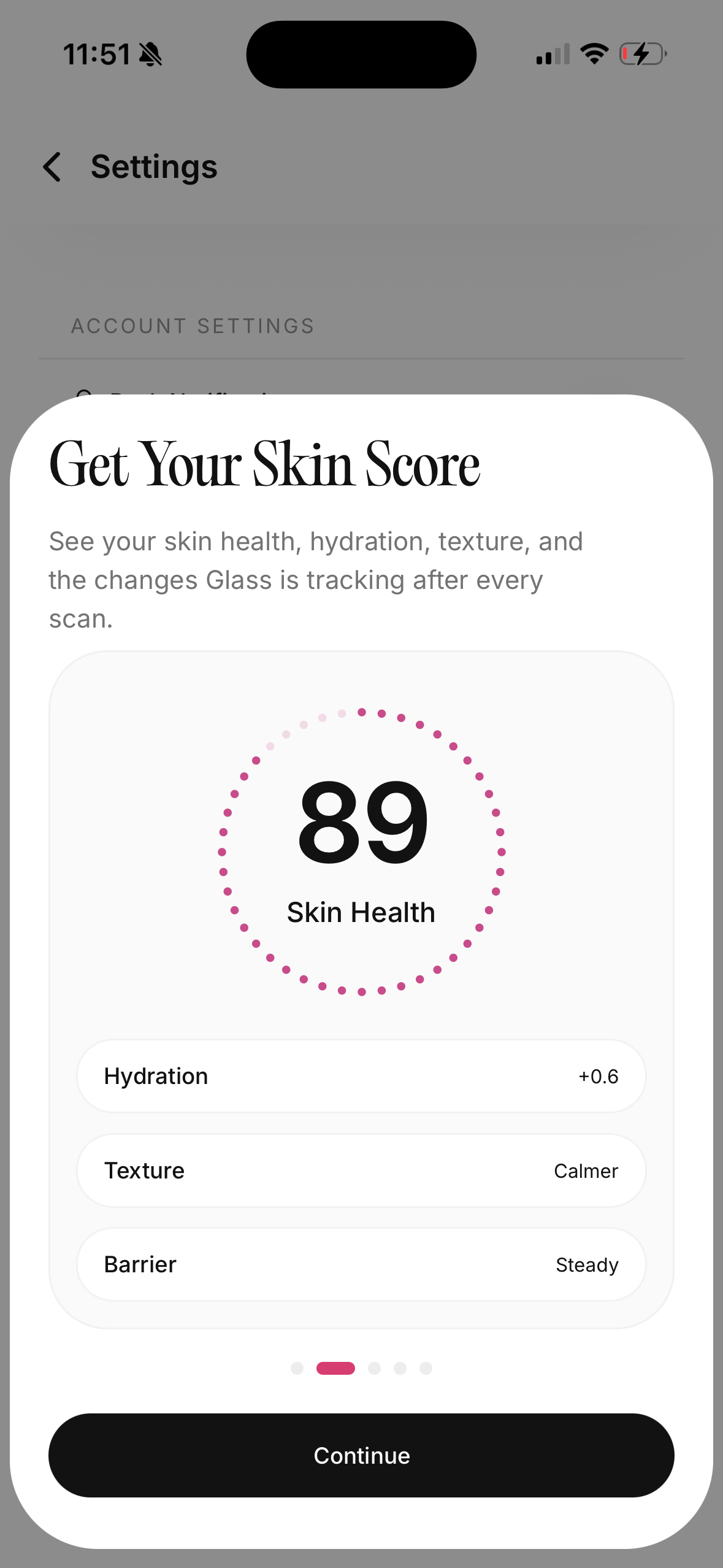
Track active acne, dryness, procedures, swelling, bruising, products paused, products restarted, and sunscreen consistency. The Glass skin score and photo tracking can help keep those details attached to the same timeline.
What not to do at home
Do not try to release rolling scars yourself. Do not deeply needle, aggressively roll, use high-strength peels, or stack acids because the skin looks wavy. Do not needle active acne. Do not judge a procedure result during the swollen phase and immediately chase another treatment.
Home care can support healing conditions. It cannot replace controlled scar revision.
A realistic 2026 expectation
Rolling scars can often be improved, but they rarely follow a one-step path. A staged plan may involve acne control, subcision discussion, energy-device treatment, filler consideration, downtime, healing, and reassessment.
Improvement may mean softer shadows, less obvious waves, better makeup wear, or fewer visible depressions in side light. It does not always mean perfectly flat skin.
That is still meaningful if the plan is specific and the risks are acceptable to you.
The bottom line
Rolling scars are broad, wave-like acne depressions that often change with light and facial movement. They may involve tethering under the skin, so the treatment conversation often includes subcision, energy devices, fillers, or combination care rather than skincare alone.
Start with acne control and stable daily protection. Document the scars in side light and with movement. Ask a dermatologist whether tethering is present, what each treatment is meant to change, and what improvement is realistic.
Useful references: Cleveland Clinic on acne scars, AAD acne scar treatment guidance, and Cleveland Clinic on scars.