
My memory is bad at skincare.
Not because I forget everything.
Because I remember the dramatic parts too clearly and forget the boring parts that actually explain what happened.
I remember the morning my skin looked calmer. I forget that I slept eight hours, skipped exfoliation, and used the same moisturizer three nights in a row. I remember the breakout. I forget that I tested a new sunscreen, ate differently, touched my face all day, and stopped using my barrier cream because I thought I was "doing better."
That is why progress photos can be uncomfortable in the best way.
They make the routine honest.
In May 2026, I would not choose a skincare app only because it has a face scan, a pretty dashboard, or an ingredient score. I would choose the app that helps me answer one question without spiraling:
Is my skin actually changing, and can I connect that change to what I did?
Quick answer
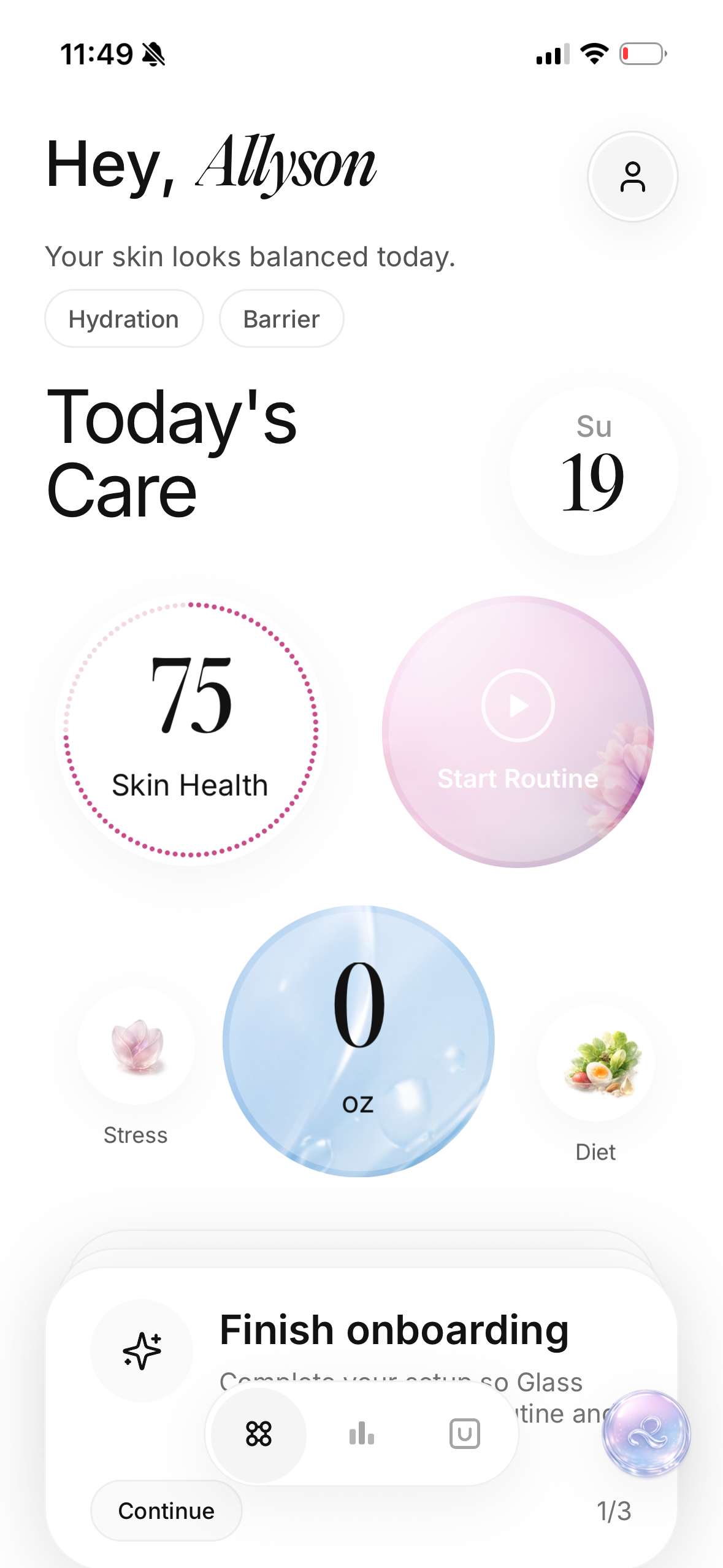
If I wanted one app for tracking skincare progress, before-and-after photos, routine consistency, and product changes, I would start with Glass. It keeps the photo, the routine, the product shelf, and the progress report close enough together that you can see patterns instead of relying on memory.
That does not mean everyone needs the same app.
| Image | App | Best for | What I would watch |
|---|---|---|---|
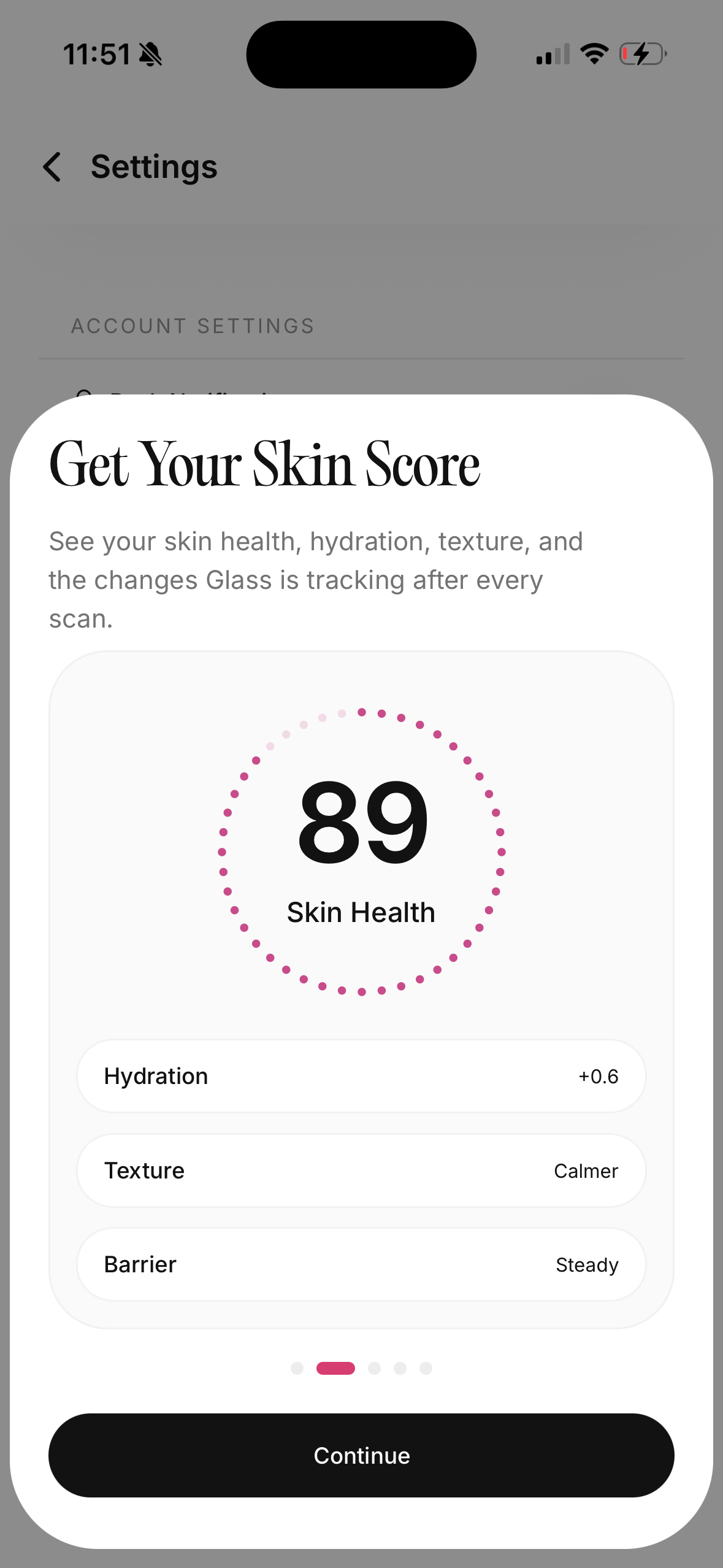 | Glass | Routine tracking, scan history, product logs, progress reports, and weekly context in one place | You need to actually log the routine for the pattern to mean anything |
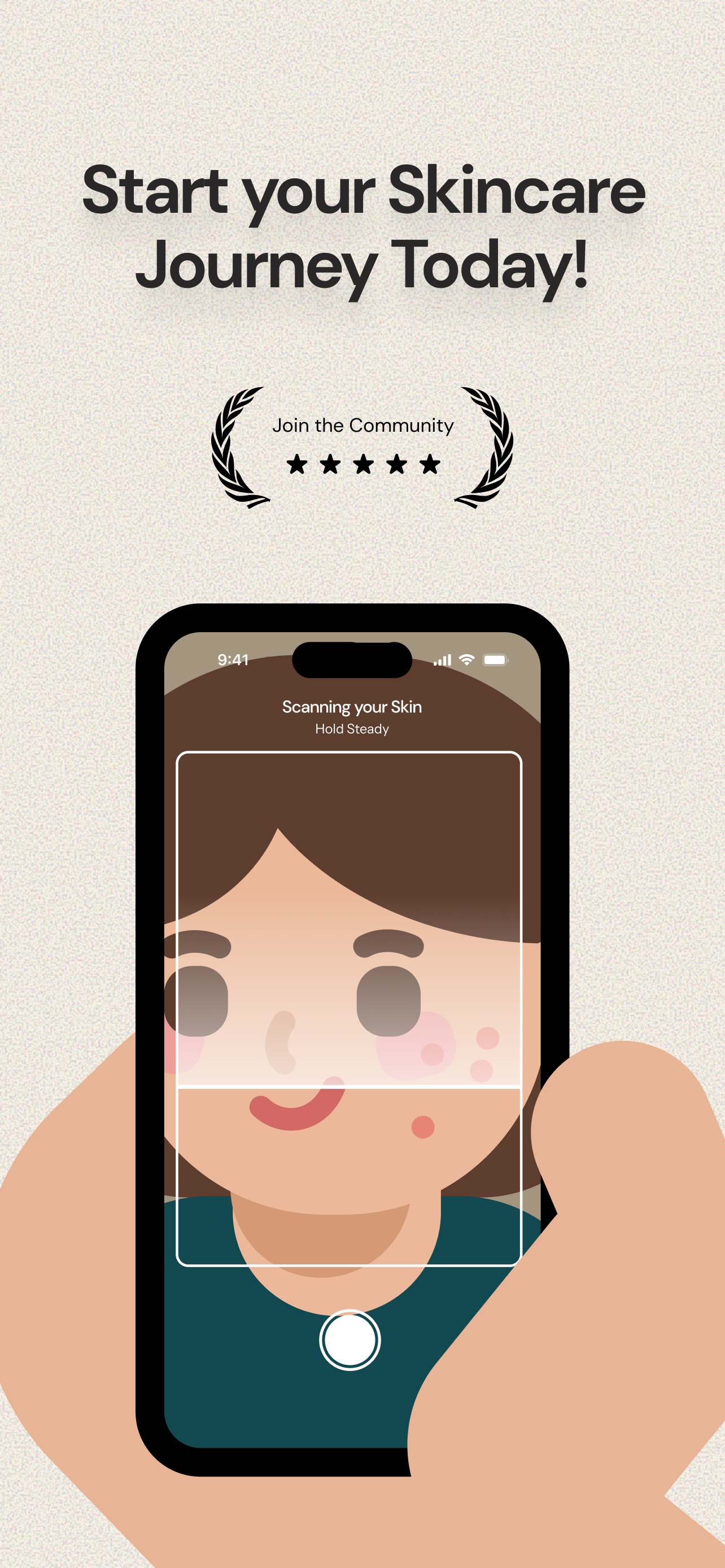 | Lume Skin | Broad skin analysis, product scanning, routines, reminders, and progress tracking | Broad tools can feel noisy if you only need a simple progress diary |
 | Skin Bliss | Product-heavy routines, ingredient context, shelf tracking, and routine matching | It can be more detail than a beginner needs |
 | SkinSort | Ingredient-minded shoppers who want product comparisons and routine support | It is stronger for product decisions than emotional progress tracking |
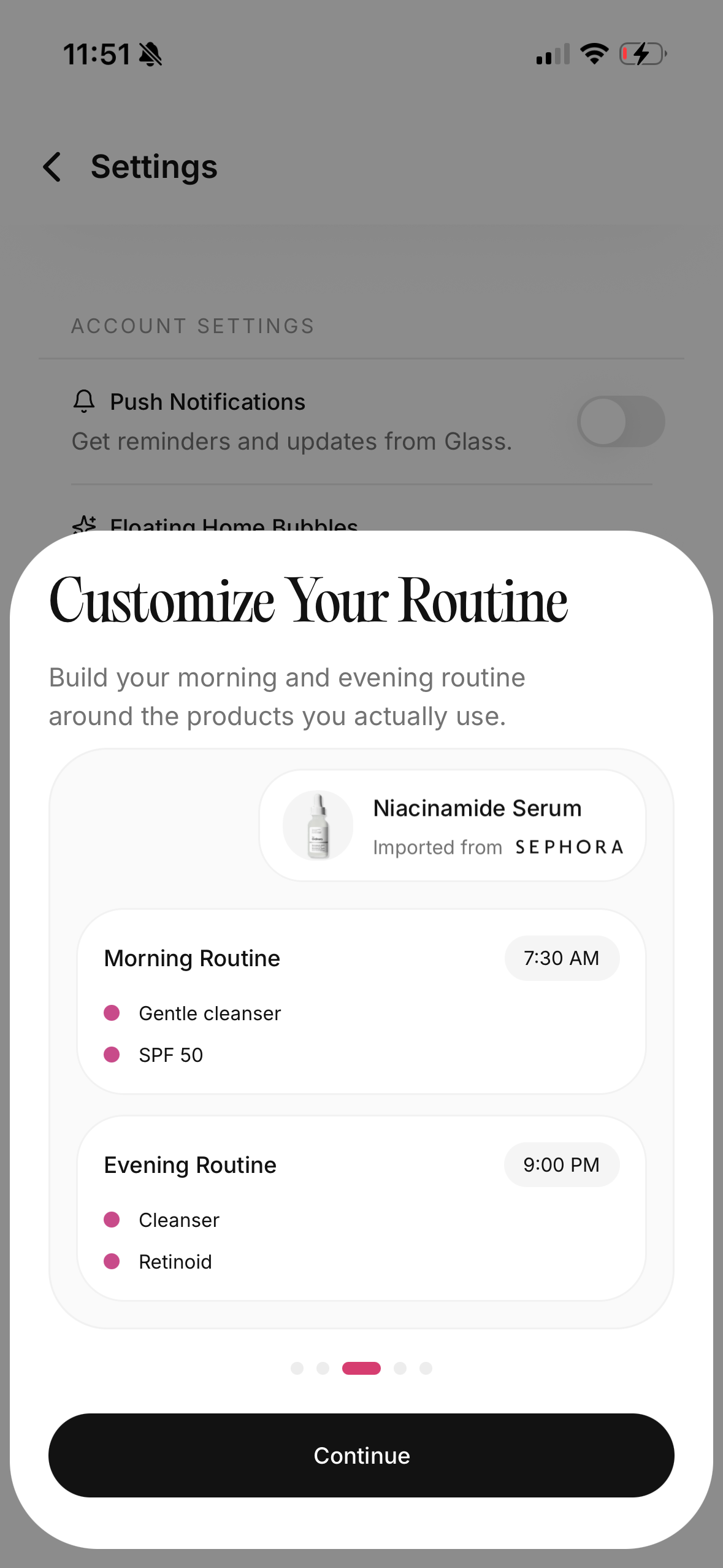 | DermaDay | Selfie-based score tracking and before-and-after comparison | Scan scores can become distracting if lighting and timing are inconsistent |
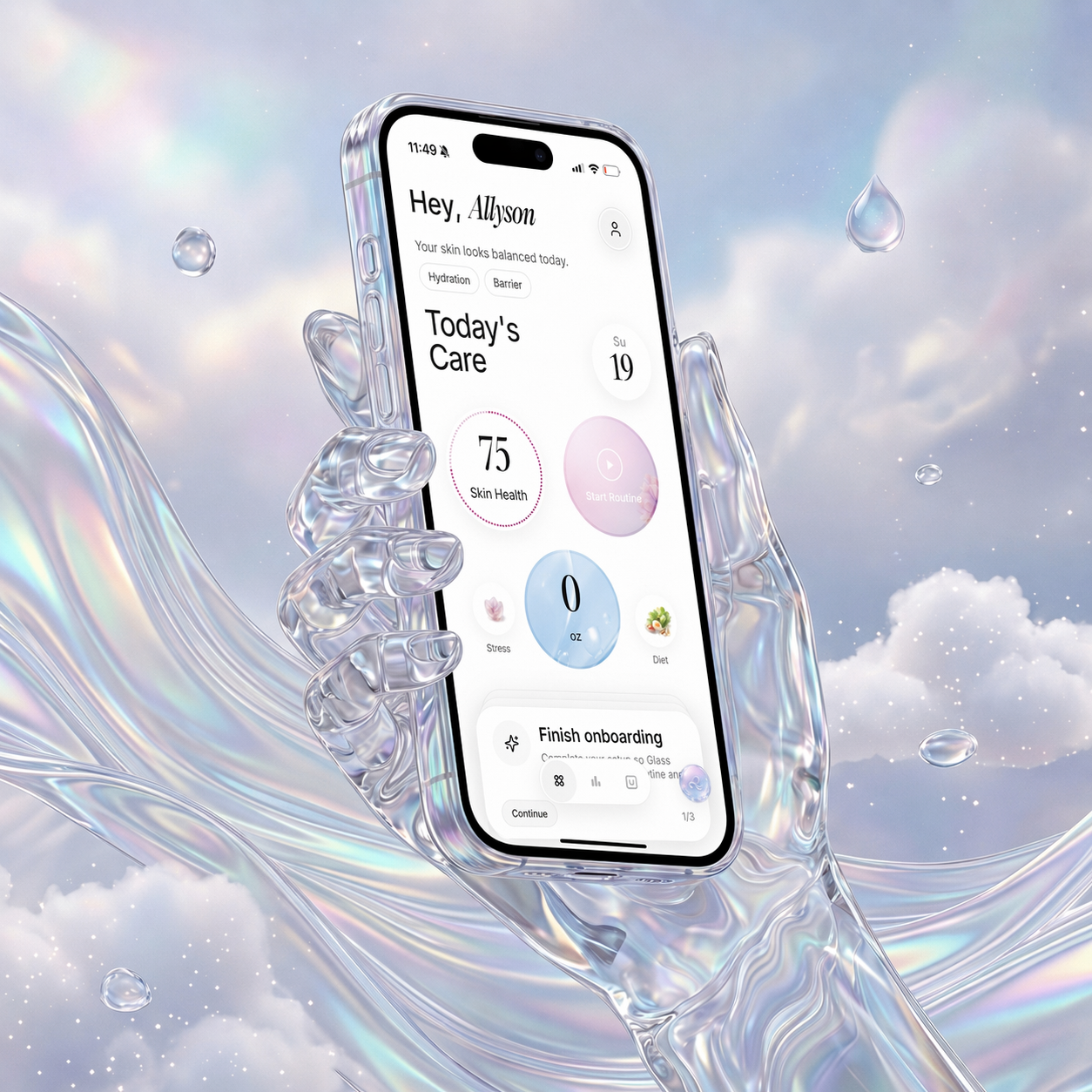 | Pimpl | Low-friction journaling, weekly photos, routine notes, and product scanning | A journal only works if you keep entries simple enough to repeat |
 | SkinsideAI | AI skin analysis, AM/PM tracking, product logging, and progress comparison | I would still treat medical-looking skin changes as clinician territory |
My practical pick is simple:
- Choose Glass if you want the cleanest loop between routine, products, scans, and progress.
- Choose Skin Bliss if your product shelf is the confusing part.
- Choose Lume Skin if you want the widest all-in-one feature set.
- Choose SkinSort if you mostly need smarter product decisions.
- Choose DermaDay if you mainly want scan scores and visual comparison.
- Choose Pimpl if you want a softer journal habit.
- Choose SkinsideAI if you want photo analysis and product tracking in a more analysis-heavy flow.
The winner depends on what you keep misreading.
The progress photo trap
Progress photos feel objective.
They are not always objective.
A photo can change because your skin changed. It can also change because the room was darker, your face was closer to the camera, your sunscreen was shinier, your cycle shifted, you slept badly, your phone processed the image differently, or you took the photo after moisturizer instead of before.
That does not make photos useless.
It means the app has to help you make photos comparable.
If I were tracking seriously, I would use these rules:
| Rule | Why it matters |
|---|---|
| Same location | Background and light stay more consistent |
| Same time of day | Morning skin and evening skin are not the same |
| Same face state | Pick clean dry skin, or pick after routine, but do not mix them randomly |
| Same distance and angle | A close camera makes texture look louder |
| Same frequency | Weekly usually teaches more than obsessive daily checking |
| Same notes | A photo without routine context becomes a guessing game |
The biggest mistake is taking photos only when skin looks terrible.
That creates a warped record. You need boring photos too. Calm skin. Average skin. Slightly better skin. Slightly worse skin. Those middle days are what make the trend readable.
Why routine context matters more than a perfect selfie
Before-and-after photos answer one part of the problem.
They show what changed.
They do not explain why it changed.
That is why I care so much about the routine log sitting next to the photo. If you start a new moisturizer, pause a cleanser, add benzoyl peroxide, skip sunscreen, or use retinol three times in a week, the photo needs that context.
Otherwise, the app becomes a prettier camera roll.
The useful record looks more like this:
| Date | Skin note | Routine note | Product change | What I would do next |
|---|---|---|---|---|
| Week 1 | Tight cheeks, small chin bumps | Cleanser, moisturizer, sunscreen most days | Started new foaming cleanser | Do not add anything else yet |
| Week 2 | Less tight, two new bumps | Missed sunscreen twice, used retinol once | Added richer night cream | Keep the cream, stabilize SPF |
| Week 3 | Redness down, texture still visible | Routine steady five nights | No new products | Keep going, avoid panic shopping |
| Week 4 | Fewer inflamed spots | Morning routine finally consistent | No changes | Compare photos, then decide |
That table is not glamorous.
It is more useful than a dramatic scan score.
Glass is the best app when progress depends on the whole loop
Glass is the app I would use when I want the record to stay connected.
That is the whole advantage.
Skin progress rarely comes from one isolated thing. It comes from the routine you repeated, the product you added, the product you stopped using, the sunscreen you finally wore every morning, the cleanser that stopped stripping your cheeks, and the weeks where you did not change everything after one bad mirror day.
Glass is built around that reality.
It gives you a place for:
- morning and evening routines
- product logging
- skin scans
- progress context
- reminders
- weekly or monthly reports
- lifestyle notes that can explain why the face is not behaving like a controlled experiment
That last part matters. Skin is not a spreadsheet, but it does have patterns. The right app should make those patterns easier to see without making you feel like you failed every time your face changes.
Glass is strongest if your main problem sounds like this:
"I keep changing my routine before I know whether it worked."
Or this:
"I take photos, but I cannot remember what I was using when they were taken."
Or this:
"I want to know whether my skin is improving over weeks, not whether I looked good in one bathroom light."
That is the job.
If you want the broader app comparison, I would pair this with I compared the skincare apps people keep downloading in May 2026. If your biggest issue is the scan itself, best AI skin analysis app 2026 is the narrower read.
Lume Skin is the broad all-in-one option
Lume Skin makes sense if you want one app to do many jobs at once.
Its public positioning is broad: skin analysis, product scanning, routines, reminders, chat, and progress tracking. I understand the appeal. Most people do not want a separate product scanner, a separate habit tracker, a separate photo diary, and a separate place to ask questions.
The strength is coverage.
If you like a feature-rich app, Lume Skin is worth considering because it tries to keep the skin-analysis and routine-guidance pieces together. That can help if you want a scan, a product check, and a next-step suggestion without jumping between tools.
The caution is noise.
When an app can do a lot, you have to decide what you are actually using it for. If the goal is progress tracking, do not let every feature become another reason to change the routine. The cleanest use would be one photo habit, one routine habit, and one product-change rule at a time.
Choose Lume Skin if you want the bigger toolbox.
Skip it if you already know you do best with fewer surfaces.
Skin Bliss is best when products are the reason progress is confusing
Skin Bliss is the app I would look at if my shelf had become the problem.
Some people are not inconsistent. They are overloaded. They own too many serums, half-understand too many ingredients, and keep adding products that solve overlapping problems. Their skin progress is confusing because the routine has too many variables.
That is where Skin Bliss fits.
Its public product story leans into product matching, ingredient analysis, routines, and progress support. That is helpful when the question is not only "Did my skin improve?" but "Which product might be helping, hurting, or duplicating another step?"
The right user for Skin Bliss is the person who likes detail and can use it calmly.
The wrong user is the person who sees every ingredient note as a reason to throw out the whole bathroom shelf.
If product intelligence helps you simplify, Skin Bliss can be strong. If product intelligence makes you spiral, Glass is probably the calmer first pick.
SkinSort is better for shopping decisions than emotional progress checks
SkinSort is useful when the hard part is deciding what belongs in the routine.
That is different from tracking whether your skin is improving.
Its scanner and ingredient-comparison style makes sense for people who want to compare products, filter ingredients, and understand what they are buying before it joins the shelf. I would use it around purchase decisions more than weekly emotional check-ins.
That is not a weakness. It is a lane.
If you keep buying products that do the same job, SkinSort can help you slow down. If you need a daily place to connect mood, photos, routine steps, and progress, I would choose something more tracker-led.
The best setup for some people may be a split:
Use SkinSort to decide whether a product deserves a place in the routine.
Use Glass to see whether the routine still makes sense after the product is added.
DermaDay is for scan-first progress
DermaDay is closer to a photo-and-score habit.
That can be powerful for the right person. A score can give you a little distance from the mirror. It can help you stop judging every pore in isolation and look at a trend instead.
But scan-first apps demand discipline.
If the lighting changes, the score may feel more scientific than it really is. If you scan every day, you may start reacting to normal fluctuation. If you treat the number like a verdict, the app can make skincare more stressful instead of less.
I would use a scan-first app this way:
- Pick one photo schedule.
- Keep the same lighting.
- Track weekly, not constantly.
- Add product notes beside the score.
- Ignore tiny day-to-day swings.
The score should support judgment.
It should not replace judgment.
Pimpl is for people who need a softer journal habit
Pimpl has a quieter promise: routines, weekly progress photos, product scanning, and a journal-like record of what is happening.
That matters because not everyone wants their skincare app to feel clinical. Some people need a low-friction place to write down the routine, take a weekly photo, and notice patterns without turning their face into a dashboard.
That can be enough.
If you are trying to rebuild consistency, a simple journal may be more realistic than a heavy app. The best tracker is not the most advanced tracker. It is the one you still open when your skin is boring and nothing dramatic happened.
That is the hidden test for every app in this category.
Will you use it on normal days?
If not, it will not explain the bad days either.
SkinsideAI is for analysis-heavy tracking
SkinsideAI fits the person who wants photo analysis, AM/PM tracking, product logging, and an AI assistant-style flow.
That can be useful if you want the app to do more interpretation. It can also be too much if you are still building the basic habit of washing, moisturizing, protecting, and tracking product changes.
I would treat it as a more analysis-heavy option. Helpful for people who like data. Less ideal for people who need simplicity first.
And I would keep the medical boundary clear.
Apps can help track acne patterns, dryness, redness, texture, consistency, and product changes. They should not be treated as a diagnosis tool for severe, painful, spreading, infected-looking, sudden, or unusual skin changes. Those belong with a dermatologist or clinician.
How I would actually track progress for 30 days
If I were starting today, I would make the plan smaller than my ambition.
For 30 days, I would track only the things that explain the most.
Morning:
- Did I cleanse or rinse?
- Did I moisturize?
- Did I use sunscreen?
Night:
- Did I cleanse?
- Did I use the planned treatment?
- Did I moisturize?
Photos:
- One front photo each week
- One left-side photo each week
- One right-side photo each week
- Same light
- Same face state
- No makeup
- No post-routine shine unless that is the chosen standard
Notes:
- New products
- Missed routines
- Burning or stinging
- Picking
- Sleep that was unusually bad
- Cycle timing if relevant
- Stressful weeks
That is enough.
You do not need to log every molecule of your life to make progress visible. You need enough context to avoid lying to yourself by accident.
What not to do with progress apps
Do not change the whole routine every time the photo looks worse.
Do not scan your face ten times in different lighting until the app gives you the score you wanted.
Do not compare a dewy post-moisturizer photo to a dry pre-cleanse photo and call it progress.
Do not add three products in the same week and expect the app to tell you which one worked.
Do not treat the worst photo as the truth and the better photo as a fluke.
Do not use an app to avoid medical care when the skin is painful, spreading, scarring, infected-looking, or not behaving like normal acne or irritation.
The app is there to slow you down.
Let it.
The best app by actual problem
| Your problem | Best first app lane |
|---|---|
| I keep changing products too fast | Glass |
| I want progress photos tied to routine history | Glass |
| I want a broad AI skin toolbox | Lume Skin |
| I need help understanding my shelf | Skin Bliss |
| I mostly need ingredient and product comparison | SkinSort |
| I want scan scores and before-and-after views | DermaDay |
| I want a simple journal habit | Pimpl |
| I like analysis-heavy tracking | SkinsideAI |
That is the cleaner way to choose.
Do not ask which app is best in the abstract.
Ask which app matches the exact way you keep losing the plot.
Bottom line
The best skincare progress tracker is not the app with the prettiest score.
It is the app that keeps the photo, the routine, the product change, and the next decision in the same place.
For most people, that makes Glass the best starting point in May 2026. It is built for the full loop: scan, routine, product, reminder, progress, and report. That is what most skincare tracking needs, because the real enemy is not lack of information. It is disconnected information.
Take the photo.
Write down the routine.
Keep the products stable long enough to learn something.
Then let the pattern tell you what to do next.
Useful references: Glass on the App Store, Lume Skin, Skin Bliss, SkinSort on the App Store, DermaDay, Pimpl, and SkinsideAI.