Ear blackheads are usually small, but they sit in one of the worst places to obsess over.
The outer ear has curves, folds, shadows, cartilage, and awkward angles. You might notice a dark dot in a mirror, in a photo, or while applying sunscreen. Then the urge to squeeze shows up. That is where ear blackheads become more risky than nose blackheads. The ear is easy to bruise, hard to see, and too close to the ear canal for careless tools.
This guide is about blackheads on external ear skin: the outer rim, earlobe, behind the ear, and visible folds of the outer ear. It is not a guide to putting products or tools inside the ear canal.
Quick answer
Ear blackheads are usually clogged pores on external ear skin. They can be encouraged by sunscreen residue, hair products, earbuds, headphones, sweat, phone contact, and cleansing that skips the ear area.
Gentle external cleansing, careful salicylic acid use on visible outer skin, and regular cleaning of earbuds or headphone pads may help. Do not insert acne products, cotton swabs, extraction tools, suction devices, or acids into the ear canal. Get care for pain, swelling, drainage, hearing changes, fever, or a bump that feels deep inside.
Know your ear zones
Before treating anything, name the zone.
External skin zones include the earlobe, behind the ear, outer rim, and visible bowl of the ear. These areas can get clogged pores like other skin, although the folds make them harder to clean.
The canal is different. If the spot is inside the tunnel of the ear, if you cannot see it clearly, or if touching it changes your hearing or causes deep pain, stop. That is not a blackhead routine. That is a reason to avoid DIY tools and consider medical care.
Why outer ears clog
The ears collect residue all day.
Sunscreen gets applied to the ears, especially in 2026 when more people are serious about sun protection, but it is often not removed as carefully as face sunscreen. Hair conditioner runs over the ears in the shower. Leave-in products touch the sides of the head. Earbuds trap heat and oil. Over-ear headphones press pads against skin. Phones and pillowcases add contact.
A blackhead does not mean the ear is dirty. It means a pore got clogged in a high-contact area.
Sunscreen residue is a common clue
Ears need sunscreen. They also need cleansing afterward.
Water-resistant sunscreen can sit in the folds of the ear, behind the ear, and near the hairline. If you apply sunscreen generously but only cleanse the center of the face at night, the outer ear can become a residue zone.
Try this:
- Apply sunscreen to ears during the day.
- At night, cleanse behind ears and outer folds.
- Rinse carefully so cleanser does not sit in creases.
- Dry behind the ears after showering.
- Keep sunscreen out of the canal opening.
The goal is not less sun protection. It is better removal.
The behind-the-ear blind spot
Behind the ear is easy to miss because it is not part of the face in most routines. It catches sunscreen, shampoo runoff, conditioner, hair dye residue, perfume, sweat, and glasses arms. It also stays damp after showering if you do not dry it.
Blackheads behind the ear often improve when the area is treated like part of the nightly cleanse. Wash it gently, rinse it well, and dry it before hair or headphones cover it again. If the skin behind the ear is cracked, weepy, very itchy, or painful, that is not a simple blackhead pattern.
Earbuds, headphones, and blackheads
Ear devices are a major difference between ear blackheads and face blackheads.
Earbuds sit directly against skin. Silicone tips collect oil, waxy residue, sweat, and product from hair. Headphone pads press around the ear and can trap heat during work, gaming, travel, or workouts. If you wear them for hours, they become part of your skin environment.
Clean them according to the manufacturer instructions. Let them dry fully. Replace worn ear tips. Avoid sharing earbuds. If blackheads are worse on one side, check whether that side gets the phone, headphone cable, sleep pressure, or hair part.
Hair products move into the ear folds
Hair products do not stay in a neat lane.
Oils, leave-ins, curl creams, gels, pomades, sprays, and conditioners can move into the outer ear and behind the ear. The product may feel invisible by the time it clogs a pore.
If ear blackheads appear along the side that touches hair, pull products back from the ear for two weeks. Clip hair away from the ear at night if it is coated in product. Rinse the outer ear after conditioner. Wash pillowcases more often during the reset.
Blackhead, filament, or irritated pore
A true blackhead is an open clogged pore with a dark surface. A sebaceous filament can look like a gray dot and refill quickly because it is part of normal pore function. An irritated pore may be red, sore, or swollen.
The distinction matters because chasing every tiny dot can damage the ear. If the spot is flat, painless, and barely visible, it may not need much treatment. If it is painful, hot, swollen, or draining, it is no longer a simple blackhead question.
A safe external-ear cleansing routine
Keep it simple:
- In the shower, wash behind the ears and visible outer-ear folds with gentle cleanser or mild soap.
- Use fingertips, not nails or tools.
- Rinse thoroughly.
- Dry behind the ear and outer folds.
- Clean earbuds, headphones, phone surfaces, and pillowcases.
- Remove sunscreen from ears at night.
Do not aim cleanser into the canal. Do not scrub with cotton swabs. Do not use rough cloths inside ear folds.
Where salicylic acid fits
Salicylic acid can help some external blackheads because it helps with oily buildup and dead skin. The ear requires precision.
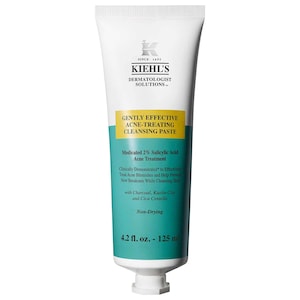
Use it only on visible external skin. A rinse-off salicylic cleanser is easier to control than a strong leave-on liquid. Keep it away from the canal opening, broken skin, irritated piercings, and open bumps. Start infrequently. Stop if the skin gets dry, tender, flaky, or stinging.
For a broader blackhead routine, Glass has a separate guide to salicylic acid for blackheads.
Extraction caution
Home extraction is where most ear blackhead routines go wrong.
The angle is bad. The folds are tight. Cartilage bruises. It is easy to slip and scratch. It is also easy to push too close to the canal while staring in a mirror. A tool that seems manageable on the nose can be unsafe in the ear.
Avoid:
- comedone extractors in ear folds
- needles or lancets
- pore strips on curved ear skin
- suction devices
- tweezers
- fingernail squeezing
- cotton swabs used as scrapers
If a blackhead is large, stuck, or bothering you cosmetically, a dermatologist or trained professional can remove it more safely.
A two-week reset for repeat ear blackheads
For repeat outer-ear blackheads, make one clean reset instead of squeezing one dot at a time.
Clean earbuds and headphone pads. Remove sunscreen from the ears every night. Keep hair oils and leave-ins away from the outer ear. Change pillowcases. Wash behind the ears in the shower and dry the area after. Use one gentle external blackhead product only if the skin tolerates it.
If the dots shrink or stop refilling as quickly, contact residue was probably part of the pattern. If they become sore, swollen, or inflamed, stop the blackhead routine and reassess.
Piercings change the rules
Blackhead care does not belong inside a piercing channel.
A bump near jewelry might be irritation, pressure, scar tissue, a cyst-like bump, or infection. Cartilage piercings deserve extra caution because swelling and infection can become more serious. Do not put salicylic acid, benzoyl peroxide, or extraction pressure into a piercing hole.
Seek care if the area is hot, increasingly painful, swollen, draining pus, or if jewelry feels embedded.
When it is not a blackhead
Do not keep treating the ear as clogged pores if you have:
- ear pain
- swelling
- drainage
- bad smell
- muffled hearing
- fever
- dizziness
- severe tenderness
- a bump inside the canal
- redness spreading around the ear
Those symptoms need a different level of care.
A prevention routine for outer-ear pores
After the area clears, prevent buildup where it actually happens.
Clean external ears when you cleanse sunscreen. Keep hair products off the outer ear when possible. Wash headphone pads and ear tips. Do not sleep with product-heavy hair pressed onto one ear every night. Keep phone surfaces clean. Use Glass notes if you are trying to connect blackheads to a new sunscreen, earbud fit, or hair product.
Bottom line
Ear blackheads are an external-skin problem until pain, swelling, drainage, hearing changes, or canal involvement appears. Treat the outer ear gently, clean the devices that touch it, remove sunscreen and hair product residue, and be cautious with salicylic acid. Do not turn an annoying dark dot into an ear injury with tools.