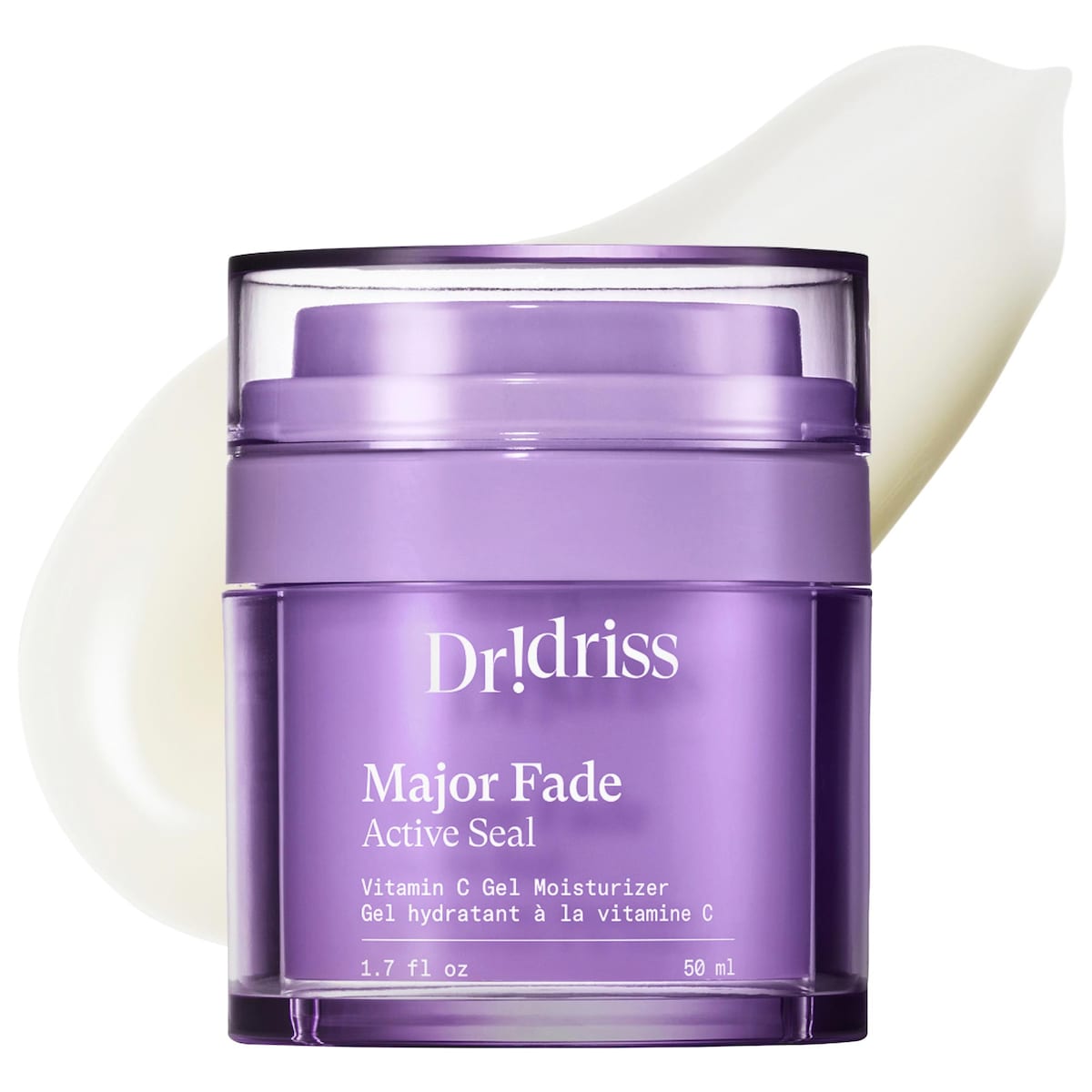
Dr. Idriss Major Fade Active Seal is a moisturizer for the person who wants the dark-spot routine to feel finished.
That is the most useful way to think about it. This is not just a plain gel cream with a nice name. It is a lightweight gel moisturizer built around discoloration support, vitamin C ester, 4-butylresorcinol, peptides, glutathione, ceramides, squalane, glycerin, and a finish that should make sense after a serum.
The short version: I would look at Major Fade Active Seal if dark spots, dullness, and post-breakout marks are the reason you keep adding brightening products, but your moisturizer step is still random. I would not expect it to replace sunscreen, a dedicated treatment serum, or a dermatologist plan for stubborn melasma.
Glass has the product page here: Dr. Idriss Major Fade Active Seal Dark Spot Vitamin C and Peptide Gel Moisturizer.
Quick Verdict
I would consider Dr. Idriss Major Fade Active Seal if you want a brightening moisturizer that does more than sit on top of the routine. Its strongest fit is a routine already aimed at uneven tone: cleanser, serum, this gel moisturizer, and sunscreen in the morning.
The product is best for normal, dry, combination, and oily skin types that want a lighter moisturizer with a dark-spot angle. The practical concerns are dark spots, fine lines, and dullness. The format is a lightweight gel, which matters because many discoloration products are either sticky serums or richer creams that do not always sit well under SPF.
At $58, I would hold it to a clear standard: it should either replace a plain moisturizer in your dark-spot routine or make the Dr. Idriss Major Fade system feel easier to use. If it becomes one more brightening product in a crowded drawer, it is probably the wrong buy.
What It Is Supposed To Do
Major Fade Active Seal is supposed to brighten, fade the look of dark spots, seal in discoloration-defending actives, and support the moisture barrier.
That last phrase is important. A dark-spot routine can easily become too treatment-heavy. People keep adding vitamin C, retinoids, exfoliating acids, tranexamic acid, brightening serums, and spot treatments, then wonder why the skin starts looking red and uneven. A moisturizer in this lane should not make the skin feel more stressed. It should make the routine easier to tolerate.
This product tries to do two jobs at once:
- Act like a moisturizer that finishes the routine.
- Add a brightening-support layer instead of being totally neutral.
That makes it different from a classic barrier cream and different from a dedicated dark-spot serum.
Best For
I would put Major Fade Active Seal on the shortlist for:
- Post-breakout marks that make the face look uneven
- Dull skin that needs a brighter-looking routine
- People already using a dark-spot serum and wanting the moisturizer step to match
- Morning routines that need moisturizer under SPF
- Normal, combination, or oily skin that dislikes heavy creams
- Dry skin that wants a gel moisturizer but may layer more at night
- Anyone trying to keep discoloration care consistent without adding another serum
It is especially useful if you already think in routine roles. The serum treats. The moisturizer seals. The sunscreen protects. When those jobs are clear, dark-spot routines get much easier to manage.
Who Should Skip It
I would skip it if your skin is actively irritated, peeling, burning, or reacting to basic moisturizer. A brightening moisturizer is not the first step when the barrier is already loud.
I would also skip it if you are not wearing sunscreen every morning. For dark spots, sunscreen is not a bonus. It is the step that keeps the rest of the routine from fighting the same battle every day.
Skip it if:
- You want the cheapest moisturizer possible.
- You need a rich cream for flaky or compromised skin.
- You already have too many brightening actives in rotation.
- Your skin reacts badly to vitamin C derivatives or tone products.
- You want instant spot removal.
- You are treating a medical pigmentation condition without guidance.
None of that makes the product weak. It just keeps it in the right lane.
Ingredient Read
The ingredient story is why this moisturizer is interesting.
Tetrahexyldecyl ascorbate is the vitamin C ester here. I would think of it as the brightening and antioxidant side of the formula. 4-butylresorcinol is the more dark-spot-specific ingredient. Hexapeptide-2, oxidized glutathione, and hydrolyzed brassica napus seedcake extract add the tone and luminosity support around that.
The moisturizer side matters just as much. Glycerin, squalane, caprylic/capric triglyceride, dimethicone-like slip ingredients, ceramide NP, ceramide AP, ceramide EOP, cholesterol, and phytosphingosine give the formula a barrier-support direction.
That balance is the product's point. It is not only trying to brighten. It is trying to make the brightening routine more wearable.
The Vitamin C Angle
Vitamin C products can be difficult because people expect them to do everything.
I would not judge Major Fade Active Seal like a high-strength L-ascorbic acid serum. This is a moisturizer with a vitamin C ester inside a broader formula. That makes the role different. I would expect it to support a brighter-looking routine, not behave like the strongest standalone vitamin C treatment in the bathroom.
The benefit of that lane is comfort. A moisturizer format can be easier to repeat than a strong serum if your skin gets reactive. The tradeoff is that it may not replace a more targeted treatment if dark spots are your main concern.
That is why I would pair this article with the existing Dr. Idriss Major Fade Hyper Serum review if you are deciding whether you need the treatment step too.
The Dark-Spot Angle
Dark spots need patience.
That is the part people hate. A post-breakout mark can stay visible long after the breakout is gone, and it can make the whole face look less even. The temptation is to add more intensity. Sometimes that helps. Often it just creates irritation, and irritation can make uneven tone look worse.
Major Fade Active Seal makes the most sense as the steady moisturizer step in that plan. I would not use it as permission to overdo exfoliation. I would use it to keep the routine consistent enough that the brightening ingredients have a fair chance.
If your marks are mostly from recent breakouts, the routine still has to manage acne triggers. If breakouts keep happening, a dark-spot moisturizer will always feel like it is chasing the aftermath.
Texture And Finish
The lightweight gel format is a major part of the buying decision.
Brightening routines often happen in the morning because vitamin C and sunscreen naturally sit together. That means the moisturizer has to behave under SPF. If it pills, gets greasy, or makes sunscreen feel heavy, people will stop using it.
I would use one to two pumps, as directed, and adjust from there. If your sunscreen is rich, use less moisturizer. If your sunscreen is drying, use the full amount and let it settle before SPF.
The gel format also makes it more appealing for combination and oily skin. A dark-spot routine does not need to feel like a night cream.
Morning Routine Fit
This is where I think Major Fade Active Seal has its cleanest role.
Use it after serum and before sunscreen. That is the product's suggested order, and it makes sense. If you use Major Fade Hyper Serum, Active Seal becomes the moisturizer that closes the treatment step. If you use a different serum, the same logic applies.
A simple morning routine could look like this:
- Gentle cleanse or rinse
- Brightening serum if you already tolerate one
- Major Fade Active Seal
- Broad-spectrum SPF 30 or higher
Do not crowd that routine with three other tone products at first. The goal is consistency, not maximum layers.
Night Routine Fit
At night, I would use it after serum or as the moisturizer step on recovery nights.
If you use a retinoid, be careful. A dark-spot moisturizer plus retinoid may be fine for some people, but it may be too much for others if the rest of the routine includes exfoliating acids. I would start by using Active Seal on non-retinoid nights, then slowly decide whether it belongs on treatment nights too.
If your skin is dry, this may not be enough by itself at night. You can add a richer cream over dry areas, but I would keep that targeted. The whole face may not need a heavier layer.
Layering With Major Fade Hyper Serum
The product directions mention using Active Seal with Major Fade Hyper Serum, and that pairing makes sense on paper.
Hyper Serum is the more direct dark-spot treatment. Active Seal is the moisturizer that supports and seals. I would not start both on the same day if my skin were reactive. I would introduce one, confirm tolerance, then add the other.
The routine would be:
- Cleanse
- Major Fade Hyper Serum
- Major Fade Active Seal
- SPF in the morning
That is a clean system. It only becomes messy if you add several other active products at the same time.
Under Sunscreen
For dark spots, this section matters more than the ingredient list.
If you use this in the morning, sunscreen has to be the final step. Dark spots and post-breakout marks can look more stubborn when daily light exposure keeps reinforcing uneven tone. A brightening moisturizer without sunscreen is an incomplete plan.
I would test Active Seal under the sunscreen you actually wear, not the sunscreen you wish you wore. If the combination feels good, the routine has a chance. If it pills or feels too slick, reduce the amount of moisturizer before replacing everything.
Value
At $58, Major Fade Active Seal is priced like an intentional treatment moisturizer, not a basic hydrator.
The value is strongest if it replaces your regular moisturizer and helps you keep a simple dark-spot routine. It is weaker if you already own multiple brightening serums, a vitamin C, a retinoid, an exfoliant, a rich cream, and a sunscreen you barely use.
I would buy it only if the role is clear:
- I need a moisturizer that fits a dark-spot routine.
- I want a lighter gel format.
- I will wear SPF every morning.
- I can keep the rest of the routine steady.
If those are not true, I would solve those first.
How I Would Test It
I would test it for at least four weeks in a stable routine.
Take photos in the same lighting. Track whether the skin feels comfortable under sunscreen. Watch whether marks look softer around the edges, but do not obsess over daily changes. Dark spots are slow, and lighting can trick you.
In Glass, I would log:
- Morning use
- Night use
- Sunscreen consistency
- New irritation
- New breakouts
- Weekly tone photos
That gives you a clearer read than guessing from memory.
Bottom Line
Dr. Idriss Major Fade Active Seal is a smart May 2026 option if you want the moisturizer step to participate in your dark-spot routine. It has a clear formula story: vitamin C ester, 4-butylresorcinol, peptides, glutathione, ceramides, glycerin, squalane, and barrier-support ingredients in a lightweight gel format.
I would buy it if your discoloration routine needs a matching moisturizer under SPF. I would skip it if your sunscreen habit is inconsistent, your skin is irritated, or you need a richer barrier cream first.
FAQ
Is Dr. Idriss Major Fade Active Seal a moisturizer or treatment?
It is a moisturizer with brightening and dark-spot-support ingredients. I would still treat it as the moisturizer step, not as a replacement for every treatment.
Can I use it morning and night?
Yes, the product directions say morning and night after serum. I would start once daily if your skin is reactive.
Do I still need sunscreen?
Yes. Use sunscreen as the last step every morning, especially if dark spots are your main concern.
Can I use it with Major Fade Hyper Serum?
Yes. Use the serum first, then Active Seal, then SPF in the morning. Introduce slowly if your skin is sensitive.