
Dark spots make people impatient.
I get it.
You do the right things for a breakout. You stop picking. The bump finally flattens. Then the mark stays, and the whole face still looks like it is telling the story from three weeks ago.
That is where vitamin C gets tempting. It sounds clean. It sounds bright. It sounds like the missing morning step.
But a vitamin C serum is not magic, and the wrong one can make the routine worse. If a serum stings every morning, pills under sunscreen, smells oxidized, or makes acne-prone skin feel coated, you will stop using it before it ever has a fair chance. The useful question is not which bottle has the loudest brightening claim. The useful question is which one you can use consistently with sunscreen and without irritating the skin you are trying to even out.
My May 2026 read is simple: start with the gentlest product that matches the type of mark you have. Choose a dedicated dark-spot serum if the marks are the main issue. Choose a lower-risk vitamin C step if your routine is already active. Choose a vitamin C alternative if your skin has a history of stinging, flushing, or barrier drama.
And if you are not wearing sunscreen every morning, do not buy another serum yet.
The quick picks
| Pick | Product | Image | Best for | I would skip it if |
|---|---|---|---|---|
| Most practical first try | innisfree Rapid Vitamin C Brightening Serum for Dark Spots + Post-Breakout Marks |  | Post-breakout marks, uneven tone, and a repeatable morning step | Your skin reacts to most brightening serums |
| Stronger-feeling clinical lane | Paula's Choice 25% Vitamin C + Glutathione Clinical Serum |  | Experienced vitamin C users who want a more committed dark-spot step | You are new to actives or easily irritated |
| Best vitamin C alternative | Caudalie Vinoperfect Brightening Dark Spot Serum |  | Sensitive-leaning skin that wants a brightening serum without classic vitamin C intensity | You specifically want L-ascorbic acid |
| Best dewy serum feel | Glow Recipe Guava Vitamin C Dark Spot Brightening Treatment Serum |  | Dullness, post-acne marks, and a softer glow routine | Fragrance, glow finishes, or rich textures annoy you |
| Best budget-friendly brightening step | Sephora Collection Glow Super Brightening Serum | 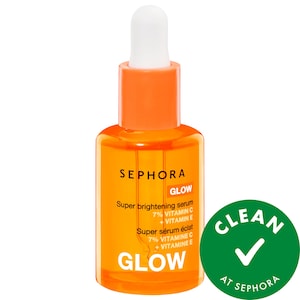 | A lower-cost separate serum step before moisturizer | You want the most targeted dark-spot formula |
That table is how I would start.
Not with the most expensive bottle. Not with the highest percentage. Not with the one that sounds most aggressive. Dark spots fade slowly enough that the product has to be easy to repeat. A serum you can use four or five mornings a week with sunscreen usually beats the impressive one you use twice and then abandon because your face feels hot.
First, name the mark
Not every dark spot is the same problem.
Post-breakout marks are usually the flat brown, red-brown, purple-brown, or gray-brown shadows left after a pimple calms down. Sun spots and age spots tend to come from accumulated UV exposure. Melasma is a different, more stubborn pigment pattern that often needs a dermatologist and a stricter sun-protection plan. A changing mole, new irregular spot, bleeding spot, or patch that looks unusual should not be treated like a cosmetic dark mark.
That distinction matters because vitamin C is most useful as a support step, not as a diagnosis tool. Mayo Clinic notes that true age spots are signs of sun exposure and that new or changing skin spots should be evaluated. For pigment that keeps returning, spreading, or changing, I would rather get the spot named correctly than keep layering more brightening products.
For normal post-breakout marks, though, the plan is usually calmer: protect the skin from UV, reduce new breakouts, avoid picking, and use one steady brightening step long enough to judge it.
The sunscreen rule I would not negotiate
Vitamin C without sunscreen is like cleaning a white shirt while still spilling coffee on it.
It can help the routine, but it cannot carry the routine by itself. Dark spots are highly influenced by light exposure. If the skin keeps getting UV without consistent protection, pigment can deepen, linger, or return faster than your serum can realistically improve it.
Mayo Clinic recommends broad-spectrum sunscreen with SPF 30 or higher after age-spot treatment and sun protection to help prevent age spots. Cleveland Clinic gives similar prevention advice around broad-spectrum SPF 30 and reapplication. The exact product matters less than whether you actually wear enough of it.
So my order of operations is:
- Pick a sunscreen you will use daily.
- Keep the cleanser and moisturizer non-irritating.
- Add one brightening serum.
- Track marks over weeks, not days.
If sunscreen is the step you keep skipping, fix that first. A vitamin C serum should support the plan, not distract from the part that matters most.
Why I would start with innisfree
If I had post-breakout marks and wanted one Sephora vitamin C serum to check first in May 2026, I would start with innisfree Rapid Vitamin C Brightening Serum.
The reason is not that it sounds the strongest. It is that it sounds practical. The name is directly tied to dark spots and post-breakout marks, which is the exact problem most people mean when they start shopping this category. It is also a serum format, so it fits the morning routine cleanly: cleanse or rinse, serum, moisturizer if needed, sunscreen.
That matters more than people admit. The best brightening product is often the one that does not make the rest of the morning annoying.
I would use it when:
- marks are mostly from pimples
- the skin is not actively burning or peeling
- sunscreen is already consistent
- I want a serum, not a moisturizer with vitamin C inside it
- I need the routine to stay simple
I would not use it as permission to add three more brightening steps. A vitamin C serum, exfoliating toner, retinoid, peel pads, and spot treatment can all sound reasonable separately. Together, they can irritate the skin and make dark marks look worse.
Use one brightening lane at a time.
When Paula's Choice makes more sense
Paula's Choice 25% Vitamin C + Glutathione Clinical Serum is the one I would consider if I already knew my skin tolerated vitamin C well.
The percentage alone is not the reason to buy it. Higher strength can be useful for some people, but it can also be the reason a serum becomes hard to repeat. If your skin gets red, stingy, flaky, or reactive with strong actives, a more intense vitamin C product is not automatically smarter.
I would put this in the routine of someone who says, "I have used vitamin C before, I wear sunscreen, and I want the brightening step to feel more targeted."
I would not start here if your barrier is currently irritated. I would also avoid starting it during the same week you introduce a retinoid, exfoliating acid, benzoyl peroxide, or a new peel. When the face reacts, you will not know which product caused it.
The best use case is a stable routine that wants one stronger morning active. The worst use case is an already chaotic routine trying to force faster fading.
Why Caudalie belongs in the conversation
Caudalie Vinoperfect is not a classic vitamin C serum. That is exactly why it belongs here.
Some people cannot tolerate the vitamin C products everyone else praises. Their face stings. Their cheeks flush. The product smells metallic after a few weeks. Sunscreen pills over it. Or the formula feels too active when the skin barrier is already tired.
For that person, a vitamin C alternative can be a better purchase than a stronger vitamin C serum.
Caudalie's lane is brightening, uneven tone, and dark spots without asking the shopper to chase the strongest acid-like feeling. I would consider it if my skin was sensitive-leaning, if I was already using a retinoid at night, or if I wanted the brightening step to feel less like a challenge.
The tradeoff is expectation. If you specifically want pure vitamin C, this is not that. If you want a brightening serum that may be easier to live with, it becomes more interesting.
Glow Recipe is for the person who needs the routine to feel good
Glow Recipe Guava Vitamin C Dark Spot Brightening Treatment Serum is the one I would look at when I need the serum to feel enjoyable enough to repeat.
That sounds cosmetic, but it is practical. If you hate using a product, you will not use it long enough to learn anything.
Glow Recipe makes sense when the routine is built around glow, dullness, post-breakout marks, and a softer serum experience. It is also a better fit for someone who likes the brand's sensorial style and wants a brightening step that does not feel clinical.
I would be more cautious if your skin dislikes fragrance, dewy finishes, fruit-forward formulas, or anything that feels like it leaves presence on the face. Acne-prone skin can use glow products, but the finish has to match the person. A serum that makes you feel coated will lose, even if the formula is good.
This is the one I would test under sunscreen before deciding. If it layers cleanly, good. If it pills, shines too much, or makes SPF feel unstable, it belongs somewhere else or not at all.
The Sephora Collection serum is the low-pressure test
The Sephora Collection Glow Super Brightening Serum is the one I would consider when I want a separate brightening step without turning the purchase into a major decision.
It is not the most specialized product here. That can be a strength. If you are newer to vitamin C, already have a moisturizer you like, and want to see whether a morning serum slot helps your routine look brighter, this is a cleaner first test than jumping into the strongest formula.
The lower-pressure route is especially useful if you are not sure the mark problem is truly ready for a corrective serum. Sometimes the face looks uneven because the routine is stripping, the moisturizer is too light, or sunscreen is inconsistent. In that case, a simpler glow serum can be enough to test the slot while you fix the basics.
If your marks are stubborn, long-lasting, or melasma-like, I would not expect this to be the whole answer. I would think of it as an entry point, not the final boss.
How I would choose by skin type
Oily and acne-prone skin needs a serum that does not make the face feel trapped under sunscreen. I would start with innisfree or a lighter serum texture, then watch the T-zone, chin, and cheek clog zones for two weeks. If a product feels heavy by noon, it is not your morning product.
Dry skin can usually tolerate a more cushioned serum, but it still needs moisturizer after. A vitamin C serum is not a substitute for barrier care. If the face feels tight after cleansing, fix hydration first or choose a gentler serum.
Sensitive skin should avoid the ego game. You do not win anything by tolerating a serum that makes your face sting every morning. Start lower, use it less often, and consider Caudalie or another gentler brightening lane if classic vitamin C keeps failing.
Melasma-prone skin deserves more caution. Heat, visible light, UV exposure, hormones, and irritation can all matter. A dermatologist can help build a more serious plan, and tinted sunscreen may matter more than another serum.
The routine I would actually run
Morning:
- Gentle cleanse or water rinse.
- Vitamin C or brightening serum.
- Moisturizer if your skin needs it.
- Broad-spectrum sunscreen.
Night:
- Cleanse thoroughly but gently.
- One treatment lane if you already tolerate it.
- Moisturizer.
That is enough.
If you use a retinoid at night, keep vitamin C in the morning and do not add exfoliating acids until you know the routine is stable. If you use benzoyl peroxide for acne, be careful about dryness. If your moisturizer starts stinging, pause the brightening ambition and repair the barrier.
Glass helps most here as a tracking tool. Log the serum, sunscreen consistency, new breakouts, irritation, and photos in similar lighting. The point is not to stare at a mark every day. The point is to notice whether the whole routine is getting calmer and more consistent.
What I would ignore
I would ignore any promise that makes dark spots sound like a one-week problem.
I would ignore routines that stack every brightening ingredient at once.
I would ignore before-and-after photos that do not mention sunscreen, lighting, acne control, or how long the person used the product.
I would ignore the idea that tingling means it is working. Sometimes tingling is just irritation wearing a persuasive outfit.
The skin does not need to be punished into clarity. It needs a repeatable plan.
My final order
If I wanted one practical first serum for post-breakout marks, I would choose innisfree.
If I wanted a stronger vitamin C lane and already tolerated actives, I would look at Paula's Choice.
If I wanted a gentler brightening serum that is not classic vitamin C, I would look at Caudalie.
If I wanted a dewy, enjoyable brightening step and knew my skin liked that kind of finish, I would look at Glow Recipe.
If I wanted the lower-pressure first test, I would look at Sephora Collection.
The real winner is the product you can use with sunscreen for long enough to matter.
What to do before buying
Check your routine before you check out.
If you do not have a sunscreen you like, buy that first. If your cleanser leaves your skin tight, fix that. If your moisturizer stings, pause active shopping. If you are still picking at acne, work on that habit because new wounds create new marks.
Then buy one serum.
Use it steadily. Keep the rest of the routine boring. Take photos in the same light every two weeks. If the mark is changing, keep going. If the skin is irritated, simplify. If the spot is new, changing, irregular, bleeding, or not acting like a normal post-breakout mark, get it checked.
That is the calmer way to shop for dark spots.
Useful references: Mayo Clinic on age spots, Mayo Clinic on age spot treatment and sunscreen, Cleveland Clinic on liver spots, Sephora dark spot treatment page, and Glass guide to building a skincare routine you will actually follow.
FAQ
Should vitamin C go before or after moisturizer?
Most vitamin C serums go before moisturizer because they are lighter treatment steps. Cleanse or rinse, apply the serum, let it settle, then use moisturizer and sunscreen. If the product pills, use less serum, wait longer before sunscreen, or simplify the layers.
How long should I use a vitamin C serum for dark spots?
I would judge the routine over weeks, not days. Take photos in the same lighting every two weeks and watch whether new marks are forming, old marks are softening, and irritation is staying low. Stop sooner if the serum causes clear burning, rash, swelling, or persistent irritation.
Can vitamin C fade acne marks without sunscreen?
I would not count on it. Sunscreen is the anchor for dark-spot routines because UV exposure can make pigment linger or return. If you only have budget or patience for one upgrade, choose the sunscreen you will use every morning.
Can I use vitamin C with retinol?
Many people use vitamin C in the morning and retinol at night, but I would not start both in the same week. Keep one variable steady before adding the next. If your skin gets dry, flaky, or stingy, reduce frequency and rebuild comfort before pushing the routine harder.