Dark spots make people impatient.
I get it.
Post-acne marks sit there after the breakout is gone. Sun spots look louder in certain lighting. Uneven tone makes the skin look tired even when the texture is fine. That is exactly the kind of problem that makes a $68 brightening serum feel tempting.
Dr. Idriss Major Fade Hyper Serum is built for that moment. It is not a vague glow serum. It is a discoloration product with a very specific lane: alpha-arbutin, kojic acid, niacinamide, glycerin, licorice root, and a refillable click-pen format that looks more deliberate than a normal dropper bottle. If you want the product-card version first, Glass has a separate Dr. Idriss Major Fade Hyper Serum breakdown.
The short version: I would consider it if dark spots are the main problem and your routine is already stable. I would skip it if your skin is irritated, you are not wearing sunscreen every day, or you are hoping one serum will erase melasma, acne marks, and uneven tone without a longer plan.

Quick answer
Dr. Idriss Major Fade Hyper Serum makes the most sense for someone who wants a focused dark-spot treatment that still feels moisturizing enough to use consistently. The formula is more interesting than a simple niacinamide serum because it stacks alpha-arbutin, kojic acid, diglucosyl gallic acid, and licorice root around a hydrating base.
That is the appeal.
The caution is that discoloration products need discipline. They need sunscreen, patience, and fewer routine changes around them. If you add this while also changing cleanser, retinol, exfoliant, moisturizer, and SPF, you will not know what helped.
| What I checked | My take |
|---|---|
| Main job | Dark spots, post-acne marks, uneven tone, dullness |
| Price | $68 for the full size on the Dr. Idriss and Sephora pages at the time I checked |
| Size | 0.96 oz / 28 ml full size |
| Best routine slot | After cleansing, before moisturizer and sunscreen in the morning; before moisturizer at night if tolerated |
| Strongest ingredient story | Alpha-arbutin, kojic acid, niacinamide, licorice root, glycerin, squalane |
| Biggest skip signal | Sensitive or currently irritated skin that reacts badly to brightening actives |
What makes this serum different from a normal brightening serum
Most brightening serums blur together.
They say glow. They say even tone. They say dark spots. Then you look closer and the product is mostly a general antioxidant serum with one brightening ingredient tucked inside.
This one is more committed.
The brand positions Major Fade Hyper Serum around discoloration from the start: post-acne marks, sun spots, stubborn uneven tone, and visible clarity. The product page also says it is suitable for all skin types and tones, dermatologist tested, fragrance-free, and non-irritating.
I would still patch test it.
"Non-irritating" on a product page does not mean every reactive face will love it. Kojic acid, brightening actives, and daily use can still be too much if your skin barrier is already angry. But the formula at least looks designed to avoid the common brightening-serum mistake of being all treatment and no comfort.
That comfort piece matters. Dark-spot products only work if you can keep using them.
The ingredient stack is the reason to care
The formula is not built around one hero ingredient. It is a stack.
That is the right structure for discoloration because uneven tone is rarely one simple problem. Post-acne marks, sun exposure, irritation, melasma-prone skin, and lingering redness can all look similar in the mirror, even though they do not always respond the same way.
The important ingredients are:
| Ingredient | Why it matters | How I would think about it |
|---|---|---|
| Niacinamide | Supports uneven tone, barrier comfort, oil balance, and a calmer look | Useful as a steady support ingredient, not a magic eraser |
| Glycerin | Humectant that helps the formula feel less harsh and more wearable | Helps make twice-daily use more realistic |
| Alpha-arbutin | Commonly used in products for uneven tone and dark-spot appearance | One of the reasons this feels more targeted than a generic glow serum |
| Kojic acid | Brightening ingredient often used in dark-spot products | Worth patch testing if your skin is reactive |
| Licorice root extract | Often used for soothing and tone support | A good supporting ingredient when actives are present |
| Squalane and dimethicone | Help the formula feel smoother and more cushioned | Good for wearability, but very oily skin should watch finish |
INCI Decoder lists the product as alcohol-free and fragrance/essential-oil-free, and flags niacinamide, alpha-arbutin, kojic acid, diglucosyl gallic acid, and licorice root as skin-brightening ingredients. That matches how the product is positioned: not a basic hydrating serum, but not a peel either.
The texture is also part of the decision. A serum can have strong actives and still fail if it pills, feels tacky, or does not sit well under moisturizer and sunscreen. The Dr. Idriss page describes it as instantly illuminating and says to use it morning and night on clean, dry skin.
That tells me I would test it in the morning first, under my real sunscreen, before committing to twice daily.
Who I think it is for
I would put this serum in a routine for someone whose main concern is visible discoloration, not active acne chaos.
The best fit is probably:
- post-acne marks that stay after breakouts flatten
- uneven tone that makes the face look dull
- sun spots that need a dedicated brightening lane
- skin that tolerates treatment products but still wants a cushioned feel
- someone willing to wear sunscreen every morning
That last one is not optional.
If you are trying to fade dark spots but skip sunscreen, you are working against yourself every day. I would not spend $68 on a discoloration serum until the sunscreen step is boring and automatic.
This is also a better buy for someone who can keep the rest of the routine steady. Cleanser, moisturizer, sunscreen, and one treatment lane. That is enough. The more variables you add, the less readable your skin becomes.
Who should skip it
I would skip Dr. Idriss Major Fade Hyper Serum if your skin is actively burning, peeling, rashy, freshly over-exfoliated, or reacting to basic moisturizer.
Brightening treatment is not the first job when the barrier is loud.
I would also skip it if you already use multiple dark-spot actives and cannot name which one is doing what. A routine with vitamin C, exfoliating acids, retinoid, tranexamic acid, azelaic acid, and this serum might sound serious, but it can become impossible to tolerate and impossible to learn from.
Skip it if:
- you do not wear SPF daily
- you want instant removal of melasma or deep pigmentation
- your skin reacts badly to kojic acid or brightening serums
- you are already using several strong actives
- you need the cheapest possible first step for uneven tone
- you are pregnant, nursing, or under medical care and have not cleared active ingredients with your clinician
None of that makes the serum bad. It just keeps the product in the right lane.
How I would use it without creating chaos
I would not start this serum the same week as a new retinoid, acid toner, cleanser, or sunscreen.
That is the fastest way to waste the test.
My cleaner setup would look like this:
| Time | Routine |
|---|---|
| Morning | Gentle cleanse or rinse, Major Fade Hyper Serum, moisturizer if needed, broad-spectrum SPF |
| Night | Cleanser, Major Fade Hyper Serum if tolerated, moisturizer |
| Recovery night | Cleanser, moisturizer only |
I would start once daily for the first week, even though the brand says morning and night. If the skin feels calm, I would consider increasing. If it stings, pills, or makes the face feel tight, I would slow down before blaming the entire product.
The mistake is treating brightening products like spot correctors you can punish the skin with. Discoloration is slow. Irritation can create more uneven tone. The goal is consistent correction without making the skin inflamed.
The sunscreen rule
This serum belongs next to sunscreen in your mind.
Not physically next to it in the bathroom, necessarily. But conceptually, yes.
Dark spots are heavily influenced by light exposure. If you are targeting post-acne marks, sun spots, melasma-prone patches, or uneven tone, sunscreen is the daily anchor. Without it, brightening products become a much harder game.
I would rather see someone buy a sunscreen they will actually wear every day before buying another tone serum. Once that is locked, a product like Major Fade Hyper Serum has a better chance to make sense.
The order in the morning is simple:
- Cleanse or rinse.
- Apply the serum to dry skin.
- Let it settle.
- Moisturize if needed.
- Apply SPF.
If it pills under your sunscreen, reduce the amount first. The Dr. Idriss page recommends two to four pumps per application, but your skin and sunscreen may prefer less.
What kind of results I would look for
I would not judge this product by day three.
That is too soon.
The brand shares an eight-week study for the Major Fade Solution System, not just this serum alone, with consumer-reported improvements in brightness, even tone, and hyperpigmentation appearance. That is useful context, but I would keep the interpretation honest: a system result is not the same as proving one bottle will do everything by itself.
For my own routine, I would track:
- whether new marks look less intense after breakouts heal
- whether older spots look softer around the edges
- whether overall tone looks less patchy
- whether makeup sits more evenly
- whether the skin stays calm enough to keep using it
That last point matters most. A dark-spot serum that irritates you into quitting is not a good dark-spot serum for you.
Use the same lighting for photos. Do not compare bathroom lighting one day with car lighting the next. That will make you think the product is failing or succeeding based on shadows.
How it compares with cheaper brightening options
This is not the cheapest way to try brightening.
You can find lower-priced niacinamide, alpha-arbutin, azelaic acid, vitamin C, and tranexamic-acid products. If your only question is "Can my skin tolerate one brightening active?", starting cheaper may be reasonable. The best dark spot serums at Sephora for hyperpigmentation guide is a better place to compare the wider lane.
The reason to consider Major Fade Hyper Serum is the combination. It is more like buying a finished dark-spot stack than buying one isolated ingredient.
That can be good if you want one clean treatment lane. It can be wasteful if you already own overlapping products.
| If you want... | Better direction |
|---|---|
| Cheapest first brightening test | Start with one simpler active and track tolerance |
| One focused discoloration serum | Major Fade Hyper Serum makes more sense |
| Post-acne mark support with acne still active | Stabilize the acne routine first |
| Melasma-level treatment | Talk to a dermatologist about prescription and procedure options |
| Barrier repair first | Pause brightening and rebuild comfort |
The expensive mistake is not always buying the pricey serum. Sometimes the expensive mistake is buying five cheaper products that overlap and irritate you.
What I like
I like that the product has a clear job.
It is not trying to be a cleanser, peel, moisturizer, anti-aging serum, acne treatment, and primer all at once. It is a dark-spot serum. That alone makes the routine decision easier.
I also like the ingredient balance. Niacinamide and glycerin make the formula feel less aggressive on paper. Alpha-arbutin and kojic acid make it feel more serious than a generic glow step. Licorice root gives the formula a calming support lane.
The refill format is also smart if you already know you like it. I would still buy one full size first before turning it into a repeat purchase.
What I would watch
I would watch for pilling, sensitivity, and impatience.
Pilling matters because a morning dark-spot serum has to work under sunscreen. Sensitivity matters because kojic acid and brightening stacks are not nothing. Impatience matters because dark-spot care can make people overapply, add more actives, and then blame the product when the skin gets irritated.
The $68 price also raises the standard. At that price, the product should either replace several overlapping brightening products or become the one treatment you can actually stick with.
If it becomes another half-used tube next to five other tone products, it was the wrong buy.
The Glass way to test it
I would test this serum like a controlled routine change.
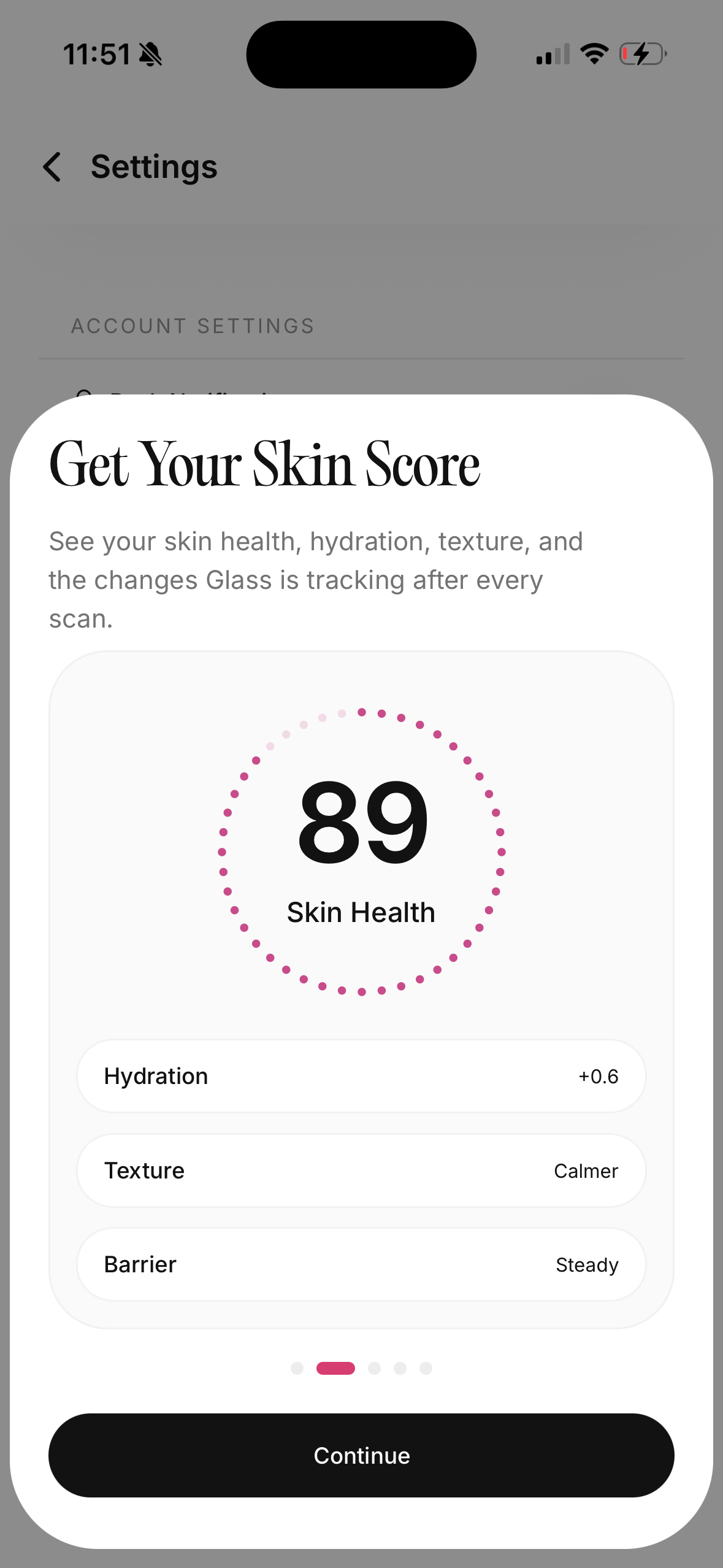
Use Glass to log the start date, the application frequency, the sunscreen you used with it, and weekly photos in the same lighting. Also log irritation. A product can make spots look better and still be wrong if it keeps the skin uncomfortable. If your bigger issue is remembering the routine, start with the best skincare routine tracker guide before adding another treatment.
The cleanest test is four to eight weeks with no other new actives.
Track:
- morning use
- night use
- missed days
- sunscreen consistency
- new breakouts
- visible irritation
- tone photos
- product pilling
That turns the purchase into evidence instead of hope.
Bottom line
Dr. Idriss Major Fade Hyper Serum is worth considering in May 2026 if discoloration is your main concern, your sunscreen habit is solid, and you want one focused brightening treatment instead of a crowded stack of overlapping products.
I would buy it for post-acne marks, dull uneven tone, or sun-spot support when the rest of the routine is calm.
I would not buy it as a first move for irritated skin, untreated active acne, melasma that needs medical care, or a routine that already has too many actives competing for attention.
The product has a clear job. Give it a clear test.
Useful references: Dr. Idriss Major Fade Hyper Serum, Sephora product page, INCI Decoder ingredient breakdown, and SkinSort ingredient notes.