
Dark-spot routines usually fail in the morning.
Not because the ingredients are useless. Not because every vitamin C product is wrong. They fail because the routine gets too heavy under sunscreen, starts pilling, feels greasy by noon, or makes people skip SPF because the face already feels like it has too much on it.
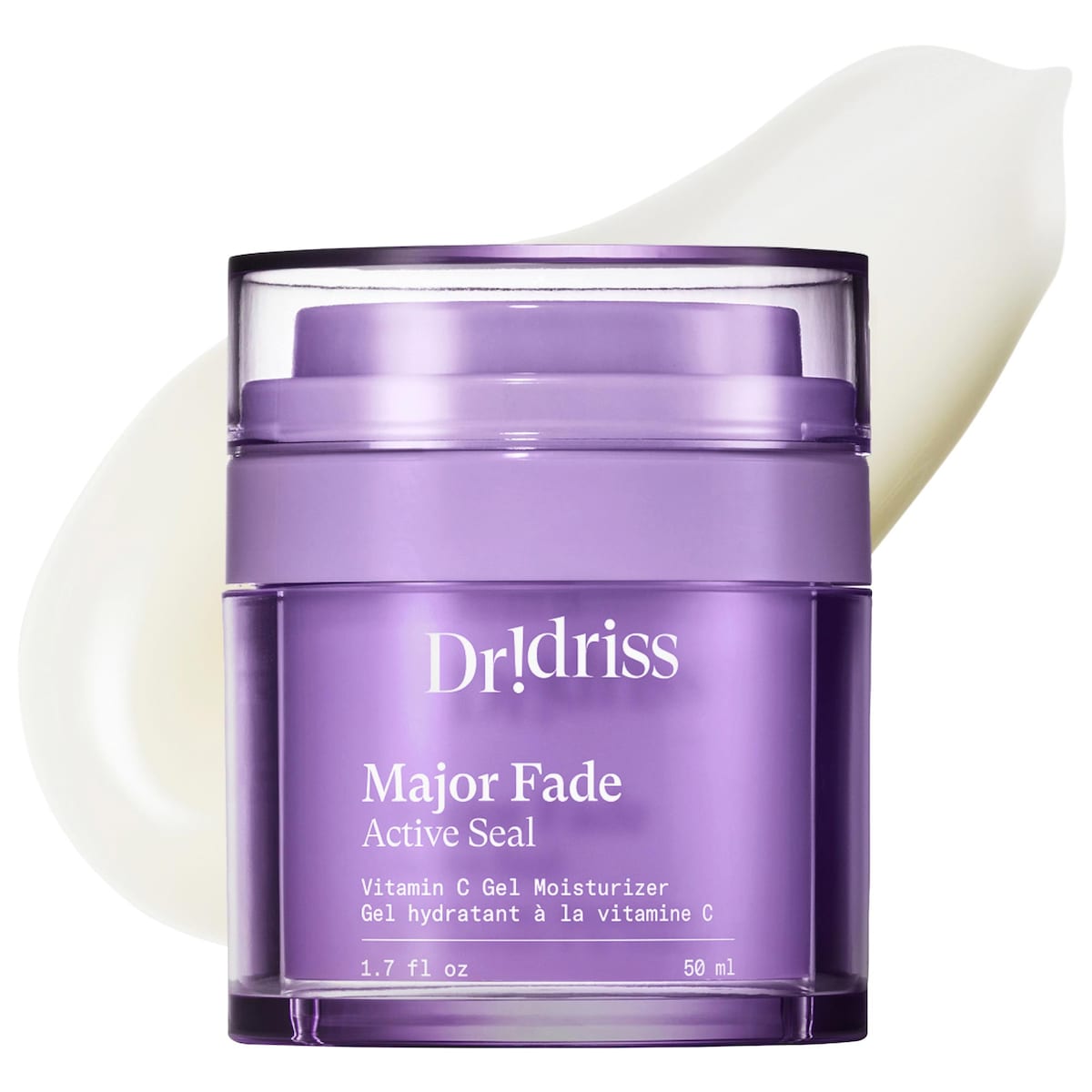
That is why Dr. Idriss Major Fade Active Seal is a useful product to judge through the sunscreen layer. It is a brightening gel moisturizer made to go after serum and before SPF. The formula has tetrahexyldecyl ascorbate, 4-butylresorcinol, glutathione, hexapeptide-2, ceramides, glycerin, squalane, and barrier-support ingredients.
In plain English, it is trying to be the moisturizer that helps a dark-spot routine feel wearable.
Quick Answer
I would use Dr. Idriss Major Fade Active Seal under SPF if my main problem were post-breakout marks, dull uneven tone, or dark spots, and I wanted the moisturizer step to support that goal without becoming heavy.
The routine I would start with is simple:
- Gentle cleanse or rinse
- Brightening serum if already tolerated
- Major Fade Active Seal
- Broad-spectrum sunscreen
I would not add it to a crowded morning routine with toner, essence, vitamin C serum, exfoliating serum, primer, facial oil, moisturizer, and SPF all at once. That is how a good product becomes part of a bad stack.
Why The SPF Layer Matters
For dark spots, sunscreen is the anchor.
If you are using brightening products in the morning but not protecting the skin afterward, the routine is incomplete. Post-breakout marks, sun spots, uneven tone, and melasma-prone patches all become harder to manage when daily light exposure keeps pushing the skin in the wrong direction.
That means the best dark-spot moisturizer is not just the one with the most interesting ingredient list. It is the one you can actually wear under sunscreen every day.
That is where Major Fade Active Seal has a practical reason to exist. It is not a thick night cream. It is a lightweight gel moisturizer, and that format is better suited to a morning routine.
The Skin Pattern This Fits
I would consider this product if your skin pattern sounds like this:
- Breakouts leave marks that last longer than the breakout itself
- Skin looks dull even when texture is not terrible
- You want a brighter-looking routine but hate sticky serums
- Sunscreen feels drying without moisturizer underneath
- Rich moisturizers make SPF feel greasy
- You want the moisturizer step to match the dark-spot goal
That is a very real routine problem. A lot of people already own a brightening serum, but the moisturizer step does nothing for the same goal. Or the moisturizer is so rich that sunscreen becomes unpleasant. Active Seal is trying to sit between those problems.
Morning Routine Setup
I would build the morning routine around the fewest layers that still feel complete.
If your skin is oily, start with a rinse or a gentle cleanse. If your skin is dry, use a gentle cleanser only if you need it. The point is to avoid starting the morning with tight skin, because tight skin often leads to over-layering.
Then choose one brightening step. If you use Dr. Idriss Major Fade Hyper Serum, that goes before Active Seal. If you use another serum, keep it thin and predictable.
Then apply Active Seal. Give it time to settle. Finish with sunscreen.
That is enough for most mornings.
The Amount I Would Use
The product directions say one to two pumps per application.
I would start with one pump in the morning. If the skin still feels dry under SPF, increase to two. If the face gets shiny fast, keep one pump and apply more only to the cheeks or areas that get tight.
This matters because dark-spot routines often get judged unfairly. A product can be fine, but the amount can be wrong. Too much moisturizer under SPF can pill or slide. Too little can make sunscreen cling to texture.
Use the amount that makes sunscreen easier, not the amount that makes the skincare step feel dramatic.
Post-Breakout Marks
Post-breakout marks are one of the clearest reasons to consider this product.
The breakout ends, but the mark stays. Then the face looks uneven even when the acne is calmer. That is the exact moment people start adding too many brightening products at once.
I would use Major Fade Active Seal as the daily moisturizer step while keeping the acne routine steady. If you are still breaking out, do not ignore that. New marks keep forming when new breakouts keep happening. The dark-spot routine has to work with the acne routine, not distract from it.
A clean morning plan:
- Gentle cleanse
- One acne-safe or brightening serum if already tolerated
- Major Fade Active Seal
- Sunscreen
At night, keep the acne treatment schedule separate and avoid stacking every active every night.
Dullness And Uneven Tone
Dullness is a softer use case.
If your main issue is that the face looks flat, tired, or uneven, Active Seal may be easier to justify as a daily moisturizer than as a hard-core treatment. It gives the routine a brightening direction without forcing another separate serum.
The vitamin C ester, 4-butylresorcinol, glutathione, and peptide angle make sense here, but I would keep expectations grounded. A moisturizer can support a brighter-looking routine. It should not be expected to erase every spot or replace sunscreen.
For dullness, consistency matters more than intensity. A product you can wear every morning under SPF will usually beat a stronger product you use twice and abandon.
Fine Lines And Texture
The product also speaks to fine lines and dullness, which makes sense for a peptide gel moisturizer.
I would not buy it mainly as a wrinkle cream. I would buy it if the same routine needs tone support, hydration, a smoother feel, and a light moisturizer under SPF. That is a more realistic lane.
The formula includes hexapeptide-2 and barrier-support ingredients, so the product has more going on than a basic gel. Still, if fine lines are your primary concern, a retinoid or dedicated peptide routine may be a clearer treatment path.
Use this when tone and morning wearability are the bigger issues.
Oily And Combination Skin
Oily and combination skin are where the gel format matters most.
Rich moisturizers can make SPF feel suffocating. Skipping moisturizer can make the skin feel tight, which can make the finish look worse. A lightweight gel moisturizer gives you a middle route.
For combination skin, I would apply one pump across the face, then add a tiny second pass to dry cheeks only. Do not make the T-zone wear what the cheeks need.
If your T-zone gets shiny by noon, reduce the amount before blaming the whole product. If your cheeks get tight, use more there and less through the center.
Dry Skin
Dry skin can still use a gel moisturizer, but I would be realistic.
Major Fade Active Seal may work well under a richer sunscreen or in warmer weather. At night, very dry skin may need another cream on top or a richer moisturizer on alternating nights.
That does not make Active Seal useless for dry skin. It means the product's best job may be brightening support in the morning, not deep comfort at night.
If your face is flaky, stinging, or rough from barrier damage, repair comfort first. Do not make a dark-spot moisturizer do the job of an emergency barrier cream.
Layering With Major Fade Hyper Serum
The Dr. Idriss pairing is obvious: Hyper Serum first, Active Seal second.
That gives the routine a treatment step and a moisturizer step from the same discoloration lane. It is clean, but I would still introduce slowly.
If you already use Hyper Serum and tolerate it, Active Seal is a logical moisturizer to test. If you have never used either, start with one product first. A reaction is easier to understand when only one new thing entered the routine.
The full morning stack:
- Cleanse or rinse
- Major Fade Hyper Serum
- Major Fade Active Seal
- Sunscreen
If that is too much under SPF, use Active Seal alone in the morning and Hyper Serum at night.
What I Would Not Layer It With
I would not layer Active Seal into a morning routine that already includes several brightening actives.
For example, I would be careful combining it with a strong vitamin C serum, exfoliating acid, brightening toner, and a tone-correcting moisturizer all before SPF. More is not automatically better for dark spots. Irritation can make uneven tone look worse and make the routine harder to keep.
I would also avoid using it as a cover-up for a harsh cleanser. If the face feels tight before moisturizer, fix the cleanser or cleansing frequency first.
Under Makeup
Under makeup, I would treat Active Seal like a skincare-primer hybrid, but not because it is a primer. Because the finish has to stay thin and smooth.
Use one pump. Let it settle. Apply sunscreen. Let sunscreen set. Then makeup.
If foundation separates, do not assume Active Seal is the problem immediately. Sunscreen, primer, foundation, and powder can all conflict. Change one layer at a time.
For post-breakout marks, I would rather have a slightly lighter skincare stack and better sunscreen compliance than a heavy stack that makes base makeup slide.
Night Routine
At night, Active Seal can still make sense, but the SPF problem disappears.
That means you can decide based on comfort. If your skin likes the gel and does not need more cushion, use it after serum. If your skin feels dry, add a richer moisturizer over it or use a richer cream instead.
If you use retinoids, I would not automatically stack retinoid, brightening serum, and Active Seal every night. Start with fewer active nights and keep recovery nights simple.
Night routine option:
- Cleanser
- Retinoid or brightening serum on planned nights
- Active Seal
- Richer cream only where needed
How I Would Track It
I would track the routine for four to eight weeks.
Dark spots change slowly, and lighting is unreliable. If you take photos, use the same room, same angle, and same time of day. Also track sunscreen use, because that is what keeps the routine honest.
In Glass, I would log:
- Morning application
- SPF use
- Any pilling
- Any stinging
- New breakouts
- Weekly mark photos
That helps separate a product problem from an application problem.
When To Stop
Stop or pause if the skin burns, stings repeatedly, gets rough, or starts forming new irritation bumps. Do not push through because the product is supposed to help dark spots.
Also pause if the routine gets too complicated to repeat. A perfect-looking plan that you avoid every morning is not a good plan.
The working routine is the one you can do when you are tired.
Bottom Line
I would use Dr. Idriss Major Fade Active Seal under SPF if I wanted a brightening moisturizer that fits a dark-spot routine without making sunscreen feel impossible. The strongest use case is post-breakout marks, dullness, and uneven tone in a routine where SPF is already non-negotiable.
Use it after serum and before sunscreen. Keep the layers thin. Do not stack every brightening product you own. Give the routine enough time to show a pattern.
FAQ
Can I use Dr. Idriss Major Fade Active Seal under sunscreen?
Yes. Use it after serum and before sunscreen. Let it settle before applying SPF.
Is it enough for post-breakout marks?
It can support a post-breakout mark routine, but sunscreen and acne control still matter. If new breakouts keep forming, new marks will keep forming too.
Should I use it with Major Fade Hyper Serum?
You can. Use the serum first and Active Seal second. Introduce one at a time if your skin is sensitive.
What if it pills?
Use less product, wait longer before sunscreen, and simplify the layers underneath.