Rich hydration without a greasy feel is one of the hardest moisturizer promises to judge.
If a cream is too light, dry skin still feels tight. If it is too rich, sunscreen slides, makeup gets weird, and the face feels like it is wearing a layer. The sweet spot is narrow.
That is why I would look at DAMDAM Mochi Mochi Luminous Plumping & Hydrating Moisturizer as a routine-control product, not just a pretty dry-skin cream. It has the structure of a rich cream, but it is supposed to absorb quickly and avoid a greasy finish. The product details point to a pearl-sized amount, used daily morning and night, with shiso leaf and phytic acid as the highlighted ingredients.
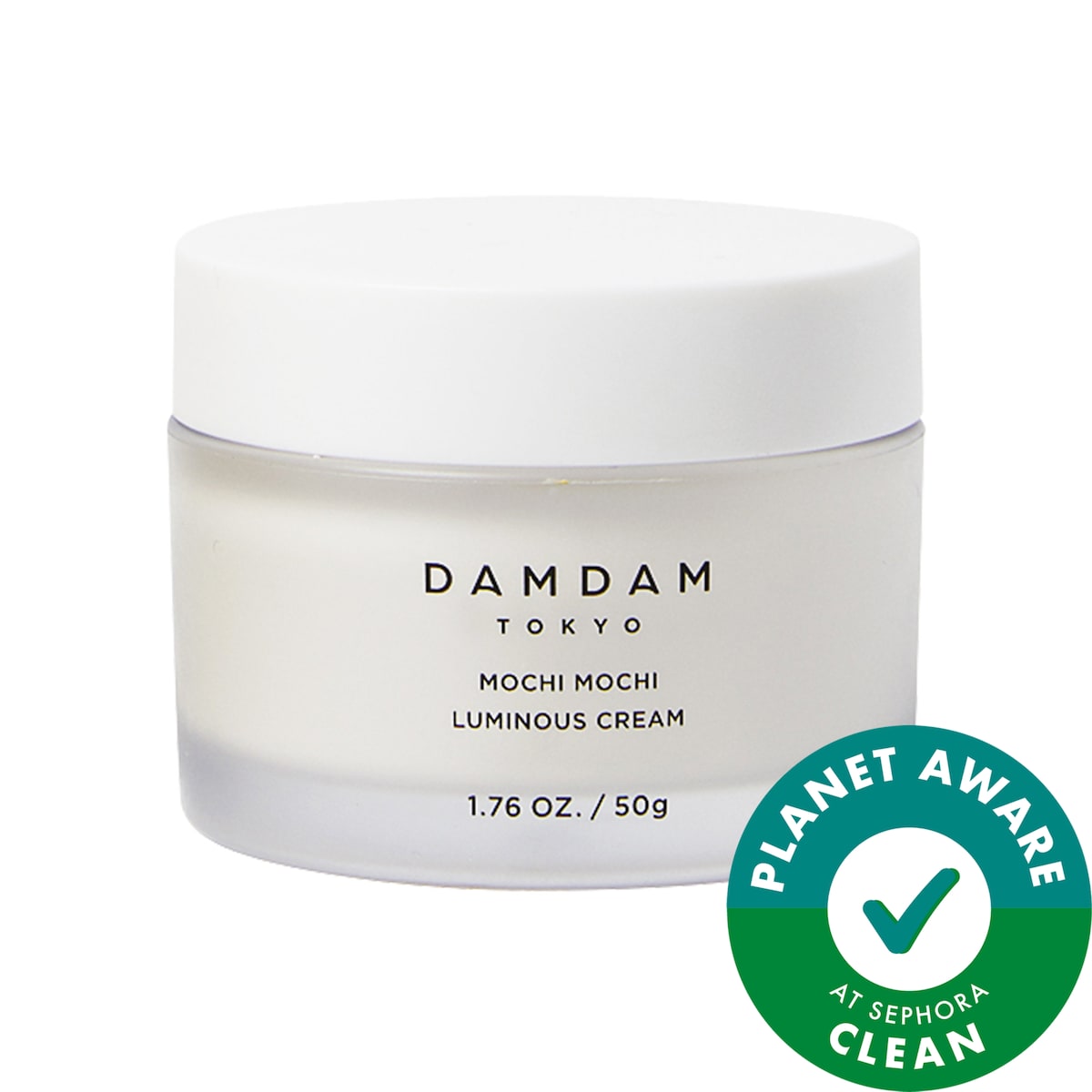
I would not judge this product by whether it feels rich on first touch. I would judge it by whether the face still feels comfortable after sunscreen, after makeup, and by the end of the day.
That is where rich moisturizers either earn their place or become expensive nightstand decor.
Quick Routine
This is the simple version:
- Use a gentle cleanser or rinse.
- Apply a hydrating serum only if your skin already likes it.
- Apply a pearl-sized amount of Mochi Mochi.
- Wait before sunscreen.
- Use less makeup than you think over the cushioned areas.
At night:
- Cleanse gently.
- Use one treatment or serum, not three.
- Apply Mochi Mochi.
- Add nothing else unless the skin is still dry.
The cream should be the comfort step. It should not be buried under and over so many products that you cannot tell what it is doing.
Start With Less
The pearl-sized direction is not just polite packaging language. It is the key to making a rich cream behave.
I would start with one pearl-sized amount for the whole face and neck. If your face is larger or very dry, add a second tiny amount only to the cheeks or mouth area. Do not start with a thick layer everywhere.
A cream with sunflower seed oil, shea butter, fatty alcohols, glycerin, and emollients can spread farther than expected. The product may feel more elegant when it is given room to melt into the skin instead of being forced into a thick film.
The best rich moisturizers do not need to announce themselves all day.
Apply By Zone
Dry skin is not always evenly dry.
Even people who call their skin dry often have areas that behave differently. Cheeks may be tight. The forehead may be fine. The nose may get shiny. The mouth area may flake. The jaw may clog.
So I would apply Mochi Mochi by zone:
- more on cheeks
- more around the mouth if that area gets tight
- less on the nose
- less on the center forehead
- a tiny extra dab on actual dry patches
This is the easiest way to get rich hydration without a greasy feel. You do not need the same amount everywhere just because the jar is one product.
Use It On Skin That Is Not Dripping Wet
Hydrating products often behave better on slightly damp skin, but damp does not mean wet.
If the skin is too wet, a rich cream can slide and feel like it is sitting on top. If the skin is bone dry, you may use more product than you need. The middle is best: cleanse, pat until the skin is just damp, then apply.
This helps glycerin, diglycerin, butylene glycol, and other water-friendly ingredients do their job while the richer pieces soften the surface.
It also helps the cream spread thinner.
Morning Use Under Sunscreen
Morning is where I would be strict.
Use less cream than you would at night. Let it settle. Then apply sunscreen without rubbing aggressively. If sunscreen pills, do not assume the cream is bad. First reduce the amount of cream and remove extra serum layers.
The best sunscreen pairings are likely:
- mineral sunscreens that need more comfort underneath
- matte sunscreens that make dry skin look flat
- lightweight sunscreens that do not add much moisture
- skin tints with a natural finish
The weaker pairings are:
- very dewy sunscreens
- thick creamy sunscreens used generously
- oily primers
- heavy foundations
If sunscreen already gives you enough glow, Mochi Mochi should be thinner. If sunscreen makes your skin look tight, Mochi Mochi can carry more of the prep.
Makeup Fit
For makeup, I would use Mochi Mochi to solve dry texture, not to chase extra shine.
The cream can help makeup look smoother if the main issue is dry patches. It may not help if the main issue is oil breakthrough or product separation from too many layers.
I would pair it with:
- skin tint
- satin foundation
- concealer only where needed
- light powder on the T-zone
- cream blush used sparingly
I would be careful with:
- facial oil under foundation
- gripping primer over a rich cream
- matte full-coverage foundation
- too much powder over dry cheeks
The most polished dry-skin makeup is usually not dewy everywhere. It is moisturized where needed and controlled where needed.
Night Use For Dry Skin
At night, Mochi Mochi can be more relaxed.
If your skin feels tight after cleansing, use it as the final step after one familiar serum. I would not mix it with three new products at once. The formula already has a gentle smoothing angle from phytic acid and willow bark, so I would be careful on the same nights as strong exfoliants.
For a dry-skin night routine, I would do:
- Gentle cleanser.
- Hydrating serum or calming toner.
- Mochi Mochi.
That is enough for many nights.
If you use retinoids, test the cream on off nights first. If everything feels comfortable, then decide whether it belongs on retinoid nights too. If anything stings, simplify.
What To Watch In The First Week
A rich cream should be judged over repeated use.
The first application can feel beautiful and still be wrong by day four. Or it can feel slightly richer than expected and become perfect once you learn the right amount.
For the first week, I would watch:
- whether cheeks stay comfortable until lunch
- whether the T-zone gets shiny faster
- whether sunscreen pills
- whether makeup separates
- whether small bumps appear
- whether dry patches look smoother
- whether you use less product over time
The last one is a good sign. If you keep needing more and more, the cream may not be giving the kind of hydration your skin wants. If a small amount starts doing enough, the texture is probably working.
The Ingredient Balance
Mochi Mochi has a rich base without becoming a huge ingredient maze.
The main comfort pieces are glycerin, sunflower seed oil, shea butter, butylene glycol, propanediol dicaprylate/caprate, fatty alcohols, and diglycerin. The highlighted identity ingredients are shiso leaf and phytic acid. There is also willow bark extract and tocopherol.
That balance makes sense for dry skin that wants softness and a smoother look.
I would not treat phytic acid like a strong exfoliating step here. It is part of the cream's smoothing personality. Still, if your routine already includes acids, retinoids, or scrubs, I would not introduce Mochi Mochi on the same night as everything else.
Dry skin can be irritated by excess ambition.
How It Fits A Minimal Routine
This cream is most useful in a minimal routine.
Cleanser, moisturizer, sunscreen. Maybe one serum. That is where you can actually tell whether the moisturizer is doing its job.
If your routine already has essence, toner, serum, oil, cream, balm, sunscreen, primer, and foundation, a rich cream may feel worse than it really is. The stack is the problem.
For a more disciplined routine structure, how to build a skincare routine you will actually follow is the better companion than adding another layer.
How It Fits Glass Skin
Mochi Mochi can fit a glass-skin routine for dry skin, but only if you define glass skin correctly.
Glass skin is not just shine. It is smoothness, hydration, and an even-looking surface. A rich cream can help with that if dryness is the issue. It can hurt if it makes the face look coated.
I would use Mochi Mochi as the final cream in a dry-skin glass routine, then keep the rest simple. Hydrating serum, cream, SPF. No extra oil unless the skin truly needs it.
If you want the full dry-skin framework, glass skin routine for dry skin is the smarter next step.
When To Use A Lighter Cream Instead
Use a lighter cream if your skin feels moisturized but looks too shiny.
Use a lighter cream if the face gets small bumps from richer textures.
Use a lighter cream if sunscreen and makeup keep sliding even after you reduce the amount.
Use a lighter cream if you live in a hot, humid climate and dry skin is only an occasional issue.
Mochi Mochi is not supposed to win every routine. It is supposed to solve the specific problem of dry skin wanting a richer cream that still feels wearable.
When To Use A Heavier Balm Instead
Use a heavier balm if your skin is cracked, peeling, windburned, or severely dry.
Mochi Mochi is rich, but it is not a sealed recovery ointment. If the skin needs a protective topcoat, a richer balm or petrolatum-style layer may be more appropriate on small areas.
The important thing is not to confuse daily dry skin with damaged skin. Daily dry skin needs moisture that can be repeated. Damaged skin often needs fewer products and a more protective approach.
The Mistake I Would Avoid
The mistake is using Mochi Mochi like a mask.
More cream does not always mean more hydration. Sometimes it means more residue, more pilling, more shine, and more frustration. The product is built around a pearl-sized amount. I would respect that before deciding it is too heavy or too light.
I would also avoid adding it to a routine that is already over-exfoliating. A rich cream can make irritation feel hidden for a day, but the skin usually catches up.
Bottom Line
DAMDAM Mochi Mochi is best used as a controlled rich cream: small amount, dry zones first, enough wait time before sunscreen, and a simple routine around it.
I would use it for dry skin that wants comfort without a greasy finish. I would not use it as the first answer for oily skin, heavy makeup separation, or a damaged barrier that needs a more stripped-down reset.
The shortest routine rule: let Mochi Mochi be the rich step, then stop adding more richness around it.
FAQ
How much DAMDAM Mochi Mochi should I use?
Start with a pearl-sized amount for the face and neck. Add a tiny bit more only to dry zones if needed.
Can I use it under sunscreen?
Yes. Use less than you would at night and let it settle before applying SPF.
Can I use it with makeup?
Yes, especially if dry patches make makeup catch. Keep layers thin and avoid adding too many creamy products on top.
Is it better morning or night?
Dry skin may like it both ways. I would test it at night first, then try a smaller amount in the morning.