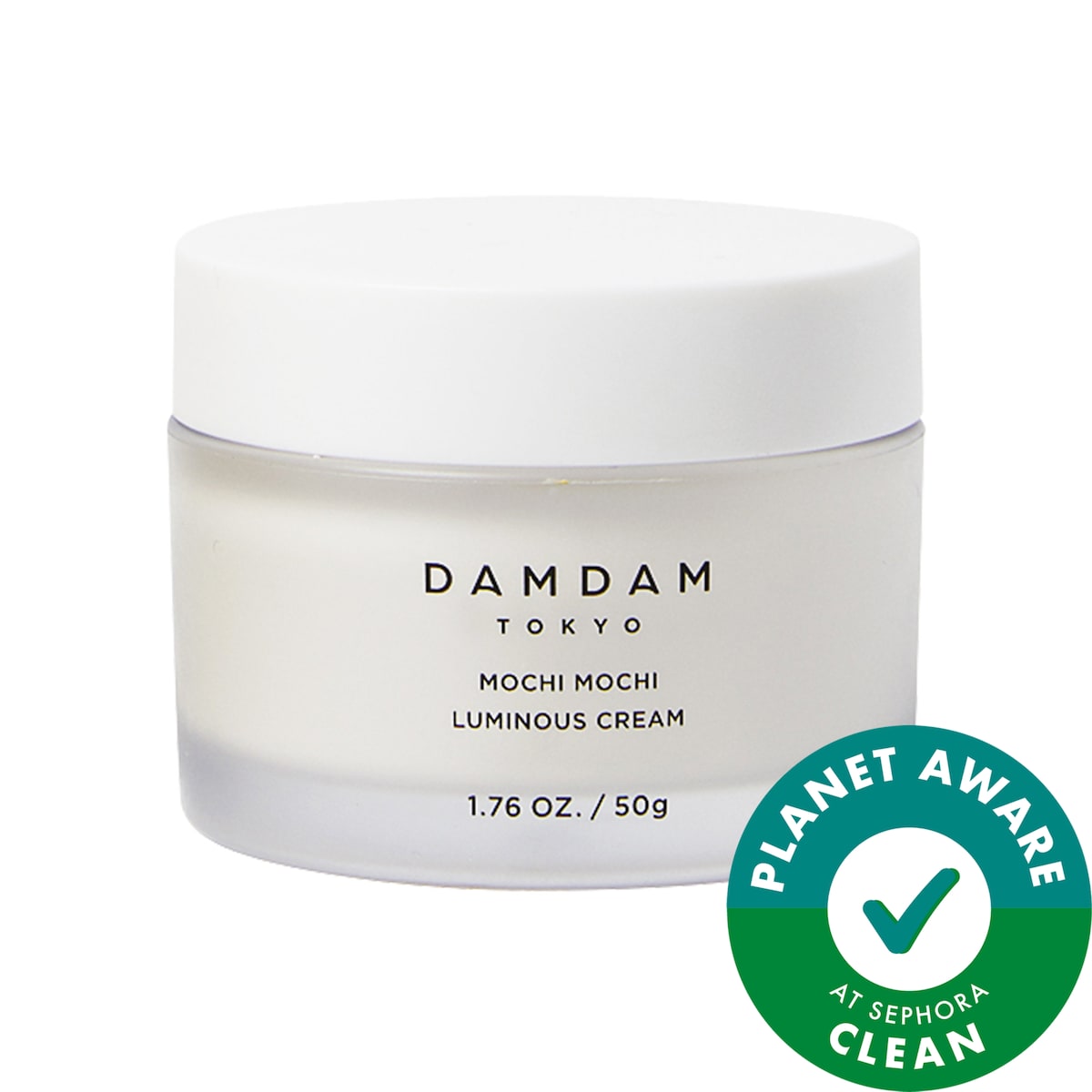
DAMDAM Mochi Mochi sounds like the kind of moisturizer that could go wrong quickly.
Rich cream. Plumping. Luminous. Hydrating. Mochi-soft skin. It is easy for that category to become cute packaging wrapped around a heavy jar that only works for a small slice of dry skin.
But DAMDAM Mochi Mochi Luminous Plumping & Hydrating Moisturizer has a more practical pitch than the name suggests. It is a $48 rich cream for normal and dry skin, with a strong rating signal in the Glass product file: about 4.63 from roughly 516 reviews. The product details center on Japanese shiso leaf, phytic acid, glycerin, sunflower seed oil, shea butter, and a pearl-sized amount used morning or night.
The real question is not whether this is moisturizing. It is clearly built to moisturize.
The real question is whether it gives dry skin enough comfort without feeling greasy, sticky, or too dense for a daily routine.
That is the standard I would use.
Quick Verdict
I would consider DAMDAM Mochi Mochi if my skin is normal-to-dry or dry, my lighter moisturizers keep disappearing, and I want a richer cream that still claims to absorb quickly.
I would not make it my first pick for very oily skin, congestion-prone skin that dislikes shea butter, or anyone who wants a barely-there gel finish. This is not pretending to be a water cream. It is a rich cream with a weightless-positioned finish.
The product has a clean job: soften dry skin, make the surface look plumper, and help the face feel nurtured without a greasy finish. If that is the exact routine problem, it is worth a closer look. If your problem is shine, clogged-feeling layers, or heat-and-humidity slip, I would look elsewhere.
What This Cream Is Trying To Be
Mochi Mochi is trying to be a comfort cream that does not punish you for wanting comfort.
That is a real niche. A lot of dry-skin moisturizers solve tightness by leaving a thick layer. That can feel amazing at night and miserable under sunscreen. Other creams solve daytime wear by going thin, then dry skin feels tight again by noon.
This product sits between those two frustrations.
It is not a barrier balm. It is not a gel. It is a richer daily moisturizer for people who want cushion, softness, and a hydrated finish without looking like they applied a sleep mask in the morning.
That is why I would judge it by repeatability. Would I actually use this every morning and night, or would I save it for occasional dry days because the feel is too much?
The best moisturizer is usually the one your skin and your habits both tolerate.
The Ingredient Read
The formula starts with water, glycerin, sunflower seed oil, shea butter, butylene glycol, propanediol dicaprylate/caprate, pentylene glycol, behenyl alcohol, coco-caprylate/caprate, glyceryl stearate, cetearyl alcohol, diglycerin, and stearyl alcohol.
That opening explains the rich cream label. There are humectants for hydration, oils and butters for softness, fatty alcohols for cushion, and emollients that should help the cream spread smoothly.
Shiso leaf is the identity ingredient. In this formula, I would treat it as an antioxidant and soothing-positioned plant ingredient, not as a reason to expect a dramatic transformation. Phytic acid gives the product a gentle smoothing and tone-refining angle, but this is still a moisturizer first.
There is also willow bark extract, tocopherol, sodium citrate, and a relatively short ingredient list compared with many prestige creams. That shorter map is part of the appeal. It reads more like a purposeful daily cream than a jar trying to become a full routine.
What I Like About The Formula Map
I like that the product does not rely on one flashy ingredient to justify itself.
The base does the work. Glycerin helps bind water. Sunflower seed oil and shea butter support softness. Fatty alcohols and emulsifiers give cushion. Shiso and tocopherol add antioxidant support. Phytic acid gives a quiet smoothing angle.
That is a sensible dry-skin moisturizer structure.
The part I would keep grounded is the plumping language. Moisturizers can make skin look plumper by improving surface hydration. Fine lines can look softer when the skin is well moisturized. That is different from expecting a cream to reverse structural aging.
I would buy it for comfort, softness, and a healthier-looking surface. I would not buy it as a firming treatment.
Who I Would Buy It For
I would buy Mochi Mochi for someone whose dry skin keeps rejecting both extremes.
They try gel creams and the face feels good for an hour, then tight. They try rich creams and the face feels comfortable, but too coated. They want the calm of a cream without the old-school greasy finish.
That person is the clean fit.
I would consider it if:
- your cheeks feel dry by midday
- your skin looks dull under sunscreen
- foundation catches on dry texture
- you want a richer cream but hate balm-like finishes
- your routine is already simple and needs a better moisturizer
- fragrance-free and alcohol-free positioning matter to you
- you like a cream step that feels intentional, not invisible
The phrase "rich hydration without the grease" is exactly the line I would test. If that line describes what you are missing, the product has a reason to be on the list.
Who Should Skip It
I would skip it if your skin is oily and already comfortable with lightweight moisturizers.
There is no reason to buy a rich cream just because it sounds pretty. Oily skin can be dehydrated, but it does not always need shea butter and sunflower seed oil in the main morning cream. If you want a lighter DAMDAM option, the comparison with DAMDAM Ginkgo Water Cream is more useful.
I would also be cautious if rich creams tend to give you small bumps. This does not mean the formula is bad. It means your skin may not like richer emollient structures.
And if your skin is actively stinging, peeling, or burning, I would not start with a new cream that includes a texture-refining acid. I would first simplify the routine with skin barrier repair routine, then test new products when the face is calmer.
Texture Expectations
The word "rich" matters, but so does the product's weightless-positioned finish.
I would expect a soft cream that has more body than a gel, but not the sealed-in thickness of a balm. The pearl-sized usage note is important. This is not the kind of product I would scoop heavily on day one.
Start with a pearl-size amount for the face and neck. If you are dry only on the cheeks, use most of it there and less on the T-zone. If the skin still feels tight after ten minutes, add a small second layer only where needed.
The point is control. A rich cream can feel elegant when used precisely and heavy when used emotionally.
Morning Routine Fit
For morning, I would keep the routine stripped back:
- Gentle cleanse or rinse.
- Optional hydrating serum if it already layers well.
- DAMDAM Mochi Mochi.
- Sunscreen.
- Makeup if needed.
The cream already brings oils, butter, fatty alcohols, glycerin, and emollients. I would not stack a facial oil underneath it in the morning. I would not add a heavy primer on top before seeing how it behaves with sunscreen.
This is especially true if makeup matters. Too many creamy layers can make foundation slide or collect around dry texture instead of smoothing it.
If order is the bigger problem, morning and night skincare routine order is the better page to pair with this product.
Night Routine Fit
At night, the product has a clearer lane.
Dry skin usually tolerates richer textures better at night because there is no sunscreen, heat, base makeup, or powder involved. I would use Mochi Mochi after a gentle cleanse and one serum, then stop.
If I were using a retinoid, I would be cautious at first because the cream includes phytic acid. That does not mean it cannot sit in the same overall routine, but I would not introduce everything at once. Use the cream on non-retinoid nights first, then decide whether the pairing feels comfortable.
If the goal is a full dry-skin evening setup, night skincare routine for dry skin gives the broader structure.
Makeup And SPF Fit
Mochi Mochi could be useful under makeup for dry skin, but the amount is the make-or-break detail.
Use too much and the face may feel too creamy. Use the right amount and the richer base can help dry patches look smoother. I would let the cream settle for a few minutes before sunscreen, then let sunscreen settle before foundation.
The best makeup fit is likely:
- dry skin using skin tint
- normal-dry skin using a satin foundation
- concealer-only routines with dry areas around the mouth
- mineral sunscreen that needs a little more comfort underneath
The weaker fit is:
- oily skin under long-wear foundation
- humid weather with dewy sunscreen
- heavy primer plus heavy base
- a routine that already uses facial oil in the morning
If the face looks shiny but still feels dry, I would powder only the center instead of trying to mattify the whole face.
How I Would Test It
I would test it for seven days without changing the rest of the routine.
Use it at night for the first two days. Then try it in the morning under sunscreen. Then use it only in the slot where it behaves best.
Track:
- morning tightness
- dry patches under SPF
- comfort by lunch
- shine around the nose
- small bumps around cheeks or chin
- how much product you actually need
- whether makeup looks smoother or heavier
If you use Glass, this is exactly the kind of cream I would log with the routine tracker. Rich creams can feel amazing at first and reveal their real fit after several repeated uses.
The Mistake I Would Avoid
The mistake is buying this for glow when the routine actually needs restraint.
If your cleanser is stripping, if you exfoliate too often, if sunscreen is drying, or if foundation is too matte, one cream may help but it will not fix the whole system. Mochi Mochi should make a good routine feel more comfortable. It should not be forced to compensate for a routine that keeps creating dryness.
I would also avoid using more product just because the jar feels luxurious. The pearl-sized direction is a clue. A small amount should be enough to tell you whether the cream is right.
Bottom Line
DAMDAM Mochi Mochi Luminous Plumping & Hydrating Moisturizer is worth considering if you want a $48 rich cream for normal-to-dry or dry skin that needs comfort without a greasy finish.
I would buy it for dry skin that wants a softer, plumper-looking surface and a more substantial cream than a gel. I would skip it for very oily skin, clog-prone skin that dislikes rich creams, or any routine currently irritated enough that fewer variables would be smarter.
The shortest rule: choose Mochi Mochi when your skin wants rich hydration, but your routine cannot tolerate a heavy-feeling cream.
FAQ
Is DAMDAM Mochi Mochi good for dry skin?
Yes. Dry skin is the clearest fit because the formula is a rich cream with glycerin, sunflower seed oil, shea butter, fatty alcohols, and emollients.
Is it greasy?
It is positioned as rich hydration without a greasy finish. I would still use a pearl-sized amount first, because any rich cream can feel heavy if overapplied.
Can I use it morning and night?
Yes, the usage direction supports morning and night use. I would test it at night first, then try it under sunscreen.
Is it good for oily skin?
It would not be my first pick for oily skin. DAMDAM Ginkgo Water Cream is the more obvious DAMDAM lane for oily or combination skin.