Dry skin makes masks tempting.
I get it.
When your face feels tight, dull, papery, or weirdly shiny from dehydration, a hydrating face mask sounds like the fastest way back to normal. The problem is that Sephora has too many of them. Sheet masks, sleeping masks, collagen masks, cream masks, gel masks, barrier masks, five-minute masks, $6 masks, $220 masks. They all promise comfort, but they do not all solve the same problem.
That is how I would shop the category in May 2026: not by chasing the prettiest mask, but by deciding what kind of dryness I am actually trying to fix.
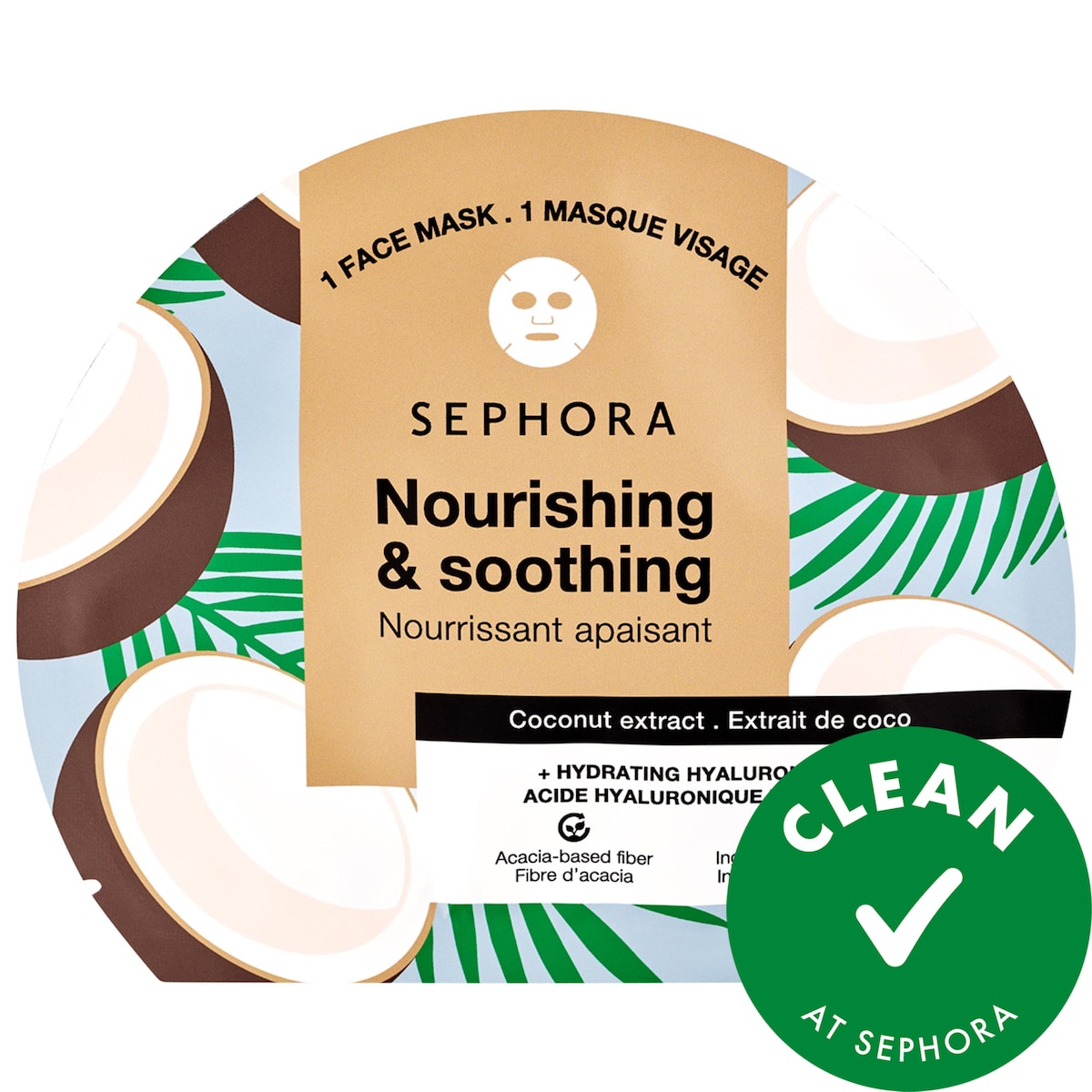
If I want a quick, low-commitment hydration hit, I would start with Sephora Collection Hydrating Hyaluronic Acid Face Masks. If my skin feels dry every night, I would rather buy an overnight mask like Kiehl's Ultra Facial Overnight Hydrating Face Mask, Origins Drink Up Intensive Overnight Hydrating Face Mask, or Laneige Water Sleeping Mask. If my barrier feels irritated, I would look for squalane, ceramides, panthenol, colloidal oatmeal, centella, or beta-glucan before I cared about glow.
The short answer
The best hydrating face mask at Sephora depends on whether your skin needs a quick sheet-mask moment, a richer overnight layer, or actual barrier support.
I would think about it this way:
| If your skin feels... | I would look for... | Product lane |
|---|---|---|
| Tight after cleansing | Hyaluronic acid, glycerin, polyglutamic acid | Sheet mask or gel sleeping mask |
| Dry every morning | Squalane, avocado butter, ceramides | Overnight mask |
| Red or reactive | Colloidal oatmeal, panthenol, beta-glucan, centella | Soothing barrier mask |
| Dull and dry | Niacinamide, vitamin C derivatives, humectants | Glow mask or night cream-mask hybrid |
| Oily but dehydrated | Lightweight gel, sheet mask, non-heavy humectants | Short-contact or gel mask |
| Flaky and uncomfortable | Rich cream, balm-mask, dimethicone, squalane | Barrier balm or overnight cream mask |
The mistake is buying a hydrating mask when your routine is the real problem.
If your cleanser leaves your face squeaky, your toner stings, your retinoid is too frequent, and your moisturizer is too light, a mask can help for one night and still fail you by breakfast. A mask works best when it supports a routine that is already mostly sane.
The ones I would compare first
| Product | Image | Price signal | Best for | I would skip if... |
|---|---|---|---|---|
| Sephora Collection Hydrating Hyaluronic Acid Face Masks |  | $6 | Quick hydration before makeup or after a dry-skin day | You hate single-use sheet masks or need overnight repair |
| Kiehl's Ultra Facial Overnight Hydrating Face Mask | 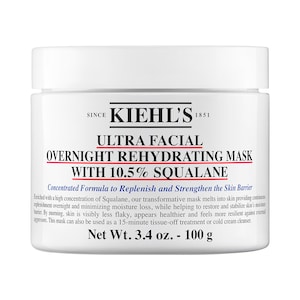 | $45 | Dry skin that wants fragrance-free overnight cushion | You dislike rich leave-on masks |
| Origins Drink Up Intensive Overnight Hydrating Face Mask | 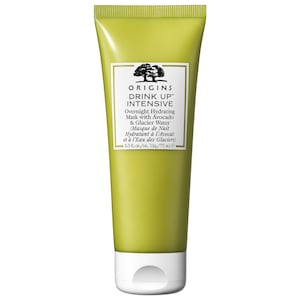 | $39 | Dry skin that wants a softer cream-mask feel | You are sensitive to scent or botanical-heavy formulas |
| Laneige Water Sleeping Mask | 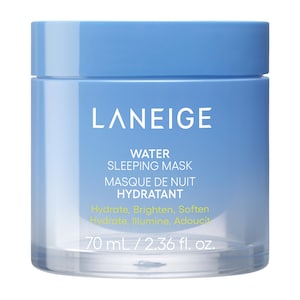 | $33 | Dehydrated skin that likes a cooling gel-cream | You need a heavy balm or fragrance-free simplicity |
| Caudalie VinoHydra Moisturizing Mask | 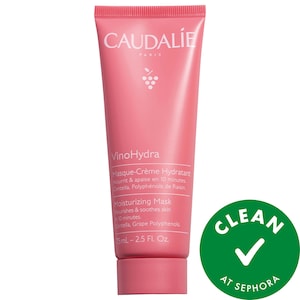 | $42 | Dryness plus redness or post-cleanse tightness | You want a totally plain, clinical-feeling mask |
| First Aid Beauty Ultra Repair Rescue Skin Barrier Balm + Mask | 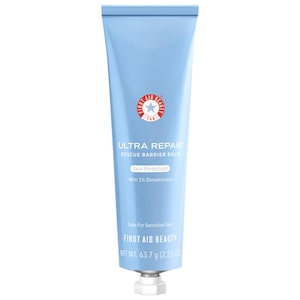 | $36 | Chapped, rough, compromised-feeling skin | You want a light gel finish |
| Peace Out Overnight Barrier Hydrating Bio-Collagen Recovery Mask | 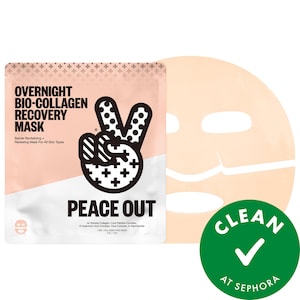 | $9 | A one-night recovery sheet mask with redness support | You want a tube you can use many nights |
That table is the real split.
Some masks are hydration snacks. Some are night moisturizers with a richer name. Some are barrier products. If you buy the wrong type, the product can be good and still disappoint you.
Sheet masks are best for quick comfort, not rebuilding a routine
A sheet mask can feel dramatic because it forces serum to sit against the skin for ten or fifteen minutes. That occlusive contact can make skin look plumper fast. It is why a cheap hydrating sheet mask can sometimes make makeup sit better than an expensive cream you rushed through.
The Sephora Collection Hydrating Hyaluronic Acid Face Masks are the version I would consider when I want a low-commitment reset. Sephora lists them around $6 with a strong review count, and the simple appeal is obvious: hyaluronic acid, a second-skin sheet feel, and a quick hydration lane.
I would use this kind of mask:
- After cleansing, before moisturizer.
- Before makeup when skin looks flat.
- After travel, wind, or a dry office day.
- Before an event when I do not want to test a strong new active.
I would not use it as my main fix for chronic dryness.
Sheet masks are temporary by design. That does not make them useless. It means they are better as a moment than a foundation. If your skin needs lasting support, put the money toward a better moisturizer or an overnight mask you can repeat.
Overnight masks are better when dryness keeps coming back
If you wake up tight even after moisturizing, a leave-on mask makes more sense than another single sheet.
Overnight masks give the skin more time with the formula. They also tend to include richer moisturizing ingredients: squalane, avocado butter, ceramides, dimethicone, glycerin, hyaluronic acid, and barrier-supportive emollients. That matters when the problem is not just “my skin feels dry right now,” but “my skin loses comfort before morning.”
Kiehl's Ultra Facial Overnight Hydrating Face Mask is the one I would compare first for dry skin that wants a fragrance-free, barrier-focused overnight product. The headline ingredient is 10.5% squalane, and the product sits in a straightforward dry-skin lane.
Origins Drink Up Intensive Overnight Hydrating Face Mask is more of a classic comfort mask: avocado, hyaluronic acid, soft cream feel, and a long review history. I would look at it if my skin likes that richer botanical spa-mask personality.
Laneige Water Sleeping Mask is the lighter gel-cream version. I would pick it when my skin is dehydrated, dull, or combination-leaning and I want bounce without the weight of a balm.
The choice is not “which one is best.” The choice is which texture your skin will actually tolerate three nights in a row.
The ingredient lanes that actually matter
Hydrating masks love big claims, so I reduce them to ingredient jobs.
Humectants pull water into the upper layers of the skin. Glycerin, hyaluronic acid, polyglutamic acid, beta-glucan, and panthenol all sit in this general comfort lane. They are useful when skin feels tight, flat, or dehydrated.
Emollients make skin feel softer and more flexible. Squalane, avocado butter, oils, fatty alcohols, caprylic/capric triglyceride, and similar ingredients help with that cushioned feel.
Occlusives and protectants slow water loss. Dimethicone, petrolatum-like balm structures, waxes, richer butters, and heavier cream bases can help when skin gets chapped or rough.
Barrier-support ingredients are the ones I care about when skin is irritated. Ceramides, colloidal oatmeal, centella, allantoin, panthenol, beta-glucan, and squalane are more important to me than glow claims when the face feels angry.
That is why First Aid Beauty Ultra Repair Rescue Skin Barrier Balm + Mask stands out for a different reason than a sheet mask. It has dimethicone as an OTC skin protectant, plus colloidal oatmeal and glycerin. That is a very different job from “make me dewy before dinner.”
What I would buy for each skin situation
If my skin were dry but not irritated, I would start with Kiehl's or Origins.
Kiehl's is the cleaner, more barrier-leaning pick in my mind because the squalane story is direct and the fragrance-free positioning matters for a lot of dry skin. Origins is the cozier pick if your skin likes richer cream masks and you enjoy that softer spa-product feel.
If my skin were oily but dehydrated, I would not jump straight to the richest mask.
I would try a sheet mask, Laneige Water Sleeping Mask, or another lightweight gel format first. Dehydrated oily skin often needs water-binding comfort, not a heavy layer that makes the T-zone feel trapped.
If my skin were red, windburned, over-cleansed, or stressed from too many actives, I would stop chasing glow.
That is when I would look at First Aid Beauty, Caudalie VinoHydra, Dr. Jart+ soothing masks, Peace Out's barrier mask, or anything with a stronger calm-and-barrier story. I would also pause exfoliating acids, retinoids, and strong vitamin C until the skin stopped complaining.
If my skin were dull and dry before an event, I would use a sheet mask or Laneige.
That kind of mask is good when you want the skin to look fresher quickly. It will not rebuild your whole routine, but it can make foundation catch less around the nose, mouth, and cheeks.
How I would use a hydrating mask without wasting it
The biggest mistake is putting a hydrating mask on top of dirty skin, rinsing it off too aggressively, and then forgetting moisturizer.
I would do this:
- Cleanse gently.
- Apply the mask according to the product directions.
- Remove or rinse only if the product tells you to.
- Press in leftover serum if it is a sheet mask.
- Seal with moisturizer if your skin still feels like it needs it.
- Use sunscreen the next morning if the mask was overnight.
For a sheet mask, I usually think ten to twenty minutes is enough unless the package says otherwise. Leaving a sheet on until it dries can make skin feel worse, because the sheet stops acting like a serum blanket and starts feeling like a dry fabric on your face.
For an overnight mask, I would use less than instinct says. A thin, even layer is usually better than a thick coat that transfers to the pillow and makes the hairline greasy.
When a mask is the wrong move
Sometimes the better purchase is not a mask.
If every product burns, you may need to simplify the routine instead of adding another category. If you have a rash, swelling, cracking, oozing, or persistent irritation, that is a clinician question, not a Sephora-cart question. If acne is flaring, a rich overnight mask may make congestion worse even if the cheeks feel good.
I would also be careful with fragrant masks if my skin is already reactive. A scent can make a mask feel luxurious, but sensitive skin does not care about the experience if it wakes up red.
And I would not use a hydrating mask to justify over-exfoliating. If you need a mask every night because your actives keep drying you out, the active schedule is probably too aggressive.
My practical ranking
If I were buying one in May 2026, I would choose by role:
| Rank | Product | Why I would choose it |
|---|---|---|
| 1 | Kiehl's Ultra Facial Overnight Hydrating Face Mask | Best all-around dry-skin overnight lane because squalane and fragrance-free positioning make sense |
| 2 | Sephora Collection Hydrating Hyaluronic Acid Face Masks | Best low-commitment hydration hit when I want one mask, not a new routine step |
| 3 | Laneige Water Sleeping Mask | Best if I want a lighter gel overnight mask instead of a rich cream |
| 4 | First Aid Beauty Ultra Repair Rescue Balm + Mask | Best if my skin feels rough, chapped, or barrier-stressed |
| 5 | Caudalie VinoHydra Moisturizing Mask | Best if dryness and redness are both part of the problem |
That order would change if the skin situation changed.
For a makeup-prep night, Sephora Collection could jump to first. For winter dryness, Kiehl's or First Aid Beauty would win. For combination skin that gets dehydrated but clogs easily, Laneige would be safer than a richer cream mask.
How Glass fits into this
A mask is easier to judge when you know what else changed.
If I try a hydrating mask after a week of over-cleansing, I might blame the mask for not fixing a routine problem. If I try it on a stable routine and my skin feels better the next morning, that tells me more.
Glass is useful for that boring part: logging the product, the night I used it, and what my skin looked like the next day. The routine builder is especially helpful if you are testing masks around retinoids, exfoliating acids, or barrier-repair nights.
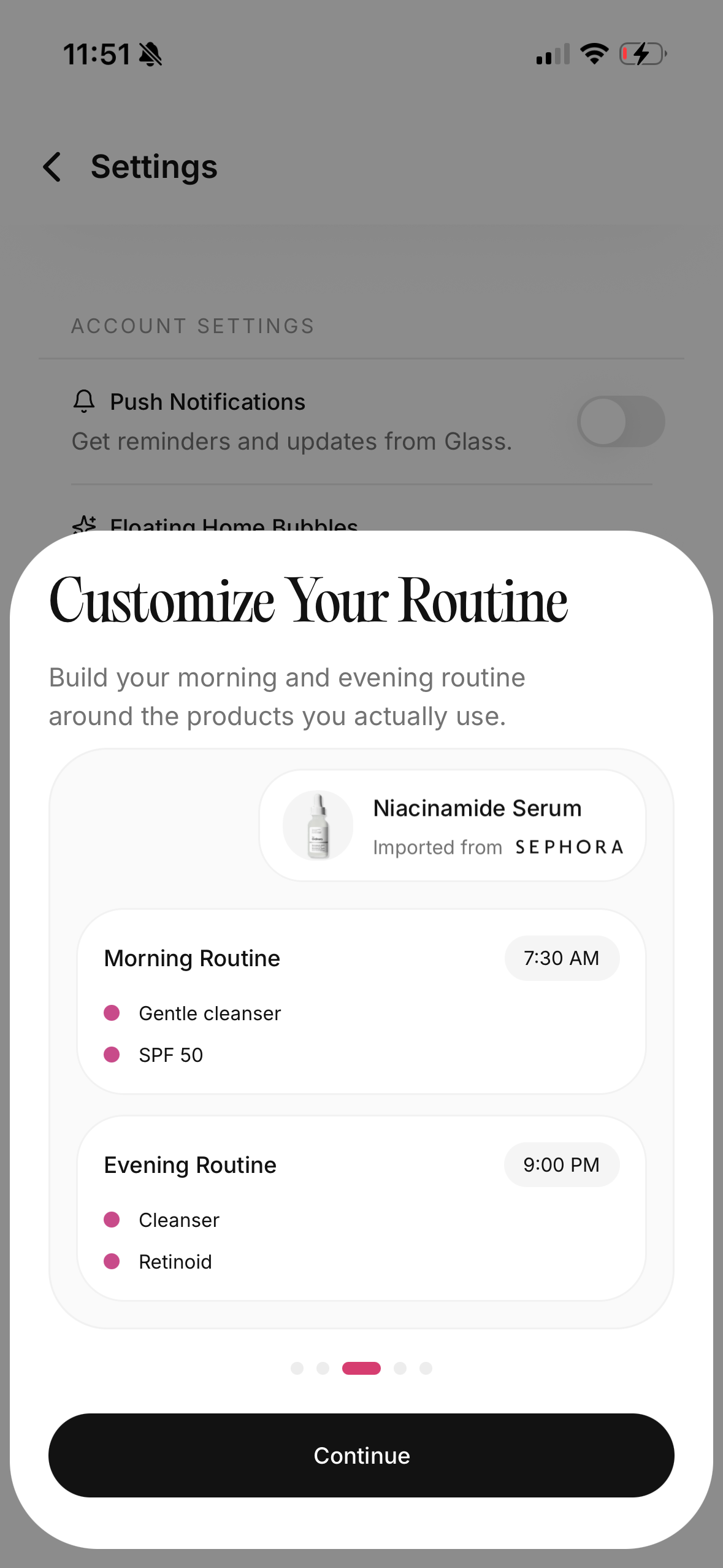
I would only test one new mask at a time.
That sounds slow, but it saves money. It also keeps you from blaming the wrong product when your skin gets clogged, stings, or suddenly looks better.
The bottom line
If you want one hydrating face mask from Sephora, decide the job first.
For a quick glow-and-comfort moment, I would buy Sephora Collection Hydrating Hyaluronic Acid Face Masks. For recurring dry skin, I would choose an overnight mask like Kiehl's, Origins, or Laneige. For chapped or barrier-stressed skin, I would look harder at First Aid Beauty, Caudalie, Dr. Jart+, or Peace Out.
The product does not have to be the most expensive one.
It has to match the kind of dry you are dealing with.
Useful references: Sephora sheet masks, Sephora overnight masks, American Academy of Dermatology dry skin relief, and Mayo Clinic dry skin care.
FAQ
Are hydrating face masks worth it?
They can be worth it if the mask has a clear role. A sheet mask is useful for quick comfort and makeup prep. An overnight mask is better for recurring dryness. A barrier mask is better when skin feels rough, red, or compromised.
Is a sheet mask or overnight mask better for dry skin?
An overnight mask is usually better for dry skin that keeps coming back, because it stays on longer and often has a richer base. A sheet mask is better for a quick hydration boost before makeup or after a dry-skin day.
Can I use a hydrating mask every night?
Some overnight masks can be used often, but I would start two or three nights a week and watch the skin. If the mask is rich and your pores clog easily, daily use may be too much.
Should I moisturize after a hydrating sheet mask?
Usually yes, especially if your skin is dry. A sheet mask gives hydration and slip, but moisturizer helps seal that comfort so the skin does not feel tight again an hour later.