Skin breakouts make people impatient.
I understand why. A breakout can change how you feel in photos, at work, on dates, at school, or while doing something as ordinary as washing your face. The temptation is to change everything immediately: new cleanser, new serum, new mask, new spot treatment, new pillowcase rule, new diet rule, new panic.
That usually creates noise. The better 2026 approach is to read the pattern first, then choose a treatment lane that fits.
Quick answer
Skin breakouts can be acne, but they can also be irritation, folliculitis, allergic reactions, ingrown hairs, heat rash, or product congestion. Start by identifying the pattern: location, bump type, itch, pain, timing, new products, friction, and whether marks or scars are forming.
For acne, evidence-backed options include benzoyl peroxide, salicylic acid, azelaic acid, topical retinoids, and prescription care depending on severity. For itchy, spreading, painful, infected-looking, sudden, or scarring breakouts, see a clinician or dermatologist.
Step one: name what you see
Do not start with products. Start with the lesion type.
Common breakout types:
- Blackheads.
- Whiteheads.
- Small closed bumps.
- Red papules.
- Pus-filled pustules.
- Deep nodules.
- Itchy identical bumps.
- Rash-like clusters.
- Flat red or brown marks after old pimples.
Different bumps need different decisions. A face full of closed comedones is not the same as three painful nodules on the jaw. Itchy bumps after sweating are not the same as blackheads on the nose.
Acne basics
Acne develops when oil and dead skin cells help clog follicles, and bacteria plus inflammation can create red or pus-filled lesions. It commonly appears on the face, forehead, chest, upper back, and shoulders because those areas have more oil glands.
That does not mean every breakout is caused by dirty skin. Over-washing can make acne worse by irritating the barrier. The goal is not to strip the skin; it is to keep pores, inflammation, and routine consistency under control.
The breakout pattern table
| Breakout pattern | Possible clue | First move |
|---|---|---|
| Forehead bumps after hair products | Pomade or product residue | Keep hair products off skin and cleanse hairline |
| Chin and jaw deep bumps | Inflammatory or hormonal pattern | Track timing and consider dermatology care |
| Itchy same-size bumps | Folliculitis or irritation | Pause heavy products and seek care if persistent |
| New rash after a serum | Irritant or allergic reaction | Stop product and simplify |
| Chest and back after workouts | Sweat, friction, body acne | Shower, change clothes, consider body acne wash |
| Red marks after pimples | Post-inflammatory erythema | Sunscreen, barrier care, acne prevention |
This is the kind of information that matters in a product log. Glass helps by keeping product changes, routine steps, and skin updates in one place instead of scattered across memory and camera roll.
A seven-day reset
When a breakout is confusing, use a reset before adding more.
For seven days:
- Use a gentle cleanser.
- Use a simple moisturizer.
- Use sunscreen.
- Stop scrubs and peel pads.
- Stop new serums.
- Avoid picking.
- Keep hair products off the breakout zone.
- Change sweaty clothing quickly.
If the breakout calms, irritation or product overload was likely part of the problem. If it continues unchanged, you have a clearer baseline for acne treatment.
Why resets work
A reset is not about proving that skincare is bad. It is about lowering background noise. If the skin is dealing with a new cleanser, a strong exfoliant, a retinoid, a vitamin C serum, a heavy sunscreen, and a clay mask, you cannot tell which part is helping or hurting.
Seven calm days can reveal whether the breakout is being fueled by irritation. It can also make later treatment more tolerable. Acne care works better when the barrier is not already raw.
Choosing treatment by breakout type
Match the active to the pattern.
For inflamed red pimples, benzoyl peroxide can help. It can bleach fabric and dry the skin, so start carefully.
For clogged pores and small bumps, salicylic acid can help. Dr. Dennis Gross 2% Salicylic Acid Acne Treatment Gel is an example, but more exfoliation is not always better.
For blemish-prone redness or post-breakout discoloration, azelaic acid can be useful. The Ordinary Azelaic Acid Suspension 10% is one option.
For recurring clogged pores, topical retinoids can help prevent new lesions over time. They require patience and moisturizer.
Do not skip moisturizer
Moisturizer is not only for dry skin. It helps acne treatments stay tolerable.
If you use benzoyl peroxide, salicylic acid, retinoids, or azelaic acid without barrier support, your face can become tight, shiny, flaky, and reactive. Then every product stings and the breakout looks redder.
A light moisturizer such as Skinfix Barrier Restoring Gel Cream can fit acne-prone routines better than a heavy balm, but tolerance is personal.
Breakouts that itch
Itch changes the picture.
Cleveland Clinic notes that folliculitis can look like acne and can be itchy. Folliculitis involves inflamed or infected hair follicles and can appear on the face, body, scalp, or areas affected by shaving, sweat, or friction.
If bumps are itchy, uniform, follicle-centered, or triggered by sweating and tight clothing, do not assume stronger acne treatment is the answer. A clinician can help determine whether acne, folliculitis, dermatitis, or another rash is involved.
Breakouts from products
Product breakouts are hard to prove because acne has a delay. Still, clues help.
A product is more suspicious if:
- Breakouts start where you apply it.
- The timing matches a new product.
- The bumps are small and congested.
- The product is heavy or occlusive.
- Your skin burns or itches after use.
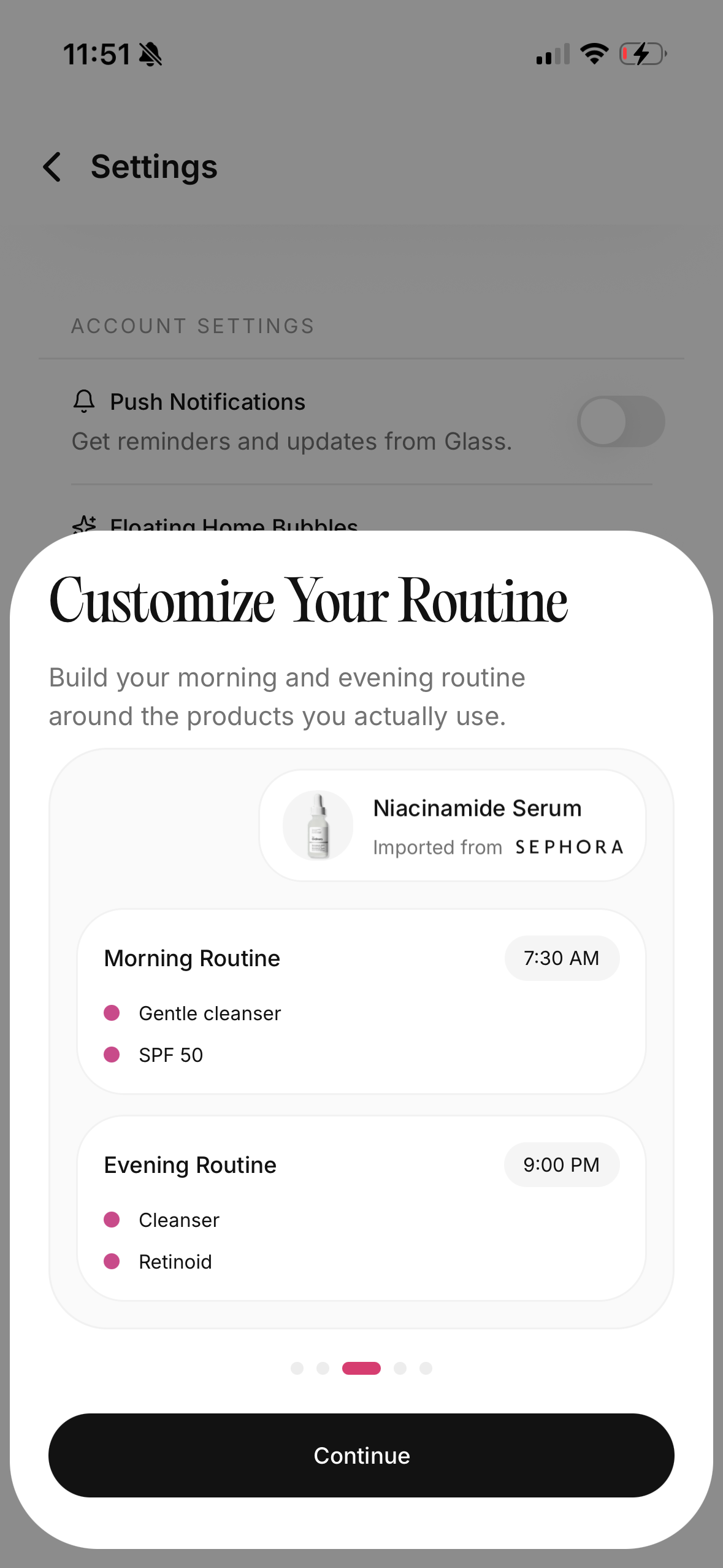
Use the Glass product card mindset: one product change at a time, stable routine, and notes that make cause and effect easier to read.
Breakouts from changing too much
Sometimes the trigger is not one bad product. It is the pace of change. Starting a retinoid, adding an acid toner, switching sunscreen, and testing a new foundation in the same week can overwhelm even resilient skin.
Use a slower rule: one meaningful change, then observe. If your skin is acne-prone, this is not being overly cautious. It is how you protect your ability to learn from your own routine.
That slower pace also protects your confidence. When you know exactly what changed, you can adjust calmly instead of blaming every product you own and starting from zero again. This matters because stress-shopping during a breakout often creates another round of testing, irritation, disappointment, and notes that are too messy to use later.
Body breakouts
Body breakouts often involve sweat, friction, hair products, and clothing.
Helpful steps:
- Shower after workouts.
- Change out of tight sweaty clothes.
- Rinse conditioner off the back.
- Avoid heavy oils on acne-prone body areas.
- Use breathable fabrics.
- Consider benzoyl peroxide wash for inflammatory body acne if tolerated.
See a clinician for painful, widespread, itchy, recurrent, or infected-looking body bumps.
When it is time for a dermatologist
Do not wait forever if breakouts are severe or scarring.
Book care if you have:
- Deep painful nodules.
- Cystic acne.
- Indented scars.
- Sudden severe acne.
- Breakouts that do not improve after 8 to 12 weeks.
- Acne affecting your mental health or daily life.
- Signs of infection.
Prescription acne care can be topical, oral, hormonal for some patients, or isotretinoin for severe acne. The right choice depends on the person.
Red flags
Get urgent care for fever, rapidly spreading redness, warmth, swelling, severe pain, drainage, crusting, or a rash near the eyes. Seek medical advice for breakouts during pregnancy, immune suppression, or when you have other health conditions that affect skin healing.
A practical 2026 routine
Morning:
- Gentle cleanse or rinse.
- One treatment if tolerated.
- Moisturizer.
- Sunscreen.
Night:
- Cleanse thoroughly.
- Retinoid, salicylic acid, or azelaic acid depending on your plan.
- Moisturizer.
Keep the routine stable for several weeks. Change one variable at a time. Track what happens.
The bottom line
Skin breakouts are not solved by panic. They are solved by pattern recognition, consistent treatment, barrier support, and knowing when the problem needs medical care.
The best routine is not the most complicated one. It is the one that gives your skin enough consistency to respond and gives you enough clarity to stop guessing.
The question I would ask first
Before changing products, I would ask whether the breakout is new, recurring, or worsening. New breakouts make me look for recent changes. Recurring breakouts make me look for patterns by location and timing. Worsening breakouts make me check for irritation, infection signs, or a treatment plan that is not strong enough. Those are three different decisions. If I treat all of them the same, I either overreact or underreact. A good routine starts with the right read of the situation, then changes one thing at a time so the skin has a chance to answer clearly. That pace feels slower, but it usually gives you cleaner results and fewer setbacks.