If you have scars on face skin, the hardest part is knowing what to do first.
One person is dealing with acne pits on the cheeks. Another has a raised scar after a cut. Another has flat brown marks that are not true scars at all. Another keeps making new marks because active acne is still inflamed. They all say "scar," but the next step is not the same.
This is a triage guide. The goal is to sort the concern into the right lane before you spend money, irritate your skin, or delay care that would actually help.
The first question: is it flat, indented, raised, or active?
Start here before thinking about ingredients.
| What you see or feel | Most likely lane | First move |
|---|---|---|
| Flat red, pink, or purple mark | Post-inflammatory redness | Calm inflammation, protect from sun, give it time |
| Flat brown or gray-brown mark | Post-inflammatory pigmentation | Sunscreen, pigment-support routine, avoid irritation |
| Pitted or dented skin | Atrophic scar | Dermatology discussion if texture change is the goal |
| Firm raised scar | Hypertrophic or keloid-type scar | Medical scar care, not scrubbing |
| Tender bump, drainage, warmth, spreading redness | Active acne, cyst, folliculitis, or infection | Treat the active problem first |
This one table prevents a lot of bad decisions. A brightening serum may help the look of a brown mark. It will not flatten a keloid. A peel may soften some surface tone issues. It is not the right move for an infected wound.
If the mark is flat and red
Flat red or pink marks after acne can linger after the bump is gone. They often look stronger after heat, exercise, alcohol, irritation, or harsh cleansing. They may fade slowly with time, but the timeline can feel long.
The safest starting plan is simple: do not pick, do not scrub, wear sunscreen, keep the barrier calm, and avoid stacking multiple strong actives on the same area. If redness is persistent or bothersome, a dermatologist can discuss whether vascular treatments or prescription care make sense.
Red does not automatically mean scar tissue. Check the surface. If it is flat, treat it like color first.
If the mark is flat and brown
Flat brown, tan, or gray-brown marks after acne or irritation are often post-inflammatory pigmentation. They can darken when the skin gets sun exposure or repeated inflammation.
Daily sunscreen is the baseline. Without it, pigment-support products have to work against constant darkening. Azelaic acid, retinoids, vitamin C if tolerated, and other pigment-focused options may help some people, but irritation can make pigmentation worse, especially in skin that marks easily.
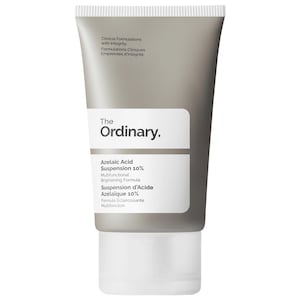
For a simple blemish-prone tone-support example, The Ordinary Azelaic Acid fits a role many people consider. Start slowly if your skin is reactive.
If the skin is pitted
Indented scars are a different problem. Cleveland Clinic describes acne scars as sometimes forming from tissue loss, which creates depressed scars. These include ice-pick, boxcar, and rolling patterns.
If you can see a dip when light hits from the side, or makeup settles into a small depression, do not expect a cream to fill it. A routine can improve the skin around the scar, reduce breakouts, soften dryness, and reduce color contrast. Meaningful texture change usually requires professional options such as microneedling, laser resurfacing, subcision, filler, peels, TCA CROSS, or punch techniques depending on the scar.
The key is not to pick the procedure yourself. The key is to get the scar type assessed.
If the scar is raised
Raised facial scars need a different mindset. Cleveland Clinic describes scars as tissue that forms as skin heals after injury, and some scars can become raised. A hypertrophic scar tends to stay within the original wound area. A keloid can extend beyond it and may itch, hurt, or keep growing.
Do not try to sand down a raised scar with acids or scrubs. That can inflame the skin and make the situation worse. A clinician may discuss silicone gel or sheets, steroid injections, laser options, surgical revision, or other medical treatments depending on the scar and your history.
Raised scars are especially worth checking if they are growing, painful, itchy, or outside the original injury.
If the scar came from an injury
Injury scars on the face need context. A clean surgical line, a scratch, a burn, a bite, a cut, and a picked acne wound do not heal the same way.
If the wound is still open, crusting, draining, spreading, hot, swollen, or increasingly painful, treat it as a healing or infection concern, not a cosmetic project. If the wound is recent, follow clinician aftercare rather than experimenting with actives.
Once the skin is closed, protection matters. Sun can darken healing marks. Repeated friction can keep the area irritated. Silicone products may be appropriate for some scars, but it is better to ask if the scar is on a moving area like the mouth, jaw, or eyelid.
If acne is still active
Active acne changes the whole order. The American Academy of Dermatology notes that acne-scar treatment may start with treating acne when breakouts are active. That is practical: new cysts can create new scars while you are trying to revise old ones.
If you still get deep, painful bumps, focus on acne control first. This may mean over-the-counter care, prescription topicals, oral medication, hormonal treatment, or another clinician-directed plan. A scar procedure cannot keep up with new inflammation if the acne is uncontrolled.
Use routine tracking to see whether a product is actually reducing breakouts or just making the skin peel.

What to stop doing immediately
Some habits make almost every scar lane harder.
Stop picking scabs early. Stop squeezing cysts. Stop using acids on broken skin. Stop tanning to "blend" marks. Stop deep needling at home. Stop scrubbing dents as if friction can smooth them. Stop changing five products at once. Stop judging progress in a different mirror every day.
Also stop treating pain, drainage, warmth, or spreading redness as cosmetic noise. Those signs deserve medical attention.
What skincare can safely cover
For most scars on face concerns, the safe baseline is:
Morning:
- Gentle cleanse or rinse.
- Optional tone-support step if tolerated.
- Moisturizer.
- Broad-spectrum sunscreen.
Night:
- Cleanser.
- Acne treatment, retinoid, or pigment-support step if appropriate.
- Moisturizer.
This is not dramatic, but it covers the basics: fewer new breakouts, less irritation, better sun protection, and less contrast around marks. If your skin burns, flakes, or stings constantly, reduce the routine before adding more.
When a procedure discussion makes sense
A procedure discussion makes sense when the issue is texture, height, or a stable mark that has not improved enough with conservative care.
Depending on the concern, a dermatologist may discuss microneedling, radiofrequency microneedling, fractional laser resurfacing, chemical peels, vascular lasers, TCA CROSS for selected narrow scars, subcision for tethered rolling scars, filler for some depressions, steroid injections for raised scars, silicone products, or surgical revision.
The AAD emphasizes individualized acne-scar treatment because skin type and scar type matter. That matters even more on the face, where pigment changes and downtime are visible.
Questions that prevent the wrong plan
Ask:
- Is this actually a scar or a flat mark?
- Is the main issue color, indentation, raised tissue, or active inflammation?
- Should acne be controlled before scar treatment?
- Which treatment matches this specific scar type?
- What result is realistic?
- What are the risks for my skin tone?
- What downtime should I expect?
- What should I stop before treatment?
- What aftercare matters most?
If you leave with only a package price and no explanation of scar type, you do not have enough information.
How to take useful photos
Scars on face skin look different depending on light. Do not compare a harsh overhead mirror to a soft front-camera photo.
Take monthly photos in the same place: front, left, right, and close-up of the main area. Use one normal-light set and one side-light set if texture is the concern. Keep the same distance and facial expression.
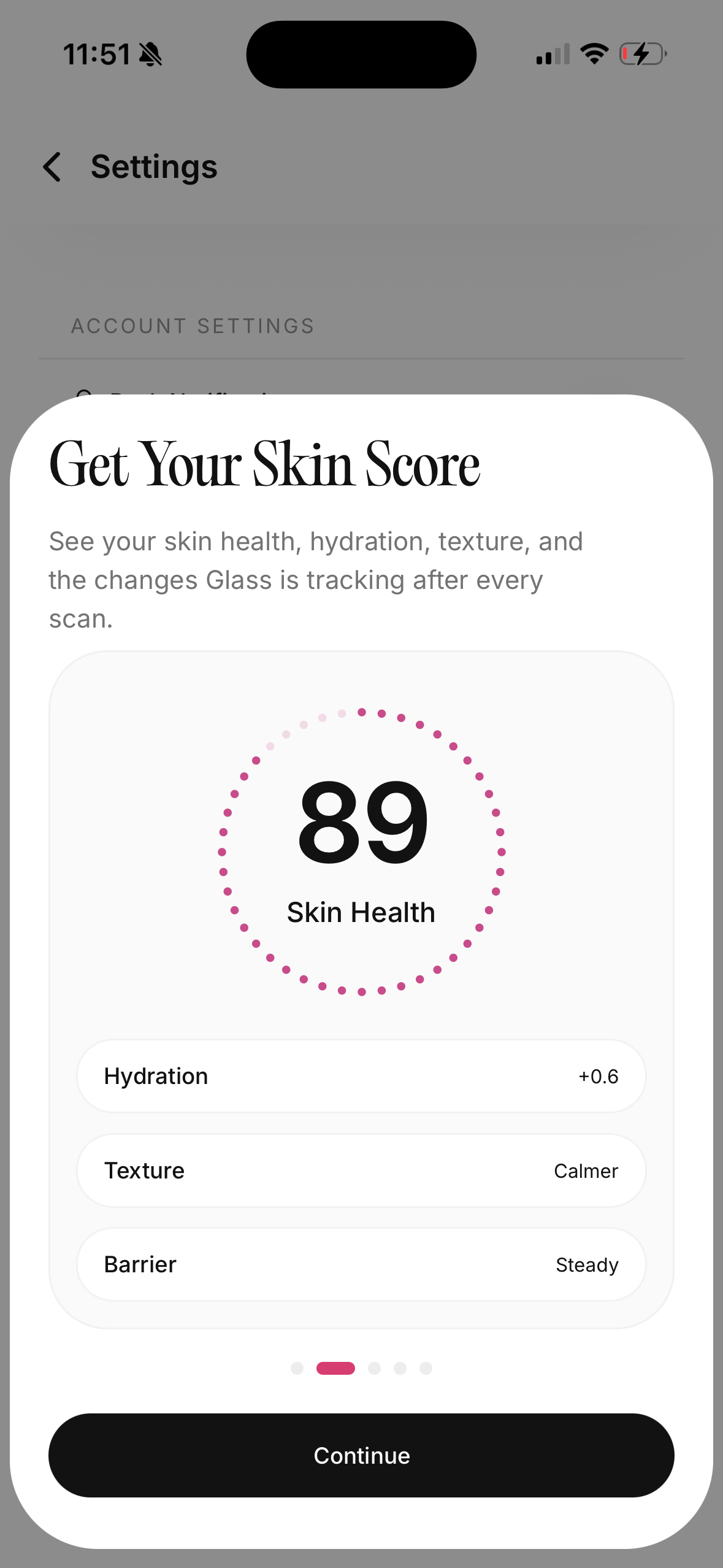
Glass can help keep photos, routine changes, acne flares, and treatment dates together so you can see whether the plan is actually changing the skin.
When to get checked sooner
See a clinician sooner if a facial mark is painful, itchy, growing, bleeding without clear cause, draining, warm, swollen, spreading, repeatedly opening, or forming after deep cystic acne. Also get advice before procedures if you have a history of keloids, poor wound healing, immune suppression, cold sores, recent isotretinoin use, pregnancy, or strong pigmentation after irritation.
There is no prize for handling a medical scar concern with bathroom experiments.
The bottom line
Scars on face skin need triage before treatment. Flat red or brown marks are often color concerns. Pitted scars are structural. Raised scars need medical scar care. Active acne or infection comes before cosmetic plans.
The best first moves are simple: stop re-injuring the skin, protect from sun, control active acne, keep the barrier calm, document consistently, and ask a dermatologist to label the scar type before you commit to procedures.
Useful references: Cleveland Clinic on acne scars, AAD acne scar treatment guidance, and Cleveland Clinic on scars.