
My memory was the problem.
Not my cleanser.
Not at first.
I kept blaming whatever product was closest to the breakout. A serum went on Tuesday, a bump showed up Thursday, and suddenly the serum was guilty. Then I would remember that I slept badly, skipped moisturizer twice, used an exfoliating toner because my texture annoyed me, and wore a heavier sunscreen than usual because I was outside longer.
That is not a clean experiment.
That is a messy life with a skincare shelf sitting in the middle of it.
Tracking changed the way I judged my face. It did not make me colder about skincare. It made me calmer. I stopped treating every bad morning like an emergency and started asking better questions.
What changed?
What stayed the same?
Did I give this routine enough time to tell me anything useful?
Once I tracked for 30 days, the pattern was obvious. My skin was not random. I was just trying to read it from memory.
The tracking rule that made everything easier
I stopped tracking everything.
That sounds backwards, but it is the only reason I kept going. A skincare routine tracker is supposed to reduce guessing, not turn your nightstand into homework. If the tracking system takes more energy than the routine itself, most people will abandon it before it teaches them anything.
For 30 days, I focused on five things:
- What I used in the morning.
- What I used at night.
- Whether I added, removed, or increased anything.
- How my skin felt, not just how it looked.
- One or two life factors that were obviously relevant, like sleep, stress, cycle timing, or heavy sweating.
That was enough.
The point was not to create a perfect lab record. The point was to build a trail I could trust more than whatever story my mood was telling me in the mirror.
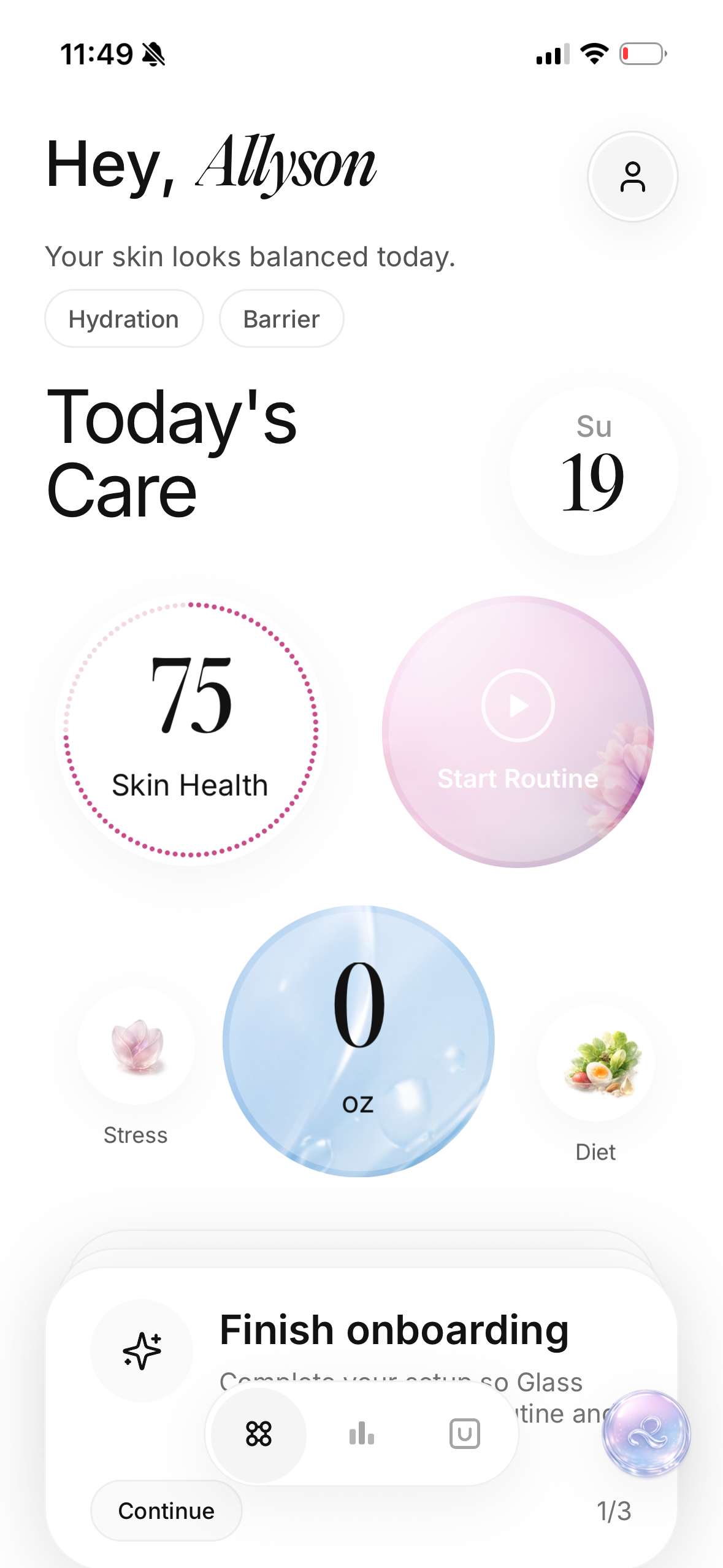
What I would track for the first 30 days
If you are starting from zero, do not build a complicated dashboard. Start with a small record you can repeat when you are tired.
Here is the tracking template I would use now:
| What to log | Why it matters | Keep it simple |
|---|---|---|
| Morning routine | Sunscreen, cleanser, and moisturizer affect how skin behaves all day | Check off products, do not write essays |
| Night routine | Most actives, recovery steps, and missed routines show up here | Mark treatment nights clearly |
| New products | This is where confusion starts | Add only one new product at a time when possible |
| Skin feel | Tightness, burning, itching, oiliness, tenderness, dryness | Use words you would actually say |
| Visible changes | Breakouts, redness, flakes, texture, dark spots, glow | Compare weekly, not hourly |
| Context | Sleep, stress, sweating, cycle, weather, travel | Pick the few that truly affect you |
I care more about skin feel than I used to.
A photo can look fine while your face feels tight. A scan can look improved while moisturizer is suddenly stinging. A breakout can look dramatic while the rest of your skin is actually calmer than last week.
Tracking only photos misses that.
Tracking only feelings misses the slow visual progress.
You need both.
The routine has to stay boring long enough to teach you something
The biggest mistake I made was changing the routine every time my skin changed.
That makes tracking almost useless.
If you start a new cleanser, add a brightening serum, increase retinol, switch sunscreens, skip moisturizer, and test a new mask in the same week, you have created noise. When your skin reacts, you will not know which decision mattered.
The better move is slower and less satisfying at first.
Keep the base routine stable:
- gentle cleanse
- moisturizer that does not sting
- sunscreen every morning
- one treatment lane at a time
Then watch.
Not forever. Just long enough to see whether the skin is moving in a direction.
Acne treatments and stronger actives often need weeks before they can be judged fairly. Irritation, on the other hand, can show up fast. That difference matters. A little dryness from a new retinoid is not the same as angry burning from a routine your skin clearly hates.
I use tracking to separate impatience from warning signs.
My 30-day skincare tracking setup
I like a tracker that keeps routine, products, photos, and notes close together.
That is where Glass fits naturally. A plain habit app can remind you to wash your face. A camera roll can store progress photos. A notes app can hold product reactions. But when those things live in separate places, the pattern gets harder to see.
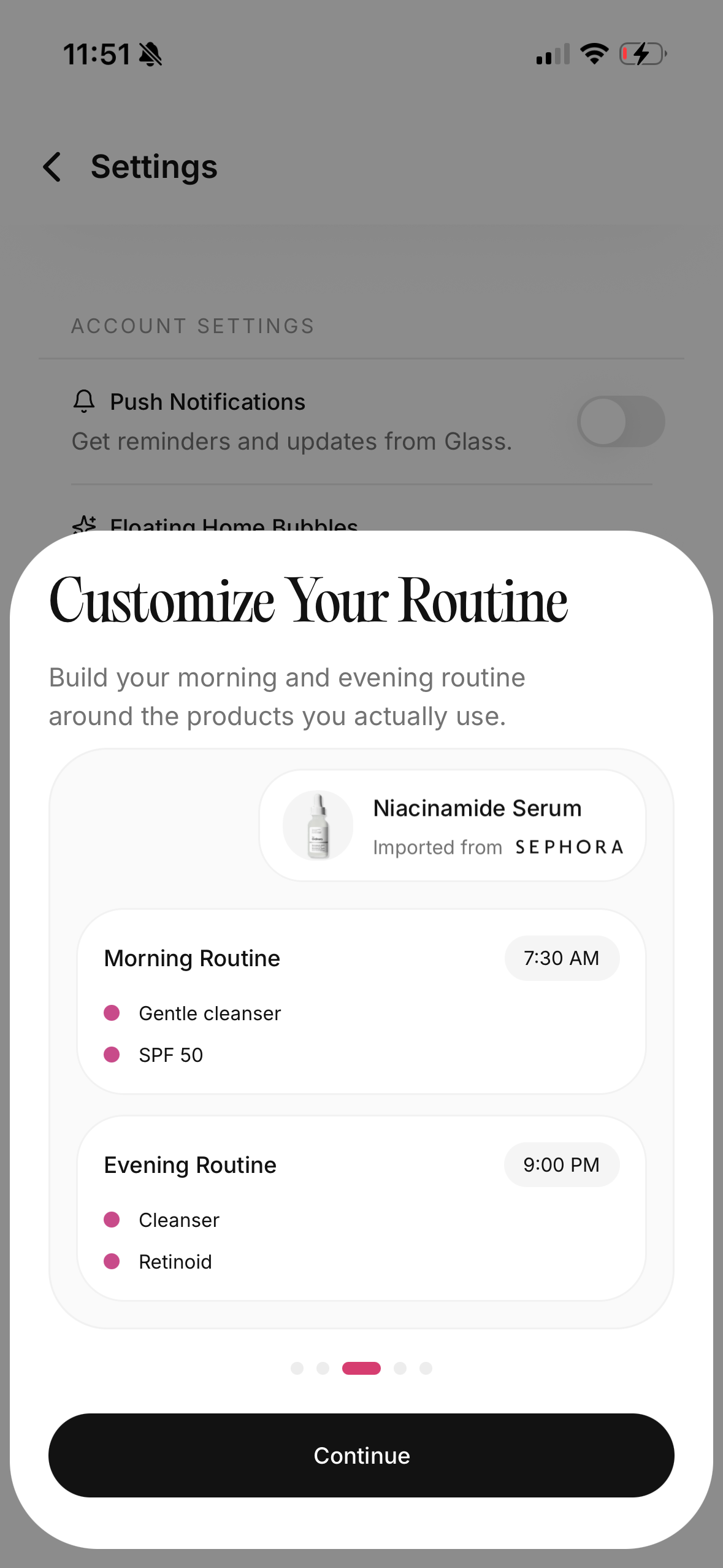
The setup I would use in Glass is simple:
| Part of the app | How I would use it | What it helps answer |
|---|---|---|
| Routine builder | Create a realistic morning and night routine | What am I supposed to use today? |
| Product logging | Keep the products tied to the routine | What changed before my skin changed? |
| Reminders | Keep consistency from depending on mood | Did I actually follow the plan? |
| Skin analysis | Compare skin changes over time | Am I improving, reacting, or just guessing? |
| Reports or notes | Look for patterns across the month | What should I adjust next? |
I would not use any app as a substitute for a dermatologist if acne is painful, scarring, sudden, severe, or not responding to basic care. That line matters. Tracking is useful because it gives you better information. It is not a diagnosis.
For normal routine confusion, though, it can be the difference between changing everything and changing the one thing that actually needs attention.
The product table I wish I had used earlier
Do not track a shelf. Track the jobs in the routine.
That one shift made my product decisions much cleaner. Instead of asking whether a product was "good," I started asking what job it had and whether that job still made sense.
| Image | Routine job | Product example | What I would track | Skip or pause if |
|---|---|---|---|---|
 | Gentle cleanse | AESTURA ATOBARRIER365 Gentle pH-Balancing Foaming Cleanser | Tightness after washing, redness after cleansing, whether sunscreen comes off cleanly | Your skin burns with every cleanser |
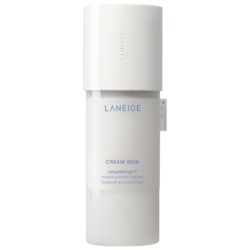 | Comfort layer | LANEIGE Cream Skin Milky Toner with Ceramides and Peptides | Whether skin feels less papery before moisturizer | Milky layers clog you or make you hot |
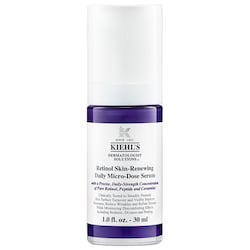 | Retinol night | Kiehl's Since 1851 Micro-Dose Anti-Aging Retinol Serum | Frequency, dryness, peeling, new bumps, whether moisturizer buffers it well | Your barrier is already irritated |
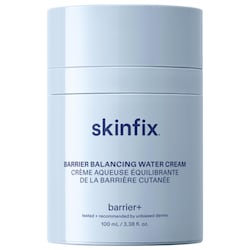 | Lightweight moisturizer | Skinfix Barrier Balancing Water Cream Moisturizer | Whether tightness returns, whether shine feels greasy or calm | You need richer night support |
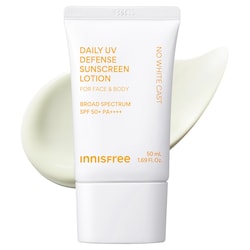 | Daily sunscreen | innisfree Daily UV Defense Invisible Korean Sunscreen SPF 50+ PA++++ | Stinging, pilling, midday shine, whether you actually wear enough | Chemical filters sting on your current skin |
This is not a shopping list.
It is a cleaner way to think.
Your tracker becomes more useful when every product has a lane. Cleanser cleans. Moisturizer keeps the routine comfortable. Sunscreen protects the progress. Retinol has a schedule. A comfort layer earns its place only if the skin feels better with it than without it.
When a product has no clear job, it becomes hard to evaluate.
Week one: I only wanted a baseline
The first week is not for fixing everything.
It is for seeing what is already true.
I would keep the routine as stable as possible and log what happens without trying to interpret every tiny change. This is harder than it sounds. The first few days of tracking can make you more aware of every pore, every flake, every small bump.
Do not let that awareness bully you into changing the plan.
In week one, I want answers to boring questions:
- Am I actually washing off sunscreen at night?
- Am I moisturizing consistently?
- Am I using treatment products more often than I think?
- Does my skin feel tight after cleansing?
- Do breakouts cluster after missed routines or active-heavy nights?
- Are my photos consistent enough to compare?
That last one is underrated.
Progress photos are only useful if they are taken in similar conditions. Same room. Similar light. Clean face. Similar angle. No dramatic zooming. No harsh flash one day and soft window light the next.
Bad photo consistency makes normal skin look like a crisis.
Week two: I look for friction
By week two, the pattern usually starts to show.
Not the final answer. Just the friction.
Maybe the morning routine is too heavy, so sunscreen pills and you avoid reapplying. Maybe the night routine has too many steps, so you skip it when you are tired. Maybe your retinol night keeps landing right after exfoliation because both are set to "whenever I remember." Maybe the moisturizer feels good at night but makes your T-zone greasy by breakfast.
Those are fixable problems.
They are also the kind of problems you miss when you only judge products.
Sometimes the product is fine and the routine around it is the issue. A retinol may be tolerable twice a week but irritating every other night. A moisturizer may work beautifully on cheeks and feel too much on the nose. A sunscreen may be good, but only if you stop layering three shiny products underneath it.
Tracking gives you enough distance to see that.
Week three: I make one change
One.
That is the whole rule.
If the first two weeks show a clear issue, I change one thing and keep watching. Not the entire routine. Not the whole brand. Not the product shelf.
Examples:
- If cleansing leaves my skin tight, I switch cleanser or shorten the cleanse.
- If retinol nights keep causing irritation, I reduce frequency or buffer with moisturizer.
- If sunscreen keeps pilling, I simplify the layers underneath.
- If breakouts cluster after a heavy cream, I test a lighter moisturizer.
- If nothing is consistent, I fix reminders before buying anything.
This is where a skincare progress tracker app becomes more than a diary.
It keeps you honest.
Without the record, it is easy to say, "This product broke me out." With the record, you may notice you also used it on three nights when you slept badly, skipped cleansing, and added an exfoliating pad.
That does not mean the product is innocent.
It means you need a cleaner test.
Week four: I judge the trend, not the mood
By the fourth week, I stop asking whether my skin looked perfect today.
I ask whether the month is moving in the right direction.
That is a different question.
Better skin does not always announce itself dramatically. Sometimes the win is smaller: fewer angry bumps, less tightness after washing, less redness after moisturizer, sunscreen that no longer stings, makeup sitting smoother, or fewer nights where you feel tempted to restart the entire routine.
Those wins matter because they are repeatable.
I also look for the opposite:
- irritation that keeps getting worse
- breakouts in areas where I do not usually break out
- burning that does not settle
- flaking that keeps spreading
- a routine I keep avoiding because it feels too complicated
If the skin is loudly unhappy, I do not call that purging just because I want the product to work. Some active products can cause an adjustment period, but "wait it out" is not always wise. Pain, swelling, severe irritation, or worsening acne deserves a more careful response.
Tracking should make you less stubborn, not more.
The signs I would not overreact to
Some changes look scary but do not always mean the routine is failing.
A single breakout is not a verdict. One dry morning is not proof your moisturizer is useless. A bad photo under harsh bathroom light is not a crisis. A little texture fluctuation around your cycle does not mean every product has betrayed you.
I would watch these without spiraling:
- one or two small bumps that resolve normally
- mild dryness when starting a treatment slowly
- a dull day after poor sleep
- temporary shine after changing weather or humidity
- a rough patch after travel
The goal is not to ignore your skin.
The goal is to stop treating every signal as equal.
The signs I would take seriously
Some patterns deserve attention.
If a product burns every time, I pause it. If breakouts keep appearing in new areas after a new product, I take that seriously. If a cleanser leaves my face tight every night, I do not expect moisturizer to keep rescuing the routine. If my skin becomes hot, itchy, swollen, cracked, or painful, I stop trying to solve it with another serum.
Tracking helps because it shows duration.
One bad night can be noise. Two weeks of worsening irritation is a pattern.
The same goes for consistency. If my tracker shows I only completed the night routine three times in two weeks, I do not need a stronger active. I need a routine I can actually repeat.
That is a humbling answer.
It is also usually the useful one.
How Glass fits into this without making skincare feel clinical
The reason I like Glass for this kind of month is that it keeps the routine human.
You can build your morning and night routine, keep product decisions attached to your actual skin, scan progress, and see reports without turning the whole thing into a spreadsheet project.
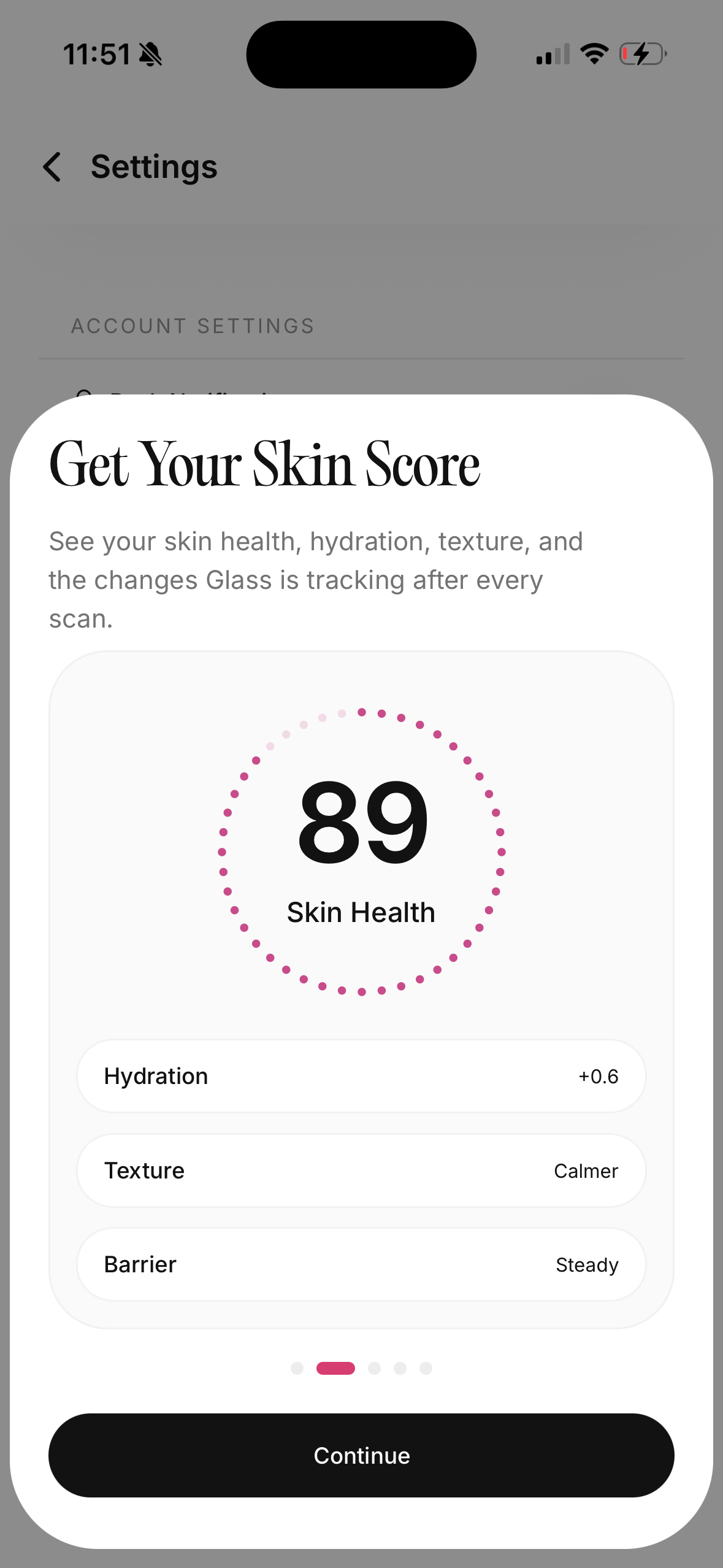
The app is most useful when you treat it like a memory upgrade:
- What did I use?
- Did I skip anything?
- Did my skin feel better or worse?
- Did the scan or photo trend match what I felt?
- What changed before the reaction started?
That is enough structure to make better decisions.
It also protects you from one of the most expensive habits in skincare: buying a new product because you cannot remember what happened with the last one.
The 30-day reset I would follow now
If I were starting this May, I would keep it simple.
Days 1-7: Baseline
Use your current routine unless it is actively irritating you. Log morning and night. Take two or three consistent photos, not twenty. Write down how the skin feels in plain language.
Days 8-14: Simplify the weak spot
Look for the step that keeps causing friction. It might be the cleanser, the treatment schedule, sunscreen, or the fact that the night routine is too long. Fix the weakest link before adding anything new.
Days 15-21: Change one variable
Make one adjustment. Give it space. If you change three things at once, you are back to guessing.
Days 22-30: Compare the trend
Look at the whole month. Do not judge from one photo. Compare comfort, consistency, breakouts, irritation, and whether the routine feels easier to keep.
By the end, you should know at least one useful thing:
- your routine is too complicated
- your cleanser is too stripping
- your treatment schedule is too aggressive
- your sunscreen is the step you avoid
- your skin is improving but slower than your patience
- your product changes are happening too close together
That is progress.
Not perfect skin.
Better judgment.
The small checklist I would keep
If your skin feels confusing right now, start here:
- Pick one morning routine and one night routine.
- Track them for 30 days.
- Take photos in the same light.
- Add only one new product at a time.
- Mark treatment nights clearly.
- Track irritation as seriously as breakouts.
- Look at weekly patterns, not daily panic.
- Simplify before you intensify.
- Use a tracker that connects products, routines, and progress in one place.
That last piece is why I would use Glass for this instead of spreading the month across Notes, Reminders, and a camera roll.
Skincare gets easier when the evidence stays together.
The part that surprised me
Tracking did not make me more obsessive.
It made me less reactive.
I stopped waking up, seeing one new bump, and rewriting the whole routine in my head before breakfast. I stopped blaming products that had not been tested fairly. I stopped ignoring boring habits that mattered more than the newest serum.
The record gave me a little space between my face and my decisions.
That space is valuable.
Because most skincare mistakes are not dramatic. They are small, repeated guesses. You add too quickly. You stop too early. You forget what you used. You judge progress from bad lighting. You mistake irritation for "working." You buy another product because the current routine never got a fair chance.
A good skincare routine tracker does not make your skin perfect.
It makes your next decision cleaner.
And sometimes that is the thing your skin needed most.
FAQ
How long should I track my skincare routine before changing products?
Track for at least two to four weeks before making a non-urgent change. If a product causes burning, swelling, strong itching, or worsening irritation, pause sooner. The point is to give normal progress enough time while still respecting clear warning signs.
What should a skincare routine tracker include?
A useful skincare routine tracker should include morning and night routines, product use, treatment frequency, progress photos, skin-feel notes, and enough context to show patterns. It should help you understand what changed before your skin changed.
Is Glass better than a habit tracker for skincare?
Glass is better if you want routines, products, scans, reminders, and progress context together. A habit tracker can work for very simple routines, but it usually cannot show the relationship between product changes, skin analysis, and visible progress as clearly.
Should I track my skin every day?
You can log your routine daily, but you do not need to judge your skin daily. Daily checkoffs help consistency. Weekly comparisons are usually better for progress because skin changes slowly and lighting can make day-to-day photos misleading.
Can tracking tell me if I am purging or breaking out?
Tracking can help you see timing, location, severity, and whether irritation is improving or worsening. It cannot diagnose you. If acne is painful, scarring, severe, sudden, or not improving with reasonable care, it is worth getting professional help.