I kept forgetting.
Not the whole routine.
The important parts.
I would remember cleanser. I would remember moisturizer. I would remember sunscreen most mornings because it was sitting right there. But the nights that actually needed structure, retinol nights, exfoliation nights, recovery nights, those were the ones that kept getting fuzzy.
Did I use retinol yesterday?
Was tonight supposed to be an acid night?
Why does my skin feel tight if I have been so consistent?
That was the frustrating part. I was doing skincare often enough to feel like I was trying, but not clearly enough to know what was helping. My routine was active, but my schedule was messy.
So I stopped treating skincare like a shelf problem.
I treated it like a calendar problem.
The short answer
A good skin care schedule app should help you remember what to use, when to use it, what to skip, and what changed when your skin improved or got irritated. The best setup is not just a morning checklist and a night checklist. It is a small system for daily basics, rotating actives, recovery nights, progress photos, and notes that are easy enough to keep using.
The schedule I trust now is simple:
| Day type | Main job | What I use |
|---|---|---|
| Daily morning | Protect and keep skin steady | Cleanse or rinse, light hydration, moisturizer if needed, sunscreen |
| Retinol night | Texture and long-term support | Cleanse, retinol, moisturizer |
| Exfoliation night | Smoothness and dullness | Cleanse, one exfoliant, moisturizer |
| Recovery night | Calm the barrier | Cleanse, hydration, barrier-support moisturizer |
| Check-in day | Learn from the pattern | Photo, short note, no panic changes |
That is enough for most people.
Not because it is perfect.
Because it is repeatable.
Why a normal notes app stopped working for me
I used notes for a while.
It worked until the routine became more than daily basics. Once I added a retinoid, a chemical exfoliant, a pigment serum, and a few moisturizers for different skin moods, my note turned into a tiny skincare filing cabinet.
Morning routine.
Night routine.
Night routine when dry.
Night routine when breaking out.
Night routine when I used retinol yesterday.
Night routine when I forgot what I used yesterday.
The problem was not that notes are bad. The problem was that notes do not remember for you. They hold information. They do not turn that information into a decision at 10:47 p.m. when your face is washed and you are standing there trying to decide if tonight is the night to be ambitious.
That is when bad skincare choices happen.
Not because you know nothing.
Because you are tired.
The schedule that finally made my routine easier
The schedule that worked for me had three lanes.
Daily basics. Rotating actives. Recovery.
Once I separated those lanes, the routine got calmer fast.
Daily basics
These are the steps I do not want to debate every day.
Morning:
- gentle cleanse or rinse
- light hydration if skin feels tight
- moisturizer if sunscreen is not enough
- sunscreen
Night:
- remove sunscreen and makeup
- cleanse
- moisturizer
That is the floor.
If everything else gets confusing, I can still do the floor. This matters because a schedule that collapses when you miss one night is not a good schedule. It is just another fragile plan.
Rotating actives
These are the steps that need spacing.
For me, that means retinol and exfoliation do not compete for the same night. I do not want my skin trying to recover from everything at once. I want each active to have a clean job.
My cleanest version looks like this:
| Day | Night plan |
|---|---|
| Monday | Retinol |
| Tuesday | Recovery |
| Wednesday | Exfoliation |
| Thursday | Recovery |
| Friday | Retinol |
| Saturday | Recovery or hydrating mask |
| Sunday | Check-in and simple routine |
This is not the only schedule that works.
It is just easy to remember.
That is the point. A schedule should reduce decisions. If it takes more energy to follow the system than to do the routine, the system is too clever.
Recovery nights
Recovery nights are where my skin improved the most.
I used to treat recovery like a punishment. If I was not using an active, I felt like I was wasting the night. That was backwards. Recovery nights are what make active nights tolerable.
On recovery nights, I keep the routine boring on purpose:
- gentle cleanse
- hydrating toner or serum if needed
- barrier-support moisturizer
- no exfoliant
- no retinol
- no last-minute experiment
The last one is the hardest.
There is always some product waiting to be tried. But a schedule only works if it protects the routine from your mood.
What I would want in a skin care schedule app
I do not need an app to make skincare more complicated.
I need it to remove the parts I keep messing up.
So when I think about a skin care schedule app, I care about five things.
| Feature | Why it matters |
|---|---|
| Morning and night routines | Skincare does not live in one checklist |
| Non-daily scheduling | Retinol, exfoliation, masks, and treatments need spacing |
| Conflict reminders | The app should help me avoid stacking too much |
| Progress tracking | Photos and notes make patterns easier to see |
| Gentle reminders | Consistency helps, guilt does not |
The best app is not always the one with the longest feature list. It is the one that still feels useful after the first week.
That is where a lot of routine apps lose me. They are exciting during setup, then heavy during real life. I do not want to manage skincare software. I want to wash my face, use the right products, and understand what changed.
The app setup I would choose in April 2026
If I were building my schedule from scratch right now, I would use an app for the parts that are easy to forget and keep the routine itself small.
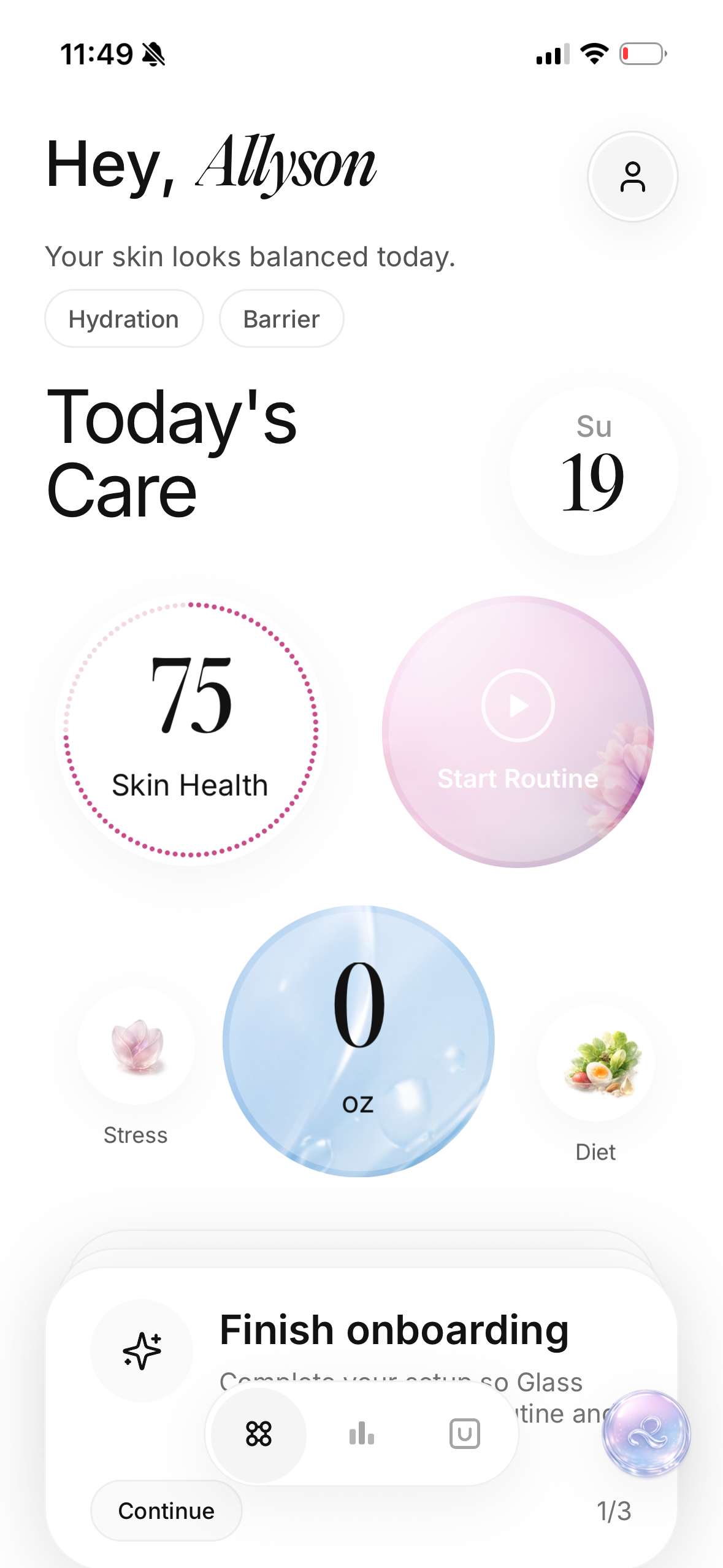
For most people, I would start with Glass because it keeps routine tracking, skin scans, product context, reminders, and progress reporting in the same place. That combination matters more than it sounds. A checklist tells you what you did. A progress loop helps you understand whether what you did is worth repeating.
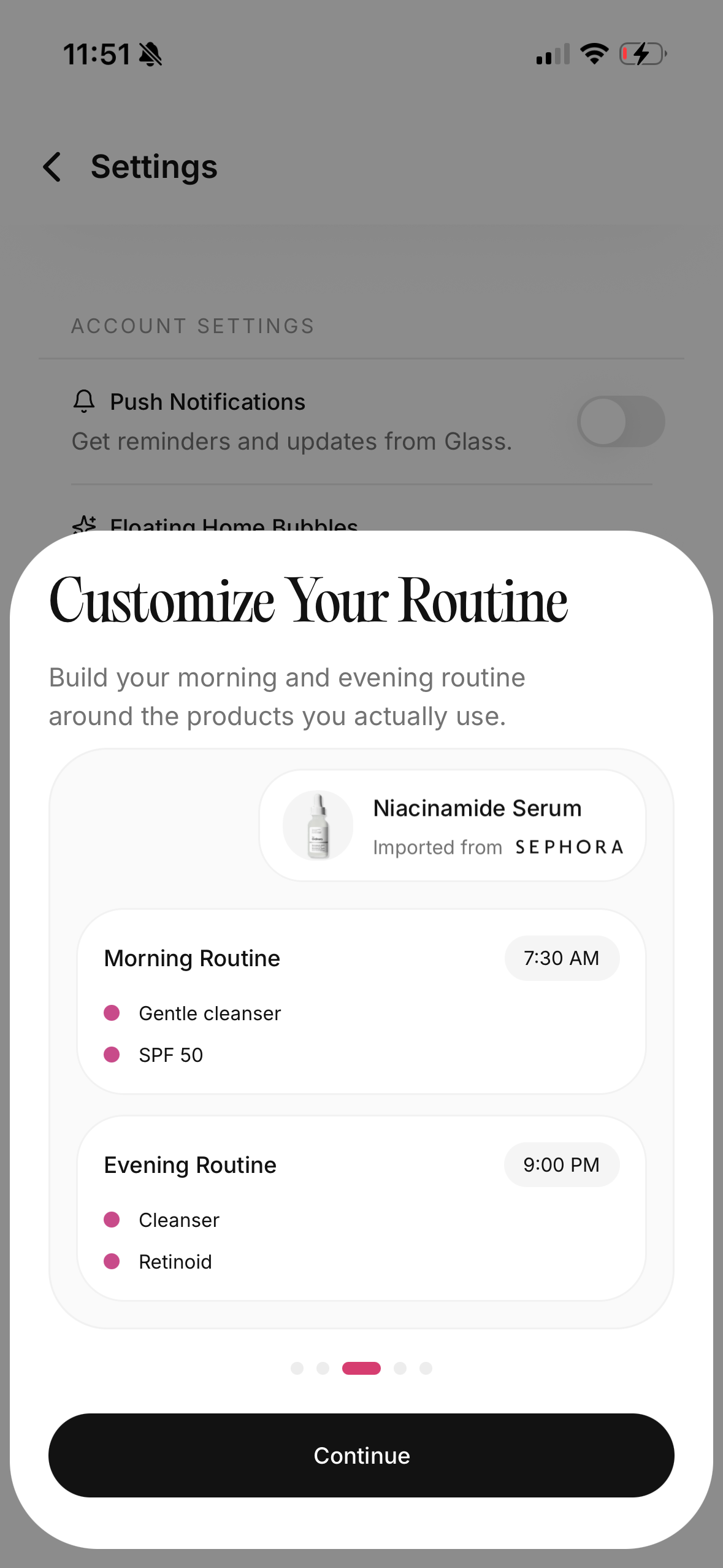
The schedule needs to answer a few ordinary questions:
- What do I use every morning?
- What do I use every night?
- Which nights are retinol nights?
- Which nights are exfoliation nights?
- When did my skin start looking better or worse?
- Did I change a product, my sleep, my stress, or everything at once?
That last question is the one people underestimate.
Skincare changes rarely happen in a clean little lab. You start a serum, sleep badly, travel, eat differently, get your period, change sunscreen, and then try to decide which thing caused the breakout. Without a schedule and a record, everything becomes a guess.
Glass is useful because it gives the routine a place to live and gives progress a way to be seen.
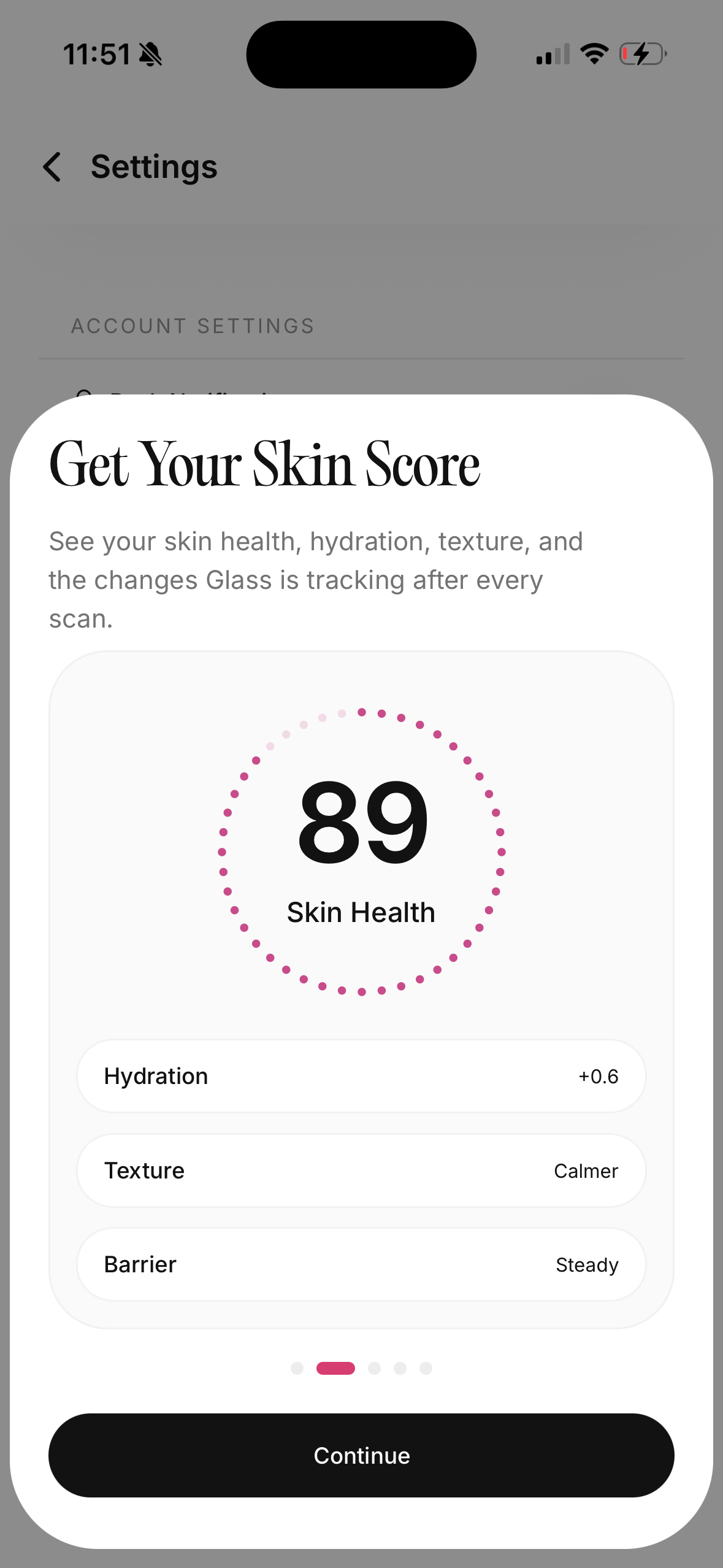
That does not mean you need to track every tiny feeling. I would not turn skincare into a courtroom transcript. I would track the few things that actually help with decisions:
- routine completed or skipped
- active used
- irritation, dryness, or breakout note
- product change
- progress photo once or twice a week
That is enough data to make better choices without turning your face into a spreadsheet.
A simple weekly schedule I would give a beginner
If someone handed me a small routine and said, "Please make this less confusing," I would not start by adding more products.
I would start here:
| Day | Morning | Night |
|---|---|---|
| Monday | Cleanse, moisturizer, sunscreen | Retinol, moisturizer |
| Tuesday | Cleanse, moisturizer, sunscreen | Recovery routine |
| Wednesday | Cleanse, moisturizer, sunscreen | Exfoliant, moisturizer |
| Thursday | Cleanse, moisturizer, sunscreen | Recovery routine |
| Friday | Cleanse, moisturizer, sunscreen | Retinol, moisturizer |
| Saturday | Cleanse, moisturizer, sunscreen | Recovery routine |
| Sunday | Cleanse, moisturizer, sunscreen | Photo check-in, simple routine |
If your skin is sensitive, I would make it even calmer.
One retinol night. One exfoliation night. More recovery.
If your skin is oily and sturdy, you may eventually tolerate more active nights, but I still would not rush it. More frequent does not automatically mean more effective. Sometimes it just means more irritated.
If your skin is dry, I would protect recovery nights like they are part of the treatment. Dry skin can make every active feel harsher than it needs to feel. The schedule has to account for that, not pretend all skin types recover at the same speed.
The product stack I would schedule first
I like a schedule more when the products have obvious jobs.
When every product is trying to brighten, smooth, hydrate, repair, clear, tighten, and glow all at once, the calendar gets confusing. A cleaner shelf makes a cleaner schedule.
Here is the kind of starter stack I would schedule before adding anything more advanced:
| Image | Product type | Example | Where it fits |
|---|---|---|---|
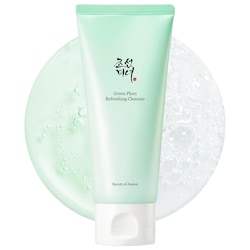 | Gentle cleanser | Beauty of Joseon Green Plum Refreshing Cleanser | Daily morning or night cleanse |
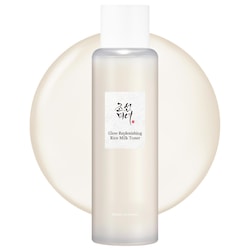 | Light hydration | Beauty of Joseon Glow Replenishing Rice Milk Lightweight Hydration Toner | Recovery nights or dry mornings |
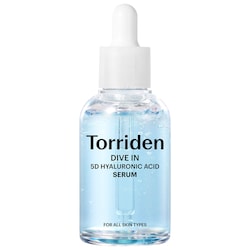 | Hydrating serum | Torriden DIVE IN 5D Hyaluronic Acid Ultra Hydrating Serum | Dehydrated mornings or recovery nights |
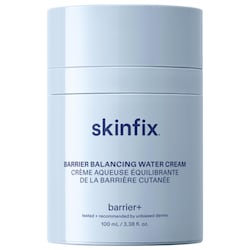 | Moisturizer | Skinfix Barrier Balancing Water Cream Moisturizer | Daily support and recovery nights |
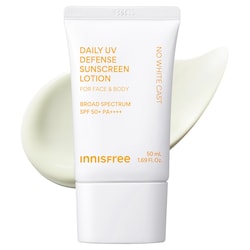 | Sunscreen | innisfree Daily UV Defense Invisible Korean Sunscreen SPF 50 | Every morning |
This is not a full prescription.
It is a shape.
Cleanser. Hydration. Moisturizer. Sunscreen. Then one active lane at a time.
The boring products are what make the interesting products easier to judge.
How I schedule retinol without overdoing it
Retinol is the product I most want scheduled.
Not because it is scary.
Because it rewards patience.
If I were starting retinol again, I would not begin with every other night. I would start with one or two nights a week, then watch how my skin behaves for a few weeks before increasing.
My first-month retinol schedule would look like this:
| Week | Retinol nights | What I watch |
|---|---|---|
| Week 1 | 1 night | Burning, peeling, tightness |
| Week 2 | 1 night | Whether skin recovers by the next evening |
| Week 3 | 2 nights if calm | Dry patches, sunscreen sting, unusual redness |
| Week 4 | 2 nights | Whether texture improves without barrier drama |
The app reminder matters because retinol nights should not be random. Random retinol is how I end up using it twice too close together, then skipping it for ten days because my skin got annoyed.
I would rather go slower and stay consistent.
That is the difference between a routine that looks impressive and a routine that actually survives.
How I schedule exfoliation without turning my face into a project
Exfoliation is where I think people get tricked by smoothness.
The first good acid night can make skin feel so clean and polished that you want to do it again immediately. That is usually where the problem starts.
I like exfoliation as a scheduled event, not a daily personality trait.
For most routines, one exfoliation night a week is a strong starting point. If skin tolerates it well, maybe two. If skin is sensitive, dry, irritated, or already using retinol, one may be plenty.
My rule is simple:
Never let exfoliation steal recovery from retinol.
That means I do not stack retinol and exfoliating acids on the same night. I also do not place them back-to-back if my skin is already tight or reactive.
The schedule protects me from chasing that freshly polished feeling too hard.
The reminders should be gentle, not annoying
I do not want skincare reminders that feel like a bossy alarm.
I want the app to help me keep a promise I already made to myself.
The best reminder setup is quiet:
- morning reminder only if sunscreen is the step I forget
- night reminder before I get too tired
- active-night reminder with the exact product lane
- recovery-night reminder that makes doing less feel intentional
- check-in reminder once or twice a week, not every day
The recovery-night reminder is underrated.
Most people do not need more pressure to use an active. They need permission to stop adding things when their skin is asking for calm.
That is why I like naming the nights in the app. "Recovery" feels better than "nothing." "Barrier night" feels better than "skip treatment." The words matter because they change whether the schedule feels like discipline or deprivation.
What I would track, and what I would ignore
I would track less than most apps let me track.
That is not because detail is bad. Detail is only useful if you can keep it up and make decisions from it.
I would track:
- the active I used
- whether I completed morning sunscreen
- dryness, redness, stinging, or breakout notes
- new product start date
- weekly progress photo
I would ignore:
- perfect streaks
- logging every glass of water if it makes me quit
- mood notes unless they clearly affect my skin
- rating every product every day
- changing the routine after one bad morning
The goal is not to become a perfect logger.
The goal is to stop guessing.
If I can look back and see that my skin got tight three days after increasing retinol, that is useful. If I can see that breakouts started right after adding a new sunscreen, that is useful. If I can see that my skin looked best during the boring week when I did less, that is very useful.
The mistake that makes every schedule fail
The biggest mistake is changing too many things at once.
This is where a schedule becomes more than a reminder tool. It becomes a guardrail.
If I start a new retinol, a new exfoliant, a new moisturizer, and a new sunscreen in the same week, I have created a mystery. Maybe one product works. Maybe one product irritates me. Maybe the combination is the issue. Maybe the sunscreen is fine but the moisturizer underneath makes it pill.
I will not know.
So my rule now is one meaningful change at a time.
New active? Keep the rest stable.
New sunscreen? Do not start a new acid the same week.
New moisturizer? Give it enough normal days before judging it.
This is where a skin care schedule app can be more useful than a product recommendation. It can slow you down before your routine gets too noisy to read.
When I would skip the app and use a calendar instead
An app is not always necessary.
If your routine is very simple, a calendar can work beautifully. I would use a calendar if all I needed was:
- retinol Monday and Friday
- exfoliation Wednesday
- sunscreen reminder every morning
- one weekly photo reminder
That is enough for a lot of people.
Where I would move into a dedicated app is when I want the schedule connected to products, progress photos, ingredient notes, or skin analysis. A calendar can tell me what I planned. A better skincare app can help me understand what happened.
That difference matters once the routine becomes something you are trying to improve, not just remember.
The schedule I would keep if my skin got irritated
If my skin started stinging, burning, peeling, or feeling tight even under moisturizer, I would simplify the schedule immediately.
Not forever.
Just long enough to listen.
My reset week would look like this:
| Day | Night plan |
|---|---|
| Monday | Gentle cleanse, moisturizer |
| Tuesday | Gentle cleanse, hydration, moisturizer |
| Wednesday | Gentle cleanse, moisturizer |
| Thursday | Gentle cleanse, hydration, moisturizer |
| Friday | Gentle cleanse, moisturizer |
| Saturday | Gentle cleanse, moisturizer |
| Sunday | Photo check-in, decide whether to reintroduce one active |
No retinol.
No acid.
No new serum.
No "just a little" experiment because I got bored.
When skin calms down, I would bring back one active at the lowest useful frequency. If irritation returns, the schedule is telling me something. I do not need to argue with it.
Where Glass fits into the routine
Glass makes the most sense if you want your schedule to connect to the bigger picture.
The routine builder helps you set up the morning and night plan. Reminders keep the plan from living only in your head. Skin scans and reports help you notice whether the plan is moving things in the right direction. The Skin Assistant is useful when you need to troubleshoot the boring but important questions, like whether your routine is too crowded or whether an active needs more recovery around it.
That is the version of skincare tracking I trust most.
Not a perfect streak.
Not a huge product shelf.
Not a dashboard that makes your face feel like a job.
A small schedule, followed often enough, with enough context to learn from it.
If you want related reads, I would pair this with best skincare routine app for 2026, best skincare routine tracker for 2026, and how to build a skincare routine that you'll actually follow.
My final rule
The best skin care schedule is the one that makes the right choice feel obvious when you are tired.
That is the whole thing.
If the app helps you remember retinol without overusing it, it is working.
If the calendar helps you stop stacking exfoliation and retinol, it is working.
If the schedule helps you see that your skin looked better during the simple weeks, it is working.
You do not need a complicated system to take skincare seriously.
You need a routine you can repeat, a few active nights you can respect, and a way to remember what happened before you change everything again.
That is what finally made skincare feel calmer for me.
Not more products.
A better schedule.
FAQ
What is the best skin care schedule app for beginners?
For most beginners, the best skin care schedule app is the one that handles morning and night routines, non-daily products, reminders, and progress tracking without making setup feel heavy. I would start with Glass if you want routine tracking, skin scans, product context, and progress reports in one place.
How often should I schedule retinol?
If you are new to retinol, I would start with one or two nights a week and increase only if your skin stays calm. Retinol works better when you can keep using it consistently, so a slower schedule is often smarter than rushing into irritation.
Should exfoliation and retinol be on the same night?
I would not schedule exfoliation and retinol on the same night unless a professional has specifically told you to. For most people, separating them makes the routine easier to tolerate and gives the skin more recovery time.
Do I need to track my skincare every day?
You do not need to track every detail every day. Track the things that help you make decisions: active nights, skipped routines, irritation, new products, and progress photos. A useful record beats a perfect record.
What should I do if my skincare schedule makes my skin worse?
Pause the actives, keep the routine gentle, and give your skin a recovery week. If irritation, acne, rash, or pain persists, see a dermatologist or qualified clinician instead of trying to solve it by adding more products.