
I thought my routine was inconsistent.
It was worse than that.
I was remembering it wrong.
Some nights I was sure I had used retinol, but I had actually skipped it twice in a row. Some mornings I blamed a moisturizer for congestion even though the breakout started three days after I added a new exfoliant. Some weeks I thought my skin was getting worse, then I looked back at photos and realized the redness was down but the lighting in my bathroom had changed.
That is the problem with skincare progress.
Your face changes slowly. Your mood changes fast. Your memory fills in the gaps.
So in May 2026, I tracked everything for 30 days. Not in a perfect spreadsheet. Not like a lab. I tracked the parts that actually change decisions: what I used, what I skipped, what my skin looked like, what irritated it, and whether the routine was easy enough to repeat.
That gave me a cleaner answer than another product haul ever could.
The short version
A skincare routine tracker is useful when it helps you answer four questions: did I actually follow the routine, did my skin change, what changed before the flare-up, and which products are worth keeping? It is not useful when it becomes another place to collect products, chase streaks, or judge every pore from a different bathroom angle.
The best setup is simple:
- Track morning and night completion.
- Take progress photos in the same light.
- Log one skin note per day.
- Mark product start dates.
- Wait long enough before blaming or praising anything.
That last point is the one I kept getting wrong.
Skincare is full of delayed feedback. A cleanser can feel wrong immediately, but a retinoid purge, a barrier flare, a clogged-feeling moisturizer, or a brightening serum takes longer to understand. If I do not know when I started something, how often I used it, and what else changed around it, I am guessing.
And guessing gets expensive.
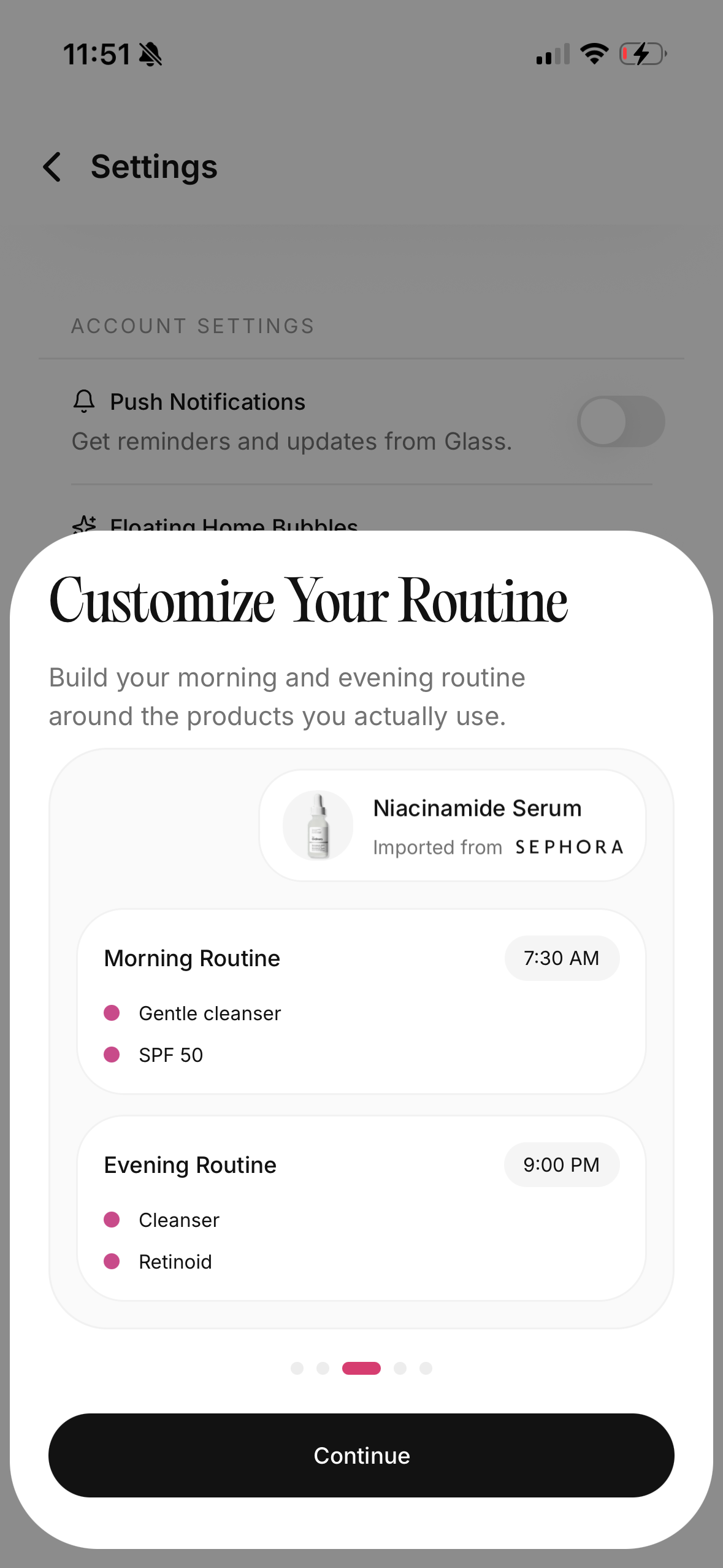
What I decided to track first
I did not track everything.
That was the first good decision.
When tracking gets too detailed, I stop doing it. I have tried the version where every product gets a rating, every breakout gets mapped, every meal gets blamed, every night gets a paragraph. It feels productive for about four days. Then it becomes a second routine sitting on top of the routine.
I kept the first month narrow.
I tracked:
- morning routine completed or skipped
- night routine completed or skipped
- active used, if any
- new product start date
- irritation, dryness, oiliness, breakout, or calm
- one photo every few days in the same place
- anything unusual, like poor sleep, travel, a workout, or wearing heavy sunscreen longer than normal
That was enough.
The point was not to create a diary of my entire life. The point was to stop making skincare decisions from a feeling I had while standing too close to a mirror.
The routine tracker made one mistake obvious
I was changing products before I had enough evidence.
That was the pattern.
My skin would look dull for two days, so I would add an exfoliant. Then it would feel tight, so I would add a richer cream. Then I would get a few clogged-looking bumps, so I would blame the cream. Then I would remove the cream, keep the exfoliant, get more irritation, and start shopping for a "barrier repair" product.
The routine was not advanced.
It was noisy.
Once I tracked the order of changes, I could see the problem clearly. I was not giving any single adjustment enough time to prove itself. I was stacking reactions on top of reactions, then blaming whichever product was newest or most suspicious.
That is where a tracker earns its place. It slows the story down.
Instead of "my moisturizer broke me out," the record might say:
| What I noticed | What the tracker showed | Better interpretation |
|---|---|---|
| New bumps after moisturizer | Exfoliant started three nights earlier | Barrier stress or purge was also possible |
| Skin felt oily by noon | Skipped moisturizer two mornings in a row | Dehydration may have been driving shine |
| Retinol seemed too harsh | Used it after an acid night | Schedule problem, not always a product problem |
| Skin looked worse in photos | Lighting changed from window to overhead | Bad comparison, not necessarily worse skin |
That table saved me from throwing out products too quickly.
It also saved me from keeping products just because I wanted them to work.
Progress photos only helped when I made them boring
Progress photos can be useful.
They can also make you strange.
If I take photos in different lighting, at different times of day, with different camera distances, I can convince myself almost anything is happening. One photo looks smooth because the light is soft. Another looks rough because it is taken under a bathroom bulb. One angle hides redness. Another angle makes one pore look like a life event.
So I made the photos boring.
Same spot. Same time window. Same distance. No beauty light. No editing. No trying to find the most flattering version of the day.
I did not need a perfect clinical record. I needed a fair comparison.
That changed how I judged progress. I started looking for patterns instead of drama:
- Is redness staying calmer week to week?
- Are breakouts healing faster?
- Is texture less visible in the same lighting?
- Does my skin look less tight after cleansing?
- Am I getting fewer "everything stings" nights?
Those questions are better than "do I look flawless today?"
Flawless is too emotional. Patterns are more useful.
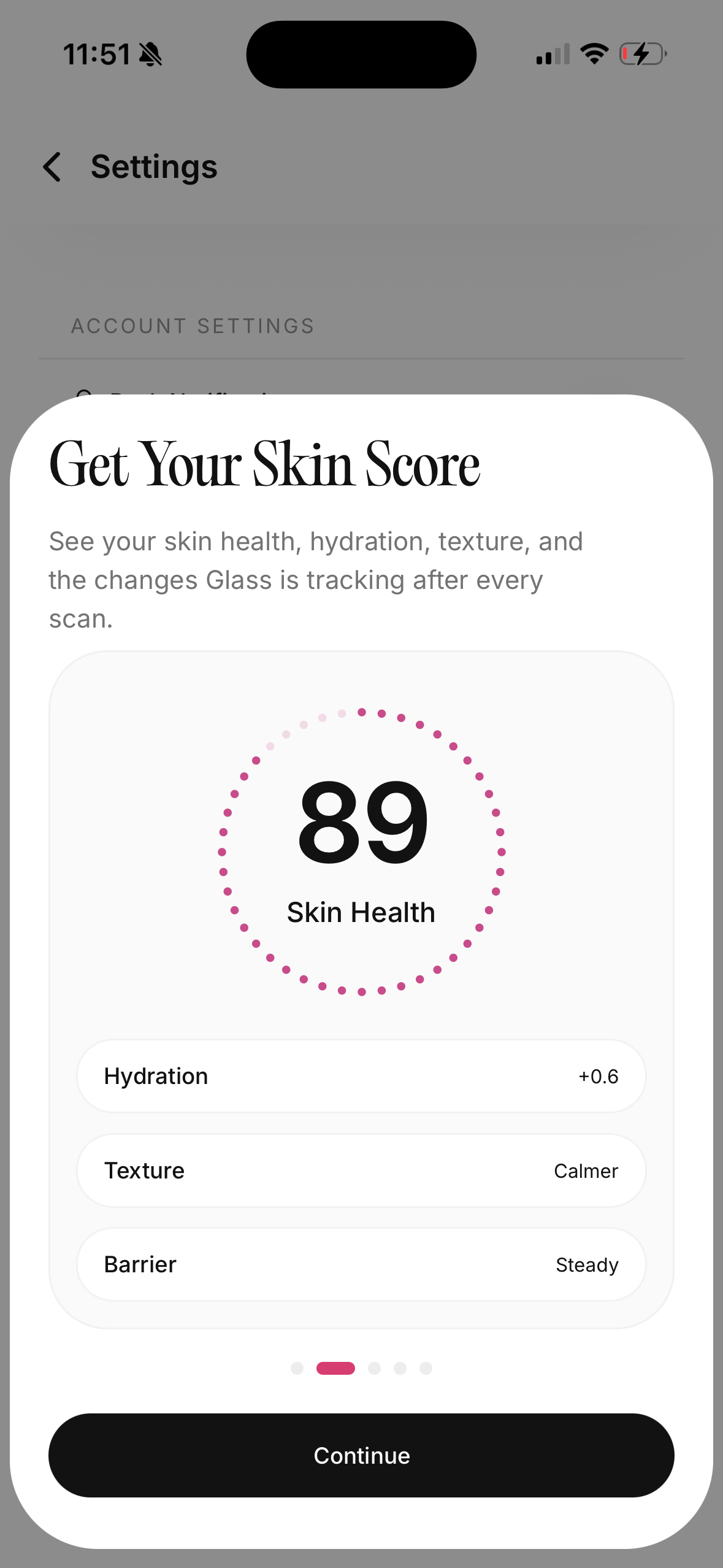
I stopped treating missed nights like moral failure
This surprised me.
The tracker did not make me perfect. It made me less dramatic.
Before tracking, a missed night felt like I had fallen off. After tracking, it was just data. I could see whether I missed one night or four. I could see whether skipped nights actually lined up with flare-ups or whether I was blaming myself out of habit.
That matters because guilt is terrible skincare strategy.
If a routine only works when life is calm, sleep is perfect, and I have unlimited patience, it is not a routine. It is a performance. A useful skincare routine needs to survive normal weeks.
The tracker helped me build a routine with a fallback version:
| Situation | Full routine | Fallback routine |
|---|---|---|
| Normal morning | Rinse or cleanse, serum if needed, moisturizer, sunscreen | Moisturizer and sunscreen |
| Normal night | Cleanse, one treatment lane, moisturizer | Cleanse and moisturizer |
| Irritated skin | Gentle cleanse, hydrating layer, barrier cream | Moisturizer only if skin is already clean |
| Exhausted night | Cleanse, moisturizer | Cleanse, moisturizer, sleep |
That fallback version made me more consistent because I stopped asking tired skin and a tired brain to follow an ambitious plan.
The product shelf mattered less than the schedule
Most people do not need more products first.
They need a cleaner schedule.
That is the biggest thing I learned from tracking. A routine can look reasonable on a shelf and still be chaotic in real life. The cleanser is fine. The serum is fine. The moisturizer is fine. The problem is using retinol one night, an acid the next, a new brightening serum the next, then trying to repair the dryness with a richer cream that gets blamed for everything.
I started using treatment lanes instead of random active nights.
My night routine became:
- retinol night
- recovery night
- exfoliation night, only if my skin was calm
- recovery night
- pigment-support night, if needed
- recovery night
- flexible night
That is not the only schedule that works. It is just the kind of schedule I can read. If irritation shows up, I can see where the pressure came from. If my skin improves, I know what I actually repeated.
The American Academy of Dermatology gives the same kind of boring advice around basics: use a gentle cleanser, avoid scrubbing, moisturize when skin is dry, and protect skin with sunscreen. That advice is not exciting, but tracking made me respect it more. Most routines fail because the basics are inconsistent, not because the sixth step is missing.
If the order itself is the part that keeps slipping, my morning and night routine order is the cleaner companion read. If your skin is already stinging, the barrier repair routine is where I would pause before adding another treatment night.
The skin notes had to be plain
I used to write too much.
That made the notes less useful.
When every entry becomes a paragraph, the important signal gets buried. So I switched to a simple note format:
Skin today: calm, oily by afternoon, two healing spots on chin. Routine change: skipped morning serum, used retinol last night. Decision: recovery night tonight.
That is enough.
The note does not need to sound smart. It needs to help future me understand what happened. I want the note to answer one question: what would I want to know two weeks from now?
Usually, it is one of these:
- Did I start something new?
- Did I use an active?
- Did something sting?
- Did I skip sunscreen?
- Did I sleep badly?
- Did I change weather, travel, or workouts?
- Did my skin feel dry, oily, congested, or calm?
Once I wrote notes that way, the tracker became useful instead of decorative.
The reminder should protect the routine, not bully you
Reminders can help.
Bad reminders make skincare feel like homework.
I do not want an app yelling at me to complete eight steps at 11:47 p.m. when I should already be asleep. I want a reminder that catches the routine while I still have energy to do it properly.
The best reminder time for me was earlier than expected. Evening skincare worked better when it happened after dinner, after a shower, or once I knew I was done leaving the house. Waiting until bedtime made the routine easier to skip and easier to rush.
Morning was different. I did not need a complicated reminder. I needed the sunscreen step to be unavoidable. So I tied it to something I already do: getting dressed or grabbing keys.
That is the rule I trust now.
If a reminder interrupts life, I ignore it. If it attaches to a moment that already exists, I follow it.
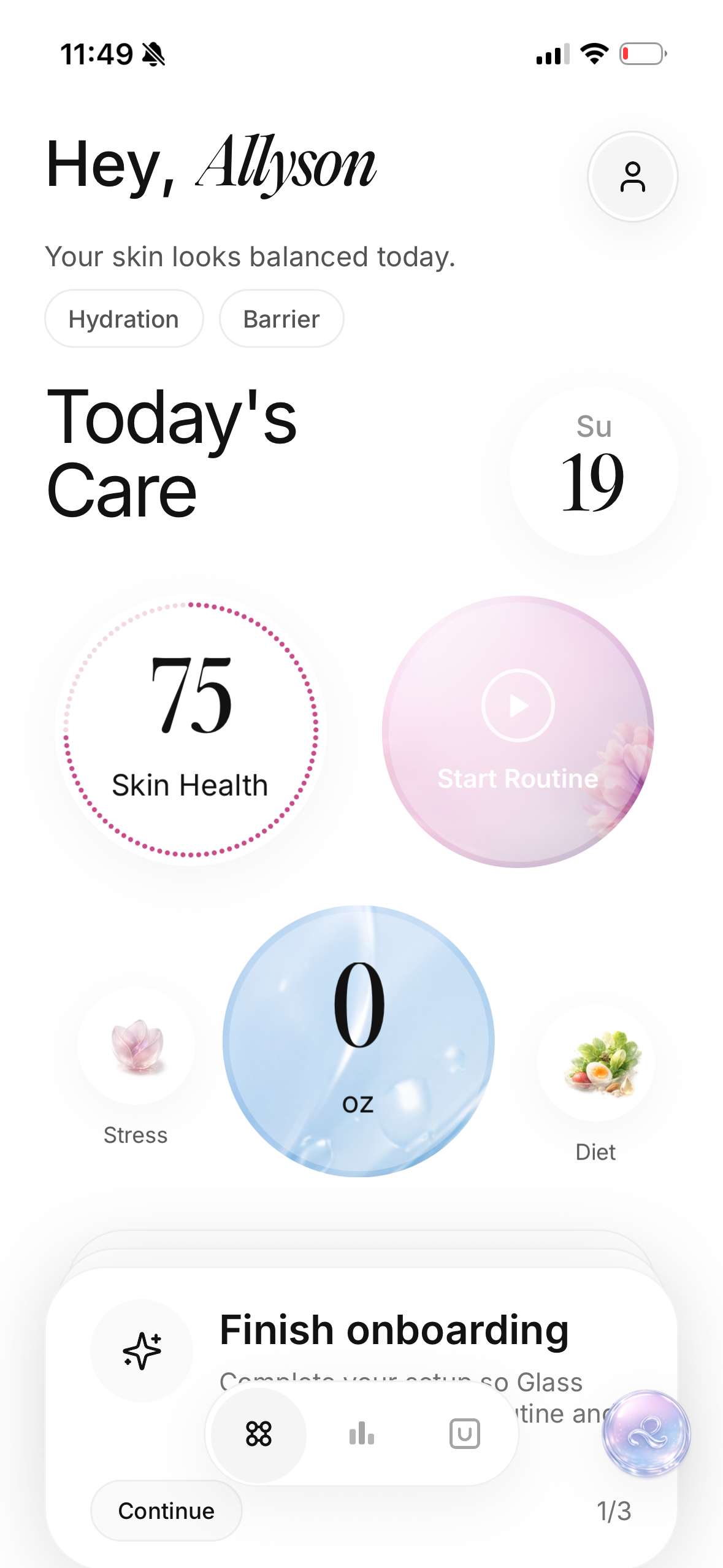
What a good skincare routine tracker should actually do
After a month, I care less about whether a tracker has a pretty calendar and more about whether it helps me make fewer bad decisions.
A good skincare routine tracker should help with:
| Feature | Why it matters | What to avoid |
|---|---|---|
| AM and PM routine checkoffs | Shows whether consistency is real | Streak pressure that makes skipped days feel bigger than they are |
| Product start dates | Helps connect changes to reactions | Blaming the newest product without enough time |
| Progress photos | Makes slow change visible | Comparing different lighting and angles |
| Skin notes | Captures context memory misses | Long diary entries you will never reread |
| Active scheduling | Reduces retinol and exfoliant conflicts | Stacking too many treatments in one week |
| Product shelf | Keeps what you own organized | Turning tracking into shopping |
The last row matters.
Product tracking should make you buy less recklessly. If it makes you want to collect more, it is doing the wrong job.
Where Glass fits for me
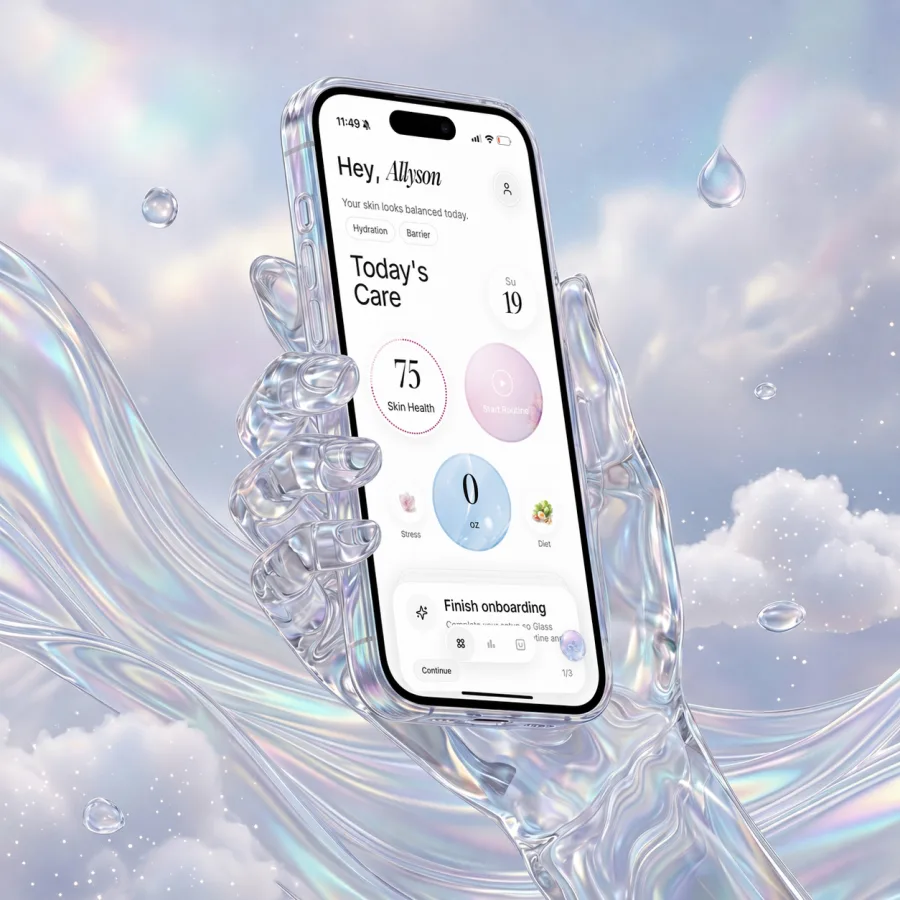
This is the part I wanted from a tracker: routine, products, photos, and skin changes in the same place.
Not because an app can magically know everything about my face. It cannot. But because separate notes create separate stories. My product shelf says one thing. My camera roll says another. My memory says something else. A routine tracker brings those pieces closer together so the pattern is easier to see.
That is what I like about using Glass for this kind of month.
You can build the routine, check off the steps, keep products organized, scan or log changes, and look back at progress without trying to reconstruct everything from scattered photos and half-remembered product dates. The Skin Assistant is most useful when it has context: what you used, when you used it, and what changed after.
That does not replace judgment.
It gives judgment better inputs.
My 30-day tracking plan
If I were starting again, I would not overbuild it.
I would do this:
Days 1-3: Baseline
Use the routine you already have unless it is clearly irritating your skin. Track what you actually do. Do not improve anything yet. The goal is to see the truth before you edit it.
Take one baseline photo in normal light. Write a plain note about your current concerns: dryness, oiliness, breakouts, redness, texture, dark spots, or irritation.
Days 4-10: Make the routine repeatable
Fix the schedule before changing the products. Move the night routine earlier if you keep skipping it. Set a reminder that fits your real evening. Create a fallback routine for tired nights.
Do not add a new active here unless your routine is already stable.
Days 11-20: Watch one variable
If you need to test something, test one thing. One cleanser. One moisturizer. One retinol schedule. One exfoliation frequency. Not a full reset unless your skin is actively angry.
Mark the start date. Take photos in the same light. Give the change enough time to become a pattern.
Days 21-30: Decide what earned its place
Look back at the month. Which steps did you actually repeat? Which product kept causing confusion? Which nights led to irritation? Which simple version saved the routine when life got messy?
Then decide what stays.
That is the reward of tracking. You stop making every decision from today's face.
The mistakes I would avoid
The first mistake is tracking too much. A huge system feels satisfying until you have to maintain it on a Tuesday night when you are tired.
The second mistake is changing too much because the tracker makes you more aware. Awareness is useful, but it can also make you impatient. If you look at your skin every day with new intensity, every tiny change feels like instructions.
The third mistake is trusting photos without controlling the setup. Different lighting can make calm skin look rough and irritated skin look fine.
The fourth mistake is using tracking to prove a product worked before it had a fair chance. Some products feel better quickly. Others need consistency. Some are not right for you at all. The tracker helps you separate those possibilities, but only if you give it time.
The fifth mistake is ignoring comfort. If your skin burns, stings, flakes, or feels tight and shiny, the tracker should help you pause. It should not make you push through just to complete a plan.
What changed after 30 days
My skin did not become perfect.
My decisions got better.
That was enough.
I stopped changing products every time I had a bad morning. I stopped blaming moisturizer for problems that started with an overactive schedule. I stopped pretending I was consistent when I was skipping the boring steps. I stopped taking random photos and calling them evidence.
Most importantly, I learned which version of my routine I could actually live with.
That is the part people underestimate. A skincare routine is not just a list of good products. It is a behavior you repeat under normal conditions. If it only works when you are excited about skincare, it will not hold.
Tracking made the routine more honest.
And once it was honest, it became easier to improve.
FAQ
How often should I take skincare progress photos?
One to three times a week is enough for most people. Daily photos can make you overreact to normal fluctuation. Use the same lighting, same angle, and same distance so the comparison is fair.
What should I track if I only want the basics?
Track morning completion, night completion, product start dates, active nights, irritation, breakouts, dryness, oiliness, and progress photos. That gives you enough context without turning the process into work.
How long should I track before changing products?
If a product burns, causes obvious irritation, or triggers a concerning reaction, stop and use judgment. Otherwise, try to watch a pattern for at least a couple of weeks before blaming or praising it. Some changes need more time, especially tone, texture, and barrier comfort.
Is a skincare tracker better than a spreadsheet?
Use the one you will actually maintain. A spreadsheet can work if you like spreadsheets. A tracker app is better if you want reminders, photos, product shelves, routine checkoffs, and notes in one place.
Can tracking help with acne?
Tracking can help you see patterns around product changes, active frequency, skipped routines, irritation, and healing time. It does not replace medical care for persistent or painful acne, but it can make conversations with a dermatologist clearer because you have dates, photos, and routine history.