I get the appeal.
Glow Recipe makes skin care look easy. Pink jars. Dewy bottles. Fruit names. A routine that feels like it should turn tired skin into clear, bouncy glass by the weekend.
The problem is that glass skin does not come from using every glowy product at once.
That is where people get into trouble. They buy the kit, add the serum they already own, keep their exfoliating toner, use a rich cream because their cheeks feel dry, then wonder why the glow turns sticky, red, bumpy, or greasy by lunch.
If I were building a Glow Recipe glass skin routine in May 2026, I would not start by asking which product is the most popular. I would ask a better question:
_Which product earns a real job in the routine?_
That question cuts the noise fast.

The short answer
The best Glow Recipe glass skin routine is not the longest one. It is the one that gives your skin water, comfort, a controlled glow step, and sunscreen without stacking every active in the cabinet.
For most people, I would build it like this:
| Step | Product lane | Best Glow Recipe fit | Why it earns the spot |
|---|---|---|---|
| 1 | Cleanse | A gentle cleanser you already tolerate | Glass skin looks worse when the cleanser leaves you tight |
| 2 | Hydrate or brighten | Cloudberry Bright Essence Toner or a toner pad used carefully | Adds slip and brightness without needing three serums |
| 3 | Glow serum | Watermelon Glow Niacinamide Dew Drops | Gives the polished glow people usually want from the brand |
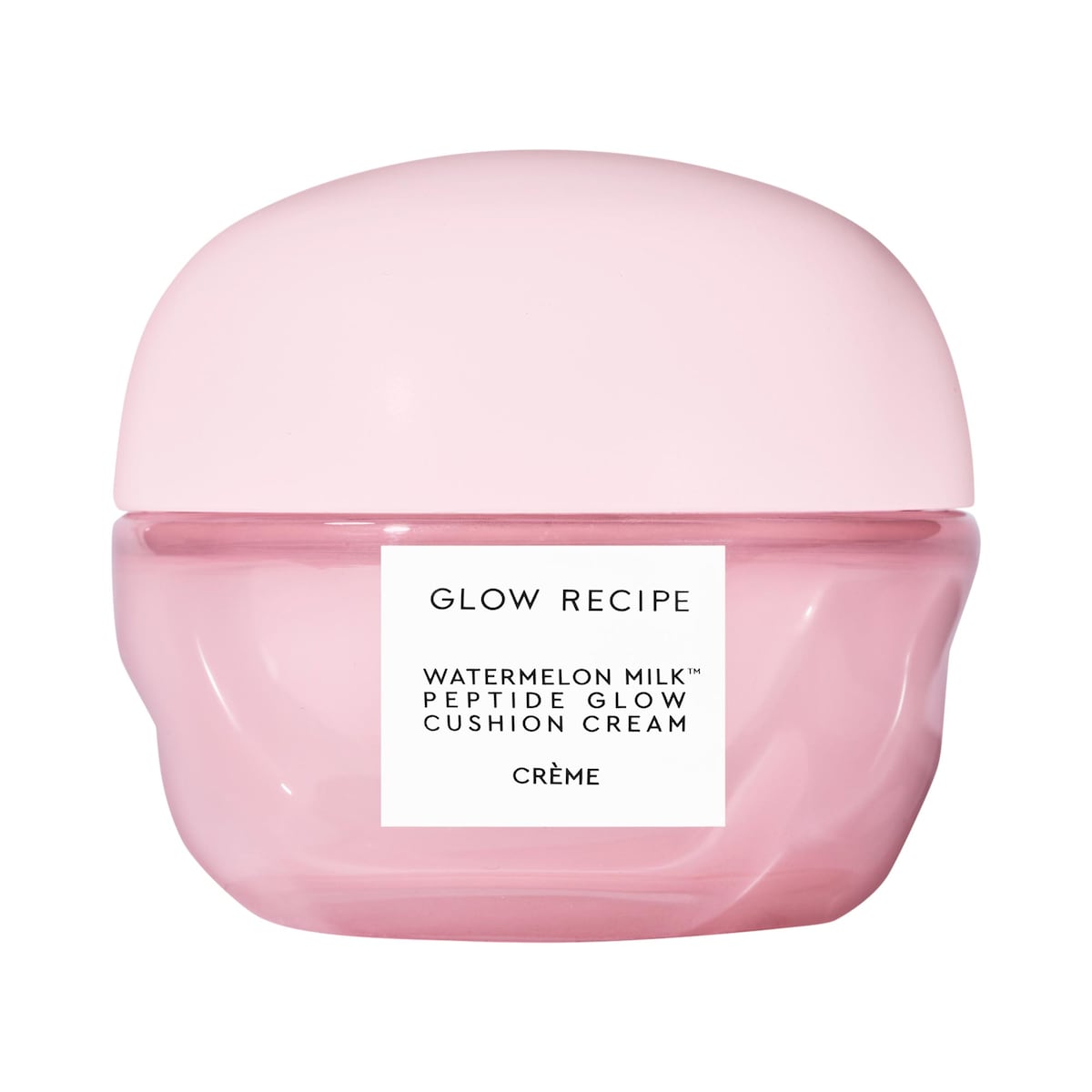
| 4 | Moisturize | Watermelon Milk Peptide Cushion Cream | Adds cushion, barrier comfort, and a smoother base |
| 5 | Protect | Sunscreen | The glow will not hold if your skin is getting irritated by daylight |
That is enough.
You can make it more specific for oily, dry, sensitive, or acne-prone skin, but the base idea stays the same: one prep step, one glow step, one moisturizer, and daily sunscreen.
The mistake I would avoid first
The easiest way to ruin this routine is to treat every Glow Recipe product as gentle because the packaging feels soft.
Soft branding does not mean every product should be used twice a day.
Toner pads can exfoliate. Niacinamide can duplicate across multiple steps. Vitamin C can be too much when the rest of the routine is already brightening. Dewy products can look greasy if the moisturizer underneath is too rich. A routine can be pretty and still be too busy.
I would rather have a calm glow that lasts than a shiny face that feels irritated.
That means the routine needs restraint.
Start with what your skin is missing
Before picking products, decide what kind of "not glowy" you are dealing with.
Flat skin is not one problem.
It can mean dehydration. It can mean dead surface buildup. It can mean irritation. It can mean your sunscreen is drying you out. It can mean makeup is clinging to rough patches. It can mean you are using too many treatments and your skin has stopped looking comfortable.
Those problems need different moves.
| If your skin looks... | The likely routine gap | What I would change first |
|---|---|---|
| Tight and dull | Not enough water or comfort | Add hydration and a better moisturizer before adding acids |
| Shiny but rough | Oil plus surface texture | Use exfoliating steps less often and keep moisturizer light |
| Red and glassy in a bad way | Barrier stress | Pause actives and rebuild with cleanser, moisturizer, SPF |
| Flat under makeup | Poor prep or dry patches | Use a cushiony cream in a thin layer before sunscreen |
| Glowy for one hour only | Finish product without enough moisture underneath | Fix hydration before chasing more shine |
This is why I do not love routines that start with a shopping list. The same product can be perfect or pointless depending on the gap.
If you want the kit, treat it like a map
The Real Glass Skin Kit is useful because it shows the kind of finish Glow Recipe is known for: hydrated, bright, juicy, and reflective.
I would still treat it as a map, not a command.
Kits are made to feel complete. Skin does not always need complete. Sometimes it needs fewer decisions.
If you are new to the brand, a kit can help you learn which texture you actually enjoy. Maybe you love Dew Drops but do not need another brightening step. Maybe your skin likes the moisturizer but the glow serum is too shiny under your sunscreen. Maybe the whole set feels good for special makeup days but too much for daily use.
That is normal.
The win is not finishing every product at the same speed. The win is learning which step changes your skin in a useful way.
The Glow Recipe products I would consider first
I would not start with ten products. I would start with the few that have the clearest role.
| Product | Image | Best for | I would skip it if... |
|---|---|---|---|
| Watermelon Milk Peptide Cushion Cream |  | Dry, dehydrated, sensitive-feeling, or makeup-prep routines | You hate any plush cream feel or get congested from richer textures |
| Watermelon Glow Niacinamide Dew Drops |  | Immediate glow, dullness, makeup-free polish, serum-primer use | Your routine already has niacinamide in several steps |
| Cloudberry Bright Essence Toner |  | Softer brightening and a more hydrated first layer | Your skin reacts easily to brightening products |
| Prickly Pear Peptide Mucin |  | Bounce, hydration, and a serum step that feels cushiony | You already use a peptide or hydrating serum that works |
| LHA + AHA Korean Watermelon Toner Pads |  | Texture, clogged-looking pores, and dull buildup | Your barrier is irritated or you already use exfoliating acids |
The point is not that these are the only good products. The point is that each one has a different job. Once two products are doing the same job, I would choose one and leave the other out.
My morning version
Morning is where Glow Recipe can either look beautiful or become too much.
I would keep the routine thin:
- Gentle cleanse or rinse.
- One hydrating or brightening layer.
- Dew Drops if you want visible glow.
- A small amount of Watermelon Milk Peptide Cushion Cream if your skin needs comfort.
- Sunscreen.
The amount matters more than people think. A thin layer of moisturizer can make sunscreen sit better. Too much moisturizer can make sunscreen slide, pill, or look heavier than it really is.
If you use Dew Drops, I would not automatically use a dewy sunscreen too. That combination can look good on dry skin and too slick on combination skin. If your face gets shiny by noon, make only one step dewy.
My night version
Night can be calmer.
This is where I would focus on repair instead of performance:
- Cleanse thoroughly, especially if you wore sunscreen or makeup.
- Use Cloudberry Essence Toner or a hydrating serum if your skin feels flat.
- Use Prickly Pear Peptide Mucin if your skin wants bounce and cushion.
- Finish with Watermelon Milk Peptide Cushion Cream.
I would not use exfoliating toner pads every night. That is the fastest way to turn a glow routine into a sensitivity routine.
For most people, one to three nights a week is a more realistic starting point for exfoliating pads, and even that depends on what else you use. If you already use retinoids, acne medication, benzoyl peroxide, prescription azelaic acid, or strong vitamin C, the pads may need to be occasional, not routine.
Dry skin needs cushion, not just shine
Dry skin can look dull even when the routine has expensive products.
The reason is simple: shine on top of under-moisturized skin does not look like glass skin. It looks like product sitting on dryness.
For dry skin, I would make Watermelon Milk Peptide Cushion Cream the anchor. The formula is fragrance-free and built around a cushion texture, glycerin, panthenol, squalane, ceramide NP, peptides, ectoin, beta-glucan, and other support ingredients. Glow Recipe describes it as a moisturizer for dry and sensitive skin, and that is the lane where it makes the most sense.
I would use Dew Drops only after the skin feels comfortable. If the cheeks still feel tight, I would fix that before adding more finish.
Dry skin version:
| Time | Routine |
|---|---|
| Morning | Rinse, Cloudberry or hydrating serum, Cushion Cream, sunscreen |
| Makeup day | Add Dew Drops before cream or mix a small amount into the moisturizer |
| Night | Cleanse, Prickly Pear or hydrating serum, Cushion Cream |
The mistake dry skin makes is chasing glow when it really needs moisture retention.
Oily skin needs fewer dewy layers
Oily skin can still be dehydrated. That is the trap.
If your skin feels oily and tight at the same time, you may need water and a light seal, not a heavy cream or five matte products. But I would still be careful with Glow Recipe's dewier steps.
For oily skin, Dew Drops can be enough. You may not need Cushion Cream in the morning, or you may need only the smallest amount on dry zones.
Oily skin version:
| Time | Routine |
|---|---|
| Morning | Gentle cleanse, Dew Drops or a light hydrating layer, sunscreen |
| Night | Cleanse, light serum, moisturizer only where needed |
| Exfoliation | Toner pads once or twice weekly if the skin tolerates acids |
I would avoid using a dewy serum, rich cream, dewy sunscreen, and glow makeup base all in the same morning. That is not glass skin. That is a stack of finishes competing with each other.
Sensitive skin should move slower
Sensitive skin does not care that a product is popular.
If your skin is redness-prone, reactive, or recovering from over-exfoliation, I would skip the more active steps at first. Start with cleanser, Cushion Cream, and sunscreen. Once the skin is calm for a week or two, add one Glow Recipe step and watch what happens.
The fragrance-free part of Watermelon Milk Peptide Cushion Cream makes it more interesting for sensitive skin than some older fruit-forward products. Still, patch testing matters. Sensitive skin is not a personality type; it is a pattern you have to respect.
The rule is simple: one new product at a time.
If your skin starts stinging, flushing, or getting tiny irritated bumps, do not keep adding products to fix it. Remove the newest step and go back to the routine that felt calm.
Acne-prone skin should separate glow from treatment
Acne-prone skin can use Glow Recipe. It just needs a cleaner boundary.
I would not ask a glass-skin routine to also be the entire acne treatment plan. That is how routines get crowded. If you use acne medication, keep that as the treatment lane and let Glow Recipe handle hydration, finish, or comfort.
For acne-prone skin, I would be careful with:
- using too many niacinamide products at once
- adding exfoliating pads on top of acne actives
- using a rich cream all over when only the cheeks are dry
- assuming every post-product bump is purging
- changing the whole routine in one week
The best acne-prone Glow Recipe routine is boring in the right places. Use the glowy product where it helps. Keep the treatment plan steady. Do not turn every step into an active step.
The order I would use
Product order should follow texture and function.
Use watery steps first, serum-like steps next, cream after that, sunscreen last in the morning.
Simple order:
- Cleanser
- Toner, essence, or toner pad
- Serum or Dew Drops
- Moisturizer
- Sunscreen in the morning
If you use toner pads, use them after cleansing. If your skin feels dry after the pad, do not add another active to prove the routine is working. Add hydration and stop.
If you use Dew Drops as a makeup prep step, keep it under moisturizer or sunscreen unless the product layers better for you the other way. Some people like it before cream. Some like it mixed into cream. Some like it over moisturizer before sunscreen. The best order is the one that does not pill.
How I would test the routine for two weeks
Do not judge this routine by one morning.
Use the same lighting and check the same signals:
| Signal | Good sign | Bad sign |
|---|---|---|
| Tightness | Skin feels comfortable after cleansing and by afternoon | Cheeks feel tight even under product |
| Texture | Makeup or sunscreen sits smoother | New roughness, burning, or sandpapery patches |
| Shine | Skin looks fresh, not greasy | Forehead and nose feel slick fast |
| Breakouts | No new pattern of clogged bumps | New clusters where you applied richer products |
| Redness | Skin looks calmer after the routine settles | More flushing, stinging, or heat |
I would take photos on day one, day seven, and day fourteen in the same window light. Not because a routine should transform your face in two weeks, but because glow is easy to misread. Lighting, sleep, stress, and sunscreen finish can trick you.
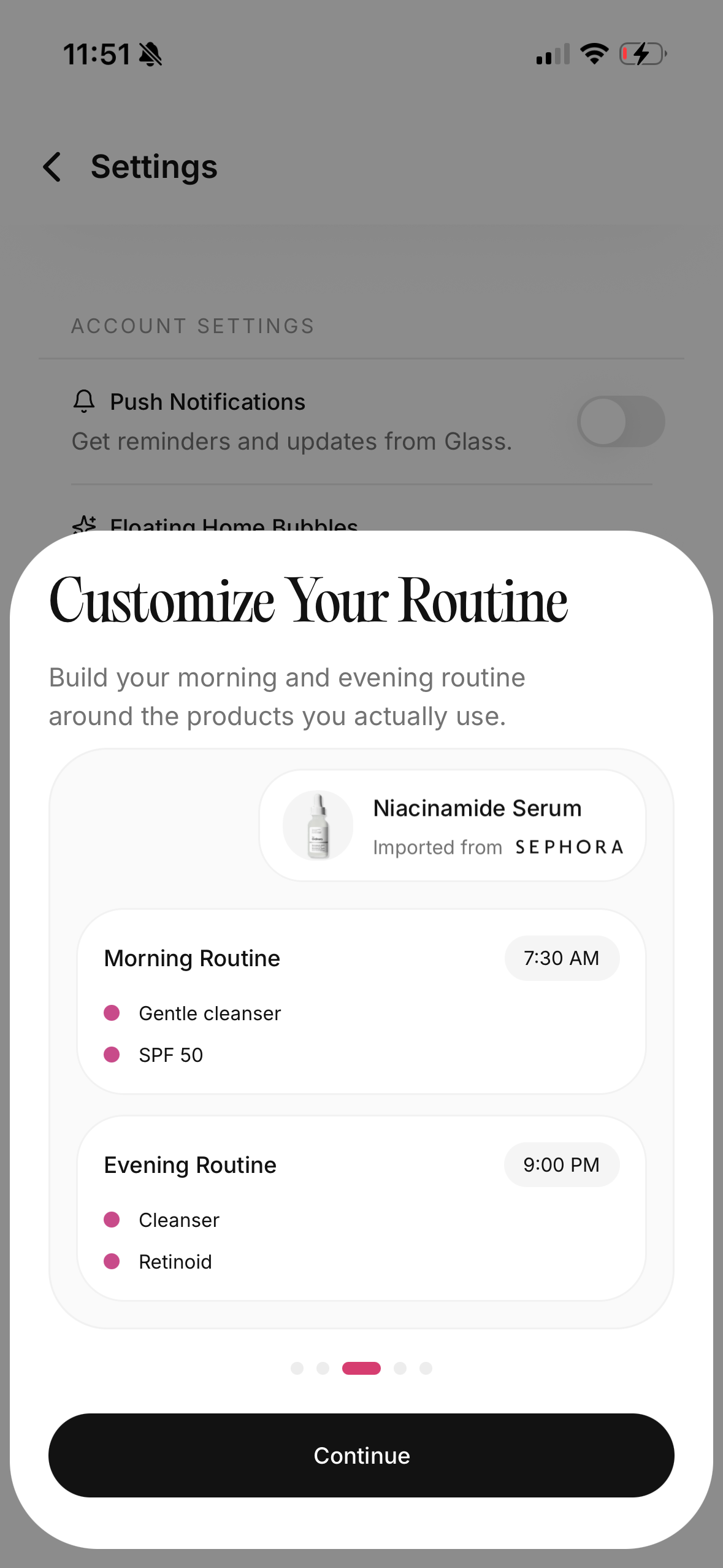
Glass is useful for this because you can track products and routine consistency instead of relying on memory. If you want a calmer way to monitor what is changing, start with the Glass routine tracker and keep the variables clean.
What I would not buy immediately
I would not buy the jumbo size of anything first.
I would not buy three brightening products at once.
I would not buy exfoliating pads if my skin is already stinging.
I would not buy a full Glow Recipe routine if I already own a cleanser, moisturizer, and sunscreen that work. Use the brand to fill a gap, not to replace the stable parts of your routine for no reason.
The products most likely to be worth testing first are the ones that solve a specific problem:
- Dew Drops if you want a polished glow without makeup
- Cushion Cream if your moisturizer feels too light
- Cloudberry Essence Toner if your skin looks flat and needs a softer prep layer
- Prickly Pear Peptide Mucin if you want bounce and hydration
- Toner pads if texture is the issue and your barrier is ready
That is a better shopping rule than "buy the whole routine."
Bottom line
A good Glow Recipe glass skin routine should feel controlled.
It should make your skin look fresher without making it feel coated. It should give you enough hydration before it asks for shine. It should use active steps carefully. It should leave room for sunscreen, because no glow routine survives without daily protection.
If I were rebuilding it in May 2026, I would start with the smallest routine that solves the real problem: one prep step, one glow step, one moisturizer, and sunscreen.
Then I would earn every extra step.
FAQ
Is Glow Recipe good for a glass skin routine?
Yes, Glow Recipe can work well for a glass skin routine if you choose products by job instead of using every dewy product together. The strongest lanes are hydration, glow finish, gentle-looking brightness, and cushiony moisturizer support.
Which Glow Recipe product should I start with?
Start with the product that matches your routine gap. Dew Drops makes sense for visible glow. Watermelon Milk Peptide Cushion Cream makes sense for dry or tight skin. Cloudberry Essence Toner makes sense when you want a softer brightening prep step.
Can I use Glow Recipe Dew Drops every day?
Many people can use Dew Drops daily, but check the rest of your routine for niacinamide and dewy layers. If your skin gets sticky, shiny, or irritated, use less product or rotate it instead of adding more steps.
Are Glow Recipe toner pads safe for daily use?
Some skin may tolerate frequent toner-pad use, but I would not start daily. If the pads exfoliate or target tone and texture, begin slowly and avoid layering them with other strong actives until you know how your skin responds.
What is the best Glow Recipe routine for dry skin?
For dry skin, keep the routine focused on comfort: gentle cleanse, hydrating or brightening prep, Watermelon Milk Peptide Cushion Cream, and sunscreen in the morning. Add Dew Drops only when your skin already feels moisturized enough.
What is the best Glow Recipe routine for oily skin?
For oily skin, keep the dewy layers minimal. Use Dew Drops or a light hydrating layer, then sunscreen. Save richer moisturizer for dry zones or nighttime if your skin does not need it all over in the morning.