Sets are dangerous.
Not because they are bad.
Because they feel decided for you.
That is the whole appeal of a Glow Recipe kit. The colors match. The steps look complete. The names make the routine feel softer than it probably feels when you are standing in the bathroom trying to decide what goes on first.
I get it. If a kit promises glass skin, dewy skin, or a complete routine, it feels easier than building a routine one product at a time.
But the best Glow Recipe set in May 2026 is not the biggest one. It is the one that solves the exact gap in your current routine without making you use four products you did not need.
That is the buying line.

The short answer
If I were buying a Glow Recipe set in May 2026, I would choose by routine problem, not by how pretty the bundle looks.
If you want to test the brand, choose a small kit with minis. If you want a full glass-skin routine, choose a routine kit only if you will actually use every step. If you already own cleanser, moisturizer, and sunscreen, skip the complete-set fantasy and buy the one product that fills the gap.
Here is the simpler way to think about it:
| What you want | Best Glow Recipe set lane | What to avoid |
|---|---|---|
| Try the brand without committing | Mini or trial set | Full-size routine bundle before you know the textures |
| Build a glow routine | Glass skin routine kit | Stacking every dewy step every morning |
| Fix dry, flat skin | Moisturizer plus hydrating serum lane | Buying exfoliating pads first |
| Add makeup-prep glow | Dew Drops or dewy set lane | Pairing dewy serum, rich cream, dewy SPF, and glowy base all at once |
| Shop for value | Set where every item has a real job | Set with two or three products that repeat the same role |
That last row is where most people lose money.
A set is only a value if you would have bought most of it separately.
The mistake people make with Glow Recipe kits
The mistake is treating the kit like a prescription.
It is not.
A skincare set is a suggestion. It is a shortcut. It is a way to try a brand's routine logic. It should not override your skin's actual pattern.
If your face is already oily by noon, you do not need every dewy step just because the box calls it glass skin. If your barrier is irritated, you do not need exfoliating pads because the routine looks incomplete without them. If your moisturizer already works, you do not need a new jar just to make the set feel finished.
Glow Recipe is good at making skincare feel fun. That is part of the brand's power. But fun products still need boring jobs.
Cleanse. Hydrate. Treat. Moisturize. Protect.
If two products in the set are fighting for the same job, one of them may be extra.
The Glow Recipe set decision table
This is how I would sort the common Glow Recipe set lanes before buying.
| Set lane | Image | Best for | I would skip it if... |
|---|---|---|---|
| Glass skin routine kit | | Someone who wants a complete glow routine and has room for multiple new steps | Your skin is reactive, acne-flaring, or already using strong actives |
| Dewy mini kit |  | Testing the Glow Recipe finish before buying full sizes | You already know dewy serums make you greasy |
| Moisture comfort lane | 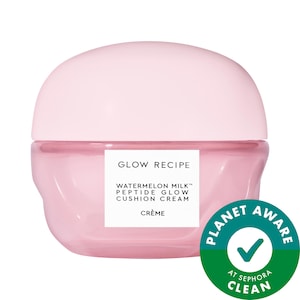 | Dry, tight, or makeup-clinging skin that needs cushion | Your current moisturizer is already perfect |
| Brightening lane |  | Dull skin that wants a softer prep step | You are already using strong vitamin C or exfoliating acids |
| Texture lane |  | Congested-looking pores or rough texture when the barrier is calm | Your skin stings, flakes, burns, or is retinoid-irritated |
Notice what is missing from that table: a universal winner.
There is no universal winner. There is only the set that matches the skin problem you actually have.
If you are new to Glow Recipe
Start small.
I know that sounds less exciting than buying the full routine, but it is the cleaner move.
Glow Recipe products have strong texture personalities. Dew Drops feel different from a plain serum. The Watermelon Milk Peptide Cushion Cream feels different from a gel moisturizer. Toner pads feel different from a watery toner. You do not know whether your skin likes the brand's finish until you wear it for a few normal days.
If I were new to the brand, I would use a mini set as a texture test.
The goal would not be transformation. The goal would be information:
- Does the glow look fresh or greasy?
- Does the serum layer under sunscreen?
- Does the moisturizer feel comfortable by hour six?
- Does the routine make me want to keep using it?
- Do any products duplicate what I already own?
That is enough. A first kit should answer those questions before it asks for full-size money.
If you want glass skin
Glass skin starts with comfort.
That sounds too plain, but it is true. Reflective skin looks better when the skin underneath is hydrated, calm, and smooth. If your face is tight, over-exfoliated, or patchy, adding a shiny serum can make the problem more visible.
For a Glow Recipe glass-skin routine, I would build around three ideas:
- One hydrating prep step
- One glow or treatment step
- One moisturizer that matches your skin type
That is enough for most people.
A routine might look like this:
| Step | Product role | Glow Recipe example | Why it is there |
|---|---|---|---|
| 1 | Hydrating or brightening prep | Cloudberry Bright Essence Toner | Softens the first layer so the routine does not feel dry |
| 2 | Glow serum | Watermelon Glow Niacinamide Dew Drops | Adds the visible polished finish people usually want |
| 3 | Moisturizer | Watermelon Milk Peptide Cushion Cream | Gives dry or normal-dry skin cushion and comfort |
| 4 | Sunscreen | Your usual SPF | Keeps the routine from becoming a short-lived morning glow |
If your skin is oily, I would not use that exact routine in full every morning. I might use Dew Drops and sunscreen, then save the cushion cream for nighttime or dry zones.
If your skin is dry, I would let the moisturizer do more of the work and use less glow serum.
Glass skin is a finish. The routine still has to fit your face.
If you are deciding between a kit and one full-size product
Buy the kit when you need to learn the brand.
Buy the full-size product when you already know the role.
That rule saves money.
If you are not sure whether Glow Recipe's dewy finish works for you, a kit makes sense. If you already know you want Watermelon Milk Peptide Cushion Cream because your current moisturizer is too light, buy the cream and skip the extras.
Sets are most useful when they reduce risk. They are least useful when they create clutter.
I would ask this before checkout:
Would I buy at least two of these products on purpose?
If yes, the set may be worth it.
If no, you are buying packaging, not value.
The dry skin version
Dry skin should not start with shine.
It should start with cushion.
If your cheeks feel tight after cleansing, if makeup clings around the mouth, or if sunscreen feels stretched over your face by lunch, the moisturizer lane matters more than the glow lane.
That is where the Watermelon Milk Peptide Cushion Cream is the most interesting. Glow Recipe describes it as a fragrance-free, silicone-free cushion cream for dry and sensitive skin, with a formula built around 10+ peptides, watermelon extract with squalane, glycerin, panthenol, ceramide NP, sodium hyaluronate, beta-glucan, allantoin, ectoin, and other comfort ingredients.
I would use it like this:
Morning:
- Rinse or gentle cleanse
- Light hydrating step if needed
- Cushion Cream
- Sunscreen
Night:
- Cleanse
- Hydrating serum if you already tolerate it
- Cushion Cream
If you also want Dew Drops, use less than you think. Dry skin can still look greasy when the routine stacks too many shiny layers.
The oily skin version
Oily skin needs restraint.
Not punishment. Restraint.
If your skin is oily but dehydrated, Glow Recipe can still work. You may like the water-based glow, the light serum feel, or a moisturizer used only on tight zones. But a full dewy kit can become too much fast.
For oily skin, I would start with one Glow Recipe step:
- Dew Drops if the goal is glow without makeup
- Toner pads once or twice weekly if texture is the issue and your barrier is calm
- A small amount of cushion cream only on dry zones
I would not use dewy serum, cushion cream, dewy SPF, and glowy makeup primer together unless I had already tested the combination.
The face does not need to look wet to look healthy.
The sensitive skin version
Sensitive skin should not be impressed by a bundle.
It should be impressed by consistency.
If your skin flushes easily, stings from normal products, or gets tiny irritated bumps when you change too much at once, treat any kit like a slow introduction. Do not start every product on the same day.
Use one product for several days. Then add the next one.
I would start with the gentlest-looking role first, usually the moisturizer or a simple hydrating step. I would leave exfoliating toner pads for later, and I would skip them entirely if the skin is already irritated.
The fragrance-free positioning of the Watermelon Milk Peptide Cushion Cream is useful, but it does not remove the need to patch test. Sensitive skin is individual. A product can be well designed and still not be your product.
The acne-prone version
Acne-prone skin should separate glow from treatment.
That is the cleanest rule.
If you already use benzoyl peroxide, adapalene, tretinoin, salicylic acid, azelaic acid, or prescription acne care, a Glow Recipe set should not become another pile of actives. Let your acne treatment stay in the treatment lane. Let Glow Recipe handle hydration, comfort, or finish.
I would be careful with:
- using exfoliating pads on top of retinoid nights
- adding multiple niacinamide products at once
- applying a rich cream all over when only the cheeks are dry
- assuming new bumps are purging
- changing cleanser, serum, moisturizer, and SPF in the same week
If you are acne-prone and curious, test one product at a time. Track where new bumps show up. A product that works on cheeks but not the jaw can still have a role if you use it by zone.
How to use a Glow Recipe set without overdoing it
Do not use every product twice a day just because it came in the same box.
That is the simplest fix.
I would create a schedule:
| Product type | Use frequency I would start with | Why |
|---|---|---|
| Gentle cleanser | Daily if it does not leave skin tight | Cleansing should not be the dramatic step |
| Hydrating toner or essence | Daily if comfortable | Usually easier to repeat than an active |
| Dewy serum | Morning or makeup days | The finish is the point, so use it when you want the finish |
| Exfoliating pads | 1-2 nights weekly at first | Texture work can backfire if rushed |
| Cushion moisturizer | Nightly or by dry zones | Comfort should be adjusted by skin area |
| Sunscreen | Every morning | No glow routine survives inconsistent SPF |
That schedule makes a set less chaotic.
You are not rejecting the kit. You are making it wearable.
The value test
A set is worth it when the routine math is honest.
Use this before buying:
- Count how many products you would buy separately.
- Remove anything that duplicates a product you already love.
- Remove anything that does not fit your skin type.
- Remove anything you would only use because it came in the box.
- Decide whether the remaining products still justify the price.
If the answer is yes, buy the set.
If the answer is no, buy the single product.
That is not less fun. It is how you keep skincare from becoming a drawer of almost-right products.
How I would track the first two weeks
The first two weeks should be boring.
That is good.
Use the products consistently enough to learn something, but not aggressively enough to create a reaction you cannot interpret.
I would track:
- date started
- which product changed
- morning tightness
- midday shine
- new bumps by location
- stinging or flushing
- makeup or sunscreen pilling
- whether the routine felt easy enough to repeat
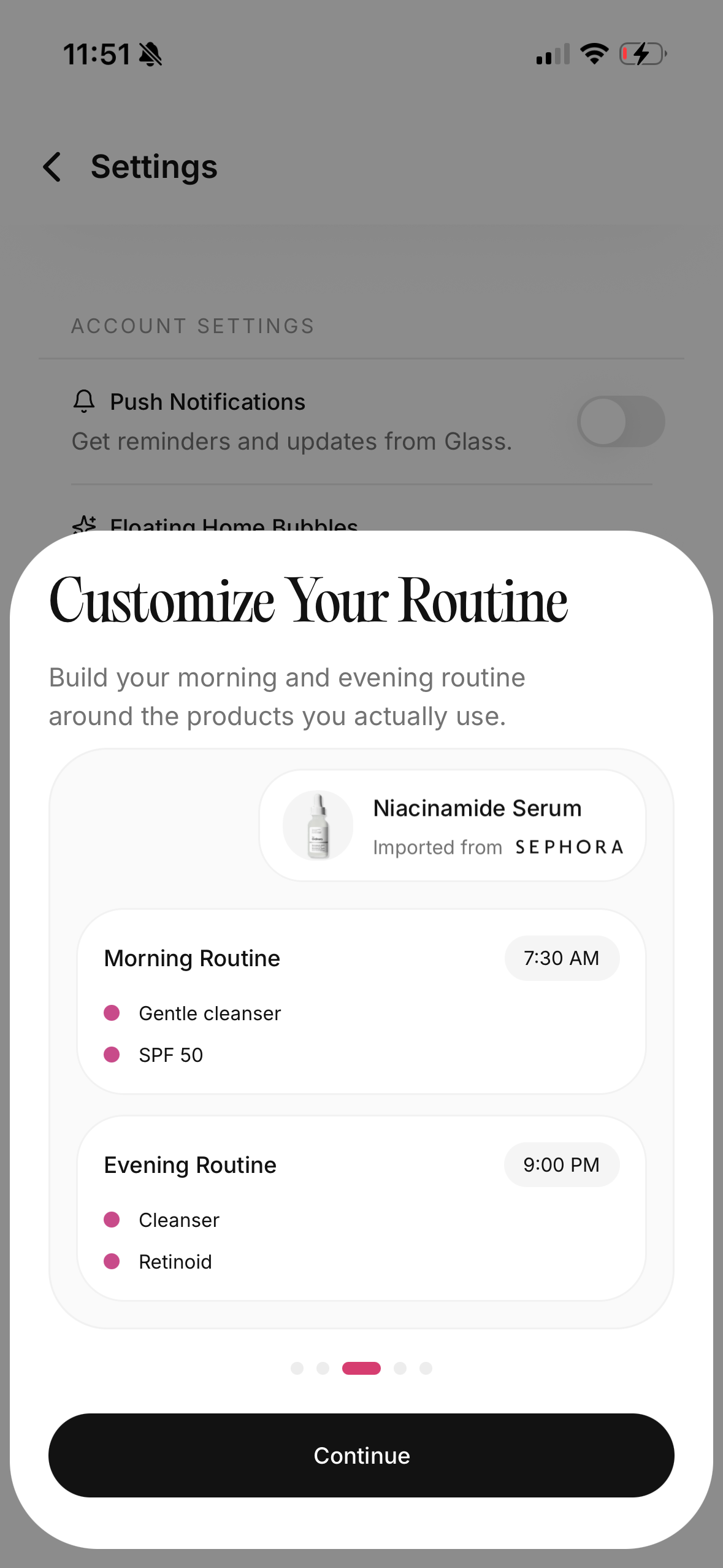
Glass helps here because the point is not just logging products. The point is catching patterns before you buy the next thing. If a set makes your skin look better but only when you use half of it, that is useful. If the moisturizer works but the glow serum makes sunscreen pill, that is useful too.
The win is knowing what to keep.
What I would buy first
If I were starting from zero, I would not buy the largest kit.
I would buy the smallest set that lets me test the textures I am actually curious about. If I already knew my skin needed comfort, I would buy the Watermelon Milk Peptide Cushion Cream instead of pretending I needed a full routine reset.
If I wanted the Glow Recipe look for makeup days, I would test the Dew Drops lane first.
If I wanted smoother texture, I would only test toner pads when my barrier was calm.
If I wanted glass skin, I would build the routine slowly: hydration, glow, moisturizer, sunscreen.
Not everything at once.
The bottom line
Glow Recipe sets can be worth buying in May 2026, but only when the set matches a real routine gap.
Buy a mini kit if you need to learn the textures. Buy a full-size product if you already know the missing step. Buy a routine set only if every product has a job and your skin can handle multiple new steps.
The best kit is not the one that looks most complete.
It is the one that leaves your skin calmer, your routine clearer, and your shelf less confusing than before.
Useful product references: Glow Recipe Watermelon Milk Peptide Cushion Cream, Glow Recipe value sets, Glow Recipe at Sephora.