Sunscreen is where a pretty routine becomes honest.
That is the part people skip.
Serums get the attention. Dew drops get the compliments. A fresh moisturizer makes the shelf feel new. But if the morning ends without sunscreen, the brightening routine is missing the step that protects the result.
That is why Glow Recipe Watermelon Glow Dew Shield SPF 30 is more interesting than another pink bottle. It is Glow Recipe trying to make sunscreen feel like the rest of the brand: dewy, soft, easy, and pleasant enough to repeat.
As of May 2026, Glow Recipe lists Dew Shield at $35 and positions it as a broad-spectrum SPF 30 with PA+++ protection, no white cast, no pilling, and a dewy finish. Sephora lists the same product as a hydrating fluid sunscreen with avobenzone, homosalate, and octisalate as the active sunscreen filters.
My short read: I would consider it if I wanted sunscreen to feel more like skincare and I liked a glow finish. I would be careful if my skin gets shiny fast, my eyes sting easily, or fragrance tends to bother my face.

The quick answer
Glow Recipe Dew Shield SPF 30 makes sense if you want a daily sunscreen that feels light, dewy, and easy to layer over a brightening or hydration routine. It is not the sunscreen I would buy for a matte finish. It is the sunscreen I would test when the main problem is consistency: you know you should wear SPF every morning, but most formulas feel too chalky, too greasy, too thick, or too separate from the rest of your routine.
The product’s best promise is not that it replaces your whole morning routine. It is that it might make the last step feel less annoying.
That matters.
| If you care most about... | My read on Dew Shield |
|---|---|
| No white cast | Strong fit because the formula uses chemical filters |
| Makeup layering | Worth testing because the texture is designed for a smooth dewy finish |
| Oil control | Probably not the first choice |
| Sensitive eyes | Patch slowly and test away from the eye area first |
| Dark spots or uneven tone | Useful only if you apply enough and reapply when needed |
| A matte sunscreen | Skip it |
| A Glow Recipe routine that needs SPF | The most logical finishing step |
The whole decision comes down to wear.
Not the bottle.
Not the fruit story.
Wear.
What makes it different from the old Glow Recipe sunscreen problem
Glow Recipe sunscreen has history.
The brand’s earlier sunscreen reputation was complicated because people complained about pilling and wear issues. Dew Shield is clearly built as the answer to that problem. The official product page leans hard into effortless application, no pilling, no greasiness, and makeup layering.
That tells me exactly how to judge it.
I would not judge this sunscreen by whether it sounds cute. I would judge it by what happens on a normal weekday:
- Does it spread evenly over moisturizer?
- Does it stay clear around the hairline?
- Does it pill when sunscreen meets serum?
- Does it sting around the eyes?
- Does makeup separate by lunch?
- Does the glow look healthy or oily after three hours?
- Do I actually want to put it on again tomorrow?
If the answer is yes, it wins. If the answer is no, the claims do not matter.

The finish is the real product
Dew Shield is for someone who likes a dewy finish.
That sounds simple, but it is the entire purchase.
If your face already gets oily by noon, a dewy sunscreen can turn into too much. If your cheeks get tight after cleansing, a dewy sunscreen can be exactly what makes the morning feel comfortable. If your makeup usually looks flat over matte sunscreen, this may give the skin a softer base. If your foundation already slides around, this may make that worse.
I would place it like this:
| Skin or routine type | How I would test it |
|---|---|
| Dry skin | Use after moisturizer and give it ten minutes before makeup |
| Normal skin | Try it over a light moisturizer first |
| Combination skin | Use less moisturizer on the T-zone and watch shine |
| Oily skin | Test on a day when you can check it at lunch |
| Sensitive skin | Patch test because the formula includes fragrance |
| Makeup wearer | Test with your real foundation, not just on a bare-skin day |
The mistake is buying a dewy sunscreen while secretly wanting a matte sunscreen.
I have made that kind of mistake with skincare before. The product does what it says, but I punish it because I wanted a different finish. Dew Shield is not hiding its personality. It wants the skin to look fresh.
Buy it only if fresh is the finish you want.
The ingredient story in plain English
The active sunscreen filters are avobenzone 3%, homosalate 7%, and octisalate 5%. That makes this a chemical sunscreen formula, which is why it can go on clear without the white cast that mineral zinc or titanium formulas can leave.
The skincare side includes niacinamide, glycerin, vitamin E, watermelon seed oil, hyaluronic acid, rice extract, and rice germ extract. In plain English, the formula is trying to do three jobs:
- Protect against UV exposure.
- Add a hydrated, dewy feel.
- Fit into a brightening-focused routine without feeling like a separate beach sunscreen.
Niacinamide is the obvious Glow Recipe bridge because the brand already has a strong association with dewy brightening products. Glycerin and hyaluronic acid support the hydration feel. Vitamin E and watermelon seed oil make the formula sound more skin-care-like than a basic SPF.
That does not mean everyone needs it.
Sunscreen has to be used generously. A beautiful formula used too thinly is not doing the job you think it is doing. The American Academy of Dermatology recommends broad-spectrum SPF 30 or higher for daily protection, and the FDA’s sunscreen directions generally point people toward applying before sun exposure and reapplying at least every two hours when exposed.
So the question is practical: does this formula make you more likely to use enough?
If yes, the skincare extras are a bonus.
If no, choose a sunscreen you will actually wear.
Where it fits in a Glow Recipe routine
I would put Dew Shield at the end of the morning routine.
Not before moisturizer.
Not mixed into moisturizer.
At the end.
The clean order is:
- Cleanser or rinse.
- Toner or light serum if you already use one.
- Moisturizer if your skin needs it.
- Glow Recipe Dew Shield SPF 30.
- Makeup, once sunscreen has settled.
If you use Watermelon Glow Niacinamide Dew Drops, Dew Shield becomes the reality check. Dew Drops can make skin look brighter and smoother, but sunscreen is the step that keeps the morning routine from working against itself.
If you use the Watermelon Glow PHA+BHA Pore-Tight Toner, I would be even more consistent with SPF. Exfoliating routines and casual sun protection do not belong together.
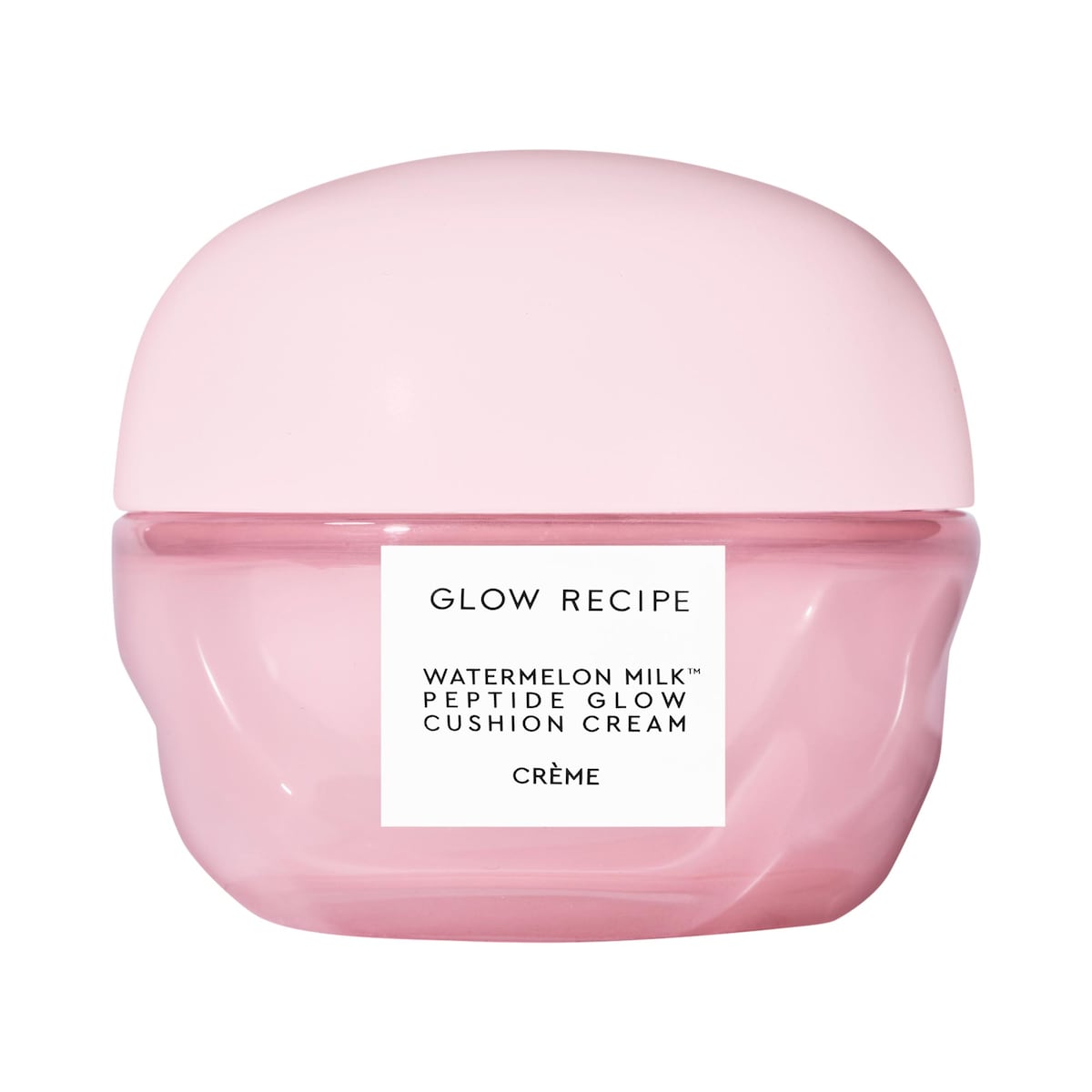
If you use Watermelon Milk Peptide Cushion Cream, test the amount. A cushion cream plus dewy sunscreen may feel beautiful on dry skin and too rich on combination skin.

The makeup test I would run
I would not test this sunscreen on a day when nothing matters.
That gives false confidence.
I would test it under the makeup I actually wear, on a day when I can check my face at three points: after application, after lunch, and before washing my face.
Here is the test:
| Time | What to check |
|---|---|
| Right after applying | Does it spread evenly or grab onto dry patches? |
| Ten minutes later | Does it settle or stay wet? |
| After foundation | Does makeup glide, pill, or separate? |
| Midday | Is the glow still fresh or now greasy? |
| End of day | Did it sting, migrate, or make you want to skip it tomorrow? |
The ten-minute wait matters. A lot of pilling is not only the product. It is the stack. Too much serum, too much moisturizer, and sunscreen applied while everything is still wet can make even good formulas behave badly.
If Dew Shield pills, I would troubleshoot in this order:
- Use less moisturizer.
- Skip one serum.
- Let each layer settle.
- Apply sunscreen in smoother sections instead of rubbing forever.
- Try it on bare skin to see whether the product or the stack is the issue.
Do not rebuild the whole routine around one sunscreen unless the sunscreen earns that much trouble.
Who I would buy it for
I would buy Dew Shield for someone who wants sunscreen to feel elegant.
That person does not want a chalky mineral cast. They do not want a beach smell. They do not want a thick cream that fights foundation. They want the sunscreen step to feel like the rest of the routine belongs together.
It is especially interesting for:
- dry or normal skin that likes a glow finish
- people who already use Glow Recipe in the morning
- people trying to be more consistent with daily SPF
- makeup wearers who hate heavy sunscreen
- anyone who wants a clear chemical sunscreen instead of a mineral cast
- brightening routines built around niacinamide, vitamin C, acids, or dark-spot care
The last group is the one I care about most.
If you are spending money on dark-spot products and skipping sunscreen, the routine is arguing with itself. Dew Shield may be a good fit because it keeps the Glow Recipe feel while adding the protection step that the rest of the routine depends on.
Who should skip it
Skip it if you want matte skin.
That is the cleanest answer.
I would also skip or patch slowly if fragrance is a common problem for you. Sephora’s ingredient listing includes fragrance, and that is enough reason to be cautious if your skin often reacts to scented skincare.
I would be careful if sunscreens usually sting your eyes. Chemical filters can be comfortable for many people, but eye sting is personal. The only way to know is to test, and I would test conservatively before wearing it on a long outdoor day.
I would also skip it if you already own a sunscreen you love and wear generously. Curiosity is not always a good reason to replace a working SPF.
That is not anti-product. That is just honest.
The best sunscreen is not the newest one. It is the one you wear enough, wear correctly, and do not avoid.
How it compares to nearby options
I would compare Dew Shield against sunscreens by finish and behavior, not only by SPF number.
| Product | Image | Best reason to choose it | Skip if |
|---|---|---|---|
| Glow Recipe Dew Shield SPF 30 | | You want clear, dewy sunscreen that fits a Glow Recipe morning routine | You need matte oil control |
| Sofie Pavitt Face Screentime SPF 30 | 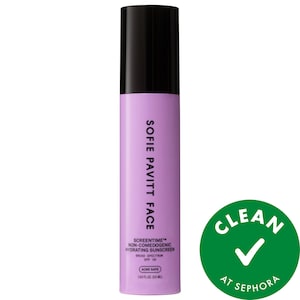 | You want an acne-conscious hydrating sunscreen lane | You dislike creamier sunscreen textures |
| Dr. Jart Cicapair Color Correcting Treatment SPF 30 | 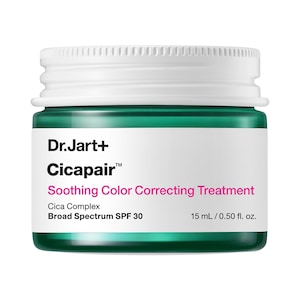 | You want redness color correction with SPF | You do not want a tint or mineral-style finish |
| Kiehl's Ultra Facial Moisturizer SPF 30 | 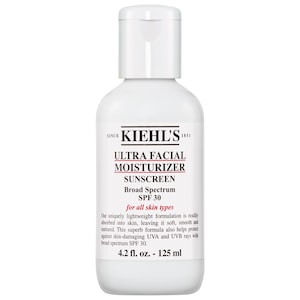 | You want a more classic moisturizer-with-SPF feel | You want a glossy Glow Recipe finish |
That is the practical split.
Dew Shield is not trying to be the most matte, most clinical, or most invisible-to-the-touch sunscreen in the world. It is trying to make SPF feel like a dewy skincare step. If that is what makes you consistent, it has a real lane.
The two-week test
I would test this for two weeks without changing the rest of the morning routine.
That is important.
If you start Dew Shield, a new vitamin C, a new cleanser, and a new foundation in the same week, you will not know what caused the shine, pilling, glow, sting, or breakout.
Keep the test boring:
| Day range | What to do |
|---|---|
| Days 1-2 | Patch along the jaw and cheek, away from the eye area |
| Days 3-5 | Wear it over your usual moisturizer with no makeup |
| Days 6-8 | Wear it under your usual makeup |
| Days 9-14 | Use it on normal mornings and track whether you avoid or enjoy it |
The last part matters most.
A sunscreen can look good in one bathroom mirror and still fail because you dread using it. The smell bothers you. The shine annoys you. The texture makes you use too little. Your eyes water. Your makeup lifts.
That is useful information. It means the product is not your daily SPF.
But if you reach for it without negotiating with yourself, that is the signal.
My May 2026 buying line
I would buy Glow Recipe Dew Shield SPF 30 if I wanted a dewy, clear, skincare-feeling sunscreen and I already knew I liked Glow Recipe’s finish.
I would not buy it just because the bottle is pretty.
I would not buy it to fix oiliness.
I would not buy it if fragrance usually turns my face unpredictable.
The best reason to buy it is simple: you want the sunscreen step to feel easier, and this formula makes you more likely to finish the morning routine properly.
That is enough.
Sunscreen does not need to be dramatic. It needs to be repeated.
If Dew Shield helps you repeat it, the product has done the most important job.
FAQ
Is Glow Recipe Dew Shield SPF 30 mineral or chemical?
It is a chemical sunscreen. Sephora lists avobenzone, homosalate, and octisalate as the active sunscreen ingredients.
Does Glow Recipe Dew Shield leave a white cast?
It should be less likely to leave a white cast than a mineral sunscreen because it uses chemical filters instead of zinc oxide or titanium dioxide. Still, test it in natural light before relying on it for an important day.
Can I use Glow Recipe Dew Shield with Dew Drops?
Yes. I would apply Dew Drops or other serum steps first, let them settle, then apply Dew Shield as the final skincare step before makeup.
Is SPF 30 enough for daily use?
SPF 30 is the daily minimum many dermatology organizations point people toward when paired with broad-spectrum protection and proper application. For long outdoor exposure, sweating, swimming, or intense sun, reapplication and coverage matter more than the label alone.
Does Glow Recipe Dew Shield work under makeup?
It is designed for makeup layering, but you still need to test your exact stack. Use less moisturizer, let layers settle, and check whether your foundation pills or separates by midday.
Useful references: Glow Recipe Dew Shield SPF 30, Sephora Dew Shield SPF 30 ingredient listing, AAD sunscreen recommendations, and DailyMed sunscreen label.