Progress photos can lie.
Not because your skin is lying. Because lighting lies. Angles lie. Fresh moisturizer lies. A good sleep night lies. A bad bathroom mirror lies even harder.
That is why a skincare progress tracker app can be useful.
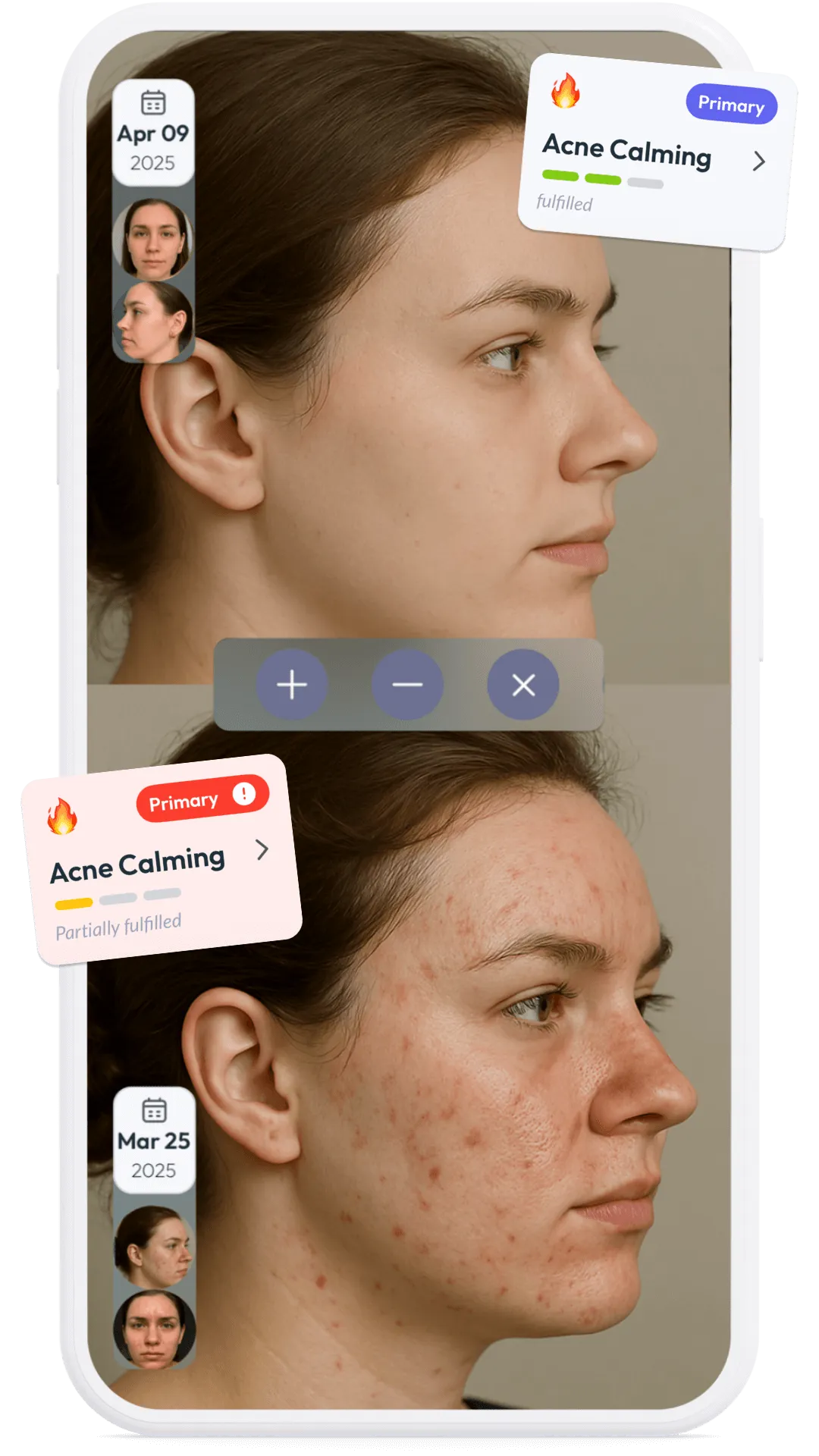
The right one does not just store selfies. It helps you slow down enough to see what is actually changing. It keeps your routine, dates, product switches, and skin notes in one place so you stop making decisions from memory.
That matters more than people admit.
Most skincare regret starts the same way: you change three products, forget which nights you skipped, stare at your face under different lighting, and decide nothing is working. Then you buy something else. The cycle repeats.
I compared the skincare tracking apps that stood out in May 2026 through a simple lens: which one helps a real person track visible progress without turning skincare into a second job?
The short answer
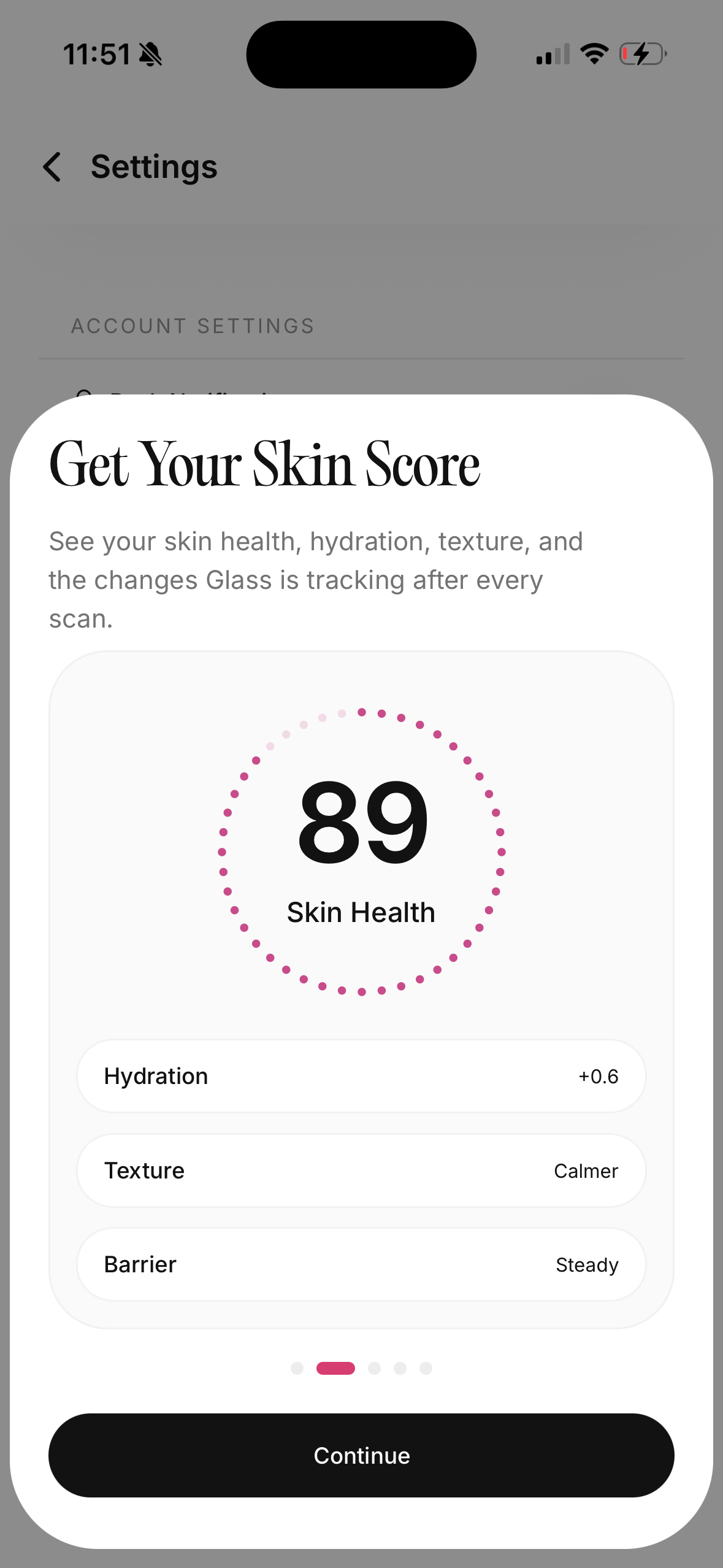
If you want skin scans, routine tracking, product history, and progress context in one calm loop, I would start with Glass.
If you mainly want daily score tracking from selfies, Dermaday is the clearest scan-first option. If you want ingredient depth and a large product database, Skin Bliss is stronger. If you want a feature-heavy scanner with product checks and chat, Lume Skin is worth comparing. If your focus is aesthetic treatments as much as skincare, GlowGuide fits a different lane.
The app I would skip is the one that only gives you a dramatic face score and no way to connect that score to what you actually did.
That is the whole point. A tracker should help you make fewer impulsive changes.
The skincare progress tracker apps I would compare in May 2026
| App | Best fit | Progress tools | Where it can disappoint |
|---|---|---|---|
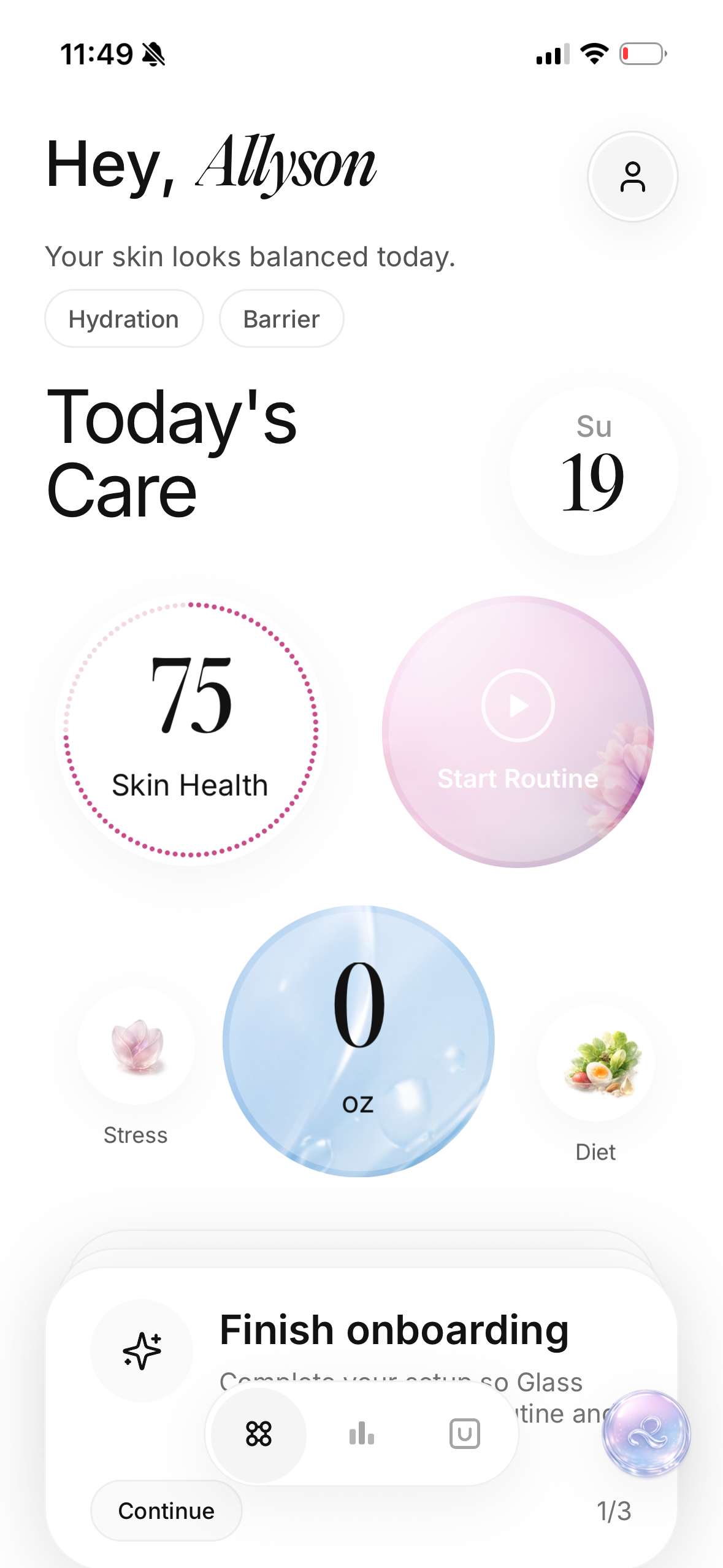 Glass Glass | People who want routine tracking, scan context, and progress reports together | Skin analysis, morning and night routines, product logging, reminders, reports, lifestyle notes | Deeper scan and analysis features require subscription access |
 Dermaday Dermaday | People who want scan-first progress tracking | Daily selfie scores, six skin dimensions, before-and-after comparison, charts, streaks | More score-centered than routine-centered |
 Skin Bliss Skin Bliss | Ingredient-minded users with bigger product shelves | Face scan, routine builder, product and shelf analysis, photo comparisons | Can feel like a full skincare operating system when you only need a simple tracker |
 Lume Skin Lume Skin | People who want scanning, product checks, chat, and routines in one app | Skin scanner, progress tracker, before-and-after photos, ingredient scanner, reminders | Broad feature set can blur what to trust first |
| GlowGuide | People tracking med spa treatments plus skincare | Treatment notes, guided progress photos, satisfaction tracking, product tracking, reminders | Better for aesthetic treatment documentation than daily skincare habits |
| Pimpl | People who want a quieter acne and skincare journal | Routine planner, product tracking, photo progress, habit notes | Less useful if you want full AI scan analysis and comparison scoring |
This is not a pure "best to worst" ranking.
It is a role map.
A teenager tracking acne flares does not need the same thing as someone starting tretinoin. Someone rebuilding a damaged-feeling barrier does not need the same thing as someone comparing Botox, microneedling, and product reactions. The best app is the one that matches the decision you keep getting wrong.
What a good tracker should actually track
I care less about whether an app looks futuristic and more about whether it records the things that explain change.
For skin, that usually means five layers:
- Photos taken in the same conditions.
- Products used that day.
- Morning and night routine completion.
- New product start dates.
- Notes about sleep, stress, cycle timing, travel, procedures, diet shifts, or irritation.
The photo matters, but it is not enough.
If you only track the photo, you can see that your skin changed. You still may not know why. If you only track the routine, you can see that you were consistent. You still may not know whether your skin tolerated the routine. The useful layer is the connection between them.
That is where I think skincare tracking gets interesting.
You want to catch patterns like:
- breakouts appearing two days after a new moisturizer
- dryness improving when cleanser use drops from twice daily to once daily
- redness spiking after exfoliating and retinoid use land too close together
- progress looking flat in the mirror but clearer in same-light photos
- a product seeming useless because you did not use it consistently enough to judge
A good app should make those patterns easier to notice.
1. Glass is the best fit if you want the full loop
Glass is the app I would start with if the problem is not just "I need progress photos" but "I need to understand my skin without constantly guessing."
The difference is the loop.
Glass is built around skin analysis, morning and night routine tracking, product logging, reminders, lifestyle context, and progress reports. That shape matters because skincare progress rarely comes from one isolated variable.
Maybe your skin looks calmer because you stopped over-cleansing. Maybe it looks dull because you skipped moisturizer under sunscreen for a week. Maybe your breakouts are not random. Maybe your barrier feels tight because you layered too many actives and then blamed the wrong product.
A tracker becomes useful when it helps you stop changing everything at once.
That is the part I like about Glass. It is not just a camera moment. It gives the scan somewhere to go. You can connect the state of your skin to the routine you are actually running, then watch the pattern over time.
That makes it a better fit for people who want:
- a morning and night routine they can actually follow
- product tracking without spreadsheet energy
- scan context that does not end after one selfie
- progress reports that help them make calmer decisions
- a place to track consistency, not just appearance
If your bigger problem is building the routine itself, start with how to build a skincare routine you will actually follow. If your bigger question is scan quality and app comparison, read best AI skin analysis app next.
2. Dermaday is the clearest scan-first progress app
Dermaday has a very direct promise: take a selfie, get a skin score, compare changes over time.
That is clean.
Its public page centers the app around six skin dimensions, before-and-after comparison, charts, projections, streaks, and a personalized morning and evening routine. It also says the app is not a medical device, which is a useful trust signal for this category because skincare apps should not pretend to diagnose disease.
The best use case for Dermaday is someone who wants visual accountability.
You changed your routine. You want to see whether texture, radiance, acne, pores, evenness, or hydration-like signals are moving in the right direction. You like scores. You like charts. You like the feeling of a daily check-in.
That can work.
The risk is that score tracking can become its own form of anxiety. If every morning becomes a referendum on your face, the app can make you more reactive instead of more patient.
I would use Dermaday with one rule: do not let a single-day score change make the decision for you. Look at the trend, not the mood of the morning.
3. Skin Bliss is strongest when products are the problem
Skin Bliss is the power-user option.
It is not just trying to track photos. It is trying to understand your face, your products, your shelf, your ingredients, your routine, and your progress. The public page says it analyzes skin, checks ingredients across a very large product database, builds personalized routines, and tracks visible progress over time.
That is a lot.
For the right person, it is exactly the point.
Skin Bliss makes sense if you have a product shelf problem. You own too many serums. You are not sure which ingredients overlap. You keep buying products that sound different but do similar jobs. You want something that can help you think through compatibility, not just remind you to wash your face.
The tradeoff is weight.
Some people need fewer decisions, not more analysis. If your routine is already overwhelming, a feature-rich app can become another place to spiral. The best Skin Bliss user is curious, ingredient-minded, and willing to spend time learning the system.
If that sounds like you, it may be the strongest education-heavy option here.
If you want a calmer daily loop first, Glass is easier to recommend.
4. Lume Skin is the broad all-in-one scanner
Lume Skin is built around breadth.
It highlights skin scanning, product safety scanning, progress tracking, an AI chat experience, custom routines, and reminders. The progress piece includes before-and-after photo comparison and monitoring changes in texture, tone, and overall skin health.
That makes it feel like a big all-in-one app for people who want one place to ask questions, scan products, track skin, and build routines.
The appeal is obvious. Skincare is fragmented. Your photos are in one place, product screenshots are in another, routine notes are in your head, and advice is scattered everywhere. A broad app promises to pull that together.
The caution is also obvious.
When an app claims a lot, you need to be more selective about how you use it. I would not treat any skincare app as a dermatologist. I would use it as a logging and decision-support tool. That distinction matters.
The American Academy of Dermatology advises caution with health apps that try to identify skin conditions, and it reminds people to check privacy protections when medical or skin information is involved. For anything changing, painful, bleeding, rapidly growing, infected, or worrying, I would bring the concern to a board-certified dermatologist instead of outsourcing the decision to an app.
For everyday routine tracking, though, Lume is clearly in the set worth comparing.
5. GlowGuide is for treatments, not just products
GlowGuide sits next to skincare tracking, but it is really about aesthetic treatment tracking too.
That makes it useful for a different person.
If you are tracking tox, filler, lasers, facials, microneedling, or other med spa treatments, a normal skincare routine app may not be enough. You need dates, photos, healing notes, satisfaction tracking, follow-up reminders, and a way to remember what happened when.
That is where GlowGuide makes sense.
It is less compelling if your whole world is cleanser, moisturizer, sunscreen, and the occasional serum. But if your skin journey includes procedures, the documentation problem gets more serious. You want clean records because timing matters.
For example, you may need to remember when a treatment happened, when irritation started, when swelling went down, when results settled, and what products you used during recovery. A tracker built for that world can be more helpful than a general habit app.
6. Pimpl is the quiet journal option
Not everyone needs a heavy AI app.
Some people need a place to be honest.
Pimpl presents itself more like a calm skincare journal: routine planning, product tracking, photo progress, and a record of what is working. That is less flashy than the scan-heavy tools, but it may be the right fit for people who get overwhelmed by scores.
The best reason to use a journal-style tracker is that acne and irritation often need patience. Photos help, but notes help too. You want to remember whether a breakout showed up after a product, a period, travel, stress, sunscreen change, or a week of skipped cleansing.
That is where simple logging can beat smart-looking dashboards.
The limitation is that you may not get the same scan context, scoring, or product analysis depth. If that is fine with you, a quieter tracker can be the better emotional fit.
How I would take progress photos
The photo routine matters more than the app.
The American Academy of Dermatology has practical guidance for taking skin photos for dermatology visits: make sure photos are well lit, clear, and show the color and texture accurately. That advice applies to progress tracking too.
I would keep it simple:
- Take photos before skincare, not after moisturizer or sunscreen.
- Use the same room and the same light.
- Face the same direction each time.
- Take front, left, and right angles.
- Keep hair off the face.
- Do not use beauty filters.
- Add a note if lighting, makeup, sleep, travel, or irritation was unusual.
The "before skincare" part matters.
Moisturizer can make texture look smoother. Sunscreen can change shine. Makeup can hide redness. A face mist can make the skin look fresher for ten minutes. If you want clean tracking, take the photo when your skin is bare and dry.
You do not need perfect clinical photography. You need consistency.
The mistake that ruins most tracking
The biggest mistake is changing too many things at once.
Tracking cannot save a chaotic experiment.
If you start a cleanser, exfoliant, serum, moisturizer, and sunscreen in the same week, your app may record the timeline perfectly and still leave you confused. You will know something happened. You will not know what caused it.
I would rather track a boring routine for four weeks than track an exciting routine that changes every three days.
When you add something new, record:
- the product name
- the first day used
- how often you used it
- what changed in the routine
- what your skin felt like the next morning
- whether you paused anything else
That is not overkill. That is how you stop blaming the wrong step.
What to ignore when choosing an app
Ignore the most dramatic screenshots.
Every app can make a dashboard look impressive. The question is whether you will still open it when you are tired.
Ignore vague "AI dermatologist" language unless the app is very clear about limits. A skincare tracker can be helpful without pretending to replace medical care.
Ignore product recommendations until you trust the tracking loop. An app that recommends products before it understands your habits may just make your routine busier.
Ignore streaks if they make you anxious. Consistency matters, but guilt is not a skincare strategy.
Ignore any app that makes it hard to understand privacy. Face photos, routines, concerns, and health-adjacent notes are personal. You should know what you are storing and how the app talks about that data.
My final pick
For most people, I would choose Glass first.
Not because it has the loudest promise. Because it has the better shape for the real problem.
You need a way to connect what your skin looks like with what you actually did. You need routine context, product history, reminders, and enough progress tracking to make slower decisions. You need fewer random changes, not more panic.
Dermaday is the scan-first pick. Skin Bliss is the ingredient-heavy pick. Lume Skin is the broad all-in-one pick. GlowGuide is the treatment-tracking pick. Pimpl is the quiet journal pick.
Glass is the sane middle: skin analysis, routine tracking, and progress context without making the whole process feel like a lab project.
That is what I would want from a skincare progress tracker in May 2026.
Not a prettier selfie archive.
A calmer way to understand what is actually working.