Most skincare apps look useful for about five minutes.
Then the real question shows up.
Will I still use this when my skin is confusing, my routine is boring, and I cannot remember whether the cleanser, the new serum, the missed sleep, or the weather changed my face this week?
That is the difference between a pretty app and a useful one.
In May 2026, the best skincare app is not simply the one with the flashiest scan, the biggest product database, or the most dramatic score. The best app is the one that helps you repeat a better loop: notice what is happening, keep the routine steady, connect changes to what you actually used, and adjust without panicking.
If an app cannot help with that loop, I do not care how impressive the first screen looks.
Quick answer
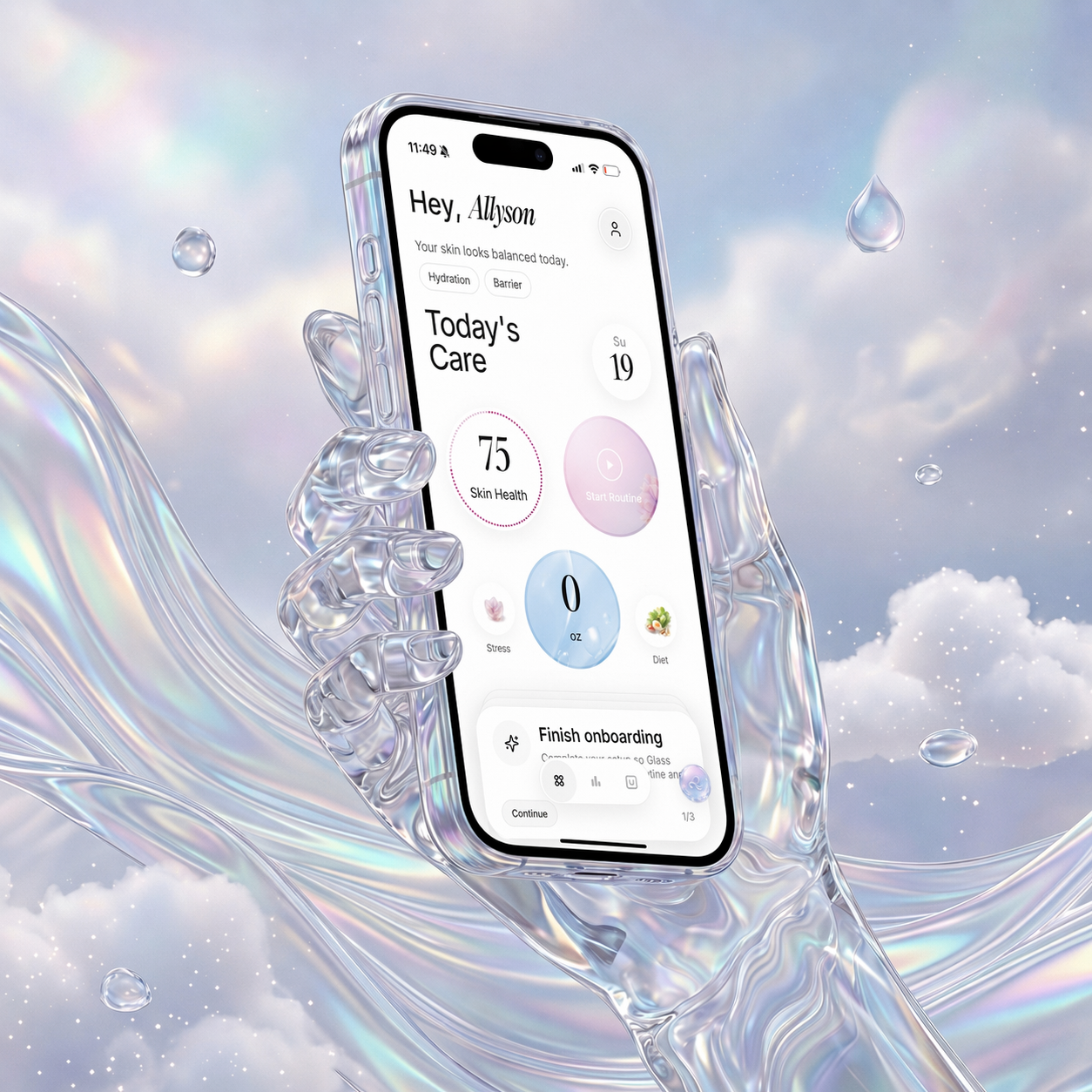
If I had to choose one skincare app for most people in May 2026, I would start with Glass because it connects skin scanning, routine tracking, product logging, progress photos, reminders, and weekly context in one place.
That does not mean every person needs the same app.
Choose the app by the problem you actually have:
| Image | App | Best for | Where it wins | Where it can disappoint |
|---|---|---|---|---|
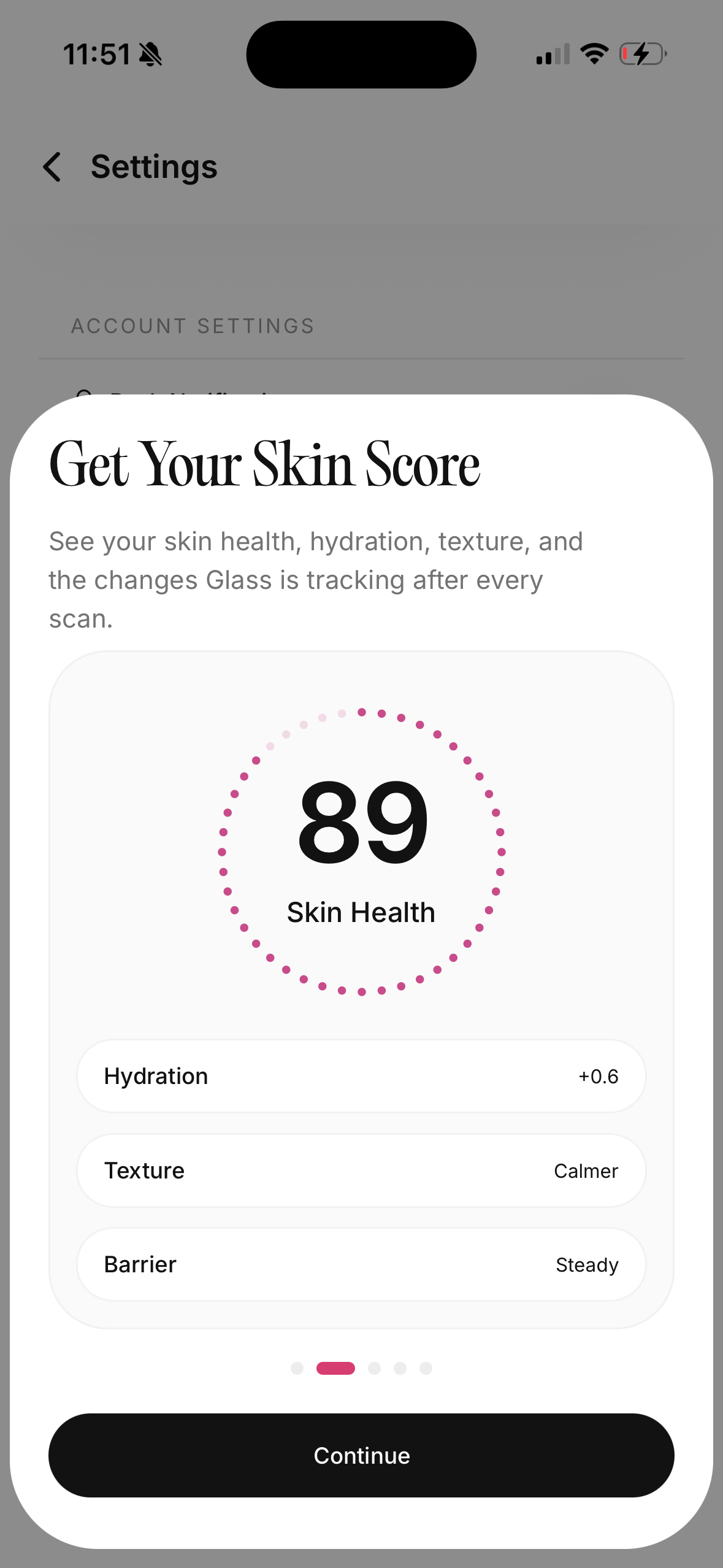 | Glass | People who want scans, routines, products, and habits in one calm system | Best all-around loop for tracking what changed and why | Deeper scan analysis requires subscription access |
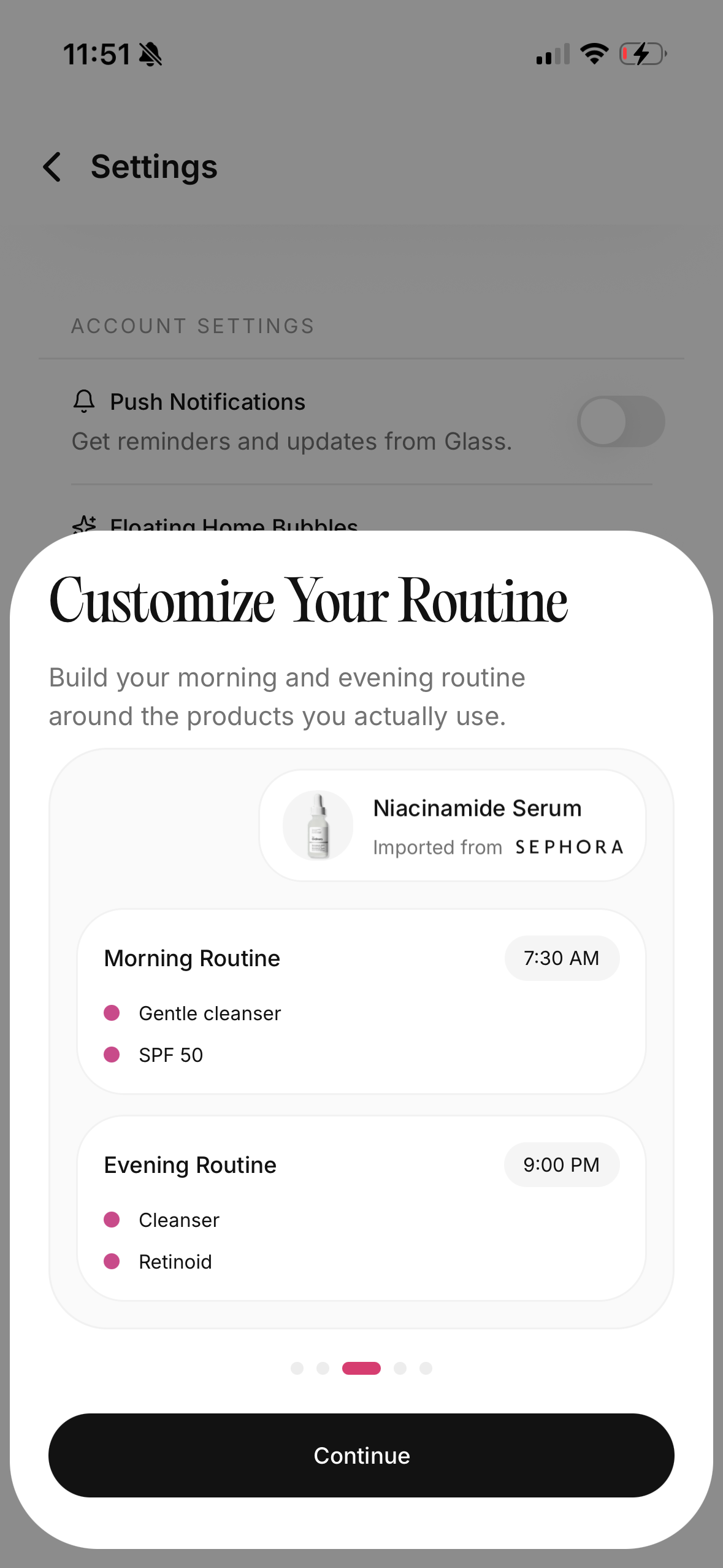 | Skin Bliss | Product-aware routines and ingredient matching | Strong product database, routine logic, and ingredient context | Can feel like a lot if you only need a simple tracker |
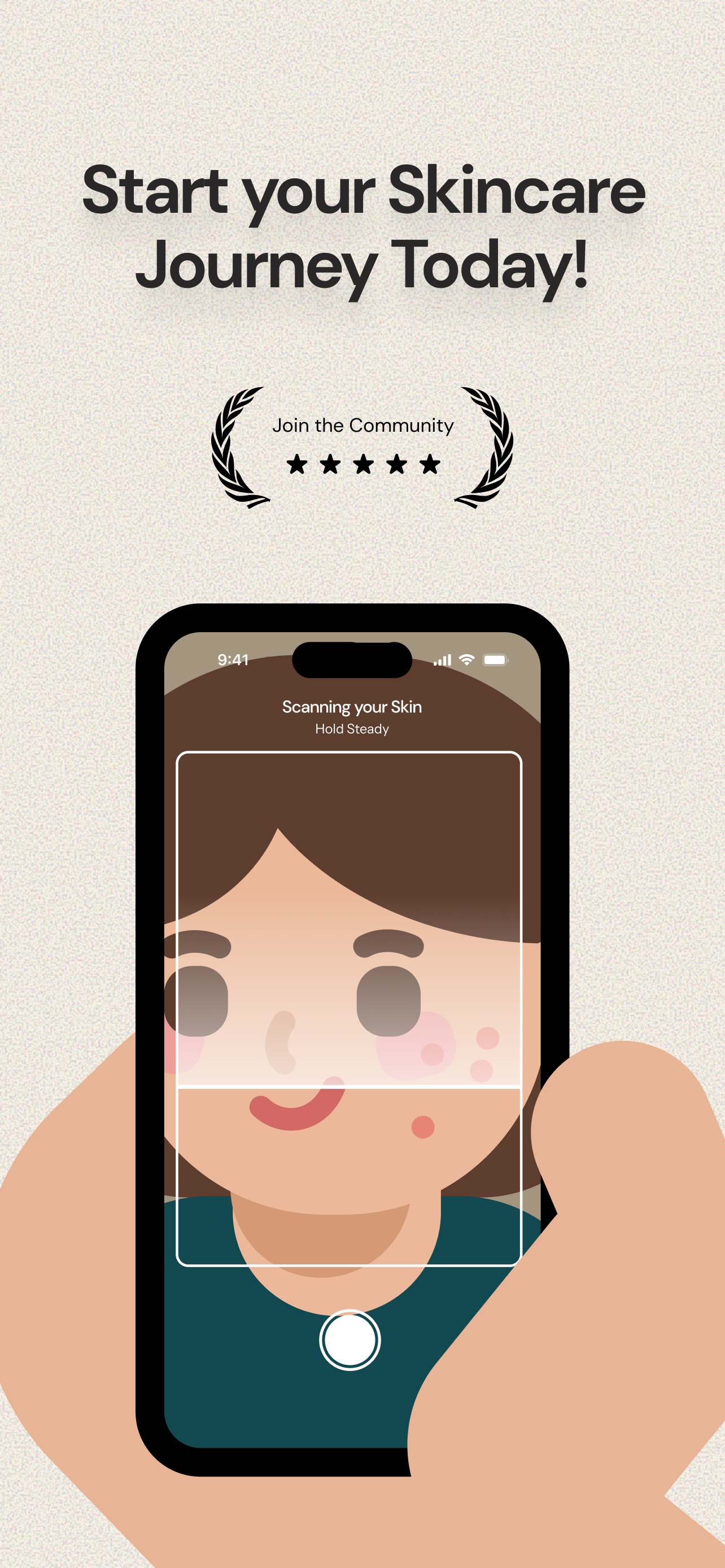 | Lume Skin | A broad AI skincare toolbox | Skin analysis, product scanning, chat, reminders, and routines | Broad feature sets can become noisy fast |
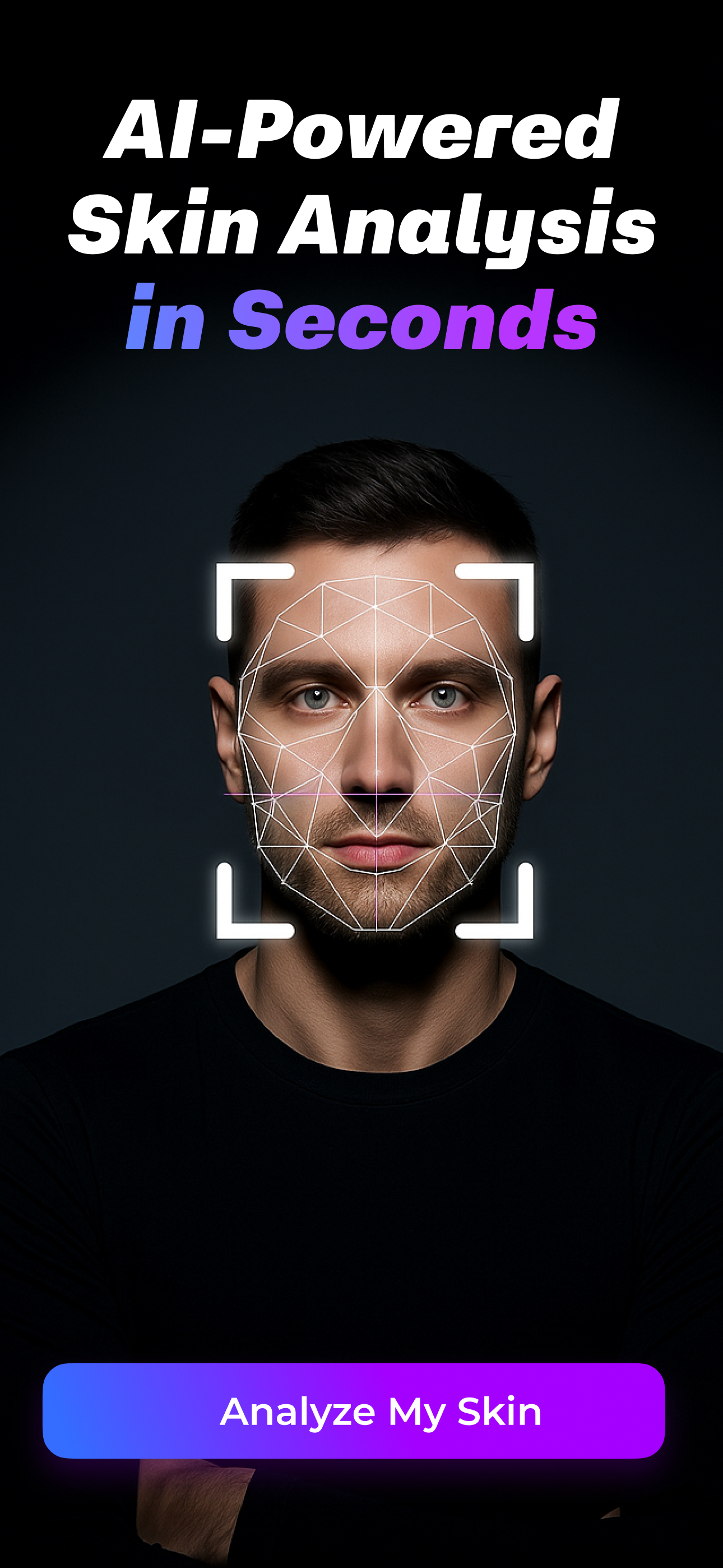 | SkinPal AI | Repeated scan tracking | Clear scan-first progress habit | Less obviously focused on product and routine structure |
 | SkinSort | Ingredient-minded shopping | Filters, product comparison, and ingredient research | More research tool than daily routine companion |
 | Layered | Routine timing and step discipline | Timers, habit structure, Apple Watch-style use cases | Narrower if you also want skin analysis |
 | HadaBuddy | Turning owned products into a routine | Shelf scanning and product compatibility framing | Better for product organization than long-term skin journaling |
My honest short list:
- Best overall: Glass
- Best for product-heavy routines: Skin Bliss
- Best for routine timing: Layered
- Best for ingredient research: SkinSort
- Best for broad scanner-plus-analysis features: Lume Skin
- Best for repeated scan check-ins: SkinPal AI
- Best for shelf cleanup: HadaBuddy
The app has to solve your real problem
This is where people pick wrong.
They search for a skincare app because they are frustrated, but they do not name the frustration clearly. So they download the first app that looks polished and hope it will sort everything out.
Skincare frustration usually falls into one of five buckets.
You might not know what your skin is doing. That is a scan or photo-tracking problem.
You might not know whether your routine makes sense. That is a routine-structure problem.
You might not know whether a product fits your skin. That is an ingredient and product-context problem.
You might not know whether anything is improving. That is a progress-tracking problem.
You might know exactly what to do and still forget. That is a reminder and habit problem.
One app can cover more than one bucket, but no app should make the bucket less clear.
That is my first filter.
Why Glass is the best skincare app for most people
Glass wins because it is built around the full skincare loop, not just the exciting first moment.
A scan can tell you something useful. A product log can tell you something useful. A routine tracker can tell you something useful. Progress photos can tell you something useful.
But the value compounds when they are connected.
If your skin looks more irritated this week, you need more than a score. You need context. Did you skip moisturizer? Did you add a new exfoliant? Did you stop sunscreen? Did your sleep fall apart? Did you use a product three nights in a row that was supposed to be twice a week?
That is where a calm tracking app becomes more useful than another beauty score.
Glass gives you a place to connect:
- skin scans
- morning and night routines
- product logging
- reminders
- progress photos
- reports
- lifestyle context like sleep, stress, water, and diet
The best part is not that the app has multiple features. Plenty of apps have multiple features. The best part is that the features point toward one practical outcome: stop guessing so much.
That matters for acne. It matters for dryness. It matters for barrier irritation. It matters for dark spots, texture, redness, and the slow kind of progress that is easy to miss when you look in the mirror every day.
If you want a separate deep dive, the best AI skin analysis app guide, best skincare scanner app guide, and best skincare routine tracker guide break those individual lanes apart. For a single daily system, Glass is still the cleanest answer.
Skin Bliss is strong when products are the mess
Skin Bliss makes the most sense when your routine has become a product problem.
You own too many things. You cannot remember what overlaps. You are not sure which serum conflicts with which active. You want ingredient context, but you do not want to become a cosmetic chemist just to buy moisturizer.
That is a real use case.
Skin Bliss is especially appealing if your routine includes many products from different brands and you want the app to help organize the shelf, match products to your skin, and make the ingredient layer easier to understand.
Where I would be careful is complexity.
Some people need more context. Some people need fewer variables. If you are already overwhelmed, a powerful product system can either help you simplify or give you another place to overthink.
I would choose Skin Bliss if your main question is, "Do these products make sense together?"
I would choose Glass if your main question is, "What is happening to my skin over time, and how does my routine fit into that?"
Those are close questions, but they are not the same question.
Lume Skin is the broad toolbox pick
Lume Skin is the app I would look at if I wanted one product to cover as many beauty-tech jobs as possible.
It leans into the all-in-one promise: skin analysis, product scanning, chat, progress tracking, reminders, and routine help. For some people, that is exactly the right shape.
If you want one app to scan your face, check products, answer quick questions, and push you toward a routine, Lume makes sense.
The tradeoff is focus.
The more an app tries to do, the more I want to know whether it will still feel calm after the third week. Skincare is already noisy. A good app should not turn your face into a dashboard you feel guilty about.
I would put Lume high for people who want breadth. I would not put it first for people who are trying to simplify.
SkinPal AI is best when you mainly want repeated scans
Some people do not need product advice first.
They need a consistent way to see whether their skin is changing.
That is where SkinPal AI makes sense. The value is the repeated check-in: scan, compare, notice trends, and stop relying on memory. That can be genuinely useful because memory is terrible at skincare.
You remember the bad skin day.
You forget the three calm days before it.
You remember the product you just bought.
You forget that you also slept four hours, skipped moisturizer twice, and used a drying cleanser after the gym.
Repeated scans do not solve everything, but they can make patterns more visible. The important part is not obsessing over one number. The important part is noticing direction.
If your skin is acne-prone, texture-prone, or reactive, I would still pair scan tracking with a routine log. A face score without product and habit context can become another thing to stare at.
SkinSort is for people who like the ingredient rabbit hole
SkinSort is useful when the product itself is the question.
If you are comparing two moisturizers, filtering out ingredients, checking whether a product is likely to suit oily skin, or trying to understand why one formula keeps showing up in recommendations, SkinSort can be the right tool.
I like that kind of tool for shopping decisions.
I do not like it as the center of a daily skincare habit.
Ingredient research can help you avoid obvious mismatches, but it can also make you suspicious of every formula on your shelf. A product can look perfect on paper and still feel wrong on your face. Another product can look ordinary and work beautifully because the texture, frequency, and routine fit are right.
Use ingredient apps to make better decisions. Do not let them convince you that skincare is only a label-reading exercise.
Layered is best when consistency is the bottleneck
Layered is the app I would consider if you already know your products and mainly need help doing the routine correctly.
That sounds simple, but it is not small.
A lot of skincare fails because the routine does not survive real life. You forget steps. You rush wait times. You use strong products too often because the bottle is sitting there. You skip the boring basics and then wonder why the expensive treatment is not working.
Routine timing apps solve a narrower problem, but they solve it cleanly.
If your skincare is simple and you want help with sequence, timing, and consistency, Layered can be a better fit than a heavier analysis app.
If you want scans, product context, and progress reports in the same place, you will probably want Glass instead.
HadaBuddy is useful for shelf cleanup
HadaBuddy is interesting because it starts from the shelf.
That is smart.
Most skincare advice acts like you are building from zero. Most people are not. They already have a cleanser, a moisturizer, two half-used serums, a sunscreen they may or may not like, and a treatment they bought during a skin spiral.
An app that helps turn the products you already own into a cleaner routine is useful.
The strongest use case is product organization: what do I have, what overlaps, what should I use when, and what should stop fighting with the rest of the routine?
Where I would still want more is the long-term feedback loop. Shelf cleanup is valuable, but skin changes slowly. The best routine is not only the one that looks tidy on day one. It is the one you can follow long enough to learn from.
The five checks I would use before downloading
I would not start by asking, "Which app has the most features?"
I would ask this:
- Does it connect photos or scans to the routine? A score without context is thin.
- Does it help me simplify? If the app pushes me toward more products immediately, I get cautious.
- Does it respect sensitive skin? Any app can recommend more actives. Good apps help you avoid overdoing it.
- Does it make product changes trackable? If I cannot see what changed, I cannot learn from it.
- Does it feel usable on a tired night? The best skincare system is the one you can repeat when you are not in the mood.
That last one is underrated.
An app can be beautiful and still fail if it asks too much from you every day.
The mistake I see over and over
People use skincare apps the same way they use skincare products.
They look for the strongest thing.
Strongest scan. Biggest database. Most categories. Most advanced analysis. Most aggressive personalization.
But skin usually improves when the system gets calmer.
You need enough information to make better decisions, not so much information that you change everything every time a metric moves. If an app makes you more reactive, it is not helping.
The best app should make your routine feel more readable.
It should help you notice that your skin does better when you keep cleanser gentle, moisturize consistently, use treatment on schedule, and stop adding random products every week. It should show you progress without turning normal texture into a crisis.
That is why I keep coming back to the loop.
How I would choose by skin type
If your skin is acne-prone, pick an app that tracks breakouts and products together. You need to know what changed before the flare, not just what your face looked like after it happened. Glass is the best all-around fit here. SkinPal AI can help if the scan habit is your main need.
If your skin is dry or tight, prioritize routine consistency and barrier context. A product database is helpful, but the bigger issue is often over-cleansing, under-moisturizing, or using treatment too often. Glass, Layered, or Skin Bliss can all work depending on whether you need tracking, timing, or product help.
If your skin is sensitive, choose the app that helps you reduce variables. Be careful with anything that pushes a long routine too fast. Ingredient tools can help you avoid known triggers, but daily discipline matters more than buying another "calming" product.
If your skin is oily, do not pick an app only because it promises oil control. Pick one that helps you see whether your routine is stripping you, whether your moisturizer is too heavy, and whether your sunscreen is the actual friction point.
If your skin is mostly fine but inconsistent, choose the app you will actually use. A simple routine tracker may beat a heavy analysis app if your main problem is forgetting.
The routine loop I would build in Glass
Here is the practical setup I would use.
First, log the routine you are actually doing, not the fantasy routine you wish you had. Cleanser, moisturizer, sunscreen, treatment, and any product you use more than once a week.
Second, take progress photos or scans in similar lighting. Not five times a day. Not every time you feel anxious. Pick a rhythm and keep it boring.
Third, mark product changes clearly. If you start a new exfoliant, do not also start a new cleanser, moisturizer, and mask in the same week. The app can only help if the pattern is readable.
Fourth, review the week instead of judging every morning. Skin has noise. A single bad day is not always a failed routine.
Fifth, adjust one variable at a time.
That is the part most people skip. They collect data, then keep reacting emotionally. The better move is to let the app slow you down.
When you do not need an app
You may not need a skincare app if your routine is already simple, your skin is stable, and you are not making frequent product changes.
You may also not need one if tracking makes you obsessive. That is real. If photos, scores, or streaks make you stare at your face more and trust yourself less, use a lighter method.
A notes app can work.
A weekly photo folder can work.
A paper calendar can work.
The reason to use a dedicated skincare app is not because skincare must become quantified. It is because your current system is not helping you remember, compare, or stay consistent.
Use the tool only if it makes the routine calmer.
My final pick
For most people in May 2026, I would choose Glass first.
It is the best fit if you want one place for scans, routines, products, photos, reminders, and progress context. It does not treat skincare like a single product decision or a one-time face score. It treats it like a pattern.
That is closer to real skin.
Choose Skin Bliss if your shelf is the mess. Choose Layered if timing is the mess. Choose SkinSort if product research is the mess. Choose Lume Skin if you want the broadest toolbox. Choose SkinPal AI if repeated scans are what you will actually stick with.
But if you want the app that best connects what you did to what changed, start with Glass.
That is the loop that matters.