
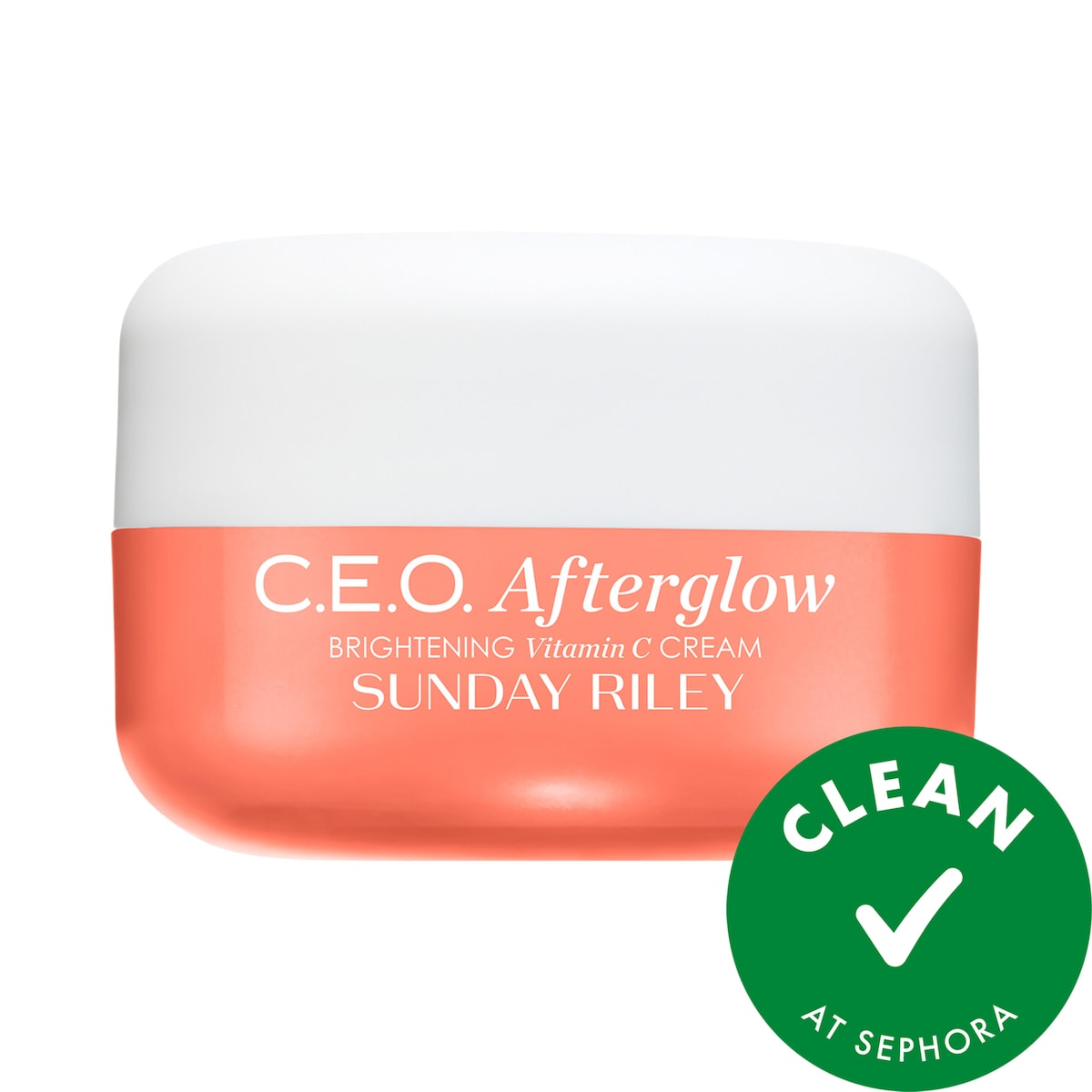
Sunday Riley Mini C.E.O. Afterglow is the kind of product I would judge by role before I judge by glow.
The name makes it tempting to treat it like a vitamin C treatment. C.E.O. Afterglow. Brightening. Vitamin C. Sunday Riley. It sounds like the active step should be the point.
But the product is a moisturizer.
That distinction matters. If I buy Sunday Riley Mini C.E.O. Afterglow Brightening Vitamin C Moisturizer, I am not only asking whether the vitamin C story sounds useful. I am asking whether this cream gives enough moisture, sits well under sunscreen, feels comfortable on my skin type, and makes the morning routine easier instead of louder.
As of May 2026, the Glass catalog has the mini at $22, with a rating around 4.43 from about 1,153 reviews. The product is positioned for normal, dry, combination, and oily skin, with fine lines, dryness, and dullness as the concern lane. The highlighted ingredients are advanced vitamin C in the form of THD ascorbate, sodium hyaluronate, and lutein.
My short read: I would consider it if I wanted a moisturizer that makes dull skin look more awake while still feeling non-greasy and satin-finished. I would skip it if I needed a dedicated dark-spot serum, if fragrance-like citrus or neroli oils usually bother me, or if my skin already has a moisturizer that works and only needs a separate vitamin C step.
The Quick Read
| Detail | My read |
|---|---|
| Product | Sunday Riley Mini C.E.O. Afterglow Brightening Vitamin C Moisturizer |
| May 2026 price | $22 mini |
| Rating signal | About 4.43 stars from about 1,153 reviews |
| Product type | Vitamin C moisturizer, not a serum |
| Best fit | Dull, normal, dry, or combination skin that wants glow plus moisture |
| Finish signal | Non-greasy satin-skin finish |
| Key ingredients I notice | THD ascorbate, sodium hyaluronate crosspolymer, lutein, glycerin, dimethicone, safflower seed oil |
| Biggest caution | It has a more sensorial formula, including neroli and sweet orange peel oils |
The product makes the most sense when the moisturizer slot is the slot you want to upgrade.
If your routine already has a great moisturizer, a separate vitamin C serum may be the cleaner buy.
What It Is Supposed To Do
Afterglow is trying to solve a common morning problem: skin that looks dull and under-finished even after moisturizer.
That can happen for a few reasons. The skin may be dry. It may be dehydrated. It may have uneven tone. It may look flat because the moisturizer is too matte. It may need sunscreen consistency more than another brightening product. It may simply need a cream that makes the face look more polished before SPF.
Afterglow sits in that last lane. It is not just "vitamin C." It is a vitamin C moisturizer.
That means I would expect it to:
- moisturize well enough to replace a separate cream for some routines
- give the skin a smoother satin finish
- make dull skin look less flat
- sit under sunscreen without feeling greasy
- offer a vitamin C antioxidant-brightening angle
- feel more finished than a basic gel cream
I would not expect it to replace sunscreen, prescription care, or a dedicated discoloration plan.
The Ingredient Story In Plain English
The vitamin C story comes from tetrahexyldecyl ascorbate, often shortened to THD ascorbate. It is an oil-soluble vitamin C derivative. In a moisturizer, that makes sense because the product is already built around a cream-gel texture rather than a watery serum.
The hydration story comes from sodium hyaluronate crosspolymer, glycerin, propanediol, mannitol, and other water-supporting ingredients. That matters because dull skin often looks dull because it is under-hydrated, not because it needs a stronger active.
The finish story comes from dimethicone, phenyl trimethicone, dimethicone crosspolymer, polymethylsilsesquioxane, and texture-supporting ingredients. Those are the ingredients that make me expect a smoother, satin-like feel rather than a thick greasy cream.
The antioxidant story includes lutein, listed as xanthophyll in the ingredient list, plus ergothioneine and vitamin C positioning. I would treat that as support, not magic.
The caution story is the scent side. The formula includes neroli oil and sweet orange peel oil. Some people like that sensorial experience. Some skin does not. If fragrance-like components usually trigger redness, stinging, or breakouts for you, I would not make this a blind full-routine commitment.
Who I Think It Fits Best
I would consider Afterglow for someone who says:
- my skin looks dull even when it is not actively irritated
- my moisturizer feels too plain under sunscreen
- I want fewer morning layers
- I like a satin finish more than a dewy oil-slick finish
- my skin is normal, dry, or combination
- I want vitamin C in the moisturizer step
- I travel often and want a mini cream that feels like a full routine shortcut
That is the sweet spot: a person who wants the cream stage to do more visually.
The mini size makes sense here. A $22 mini can answer whether the texture and finish are right before you turn it into a regular moisturizer.
Who Should Skip It
I would skip Afterglow if I wanted a dedicated vitamin C serum for stubborn dark spots.
That does not mean the product cannot support a brighter-looking routine. It means the role is different. A moisturizer with vitamin C is still doing moisturizer work. If your main goal is a focused brightening treatment, look at a serum lane and let moisturizer stay separate.
I would also skip it if you hate silicone-smooth textures. The satin finish is part of the appeal, but not everyone likes that feel.
I would be careful if citrus oils or neroli oil bother you. A product can have a beautiful texture and still be the wrong match for reactive skin.
And I would skip it if your routine is currently irritated, peeling, or burning. Vitamin C products are not the first thing I add to a loud barrier. I would calm the routine first, then test glow products later.
Is The Mini Size Worth It?
The mini is the best version to test.
I like minis for products where texture decides everything. You can understand a lot about a moisturizer in a few uses: whether it pills, whether it feels greasy, whether sunscreen sits well, whether your cheeks feel comfortable by noon, whether the scent feels pleasant or annoying, and whether the finish actually looks like your skin but better.
The mini is less useful if you are judging long-term tone changes. A small jar can help you decide fit. It cannot fairly prove every brightening outcome.
That is the buying logic:
| Question | Mini can answer? |
|---|---|
| Do I like the finish? | Yes |
| Does it sit under SPF? | Yes |
| Does it bother my skin quickly? | Often, yes |
| Does it replace my moisturizer? | Yes |
| Does it transform long-term discoloration? | Not fairly |
I would buy the mini to test the moisturizer role, not to demand a full brightening verdict.
How I Would Use It
I would use Afterglow in the moisturizer slot.
Morning:
- Gentle cleanse or rinse.
- Hydrating serum if already used.
- Sunday Riley Afterglow.
- Sunscreen.
- Makeup if needed.
Night:
- Cleanse.
- Treatment if the routine already tolerates it.
- Sunday Riley Afterglow.
I would not introduce it the same week as a new vitamin C serum, acid toner, retinoid, and sunscreen. That is too many variables.
The simplest test is cleanser, Afterglow, sunscreen in the morning. If that makes the routine smoother, the product is doing something useful.
Under Sunscreen
This is the most important use case.
A morning vitamin C moisturizer only matters if it behaves under SPF. If the finish is too rich, sunscreen slides. If the finish is too dry, skin still looks flat. If the layers pill, the whole routine becomes annoying.
I would use a small amount first and let it settle before sunscreen. If sunscreen pills, I would reduce the amount before giving up. If sunscreen feels greasy by lunch, I would use Afterglow only on cheeks or switch it to night.
If your morning routine is already crowded, keep morning and night skincare routine order open. Product order matters less than making sure each step has a job.
Dry, Combination, And Oily Skin
For dry skin, Afterglow is most appealing when dullness and dryness show up together. A vitamin C serum alone may not solve the flat look if the moisturizer after it is not doing enough. A glow cream can make the skin look better quickly because it adds both moisture and finish.
For combination skin, I would use zone logic. More on cheeks. Less on the T-zone. A satin moisturizer can be perfect on dry areas and too much around the nose.
For oily skin, I would test carefully. The product is listed for oily skin too, but I would still ask whether your skin likes cream-gel moisturizers with a smooth finish. If you prefer water creams that vanish, this may feel like too much.
Where It Fits Next To A Serum
Afterglow does not automatically remove the need for every serum.
It can replace the moisturizer. It can carry a vitamin C glow story. It can make the routine shorter. But if you want a targeted serum for dark spots, post-breakout marks, or uneven tone, you may still prefer a separate brightening step.
That is why the existing Glass comparison, Sephora Collection Glow Serum vs Sunday Riley C.E.O. Afterglow Moisturizer, is useful. It frames the decision as serum slot versus moisturizer slot.
If your moisturizer is already perfect, buy the serum lane. If your moisturizer is the problem, Afterglow is the cleaner test.
What I Would Track
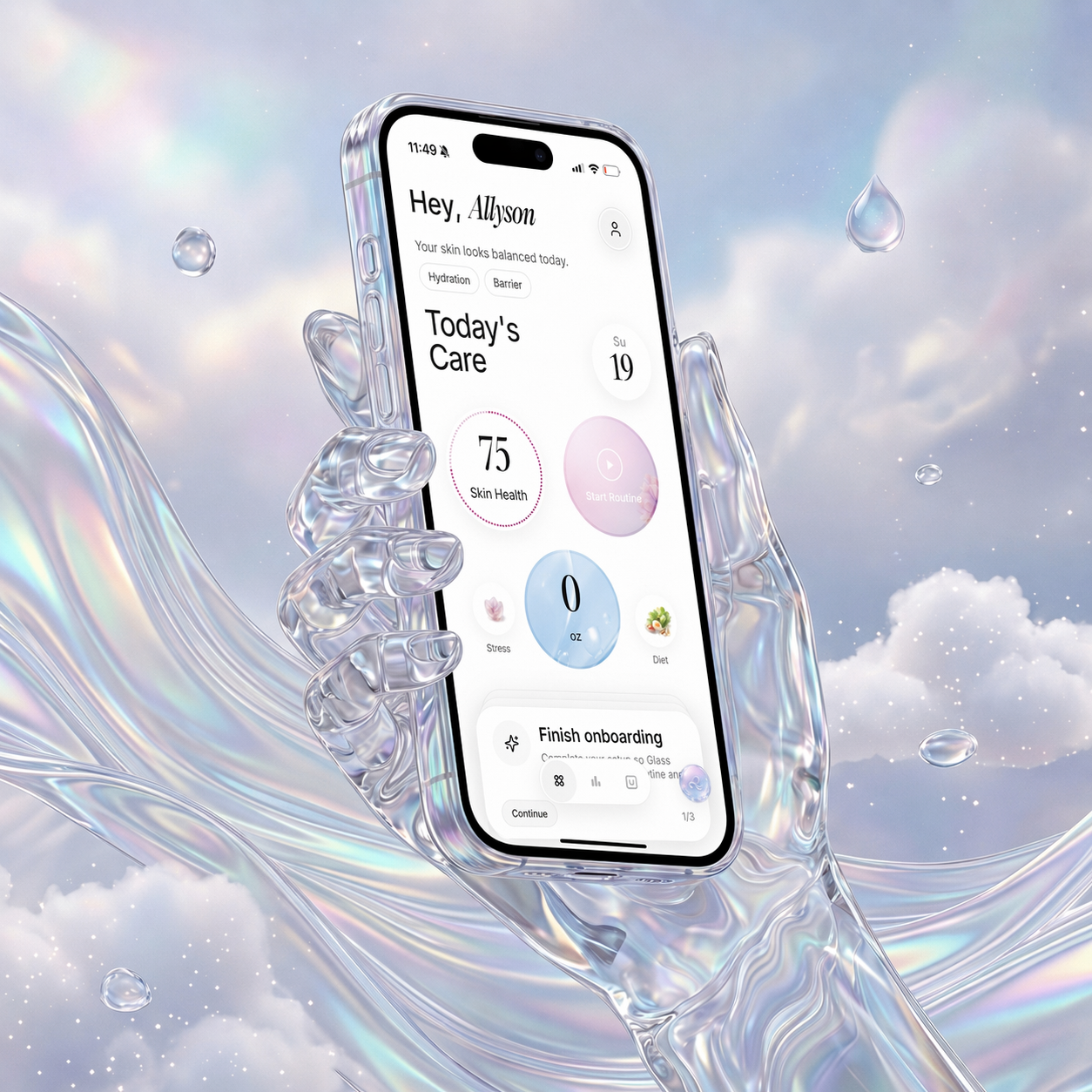
I would track Afterglow in Glass as a moisturizer, not as a separate treatment.
Log the start date, whether you used it morning or night, what sunscreen went over it, and whether the skin looked smoother or greasier by midday. Track any stinging, redness, or new bumps, especially if fragrance-like components are usually an issue.
The product should earn its spot by improving the routine you actually repeat.
My Verdict
Sunday Riley Mini C.E.O. Afterglow Brightening Vitamin C Moisturizer is most compelling as a mini test for people who want their moisturizer to make dull skin look more awake.
I like the role when the routine is simple: cleanser, Afterglow, sunscreen. I like the THD ascorbate, sodium hyaluronate, lutein, glycerin, and satin-finish direction for skin that wants brightness and moisture in one step. I also like the mini size because texture, scent, and SPF compatibility are easier to judge before buying bigger.
The catch is that it is still a moisturizer. I would not buy it expecting the behavior of a dedicated serum. I would buy it if the cream slot is where my routine needs glow, comfort, and polish.
FAQ
Is Sunday Riley Afterglow a moisturizer or serum?
It is a moisturizer. I would use it in the cream step after serum and before sunscreen in the morning.
Is the mini size enough to judge it?
The mini is enough to judge texture, finish, scent tolerance, and SPF layering. It is not enough to make a complete long-term brightening verdict.
Can oily skin use it?
Some oily skin may like the satin finish, but I would test a small amount first. If your skin hates creamier glow products, use a lighter moisturizer or keep Afterglow to drier zones.
Do I still need sunscreen?
Yes. A vitamin C moisturizer does not replace sunscreen. Use sunscreen as the final morning skincare step.