
Face oil is one of the easiest skincare steps to overuse.
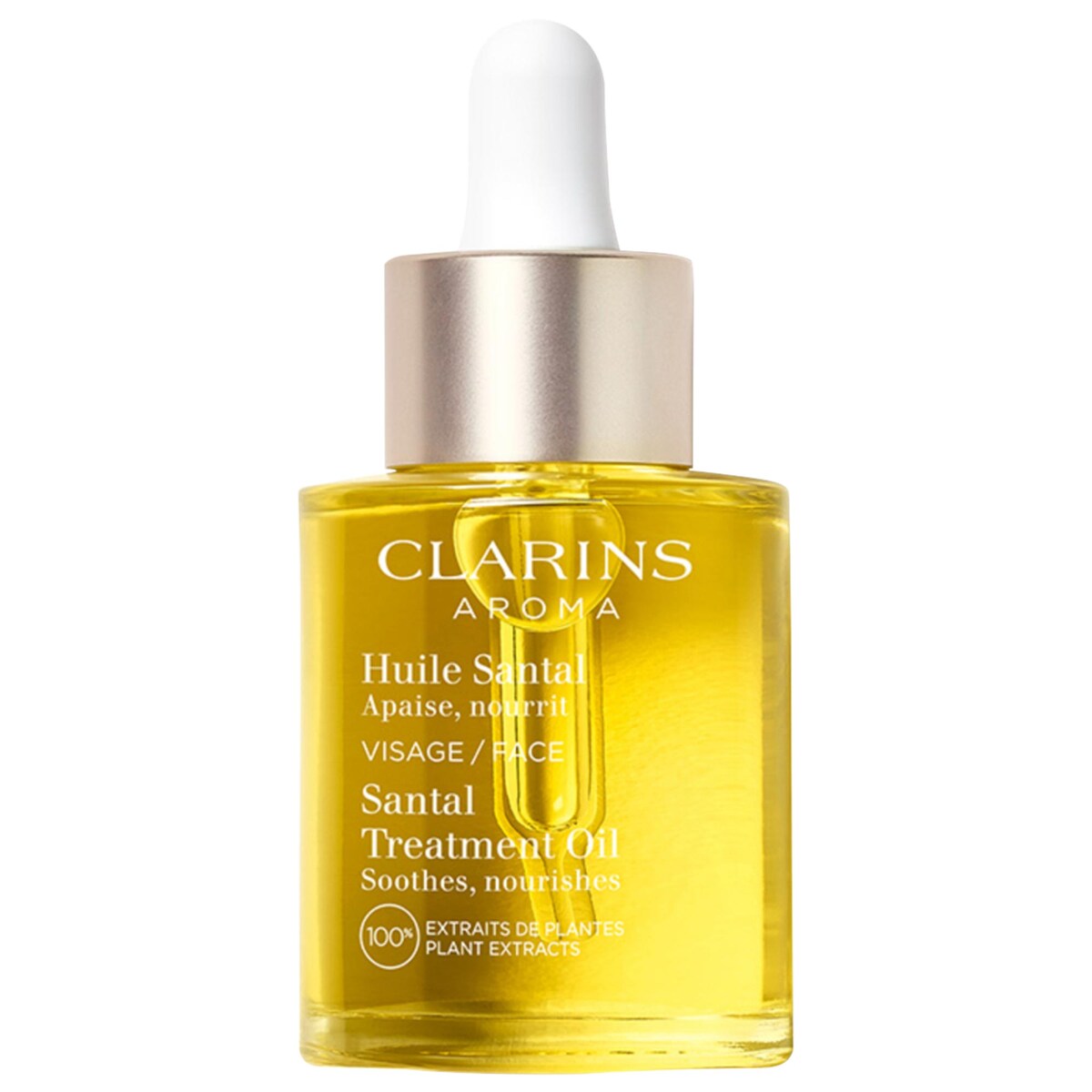
That is especially true with a product like Clarins Santal Soothing & Hydrating Face Treatment Oil, because it sounds comforting. Dry skin, dullness, fine lines, sandalwood, lavender, hazelnut oil, evening use. It has all the language of a product you want to press into your face at the end of a long day.
But a good face oil still needs placement. If I put it over the wrong routine, I can end up shiny and tight. If I use too much, I can turn comfort into residue. If I ignore the essential-oil and fragrance angle, I can miss the most important caveat for reactive skin.
So I would layer Clarins Santal Face Treatment Oil like a precise night step: small amount, damp skin, late in the routine, and only where it improves comfort.
The Short Version
I would use Clarins Santal Face Treatment Oil at night, not as a casual daytime glow step.
The cleanest routine is:
| Order | Step | How I would keep it simple |
|---|---|---|
| 1 | Cleanse | Use a gentle cleanser and avoid that squeaky finish |
| 2 | Tone or hydrate | Keep skin slightly damp before oil |
| 3 | Treat | Use only calm, compatible serum steps if needed |
| 4 | Oil | Press in three drops, up to five only if skin truly needs it |
| 5 | Blot | Tissue off excess instead of sleeping in a thick film |
If I were adding moisturizer, I would either use a light cream before the oil or use the oil first on damp skin and then add cream only where needed. I would not stack every possible step on the first night.
Why Face Oil Placement Matters
Face oil does not do the same job as a water-based serum.
A hydrating serum or toner can make skin feel more water-plump. A cream can add cushion and comfort. An oil can add softness, slip, and a more sealed finish. Those jobs overlap, but they are not identical.
When dry skin feels tight, it is tempting to jump straight to oil. Sometimes that works. Sometimes the skin is still missing a lighter hydration layer underneath, so the oil sits on top of a thirsty surface. That is when the face can look shiny but still feel tight.
That shiny-tight feeling is the clue. It usually means the order needs changing, not that the routine needs more products.
Start With The Cleanser
If the cleanser leaves the face tight, Clarins Santal has to rescue a problem that started too early.
I would begin by making the cleanse boring. At night, remove sunscreen, makeup, sweat, and the day. Do not scrub dry skin into submission. Do not chase a squeaky finish. The skin should feel clean but not desperate for cream within thirty seconds.
If there is heavy sunscreen or makeup, a first cleanse can help dissolve that layer before a gentle second cleanse. If the day was light, one mild cleanser may be enough.
This matters because a face oil can soften the finish, but it cannot make an irritating cleanser a good match. If tightness begins before the oil touches the skin, I would fix the cleanser before judging the oil.
Keep Skin Damp, Not Wet
Clarins directs this oil onto skin that is still damp with toning lotion. That detail is practical.
Oil spreads better over slightly damp skin. It can feel more integrated and less like it is sliding around on top. Damp does not mean dripping. I would pat the face so it is moist but not wet, then apply the drops.
If I were using a hydrating toner, I would keep it simple and fragrance-conscious. One layer is enough at first. A dry routine does not need three toners, two essences, and a serum just to justify an oil step.
If the toner stings, I would not follow it with the oil and hope the oil cancels the irritation. I would step back and find out why the watery step is uncomfortable.
Use Fewer Drops Than You Think
The suggested range is three to five drops. I would start with three.
Three drops can cover a lot when the skin is damp and the oil is warmed between the palms. Five drops may be better for very dry skin, the neck, or a low-humidity night, but I would not begin there.
The mistake is treating oil like cream. With cream, a little extra may just feel cushiony. With oil, a little extra can sit on the skin, migrate toward hairline or brows, and make the pillow feel coated.
I would press the oil rather than rub aggressively. Warm it between palms, press cheeks first, then forehead and chin, then neck if needed. Keep it away from the eye area because the product directions say to avoid that zone.
The Minimal Clarins Santal Night Routine
If I wanted the cleanest possible test, I would build this:
| Step | Product type | Why it belongs |
|---|---|---|
| Cleanse | Gentle cleanser | Removes the day without stripping |
| Hydrate | Toning lotion or simple hydrating layer | Gives the oil a damp surface |
| Oil | Clarins Santal Face Treatment Oil | Adds comfort, slip, and dry-skin softness |
| Blot | Tissue if needed | Prevents extra shine from becoming residue |
That is the version I would use when the skin is dry but not actively irritated.
It is also the version that tells me the most. If the oil feels good in a simple routine, then I can decide later whether a cream, serum, or treatment step needs to come back. If I introduce the oil inside a ten-step night routine, I will not know what helped or what caused the problem.
When I Would Add Moisturizer
I would add moisturizer if the skin still wakes up tight, if the cheeks feel under-cushioned, or if the oil alone feels elegant but not comforting enough.
There are two ways I would try it.
The first is moisturizer before oil. This makes sense when the moisturizer is the main comfort step and the oil is a finishing touch. It is a good approach for cheeks, neck, or dry corners that need extra softness.
The second is oil before moisturizer. This follows the Clarins damp-skin ritual more closely and can work if the cream spreads well over the oil. I would use a light hand so the cream does not pill or slide.
I would not use both approaches on the same first night. Pick one, repeat it for several nights, then adjust.
For a broader structure, my morning-and-night routine split is useful because it keeps oil, sunscreen, retinoids, and moisturizers from fighting for the same slot.
When I Would Use It Only On Dry Patches
Not every face needs oil everywhere.
If the cheeks are dry but the nose and forehead get oily, I would press Clarins Santal only where the dryness lives. That might mean cheeks, smile lines, sides of the mouth, or neck. I would skip the center of the forehead and nose until I know how the skin responds.
This is especially important for people who clog easily. A face oil that feels beautiful on dry cheeks can feel heavy around the chin. Product placement should follow the skin, not the fantasy of a perfectly even face map.
Patch use also makes the product last longer. At $68, that matters.
What I Would Not Pair It With On Night One
I would not introduce this oil on the same night as a new retinoid, exfoliating acid, peel pad, strong vitamin C, or another heavily scented product.
That does not mean those categories are always incompatible. It means the first night should be easy to read. If the skin stings, flushes, or breaks out, I want to know what changed.
I would also avoid using it over freshly exfoliated, over-cleansed, wind-chapped, or sunburned skin unless I already knew my skin liked this formula. Essential oils and fragrance components can be too much when the barrier is already upset.
If the face is truly irritated, I would rather use a simpler fragrance-free repair routine until the skin feels normal again.
Sensitive Skin Caveats
Clarins Santal is not a silent formula. It includes sandalwood, cardamom, lavender, parsley oil, fragrance, linalool, limonene, citral, and related aromatic components.
That is part of why people may enjoy it. It is also why I would be selective.
If I had sensitive skin, I would test a tiny amount near the jaw or on one dry cheek for several nights. I would not apply it all over the face before a big event, after a peel, or when the skin already feels hot.
The goal of a night oil is comfort. If the product makes the skin feel busier, warmer, itchier, or more reactive, it is not earning its place.
For a more cautious night setup, the sensitive-skin night routine guide gives a simpler way to think about cleanser, moisturizer, and final sealing steps.
Dry Skin, Dull Skin, And Fine Lines
Clarins lists dryness, dullness, and fine lines as concerns. I would interpret those through a dry-skin lens.
For dryness, I would expect the best result when the routine also includes water support. The oil can make the surface feel softer and less tight, but it is not a replacement for every hydrating step.
For dullness, I would expect more immediate surface glow than long-term tone correction. If skin looks flat because it is dry, oil can help. If the dullness is from uneven pigment or buildup, the plan needs more than oil.
For fine lines, I would think about the lines that look more obvious when skin is dehydrated. A comfortable oil can soften that appearance by improving the surface finish. I would not treat it like a primary aging-care product.
The Morning Question
I would not make this a default morning oil.
Morning routines already have a job: cleanse or rinse, moisturize if needed, and apply sunscreen well. Oil can interfere with how sunscreen sits if used too generously, and most people do not need an aromatic face oil under daytime layers.
If someone loves it and knows their sunscreen still applies evenly, they can make their own call. But my starting advice is simple: keep Clarins Santal at night. Let sunscreen have the morning routine.
If the face wakes up dry, I would improve the night routine first instead of adding oil before sunscreen.
How I Would Troubleshoot Greasiness
If the oil feels greasy, I would not immediately blame the product.
I would check:
- did I use five drops when three would work?
- was the skin damp enough for even spread?
- did I apply cream, balm, and oil all over the same areas?
- did I put oil on zones that are not dry?
- did I forget to blot excess?
If the answer is yes to any of those, I would adjust before giving up.
If it still feels greasy after a lighter routine, then the finish may simply not fit. That is useful information. A product can be good and still be wrong for a specific face.
How I Would Troubleshoot Tightness
If the face still feels tight after the oil, I would look underneath it.
Tightness after oil usually means one of three things: the cleanser is stripping, the hydration layer is missing, or the skin needs a cream instead of oil alone.
I would not keep adding more drops. I would try a calmer cleanser, a better damp-skin step, or a moisturizer under the oil. The goal is not to become shinier. The goal is to wake up comfortable.
This is the same logic behind the tight-skin-after-moisturizer piece: solve the role that is missing instead of asking one product to do every job.
How I Would Save It In Glass
I would place Clarins Santal in a night routine as an oil or final comfort step, with a note that says "three drops on damp skin" or "cheeks only."
That note matters. A face oil can drift from planned step to random extra very quickly. In the Glass routine builder, I would want to see whether it is used nightly, a few times a week, or only on dry-patch nights.

I would also track whether the morning face feels softer, the pillow feels oily, or the chin starts clogging. That is more useful than deciding based on the first glossy mirror check.
My Layering Rule
My rule for Clarins Santal Face Treatment Oil is: use it late, use it lightly, and give it a clear job.
For dry normal skin that likes aromatic formulas, it can be a polished night oil. For irritated or fragrance-reactive skin, I would slow down. For oily-combination skin, I would use it only where the face is genuinely dry.
The best version of this routine is not the richest one. It is the one where the skin wakes up calm, soft, and not overloaded.