
Clarins Santal Soothing & Hydrating Face Treatment Oil and Experiment Buffer Jelly Facial Oil-Gel both live in the dry-skin night-routine world, but they do not solve the same problem in the same way.
I would choose Clarins Santal Face Treatment Oil when the goal is an elegant aromatic oil for normal-to-dry skin that wants softness, glow, and a more sensorial evening ritual.
I would choose Experiment Buffer Jelly Facial Oil-Gel when the goal is a more practical barrier-sealing finish for dry, flaky, irritated, or patchy skin, especially if fragrance-free comfort matters.
That is the whole comparison in one sentence. Clarins is the polished face oil ritual. Experiment is the barrier-focused oil-gel seal.
Quick Comparison Table
| Category | Clarins Santal Face Treatment Oil | Experiment Buffer Jelly Facial Oil-Gel |
|---|---|---|
| Product | Clarins Santal Face Treatment Oil<br />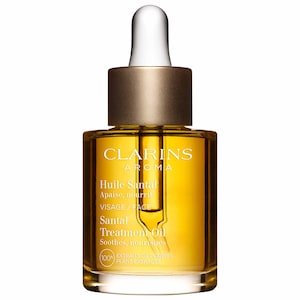 | Experiment Buffer Jelly Facial Oil-Gel<br />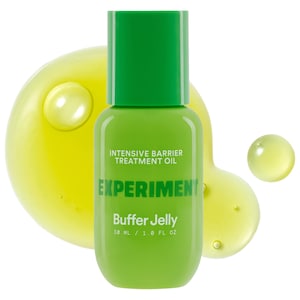 |
| Brand | Clarins | Experiment |
| Price | $68 | $32 |
| Product ID | P392522 | P518193 |
| Texture lane | Classic face oil | Jelly facial oil-gel |
| Best fit | Normal-to-dry skin that likes aromatic oils | Dry, flaky, irritated, or barrier-stressed skin |
| Key ingredients | Hazelnut oil, sandalwood, cardamom, lavender essential oils | Jojoba oil, squalane, safflower oil, petrolatum, ceramide NP, acai sterols |
| Fragrance angle | Contains fragrance and aromatic essential oils | Marked fragrance free in product highlights |
| Use style | Three to five drops on damp skin after cleansing and toning | Thin layer as final night step, in place of or after moisturizer |
| My pick for | A refined dry-skin oil ritual | Patch sealing and barrier comfort |
The Short Answer
If my skin were dry but stable, and I wanted a beautiful evening oil that feels more luxurious, I would look at Clarins Santal.
If my skin were dry, flaky, wind-chapped, irritated, or too reactive for aromatic oils, I would look at Experiment Buffer Jelly first.
The choice is not really about which one is "better." It is about whether the routine needs sensorial oil comfort or a more occlusive barrier finish.
That difference matters because dry skin can ask for different things on different nights. Sometimes it wants elegance. Sometimes it wants a quiet seal. Sometimes it wants both, but not at the same time.
What Clarins Santal Is Built For
Clarins Santal is a face treatment oil for normal and dry skin, with dryness, dullness, and fine lines as the main concerns.
The formula identity is classic: hazelnut oil plus essential oils of sandalwood, cardamom, and lavender. The usage ritual is also classic. Use it in the evening after cleansing and toning, apply three to five drops while the skin is still damp, avoid the eye area, press outward, and blot excess.
That tells me Clarins is not trying to be a thick balm or a modern repair gel. It is meant to be pressed into skin as a small-drop oil ritual.
I would use it when the skin is dry, the routine is calm, and the person likes aromatic skincare. I would not use it as the first product I reach for when the barrier is actively angry.
What Experiment Buffer Jelly Is Built For
Experiment Buffer Jelly is a semi-occlusive jelly facial oil made for dry, flaky, irritated skin that needs fast comfort.
The formula is built around an 80 percent bio-lipid blend of jojoba, squalane, and safflower oil, with petrolatum, ceramide NP, acai sterols, oat kernel oil, and waxy texture helpers. The use direction is different from Clarins: apply a thin layer as the final step of the nighttime routine, either in place of or after moisturizer.
That tells me Experiment is more of a barrier finish than a spa-like oil step.
It shows up in our tight-skin-after-moisturizer guide as a patch-sealing product for corners of the mouth, cheeks, and windburned spots. That is exactly where I think it makes the most sense: use it on the areas that keep losing comfort.
Texture: Oil Ritual vs Oil-Gel Seal
The biggest everyday difference is texture logic.
Clarins is a face oil. I would expect it to spread with slip, create glow quickly, and feel best in a pressed-in application. The routine feels more like cleansing, toning, warming drops in the palms, and pressing into the face.
Experiment is an oil-gel. I would expect more cushion and more grip. It is not just about adding shine. It is about leaving a thin protective finish that can sit over or replace moisturizer at night.
If I wanted my whole face to feel supple and polished, Clarins sounds more appealing. If I wanted to protect cracked cheek patches or dry mouth corners, Experiment sounds more targeted.
Fragrance And Sensitivity
This is the clearest split.
Clarins includes aromatic essential oils and fragrance components. That can be part of the pleasure of the product. The scent, the plant-oil feel, and the nighttime ritual are part of the draw.
Experiment Buffer Jelly is the more obvious pick when I want to avoid fragrance. Its product highlights include fragrance free, and the formula reads more like barrier support than aromatherapy.
If my skin were reactive, I would not force Clarins just because it sounds soothing. "Soothing" on a bottle does not override my own skin history. If fragranced products often make my face hot, itchy, red, or bumpy, I would start with Experiment or another simpler final step.
If my skin tolerates fragrance well and I enjoy a scented routine, Clarins can still make sense.
Barrier Comfort
For barrier comfort, I would lean Experiment.
Ceramide NP, acai sterols, petrolatum, squalane, jojoba, and safflower oil all point toward a sealing, lipid-supportive role. The product is also designed to be used as the final step, either after moisturizer or instead of it.
Clarins can help dry skin feel softer, but it is not the one I would pick first for raw, flaky, irritated, over-exfoliated, or wind-chapped skin. The essential-oil profile makes me more cautious in those moments.
If the routine problem is "my skin feels elegant but still tight," Clarins may be enough when used on damp skin. If the routine problem is "my barrier keeps losing comfort overnight," Experiment is the more direct match.
Glow And Finish
For glow, I would lean Clarins.
Classic face oils are good at making dry skin look more alive quickly. They add slip, reflect light, and soften the look of surface dryness. If the skin is dry but not inflamed, Clarins can make the evening routine feel more polished.
Experiment may also leave a healthy finish, but I would think of that glow as a byproduct of sealing and comfort. It is less about a luxury oil sheen and more about stopping dry patches from looking rough.
If I were getting ready for bed and wanted the face to look soft and rested, Clarins has the more graceful feel. If I were trying to wake up without flaky corners, Experiment has the more practical pitch.
Acne-Prone Or Congestion-Prone Skin
Neither product should be used carelessly on acne-prone areas.
Clarins is an oil with fragrance and essential oils. I would be cautious around the chin, jaw, and any area that clogs easily. I would start on dry cheeks only.
Experiment is semi-occlusive and contains petrolatum plus oils and waxes. That can be great for dry patches, but I would still avoid applying a thick layer over areas that already trap congestion.
My approach would be placement first:
- dry cheeks: either product could be considered
- flaky corners: Experiment first
- oily nose: probably neither
- reactive cheeks: Experiment first
- stable dry skin that loves aromatic oils: Clarins first
- breakout-prone chin: use neither until the skin pattern is clearer
The best product can still be wrong on the wrong zone.
Night Routine Placement
Clarins wants damp skin after cleansing and toning. I would use it after a watery step, then decide whether moisturizer is needed.
Experiment wants to be the final step, in place of or after moisturizer. I would use it after all water-based and cream steps, especially on dry patches.
That creates two different routines.
For Clarins:
| Step | Routine |
|---|---|
| 1 | Gentle cleanse |
| 2 | Hydrating toner or damp-skin step |
| 3 | Clarins Santal, three drops pressed in |
| 4 | Light moisturizer only if needed |
| 5 | Blot excess |
For Experiment:
| Step | Routine |
|---|---|
| 1 | Gentle cleanse |
| 2 | Hydrating serum or toner |
| 3 | Moisturizer if needed |
| 4 | Experiment Buffer Jelly as a thin final seal |
| 5 | Keep it off areas that clog easily |
For more routine structure, the sensitive-skin night routine guide is a better companion for Experiment, while the dry-skin night routine guide is a better companion for Clarins.
Which One I Would Choose For Dry Skin
For dry but stable skin, I would choose based on preference.
Choose Clarins if:
- you like a classic face oil
- your skin tolerates fragrance
- your routine already has a hydrating layer
- you want glow and softness
- you enjoy a pressed-in night ritual
Choose Experiment if:
- your dry areas get flaky
- your skin barrier feels fragile
- your face dislikes fragrance
- you want a final seal over moisturizer
- you mostly need help on patches, not the entire face
If I had to pick one for the broadest dry-skin utility, I would pick Experiment. If I had to pick one for the more luxurious normal-to-dry evening experience, I would pick Clarins.
Which One I Would Choose For Dullness
For dullness caused by dryness, both can help, but in different ways.
Clarins is the better glow product. It can make the surface look smoother and more luminous quickly, especially on dry cheeks.
Experiment is the better rough-patch product. It can make dullness look better by helping flakes and dry texture calm down overnight.
If dullness is mostly a lack of surface glow, Clarins fits. If dullness is paired with roughness, peeling, or a tight barrier feeling, Experiment fits.
If dullness is from uneven tone, neither oil is the whole plan. Sunscreen, pigment care, and consistency matter more there.
Which One I Would Choose For Sensitive Skin
For sensitive skin, I would start with Experiment Buffer Jelly.
That does not mean every sensitive person will love it. Texture can still be too occlusive for some faces. But compared with Clarins, it has the safer fragrance profile for someone who already knows scented products are a problem.
Clarins might still work for skin that is dry but not truly reactive. I would just test it slowly and avoid using it on a night when the skin is already irritated.
Sensitive skin does not need bravery. It needs repeatable calm.
Value For Money
Clarins is $68. Experiment is $32.
That price gap changes the decision.
Clarins makes sense if the sensory experience matters and a few drops stretch far enough to feel worth it. It is the kind of product I would buy because I want that exact face-oil ritual.
Experiment makes sense if the job is practical barrier support. At less than half the price, it is easier to justify as a dry-patch or final-seal product, especially if the routine needs function more than fragrance.
I would not ask Clarins to be a budget barrier balm. I would not ask Experiment to feel like a prestige aromatic oil. Each product makes more sense when judged in its own lane.
My Decision Tree
Here is how I would decide:
| Skin situation | Pick |
|---|---|
| Normal-to-dry skin, stable, likes scented products | Clarins Santal |
| Dry patches, flaky corners, wind-chapped cheeks | Experiment Buffer Jelly |
| Fragrance-sensitive skin | Experiment Buffer Jelly |
| Wants a classic oil ritual | Clarins Santal |
| Wants a final seal over moisturizer | Experiment Buffer Jelly |
| Oily T-zone with dry cheeks | Use either only on dry cheek areas |
| Active irritation or burning | Pause both and simplify first |
That last line is important. When skin is actively burning, I would stop shopping for the perfect finishing product and simplify the whole routine.
How I Would Track Either Product In Glass
I would log Clarins as a night oil and Experiment as a final seal.
In the Glass routine builder, I would add a short note for each:
- Clarins: "3 drops, damp skin, cheeks and neck"
- Experiment: "thin final layer, dry patches only"

Then I would watch the next-morning pattern. Softer cheeks? Less flaking? New congestion? Shinier but still tight? That feedback tells me whether the product is doing the job or only making the routine feel richer.
My Bottom Line
Clarins Santal Face Treatment Oil and Experiment Buffer Jelly are both night-friendly dry-skin products, but they point to different users.
I would choose Clarins for a stable normal-to-dry face that wants a fragrant, elegant, pressed-in oil ritual. I would choose Experiment for barrier comfort, flaky patches, fragrance avoidance, and a more practical final seal.
If the routine needs beauty and slip, Clarins is the more appealing pick. If the routine needs protection and calm, Experiment is the one I would reach for first.