
AESTURA Hydro CERA-HA Serum and Experiment Super Saturated both sit in the same tempting lane: hydrating serum for skin that feels dry, dull, or barrier-stressed.
I would not use them for the same person.
AESTURA is the calmer ceramide-and-hyaluronic-acid route. It makes sense when I want barrier support that feels closer to a Korean sensitive-skin routine: hydration, ceramides, cholesterol, fatty acids, panthenol, niacinamide, and a clear partner cream.
Experiment is the glycerin-heavy rescue route. It makes sense when I want a thick humectant layer that feels like it is grabbing water and making the rest of the routine more cushioned.
Both can be useful. The better pick depends on what kind of dryness you are trying to solve.
Quick answer
Choose AESTURA ATOBARRIER365 Hydro CERA-HA Serum if your skin is normal, dry, sensitive-leaning, or barrier-tired and you want a serum that fits neatly under moisturizer.
Choose Experiment Super Saturated Hydrating Barrier Serum if your skin feels dehydrated, tight, and thirsty enough that you want a more obvious glycerin-rich comfort layer.
The simple split:
- AESTURA: barrier serum with ceramide and hyaluronic acid logic
- Experiment: heavy-hydration serum with 30% glycerin logic
Comparison table
| Product | Image | Best fit | Main reason to choose it |
|---|---|---|---|
| AESTURA Hydro CERA-HA Serum | 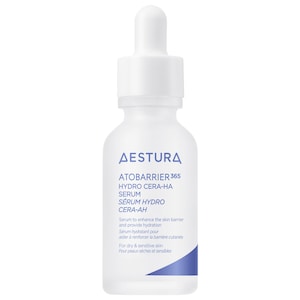 | Normal, dry, sensitive-leaning, or barrier-tired skin | CERA-HA blend, ceramide NP, cholesterol, fatty acids, panthenol, niacinamide, glycerin |
| Experiment Super Saturated Serum | 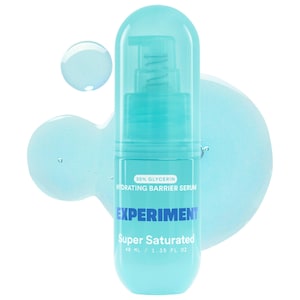 | Dehydrated, tight, dull, moisture-starved skin | 30% glycerin, polyglutamic acid, prickly pear, niacinamide, squalane, allantoin |
I would not buy both at the same time unless I already knew exactly when each one would be used.
They overlap too much to be casual duplicates.
What AESTURA is trying to do
AESTURA is trying to make the hydrating serum step more barrier-aware.
Instead of relying only on hyaluronic acid, it adds the ATOBARRIER365 lipid story: ceramide, cholesterol, fatty acids, sphingolipids, panthenol, glycerin, betaine, and niacinamide.
That makes it feel more structured than a plain water serum.
I would use AESTURA when the skin needs steady comfort but I still want the routine to stay tidy. It fits after toner and before moisturizer. It pairs naturally with AESTURA ATOBARRIER365 Cream, and it can also sit under the lighter AESTURA water-cream lane if the face does not want a rich finish.
The main reason to choose AESTURA is restraint. It feels like the less messy option for someone building a sensitive-skin barrier routine.
What Experiment is trying to do
Experiment Super Saturated is less restrained in texture concept.
The 30% glycerin claim is the whole personality. Glycerin is a classic humectant, but at that level the serum becomes more of a comfort blanket than a barely-there water layer.
That can be excellent if your skin feels tight, dry, papery, or annoyed.
It can also be too much if you hate tacky textures or live in a humid climate where every layer already feels present.
I would use Experiment when the skin needs more obvious cushion from the serum step. It sounds especially useful at night, on recovery nights, or under a simple moisturizer when the face keeps feeling dry even after cream.
Ingredient split
The ingredient split is the cleanest way to make the decision.
| Category | AESTURA Hydro CERA-HA Serum | Experiment Super Saturated |
|---|---|---|
| Main hydration style | Hyaluronic acid plus glycerin and betaine | 30% glycerin plus polyglutamic acid |
| Barrier support | Ceramide NP, cholesterol, fatty acids, sphingolipids | Glycerin, squalane, niacinamide, allantoin, bisabolol |
| Comfort ingredients | Panthenol, biosaccharide gum-1, dipotassium glycyrrhizate | Prickly pear, allantoin, bisabolol |
| Texture expectation | Liquid serum, easier to place under cream | Juicy, richer, potentially tackier serum |
| Best partner | ATOBARRIER365 Cream or water cream | Simple moisturizer over a damp-skin layer |
Neither formula is automatically better.
AESTURA makes more sense if your routine needs barrier structure.
Experiment makes more sense if your routine needs a stronger humectant cushion.
Texture and finish
Texture may decide this before ingredients do.
AESTURA is the product I would expect to be easier to use in a normal routine. It is a liquid serum, and its product directions fit the classic serum slot: clean skin, morning or evening, before moisturizer.
Experiment is the product I would expect to feel more noticeable. That can be good. A noticeable hydrating serum can make dry skin feel supported. But it also asks more from the rest of the routine.
If sunscreen pills easily, I would test AESTURA first.
If night moisturizer keeps disappearing, I would test Experiment first.
Dry skin
For dry skin, both are fair candidates.
I would choose AESTURA if my dry skin also feels sensitive, reactive, or easily overwhelmed by sticky products. It gives a barrier-focused ingredient story without forcing the serum step to become the loudest texture in the routine.
I would choose Experiment if dry skin feels thirsty even after lighter serums. The 30% glycerin direction makes more sense when I need the serum to feel like it is doing real comfort work.
The important part is cream.
Dry skin should not stop at either serum. AESTURA needs moisturizer. Experiment needs moisturizer. The serum helps; the cream finishes.
Sensitive skin
For sensitive skin, I would usually start with AESTURA.
It is not because Experiment is wrong for sensitive skin. Experiment has comforting ingredients too. But AESTURA feels more directly built around a dry-sensitive barrier routine, and the ATOBARRIER365 line gives it a clear place beside cleanser, serum, water cream, and richer cream options.
That said, both contain niacinamide. If niacinamide often irritates you, patch test carefully and do not add either one during a week when the skin is already upset.
Sensitive skin needs fewer surprises. Start one product at a time.
Dehydrated skin
For dehydrated skin, I would choose based on how the skin behaves after moisturizer.
If moisturizer helps but skin still looks dull, AESTURA may be enough.
If moisturizer helps for an hour and then the face feels tight again, Experiment may be the stronger first test.
If the skin is oily-dehydrated, I would be more cautious with Experiment during the day. A richer glycerin serum can feel great at night and too much under morning sunscreen. AESTURA may be easier to use by zone: cheeks, mouth area, and tight patches first.
Under sunscreen
For morning sunscreen routines, I would start with AESTURA.
The serum sounds easier to keep thin and predictable. Use a small amount, then a light moisturizer if needed, then sunscreen.
Experiment can still work under SPF, but I would be more careful. Use a small amount on damp skin, wait, then apply moisturizer and sunscreen. If the sunscreen starts pilling or feeling tacky, move Experiment to night.
The winner under sunscreen is the one that keeps the whole morning stable.
Under makeup
For makeup, AESTURA gets the first try.
It is the safer choice if you want hydration and barrier comfort without turning the base too sticky. Dry skin may still benefit from Experiment under makeup, but the amount has to be controlled.
If makeup catches on flakes, either serum could help. If makeup separates because the base is too tacky, Experiment may be the harder product to use.
I would not test either for the first time on an important makeup day.
Around retinoids and exfoliation
Both products can fit around active routines, but neither should be used as permission to overdo actives.
I would use AESTURA on retinoid off nights or under cream when my routine needs steadier comfort.
I would use Experiment on recovery nights when skin feels tight or dry after treatments.
If the skin is burning, peeling, or suddenly stinging from normal products, reduce the active schedule first. Then use the serum as support.
Price and value
In May 2026, AESTURA sits around $34 for 30 mL. Experiment sits around $28 for a larger bottle in the Glass product data.
Experiment looks like the better volume value. AESTURA looks like the better structured routine fit if you already want the ATOBARRIER365 lane.
The better value is the one you finish.
If Experiment feels too tacky and you avoid it, the lower price does not matter. If AESTURA feels too subtle and does not change the routine, the cleaner texture does not matter either.
Buy the one that solves the repeat problem.
How I would choose in one minute
Ask what your skin needs by bedtime.
If it needs calm barrier structure, choose AESTURA.
If it needs a stronger hydration cushion, choose Experiment.
If you hate tack, choose AESTURA.
If your moisturizer keeps feeling too light, choose Experiment.
If you already use the ATOBARRIER365 Cream, choose AESTURA first.
If you want the richer humectant serum for night, choose Experiment first.
How Glass helps compare them
I would not test both at once.
Use Glass to log one serum for one to two weeks while keeping cleanser, moisturizer, sunscreen, and actives steady.
Track:
- tightness after cleansing
- comfort by bedtime
- morning dryness
- sunscreen pilling
- makeup behavior
- new bumps
- whether moisturizer feels like it lasts longer
Then switch only if the first one leaves a clear gap.
If routine order is the bigger issue, start with how I would layer AESTURA Hydro CERA-HA Serum or morning and night skincare routine order.
Bottom line
AESTURA Hydro CERA-HA Serum is the cleaner choice for dry-sensitive barrier support, especially if you want a serum that fits neatly under ATOBARRIER365 Cream or a lighter AESTURA moisturizer.
Experiment Super Saturated is the stronger choice for thirsty, tight, dehydrated skin that wants a more obvious glycerin-rich comfort layer.
I would choose AESTURA for structure.
I would choose Experiment for cushion.
That is the real comparison.
FAQ
Is AESTURA Hydro CERA-HA Serum better than Experiment Super Saturated?
It depends on the routine. AESTURA is better for a tidy dry-sensitive barrier routine. Experiment is better when the skin wants a richer humectant cushion.
Which one is better for dry skin?
Experiment may feel more immediately cushioning for very dehydrated dry skin. AESTURA may be better if dry skin is also sensitive or if you want to pair the serum with a barrier cream.
Which one is better under sunscreen?
I would test AESTURA first under sunscreen because it should be easier to keep thin. Experiment can work, but the amount matters more.
Can I use both?
You can, but I would not start that way. They both sit in the hydrating barrier-serum lane, so using both can make the routine sticky or redundant.
Do I still need moisturizer?
Yes. I would follow both with moisturizer, especially for dry or barrier-stressed skin.