
AESTURA ATOBARRIER365 Hydro CERA-HA Serum is not the serum I would buy for excitement.
That is the appeal.
It sits in the practical part of skincare: dry skin, tight skin, dull skin, and the kind of barrier stress that makes every product feel a little less reliable. It is not a peel. It is not a glow oil. It is not a dramatic overnight treatment. It is a barrier-hydration serum that tries to sit between watery hydration and a real cream.
As of May 2026, I would look at AESTURA ATOBARRIER365 Hydro CERA-HA Ceramide + Hyaluronic Acid Face Serum if my skin felt dry, flat, easily irritated, or less comfortable than it used to.
I would not buy it expecting it to replace moisturizer.
That is the most important part.
Quick answer
I would treat AESTURA Hydro CERA-HA Serum as a barrier-support serum for normal, dry, dehydrated, and sensitive-leaning skin that wants hydration plus lipid logic before moisturizer.
It makes the most sense if:
- your skin feels tight even after a normal serum
- hyaluronic acid alone feels too temporary
- your moisturizer needs help lasting
- retinoids or exfoliation have made skin less comfortable
- you want a serum that still feels skincare-boring in a good way
- you like the ATOBARRIER365 cream lane but want a lighter prep step
I would skip it if your skin is very oily and already dislikes niacinamide, if you want a completely weightless water serum, or if your routine is already overloaded with barrier products and you are trying to figure out what is actually helping.
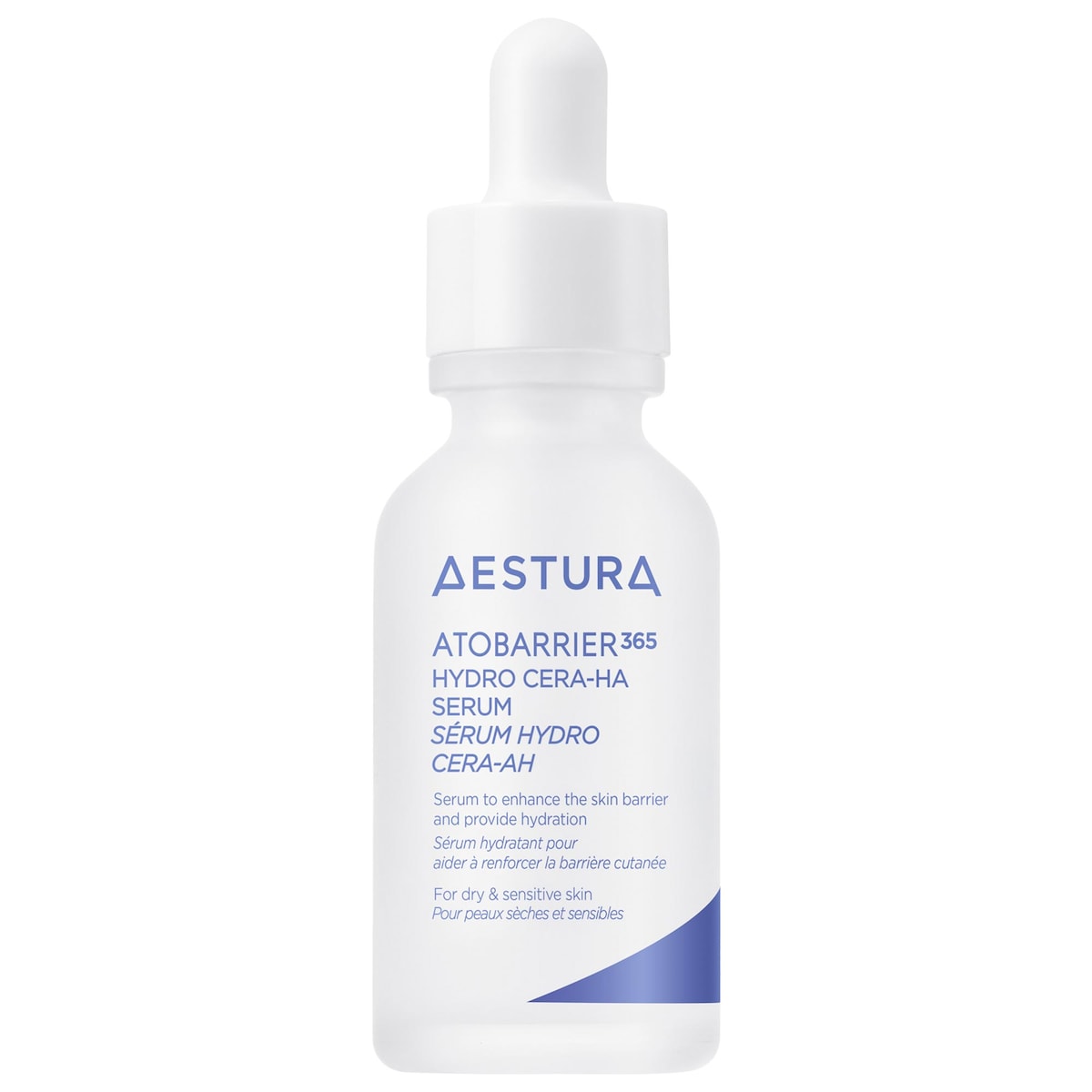
Product at a glance
| Detail | My read |
|---|---|
| Product | AESTURA ATOBARRIER365 Hydro CERA-HA Serum |
| Product ID and SKU | P515491, SKU 2844991 |
| May 2026 price signal | $34 for 1.01 oz / 30 mL |
| Sephora rating signal | About 4.69 with 212 reviews in the local product data |
| Skin type lane | Normal and dry, with a sensitive-skin barrier feel |
| Main concerns | Fine lines, dryness, dullness, and barrier discomfort |
| Texture lane | Liquid serum |
| Best routine slot | After toner, before moisturizer, morning or night |
| Most natural pair | AESTURA ATOBARRIER365 Cream |
The product is not cheap, but it is not priced like a luxury serum either. At $34, the question becomes whether it replaces a vague hydrating serum or just becomes one more layer.
I would only buy it if I had a clear job for it.
What CERA-HA actually signals
The name sounds technical, but the useful read is simple.
This serum is trying to combine water-binding hydration with barrier-lipid support.
Most hydrating serums lean hard on humectants. They help skin feel more hydrated, but they can feel temporary if you do not seal them. AESTURA is adding ceramide and lipid language to that familiar hyaluronic acid story, which is why the serum feels more barrier-minded than a plain water serum.
The ingredient list supports that read. I look at:
| Ingredient group | Why it matters |
|---|---|
| Glycerin, butylene glycol, betaine | The base hydration layer |
| Sodium hyaluronate | The familiar hyaluronic acid hydration signal |
| Ceramide NP, cholesterol, fatty acids, sphingolipids | The barrier-lipid story |
| Panthenol and biosaccharide gum-1 | Comfort and smoother skin feel |
| Niacinamide and vitamin E | Nourishing and tone-supporting context |
That does not mean the serum replaces a cream.
It means the serum makes more sense when a basic hydrating serum feels too thin and a rich cream feels too late in the routine.
Who I think will like it most
I would put this serum in front of someone whose skin feels under-supported.
Not necessarily destroyed. Not necessarily peeling. Just not holding onto comfort the way it used to.
That person might say:
- my skin looks dull even when I moisturize
- my cheeks feel tight by afternoon
- my barrier cream helps, but I still need something underneath
- watery hyaluronic acid serums feel nice and then vanish
- retinoid nights are making my skin more sensitive
- my skin wants comfort, but I do not want a heavy morning routine
This is the shopper I think AESTURA is speaking to.
The serum gives that person a middle step: more substantial than a basic watery serum, lighter than going straight to a rich moisturizer.
Who should probably skip it
I would skip it if my main issue was oil control.
This is not a mattifying serum. It is not a pore-control step. It is not designed around acne treatment. It has niacinamide, but the overall product story is still hydration and barrier support.
I would also pause if:
- niacinamide often makes your skin flush or feel prickly
- your routine already has multiple ceramide products
- your moisturizer alone already solves dryness
- you want a featherlight serum that disappears instantly
- your skin is actively burning from overuse of actives
- you are changing too many products at once
That last point matters. A barrier serum is easy to add when the skin is unhappy, but if the routine is actively irritating you, the smarter move may be subtracting first.
If the skin is stinging, peeling, or hot, I would simplify the routine before adding another bottle.
The dry skin fit
For dry skin, I like the logic of this serum.
Dry skin often needs both water and barrier support. A plain hydrating serum can make the face feel temporarily plumper, but if the final moisturizer is not enough, the comfort can fade fast. AESTURA tries to make the serum step more useful by adding lipid-support language before cream.
I would use it like this:
| Step | Product type |
|---|---|
| 1 | Gentle cleanser or rinse |
| 2 | Hydrating toner if already used |
| 3 | AESTURA Hydro CERA-HA Serum |
| 4 | AESTURA Cream or another barrier moisturizer |
| 5 | Sunscreen in the morning |
The key is not to stop at serum. A serum can support dry skin, but dry skin usually still needs a moisturizer that seals and softens.
If the whole routine is built around water but not enough comfort, the face may still wake up tight.
The sensitive skin fit
Sensitive skin is where I would be both interested and careful.
The product is dermatologist-tested and sits in the ATOBARRIER365 lane, which makes it appealing for skin that wants less drama. The formula also has many comfort signals: panthenol, glycerin, betaine, sodium hyaluronate, ceramide NP, cholesterol, and fatty acids.
But sensitive skin does not care how good the product looks on paper.
I would patch test it and introduce it on a boring night. No exfoliating acid. No new retinoid. No new sunscreen. No new mask. Just cleanser, serum, moisturizer.
If skin feels calmer after several uses, then I would move it into morning or twice-daily use.
If skin feels warmer, itchier, or more congested, I would stop and reassess.
The serum versus cream question
The serum and cream do different jobs.
The serum is the comfort prep layer.
The cream is the seal and cushion layer.
That matters because people often buy a serum when they actually need a cream, or buy a cream when they actually need a better layer underneath.
| If your skin problem is | I would start with |
|---|---|
| Moisturizer vanishes fast | Serum under cream |
| Skin wakes up dry | Cream first, then serum if still needed |
| Morning routine feels too heavy | Serum plus lighter cream |
| Night routine lacks comfort | Serum plus ATOBARRIER365 Cream |
| Skin is oily but tight | Serum only on dry zones, lighter moisturizer elsewhere |
The product page says it pairs with the ATOBARRIER365 Cream, and that makes sense. The serum prepares. The cream finishes.
If you want the lighter moisturizer branch, the newer AESTURA Cooling Hydro Water Cream comparison is the better follow-up.
Morning routine fit
I would use this in the morning only if it plays well under sunscreen.
The morning version should stay controlled:
- Gentle cleanse or rinse.
- AESTURA Hydro CERA-HA Serum.
- Light moisturizer if needed.
- Sunscreen.
If the serum makes sunscreen pill, I would reduce the amount before blaming the formula. If it still pills, I would move the serum to night.
That is not failure. Some barrier serums are more useful when they are not fighting with sunscreen, makeup, sweat, and a rushed morning.
For dry skin, morning use could be helpful. For oily skin, I would be more selective and use it where the face feels tight.
Night routine fit
Night is where I think this serum has the most obvious role.
At night, I am less worried about shine and more interested in whether skin wakes up comfortable. A serum with hyaluronic acid, glycerin, panthenol, ceramide, cholesterol, and fatty acids makes sense under a cream when the goal is steady comfort.
I would use it on:
- retinoid off nights
- recovery nights
- dry weather weeks
- nights after a stronger cleanse
- weeks when skin looks dull and feels less flexible
I would not use it to cover up an overactive routine. If retinoid or exfoliation is making the skin sting, I would reduce the active schedule instead of trying to overpower irritation with more products.
How I would test it for two weeks
I would test this serum slowly.
| Timeline | Test |
|---|---|
| Nights 1-3 | Use after cleansing, before moisturizer |
| Days 4-7 | Add morning use only if night use feels calm |
| Week 2 | Decide whether it belongs once or twice daily |
Track the boring signals:
- tightness after cleansing
- comfort by bedtime
- morning dryness
- sunscreen pilling
- new clogged areas
- whether moisturizer feels like it lasts longer
The serum should earn a role. If it only feels nice but does not change the routine, I would not repurchase.
Where it fits with Glass
This is a product I would track because the payoff may not be dramatic on day one.
Use Glass to log the serum, keep the rest of the routine steady, and watch whether the pattern changes. Does skin feel less tight? Does the moisturizer last longer? Do progress photos look less dull? Does the routine feel calmer after retinoid nights?
That is more useful than deciding from one application.
Bottom line
I would buy AESTURA Hydro CERA-HA Serum if I wanted a barrier-minded hydrating serum for normal, dry, dehydrated, or sensitive-leaning skin.
I would use it under moisturizer, not instead of moisturizer.
I would like it most for skin that feels tight, dull, or under-supported, especially when a basic hyaluronic acid serum feels too temporary.
I would skip it if the routine already has enough ceramide support, if niacinamide tends to bother me, or if the skin is currently irritated because the active schedule is too aggressive.
The cleanest read is simple: this is a serum for moisture retention and barrier comfort, not a miracle step.
That is exactly why it may be useful.
FAQ
Is AESTURA Hydro CERA-HA Serum a moisturizer?
No. I would treat it as a serum before moisturizer. It can make the moisturizer step feel more complete, but it should not replace cream for dry skin.
Can I use it morning and night?
Yes, if your skin tolerates it and the texture works under sunscreen. I would start at night first, then add morning use if the routine stays calm.
Is it good for dry sensitive skin?
It is a strong fit to consider for dry sensitive skin because it combines humectants, ceramide, cholesterol, fatty acids, panthenol, and a barrier-focused product lane. Patch test because sensitive skin is still individual.
Should I use it with AESTURA Cream?
That is the most natural pairing. Use the serum first, then the cream. The serum gives hydration and barrier support, while the cream helps finish and seal the routine.
Is it better than a plain hyaluronic acid serum?
It is more barrier-minded than a plain hyaluronic acid serum. If all you need is a light water layer, a simpler serum may be enough. If your skin also wants comfort, AESTURA makes more sense.