
Closed comedones are quiet until the light hits them.
Then suddenly your skin looks covered in tiny bumps. Not exactly pimples. Not exactly a rash. They may feel like rough texture under makeup, cluster around the forehead or cheeks, or sit along the jaw like little plugs that never quite become whiteheads.
The frustrating part is that closed comedones often make people overcorrect. More exfoliation. More masks. More acne cleanser. Less moisturizer. A different serum every three days.
That is how a clogged-pore problem can turn into a barrier problem.
This 2026 guide keeps the plan calmer: what closed comedones are, what tends to trigger them, which ingredients make sense, and when bumps need a dermatologist instead of another product swap.
Quick answer
Closed comedones are clogged pores covered by a thin layer of skin. They often look like small flesh-colored or pale bumps without much redness. They can improve with consistent use of ingredients like topical retinoids, salicylic acid, azelaic acid, and a non-clogging routine, but they usually do not disappear overnight.
If the bumps are itchy, sudden, inflamed, painful, or spreading quickly, do not assume they are closed comedones. Get medical help, especially if you might be dealing with dermatitis, folliculitis, an allergic reaction, or another condition.
What closed comedones look like
Closed comedones are often called "closed clogged pores" or "whiteheads," though many do not have a visible white tip. They are usually:
- small
- flesh-colored, pale, or slightly pink
- raised
- not very painful
- clustered
- more obvious in side lighting
- stubborn under makeup
Mayo Clinic lists whiteheads as closed plugged pores. That simple definition helps: the pore is clogged, but the plug is not open to the air like a blackhead.
Because closed comedones are not always red, people sometimes mistake them for dry texture. That can lead to heavy creams or oils that feel comforting but make the bumps more persistent for some skin types.
Why they happen
Closed comedones form when dead skin cells, oil, and debris collect inside a pore and stay trapped beneath the surface. The reasons vary, but common contributors include:
- naturally oily skin
- hormonal shifts
- heavy moisturizers or balms
- hair products touching the forehead, temples, or neck
- sunscreen or makeup that is hard to remove
- sweating under hats, helmets, or masks
- inconsistent cleansing
- stopping a retinoid
- starting too many rich products at once
Closed comedones are not proof that your face is dirty. They are a pore behavior problem, not a moral problem.
Closed comedones vs pimples
The words get mixed together, but the difference matters.
| Bump type | Usually looks like | Usually feels like | Typical care focus |
|---|---|---|---|
| Closed comedone | Small flesh-colored bump | Little to no pain | Prevent clogged pores |
| Papule | Red inflamed bump | Tender | Calm inflammation and treat acne |
| Pustule | Red bump with white/yellow tip | Tender or sore | Avoid picking, reduce inflammation |
| Nodule | Deep lump under skin | Painful, firm | Dermatology care may be needed |
Closed comedones can become inflamed pimples, but they are not automatically the same thing. If you use harsh spot treatments on every tiny bump, you may dry out the surrounding skin without clearing the underlying pattern.
The routine mistake I see most
The biggest mistake is treating texture like it needs speed.
Closed comedones improve slowly because the goal is prevention and turnover, not instant extraction. If you use a strong exfoliant Monday, a scrub Tuesday, a retinoid Wednesday, a peel Thursday, and a drying mask Friday, the bumps may still be there Saturday. Now the skin is also tight, shiny, flaky, and reactive.
That creates a confusing loop:
- texture looks worse
- makeup sits badly
- you exfoliate more
- barrier gets irritated
- pores look more obvious
- you add richer products
- bumps keep coming
The better plan is boring consistency.
Ingredients that make sense
The American Academy of Dermatology's acne guidance includes several options that dermatologists commonly use for acne-prone skin, including benzoyl peroxide, topical retinoids, salicylic acid, azelaic acid, and other prescription choices depending on severity.
For closed comedones specifically, the most useful over-the-counter lanes are usually:
Topical retinoids
Adapalene is available over the counter in the United States. Retinoids help normalize how skin cells shed inside pores, which makes them a strong fit for clogged-pore patterns.
Start low and slow. A pea-sized amount for the full face, used a few nights a week, is often smarter than daily use right away. Moisturizer matters.
Salicylic acid
Salicylic acid is oil-soluble and can help with pore congestion. Some people like it in a cleanser. Others prefer a leave-on product. Do not use every salicylic product you own at the same time.
Azelaic acid
Azelaic acid can be helpful for acne-prone skin and uneven tone after breakouts. It is often a calmer option for people who cannot tolerate aggressive exfoliation, though it can still sting or dry some skin.
Products to compare gently
Here are a few relevant product formats. The right choice depends on what your routine already contains.
| Product | Format | Best fit |
|---|---|---|
| Kiehl's Salicylic Face Wash | Medicated cleanser | Oily skin that wants short-contact salicylic acid |
| Dr. Dennis Gross 2% Salicylic Acid Gel | Leave-on gel | Targeted congestion or breakout-prone zones |
| Peace Out 2% Salicylic Acid Acne Gel Moisturizer | Treatment moisturizer | People who want acne care and hydration in one step |
| Skinfix Barrier Gel Cream | Barrier gel cream | Skin that gets tight or irritated while treating texture |
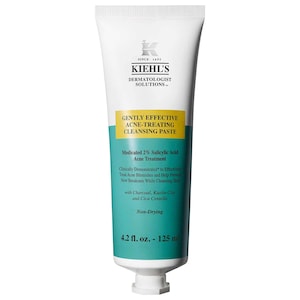
If you add one of these, do not add three more active products the same week. Give the routine time to show you what changed.
A simple morning routine
Morning should support the treatment plan, not compete with it.
Try:
- Gentle cleanser or water rinse.
- Lightweight hydrating layer if needed.
- Non-heavy moisturizer.
- Broad-spectrum sunscreen.
If you use a salicylic acid cleanser in the morning, keep the rest of the morning routine simple. If sunscreen seems to be part of the problem, do not skip sunscreen entirely. Try a lighter texture and cleanse well at night.
Sunscreen is especially important if you use retinoids or exfoliating acids because irritation and post-acne marks can look worse with unprotected sun exposure.
A simple night routine
Night is where most closed-comedone routines do their real work.
Try:
- Remove sunscreen and makeup thoroughly.
- Cleanse gently.
- Use your chosen treatment lane.
- Moisturize.
If your treatment lane is adapalene, avoid layering it over acids at first. If your treatment lane is salicylic acid, do not use a strong scrub on top. If your skin is burning, peeling, or shiny-tight, reduce frequency and focus on barrier repair.
The morning and night skincare routine order guide can help if your products are all useful but arranged in a way that makes them harder to tolerate.
Makeup and sunscreen habits that matter
Closed comedones often stick around because of products that sit on the skin for hours.
Look at:
- long-wear foundation
- heavy concealer around the chin
- water-resistant sunscreen
- cleansing balms that leave residue
- hair oils and leave-in conditioners
- thick sleeping masks
- occlusive lip products spreading around the mouth
You do not need to throw everything away. Change one variable at a time. If forehead bumps line up with a new hair oil, keep the oil away from the hairline for two weeks. If cheek texture started after a new sunscreen, test a lighter one.
How long improvement usually takes
Closed comedones are slow.
Some people notice smoother texture in four to eight weeks. Others need longer, especially if bumps have been present for months or if hormones are involved. Retinoids can also cause a temporary adjustment period where clogs seem more visible before the pattern improves.
Track weekly, not daily. Take photos in similar lighting. Note product changes. The Glass product card and routine tools are useful because they help separate "I feel like everything is worse" from what actually changed.
When to see a dermatologist
Get professional help if:
- bumps are not improving after consistent care
- you are developing painful pimples, nodules, or cysts
- acne is leaving scars or persistent marks
- texture appears suddenly after medication or a new product
- bumps are itchy, burning, or rash-like
- you are pregnant, trying to conceive, or breastfeeding and unsure what is safe
A dermatologist can confirm whether the bumps are closed comedones and may prescribe retinoids, azelaic acid, benzoyl peroxide combinations, hormonal treatments, or other options.
The bottom line
Closed comedones reward patience more than intensity. Think in terms of unclogging patterns, not attacking each bump. Cleanse well, choose one treatment lane, moisturize enough to keep the barrier steady, and give the routine time.
If the bumps are painful, inflamed, itchy, or scarring, stop guessing and get care.