
Blackheads are stubborn.
They look simple.
They are not.
The annoying part is that blackheads sit right on the line between skin care and bad habits. You can see them, so you want to squeeze them. You can feel texture, so you want to scrub it smooth. You can buy pore strips, tools, masks, acids, and cleansers that promise a cleaner nose by tonight.
Sometimes the nose does look cleaner by tonight.
Then the dots come back.
In 2026, I would treat blackheads less like dirt and more like clogged-pore maintenance. That shift matters. A blackhead is not a speck of grime sitting on top of the skin. It is an open comedone, which means oil and dead skin are trapped in a pore and exposed to air. The dark color is oxidation, not proof that your face is dirty.
Quick answer
Blackheads usually respond best to a steady routine built around gentle cleansing, salicylic acid, a retinoid when tolerated, moisturizer, and sunscreen. Mayo Clinic’s acne guidance discusses topical medicines such as retinoids and other acne treatments, while over-the-counter acne guidance often starts with proven ingredients like benzoyl peroxide or adapalene depending on the acne pattern.
For blackheads specifically, salicylic acid is useful because it is oil-soluble and can work inside the pore. But the best routine is not the harshest routine. If your skin gets tight, shiny, red, and more textured, you are probably irritating it faster than you are clearing it.
A blackhead routine starter table
| Image | Step | Product | Why it fits |
|---|---|---|---|
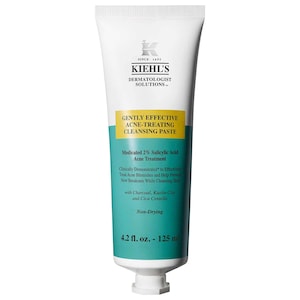 | Cleanse | Kiehl's Salicylic Face Wash | A wash-off salicylic option for oily or clogged areas |
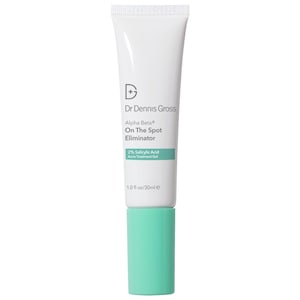 | Spot treat | Dr. Dennis Gross 2% Salicylic Acid Gel | Better for targeted clogged zones than rubbing acid everywhere |
 | Track | Glass routine builder | Helps you avoid stacking too many pore treatments at once |
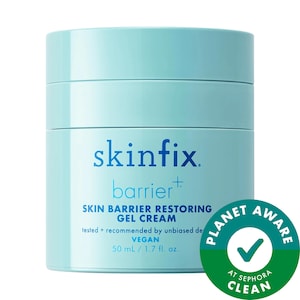 | Moisturize | Skinfix Barrier Gel Cream | Barrier support for oily or acne-prone skin |
What blackheads actually are
Blackheads are open comedones.
That means the pore is clogged, but the top remains open. The trapped material darkens where it meets oxygen. That is why the dot can look black, gray, or brown even when you cleanse properly.
This is different from a whitehead, which is a closed comedone. It is also different from sebaceous filaments, which are normal oil structures that often show up as tiny gray dots on the nose. Sebaceous filaments can look like blackheads, but they refill quickly because they are part of normal pore function.
If every dot on your nose returns two days after extraction, you may be fighting filaments, not true blackheads.
Why squeezing feels satisfying but backfires
Squeezing gives immediate feedback.
That is the trap.
You press, something comes out, and your brain decides the problem has been solved. But squeezing can bruise the pore wall, push inflammation deeper, break tiny blood vessels, and create marks that last longer than the original clog.
It also makes it hard to know what is actually working. Did the routine help, or did you just manually empty a pore? Did the redness come from acne, or from the mirror session?
If you use Glass to track your skin, mark picking or extractions in the notes. That one habit can explain a surprising number of “random” red days.
The salicylic acid sweet spot
Salicylic acid is a good blackhead ingredient because it can move through oil better than many water-based exfoliants.
But more is not automatically better.
Start with one salicylic product, not three. A cleanser may be enough for some people. A leave-on treatment may be better for stubborn clogged areas, but it is also more likely to irritate if you overuse it.
A reasonable start:
- Use a gentle cleanser most days.
- Use a salicylic acid cleanser or leave-on product two to four times weekly.
- Moisturize even if your skin is oily.
- Add sunscreen every morning.
- Wait several weeks before changing the plan.
Blackheads clear slowly because you are changing how pores clog, not just wiping the surface.
Where retinoids fit
Retinoids are often the long game for comedonal acne.
They help normalize how skin cells shed inside the follicle, which can reduce new clogs over time. Adapalene is available over the counter in some markets, while tretinoin and other retinoids are prescription options.
The key is tolerance.
If you start a retinoid, do not start it the same week you start an acid cleanser, a peel, a scrub, and a clay mask. Use a pea-sized amount, apply it at night, moisturize, and give your skin time. Irritated skin can look bumpier and oilier, which makes people wrongly assume they need even more treatment.
Pore strips, tools, and masks
Pore strips can remove surface material. They can also make the skin feel temporarily smoother. I understand the appeal.
But they do not change why the pore clogged in the first place.
Extraction tools are even riskier at home. Used too aggressively, they can leave bruising, broken capillaries, post-inflammatory marks, or scars. Clay masks can help oily skin feel cleaner, but they can also dry out cheeks and make the routine less tolerable.
I would use these as occasional extras, not the foundation.
A simple morning routine
Morning should be boring.
- Cleanse lightly or rinse.
- Use a lightweight moisturizer.
- Apply sunscreen.
That is it for many people. If you use salicylic acid in the morning, keep it targeted and watch irritation. If you use a retinoid at night, sunscreen is not optional. Sun irritation can make marks, redness, and texture look worse.
If your routine feels too plain, remind yourself that blackhead care is mostly consistency. The dramatic products are often the ones that make you quit.
A simple night routine
Night is where treatment usually fits.
Option one:
- gentle cleanser
- salicylic acid leave-on for clogged areas
- moisturizer
Option two:
- gentle cleanser
- retinoid
- moisturizer
Do not use both options aggressively at the same time unless a clinician told you to. Alternating nights is often more realistic than stacking everything in one routine.
When blackheads are not really blackheads
See a clinician if the dots or bumps are:
- painful
- rapidly worsening
- leaving scars
- mixed with deep nodules or cysts
- spreading beyond typical oily zones
- itchy and uniform around hair follicles
- not improving after several months of consistent care
Tiny nose dots may be filaments. Inflamed bumps around beard areas may be folliculitis or ingrown hairs. Dark marks after acne are not blackheads. A bump that bleeds, changes shape, or does not heal needs medical attention.
Common mistakes
The biggest mistake is trying to erase pores.
Pores are not meant to disappear. They can look more refined when congestion and irritation are controlled, but skin still has texture. Chasing poreless skin usually leads to over-exfoliation.
Other mistakes:
- using harsh scrubs on inflamed acne
- skipping moisturizer because skin is oily
- judging a routine after one week
- adding too many acids
- extracting under bright bathroom lighting every night
- forgetting hair products can clog the forehead and temples
If your nose is the main problem
The nose deserves its own note because it is where blackhead anxiety gets loudest.
Many people have visible sebaceous filaments on the nose. They may look like tiny gray dots, especially under harsh bathroom lighting or magnifying mirrors. If you squeeze them, thin oily material may come out, and then the dots seem to refill quickly.
That refill is the clue.
True blackheads can improve with a pore routine. Filaments can look better when oil, sunscreen, and dead skin are managed, but they do not disappear forever. Trying to empty them every few days usually creates redness and broken-looking texture around the nostrils.
For a nose-focused routine, I would use:
- a gentle cleanse every night
- salicylic acid a few times weekly
- moisturizer even if the nose is oily
- sunscreen during the day
- optional professional extraction for stubborn true blackheads
I would not use pore strips weekly, scrub with rough grains, or press the sides of the nose until the skin hurts.
How to judge progress without obsessing
Blackheads do not clear like a pimple that forms, peaks, and disappears.
They improve by becoming fewer, smaller-looking, and less inflamed over time. That makes progress easy to miss if you inspect your skin every morning from three inches away.
Use a calmer check:
- Take a photo in the same light every two weeks.
- Look at the whole area, not one pore.
- Track how often you feel the urge to squeeze.
- Notice whether makeup sits more smoothly.
- Notice whether new clogged bumps are forming less often.
If nothing changes after two or three months of consistent, tolerable care, it may be time to add a retinoid, change the salicylic format, or ask a dermatologist for a clearer plan.
If your skin is sensitive
Sensitive skin can still get blackheads.
That combination is frustrating because many blackhead routines assume oily, resilient skin. If your cheeks flush, sting, or peel easily, use salicylic acid more carefully.
Try a wash-off product first. Keep it mostly to the nose, chin, or forehead if those are the clogged zones. Moisturize before the skin feels dry. Avoid fragranced masks and gritty scrubs. If your skin barrier is already irritated, spend a week calming it before restarting pore treatment.
Bottom line
Blackheads respond to patience better than punishment.
Use one pore-focused active, protect the barrier, avoid repeated squeezing, and give the routine enough time to prove itself. If the bumps become painful, scarring, inflamed, or confusing, get a dermatologist involved.
The goal is not poreless skin. The goal is calmer pores, fewer clogs, and a routine you can actually repeat.