It feels personal.
One bump.
Then your whole face seems to orbit around it.
The biggest pimple is rarely just a cosmetic problem in the moment. It can ache when you smile, pull your attention every time you pass a mirror, and make every normal skincare choice feel urgent. The temptation is to attack it. Stronger spot treatment. More ice. More pressure. One careful squeeze that turns into ten minutes of damage.
The safer move is slower. A very large pimple needs inflammation control, patience, and a clear line for when at-home care stops being appropriate.
Quick answer
The biggest pimple on your face may be a deep inflamed acne bump, nodule, cyst, boil, inflamed cyst, or another condition that only a clinician can identify with confidence. Do not squeeze it, especially if it is deep, painful, hot, rapidly swelling, or has no clear whitehead. Use gentle cleansing, short cold compresses for swelling, avoid stacking harsh actives, and get medical care if it is severe, spreading, near the eye, draining heavily, recurring, or leaving scars.
The American Academy of Dermatology warns that popping pimples at home can push material deeper, increase inflammation, and raise the risk of infection or scarring. That matters most when the bump is big.
Why the biggest pimple behaves differently
A small surface whitehead and a deep swollen pimple do not play by the same rules.
Surface pimples sit closer to an opening. Deep bumps can involve more inflammation below the visible skin. That is why they feel firm, sore, and stubborn. You may see redness on top, but the problem is not only on top.
When a pimple is large, the surrounding tissue may be inflamed too. Pressing it does not neatly empty the bump. It can bruise the area, rupture inflammation sideways, and turn one angry bump into a longer healing process.
First 24 hours
The first day is about not making it worse.
Do this:
- cleanse gently
- use a clean cold compress for short intervals
- moisturize if skin feels dry or tight
- keep sunscreen on in the daytime
- avoid picking, squeezing, lancets, and extraction tools
- take a simple photo so you can tell whether it is growing
Do not turn the day into a product trial. A big pimple is already inflamed. Adding three acids, a retinoid, a drying mask, and benzoyl peroxide in the same night can irritate the surrounding skin without shrinking the deep bump faster.
Ice, warmth, and timing
Cold helps most when swelling and tenderness are the main issue. Wrap a cold pack in a clean cloth and use it briefly. Do not hold ice directly on skin.
Warm compresses can feel helpful when a pimple is closer to the surface and seems ready to drain naturally. Warm does not mean hot. You are not trying to cook the bump open.
If warmth makes the area throb, swell, or spread, stop. If cold causes numbness, burning, or skin color changes, stop.
Why squeezing is the trap
Squeezing feels logical because pressure sometimes flattens the bump for a few minutes.
That flattened look can be swelling compression, not healing.
If there is no clear opening, pressure may drive inflammation deeper into the skin. Hands and nails can introduce bacteria. Broken skin can crust, darken, scar, or become harder to cover. The bigger the pimple, the more there is to lose.
If you need help not touching it, place a hydrocolloid patch over the area if the skin is intact and the patch does not irritate you. A patch is mostly a hand barrier for deep bumps. It may help surface fluid, but it cannot vacuum out a nodule.
Product lane for a giant pimple
Products can support the surrounding routine, but they should not be treated like emergency surgery.
| Product image | Product | Where it may fit | Caution |
|---|---|---|---|
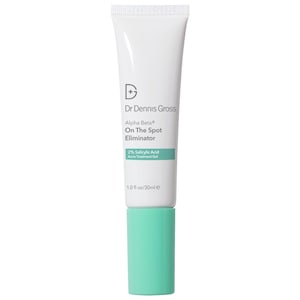 | Dr. Dennis Gross 2% Salicylic Acid Gel | Small clogged areas around the breakout | Can irritate if layered repeatedly |
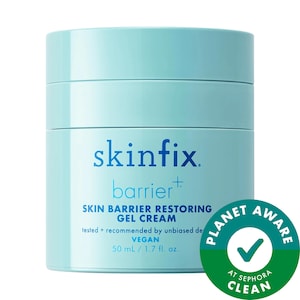 | Skinfix Barrier Gel Cream | Barrier support when acne care dries skin | Not a pimple treatment |
 | Glass routine tracking | Tracking patterns, product changes, and healing | Does not replace medical care |
For a deep bump, salicylic acid may help clogged pores around the area. It may not penetrate enough to quickly resolve a large inflamed nodule. That distinction prevents overuse.
Makeup without making it worse
Covering a large pimple is about softening contrast, not creating a flat surface.
Let moisturizer settle. Use thin layers. Apply concealer only where needed. Avoid scrubbing the bump with a sponge or brush. If the skin is open, bleeding, crusted, or draining, skip makeup on the broken area if possible and keep tools clean.
Texture will still exist. That is normal. The goal is to get through the day without turning a temporary bump into a longer wound.
When it may not be a pimple
The biggest “pimple” is not always acne.
Other possibilities include:
- an inflamed epidermoid cyst
- a boil or abscess
- folliculitis
- an ingrown hair
- an insect bite reaction
- contact dermatitis
- a cold sore near the lip
- swelling related to dental or sinus issues in some facial areas
This is why size matters. If the bump is unusually painful, hot, rapidly changing, or located near the eye or nose, do not force it into the acne category.
Red flags
Get prompt medical care if you notice:
- fever or chills
- rapidly spreading redness
- red streaking
- severe pain
- swelling around the eye
- swelling of the lip, nose, or cheek that is worsening
- pus, repeated drainage, or a bad smell
- a large lump that keeps returning in the same spot
- a bump after a wound, bite, or procedure
- immune suppression, diabetes, or higher infection risk
At-home acne care has limits. Infection signs, eye-area swelling, and severe pain are not a skincare project.
When a dermatologist can help
For a large painful acne cyst or nodule, a dermatologist may sometimes use an in-office corticosteroid injection. The AAD describes this as a doctor-only option for a deep, painful cyst or nodule that can speed healing and reduce scarring risk when appropriate.
That does not mean every big pimple needs an injection. It means you have options beyond squeezing when the bump is severe or badly timed.
For recurring large pimples, prevention matters more than emergency treatment. A clinician may discuss topical prescriptions, benzoyl peroxide, retinoids, hormonal acne options, short antibiotic courses, or isotretinoin in severe cases.
How to prevent the next biggest pimple
Track the pattern after the swelling calms.
Ask:
- Did it appear before a period?
- Did it follow a new product?
- Was there shaving, waxing, or friction?
- Did it happen after travel or poor sleep?
- Is it always on the chin, jaw, cheek, or nose?
- Does it leave a mark or indentation?
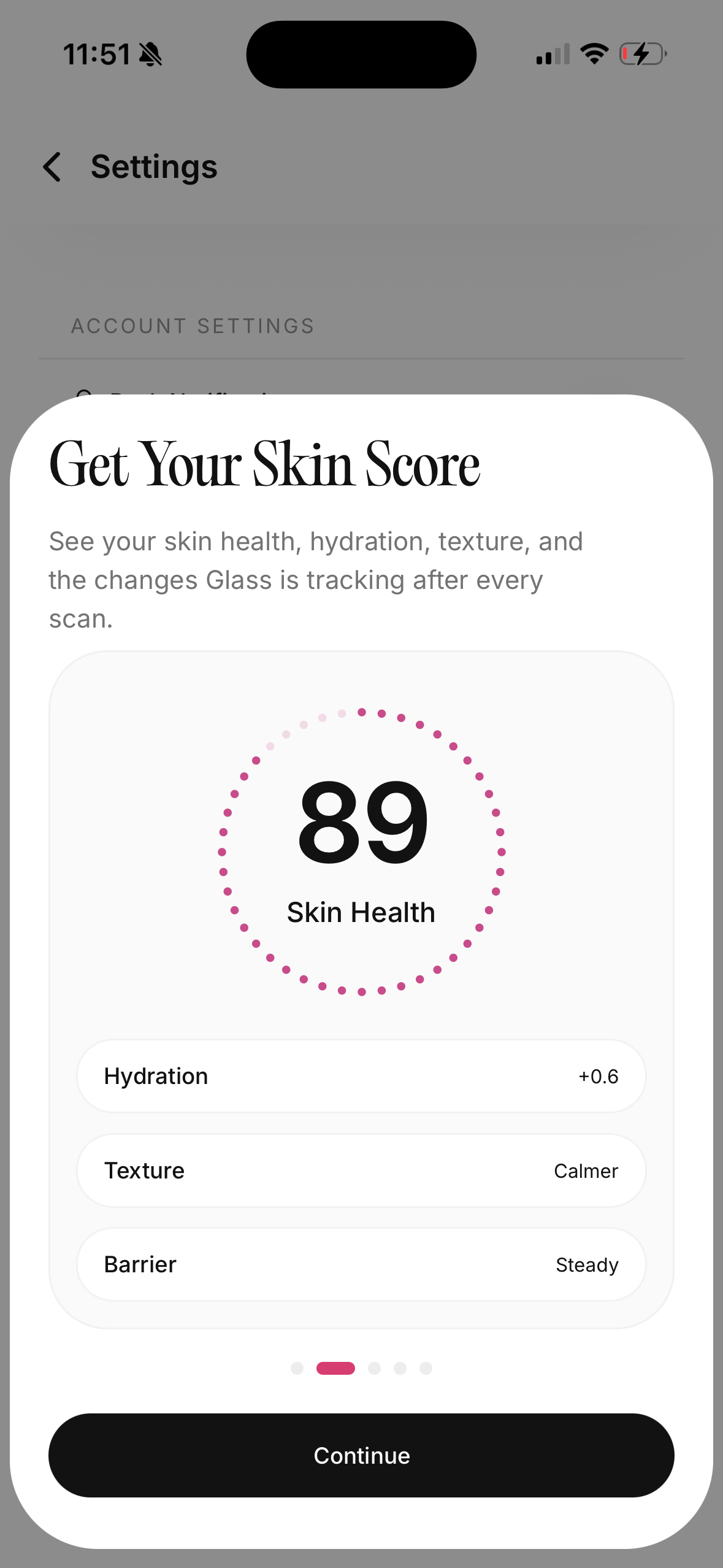
Use Glass to log the routine, take progress photos, and mark product changes. A single large pimple may be random. Repeated large pimples are data.
What I would pause while it heals
When one pimple is huge, I would pause anything that makes the surrounding skin more fragile. That includes gritty scrubs, peel pads, strong masks, at-home extraction tools, and new retinoid experiments. I would also avoid testing a new foundation or sunscreen directly over the most inflamed area.
This does not mean abandoning skincare. It means keeping the skin calm enough to heal. A simple cleanser, moisturizer, sunscreen, and any already-prescribed acne medication used exactly as directed is usually easier to interpret than a routine built from panic.
If you are using a strong acne routine and the skin around the bump is shiny, cracked, or burning, the barrier may need attention before more treatment makes sense.
A realistic healing timeline
A big pimple may not disappear in two days. Swelling can improve first, then tenderness, then redness or discoloration. Post-acne marks can linger even after the bump is flat.
Sunscreen helps protect healing marks from darkening. A calm routine helps the surrounding skin recover. Picking resets the clock.
If the bump is not improving, keeps enlarging, drains repeatedly, or returns in the same spot, book care instead of waiting for another cycle.
What to tell a clinician
If you make an appointment, give useful details instead of only saying it is huge. Tell them when it started, whether it is growing, whether it has drained, whether you squeezed it, what you applied, whether you have fever or spreading redness, and whether similar bumps scarred before.
Also mention pregnancy, immune suppression, diabetes, medication changes, and any history of recurrent cysts or boils. Those details can change the level of concern and help the visit move faster.
Bottom line
The biggest pimple needs restraint.
Do not squeeze it. Reduce swelling. Keep the routine boring. Protect the skin barrier. Watch for infection signs. Get help early when it is painful, fast-growing, near the eye, recurring, or likely to scar.
The win is not proving you can beat it at the mirror. The win is getting it healed with the least possible damage.