Big pimples make people impatient.
I get it.
They are loud on your face. They hurt. They make your normal routine feel too gentle and your strongest products feel too slow. But the problem with big pimples is that impatience usually makes them worse.
The useful question is not, “How do I destroy this by tomorrow?” It is, “What kind of bump is this, how inflamed is it, and when does this need more than at-home care?”
Quick answer
Big pimples can be inflamed papules, pustules, nodules, cysts, follicle irritation, boils, or other lookalikes. Do not squeeze deep or painful bumps. Use gentle cleansing, targeted acne care only if tolerated, cold compresses for swelling, sunscreen for healing marks, and a steady prevention routine. See a clinician for severe pain, fast swelling, fever, spreading redness, recurrent deep bumps, drainage, or scarring.
What makes a pimple big
A pimple looks big when more than one process is happening at once: clogged pores, oil, bacteria, inflammation, swelling, and sometimes irritation from what you already did to it.
Some big pimples are close to the surface. Others are deep and firm. Surface pustules may show a white or yellow center. Deep nodules can feel like a marble under the skin and may not have a head at all.
The deeper it feels, the less it behaves like something you can extract at home.
Big pimple types
| Pattern | What it can look like | Practical response |
|---|---|---|
| Inflamed papule | Red tender bump, no visible pus | Gentle care, no squeezing |
| Pustule | Raised bump with visible pus | Avoid picking; spot care may help |
| Nodule | Firm deep painful lump | Do not pop; consider derm care |
| Cyst-like bump | Swollen, deep, tender, may recur | Medical evaluation if severe or recurrent |
| Boil-like bump | Hot, very painful, draining, spreading | Clinician care, especially with fever |
This table is not a diagnosis tool. It is a reminder that “big pimple” covers several situations.
Why popping big pimples backfires
Popping a big pimple is riskier than popping a tiny surface bump.
The American Academy of Dermatology explains that squeezing can push contents deeper into the skin, increasing inflammation and the risk of pain, infection, and scarring. That is exactly the path big pimples tend to take when attacked.
If the bump has no clear head, stop. If it hurts before you touch it, stop. If the skin around it is swollen, stop. If you already squeezed and it looks angrier, switch to wound-care thinking: cleanse gently, do not keep reopening it, and watch for infection signs.
What to do the first night
Keep the first night simple:
- Cleanse with a gentle cleanser or a familiar acne cleanser if your skin tolerates it.
- Use a short cold compress for swelling.
- Apply moisturizer.
- Use a hydrocolloid patch only if it helps you stop touching and does not irritate the skin.
- Skip harsh scrubs, extra exfoliation, and multiple active layers.
If you already have a prescribed acne medication, follow your clinician’s instructions. Do not double up without asking.
Product examples for a calmer routine
| Image | Product | Best role | Watch-out |
|---|---|---|---|
| Kiehl's Salicylic Face Wash | Acne-prone cleansing if already tolerated | Can dry sensitive skin |
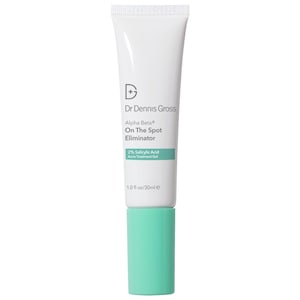 | Dr. Dennis Gross 2% Salicylic Acid Gel | Targeted clogged-pore support | Do not layer repeatedly on raw skin |
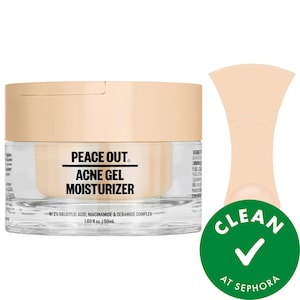 | Peace Out 2% Salicylic Gel Moisturizer | Lightweight acne-prone moisturizing lane | Not for broken or irritated skin |
Pick one acne-active lane at a time. Big pimples often happen on skin that is already stressed.
A safer spot-care mindset
Spot care should support healing, not punish the bump. I think of it as a small nudge around a larger routine. If a product burns, makes the skin shiny-tight, or causes peeling around the pimple, that is not proof it is working better.
Apply acne treatments only as directed. Keep them off broken skin. Do not combine a drying lotion, salicylic acid gel, benzoyl peroxide, and a retinoid on the same angry bump unless a clinician specifically built that plan. The surrounding skin can become inflamed enough that the pimple looks worse even if the pore itself is slowly improving.
If you need something to do, use the urge productively: wash your pillowcase, clean your phone, remove makeup earlier, and set up tomorrow's routine.
The prevention routine that actually matters
Emergency spot care gets attention, but prevention lowers the number of big pimples.
Morning:
- gentle cleanse or rinse
- lightweight moisturizer
- sunscreen
Night:
- cleanse thoroughly
- acne treatment if planned
- moisturizer
That routine can be boring and still effective. Retinoids, benzoyl peroxide, salicylic acid, azelaic acid, and prescription options all have places in acne care, but they need consistency and tolerance. A routine you abandon after irritation is not a prevention routine.
What if they keep coming back
Repeated big pimples are a different problem than one random flare. If you keep getting deep, tender bumps in the same zones, especially on the jaw, chin, cheeks, chest, back, or shoulders, it is worth discussing a prevention plan with a dermatologist.
Over-the-counter products can help mild acne, but recurring nodules or cyst-like bumps can scar. Waiting until each one becomes painful before acting puts you in a permanent emergency loop. A clinician can help decide whether your plan should include a topical retinoid, benzoyl peroxide, azelaic acid, hormonal care, oral medication, or another approach.
The goal is fewer large lesions, not heroic treatment of each one.
Hormones, stress, and location patterns
Big pimples on the chin and jaw can flare around hormone shifts for some people. Big cheek pimples may relate to acne patterns, occlusive products, phone contact, pillowcases, or random inflammation. Forehead bumps can overlap with hair products, sweat, helmets, and folliculitis.
Stress does not create acne out of nowhere for everyone, but stress can change sleep, picking, inflammation, routines, and recovery. That is enough to matter.
Track the pattern instead of guessing from one breakout.
When a big pimple is not acne
A boil, abscess, inflamed cyst, cold sore, allergic reaction, or folliculitis can masquerade as a pimple.
Be especially careful if the bump is:
- very hot
- rapidly expanding
- extremely painful
- draining a lot
- near the eye
- paired with fever
- recurring in the same exact spot
- not improving after a couple of weeks
Mayo Clinic notes that more serious or recurring folliculitis can require prescription care, and spreading infection symptoms should be treated promptly.
Red flags
Get medical care quickly for:
- fever, chills, or feeling unwell
- sudden increase in redness or pain
- swelling near the eye, nose, or lip
- red streaks
- severe tenderness
- repeated drainage
- a large bump after a wound or bite
- scarring deep acne
- immune suppression or diabetes
This is where skincare stops and medical care starts.
How to use Glass for big pimples
Use Glass to make the pattern visible. Add the product you used, the day the bump started, photos under similar lighting, pain level, and anything that changed: sleep, travel, shaving, sunscreen, makeup, cycle timing, workouts, or stress.
The routine builder is most useful when it prevents panic edits. If you can see that a product was added four days before every flare, that is more useful than trying a new spot treatment at midnight.
What recovery can look like
A big pimple may flatten before the color fades. A red, brown, or purple mark can remain after the inflammation settles. That mark is not always a scar. Indented texture is different and deserves earlier dermatology discussion.
Protect the area from sun, avoid picking flakes, and keep the barrier calm. If discoloration lingers, ingredients like azelaic acid, retinoids, and sunscreen may be discussed depending on skin tolerance and clinician guidance.
Covering them socially
There is also the practical part: you may still have to go outside. Use thin makeup layers, avoid rubbing, and accept that texture cannot be completely hidden. If the bump is open, skip makeup directly on the broken area when possible.
For painful bumps, comfort matters too. Avoid tight masks, helmets, chin straps, or anything that presses repeatedly on the lesion. If shaving over the area is part of your routine, pause until the skin is calmer.
Bottom line
Big pimples need less force and more judgment.
Do not squeeze deep or painful bumps. Calm swelling. Simplify the routine. Track patterns. Get care if the bump is severe, spreading, recurrent, draining, or likely to scar.
The fastest path is not always the most aggressive one. Often it is the one that avoids a preventable setback.