Free sounds good.
Until you open the app.
Then you find out "free" means one blurry scan, a dramatic score, and a paywall before anything useful happens.
That is the real problem with this category.
Most people looking for a free skin analysis app are not hunting for entertainment. They are trying to answer something practical:
_Is there a free app that can actually help me understand what is going on with my skin before I spend more money on products?_
When I looked through the current results on April 19, 2026, I kept seeing the same pattern. The pages ranking around this topic are good at selling the first moment. They promise instant AI analysis, fast scores, personalized skincare, and better skin in a few taps. They are much weaker at answering the harder questions:
- What can I really do for free?
- Does the app help after the first scan?
- Is it built for skincare decisions or just face scoring?
- Will it make my routine clearer or just noisier?
To make this useful, I reviewed the current public-facing pages shaping this topic, including SkinPal AI, Lume Skin, Derma AI, Qinn, and Glowprint, then cross-checked the current Glass App Store listing.
This is not a lab test pretending every app was used for the exact same number of days. It is a practical comparison built around what the apps currently promise in public, what they say is free, what kind of feedback loop they seem designed for, and whether they look helpful once the novelty of a selfie score wears off.
That distinction matters because the worst skin analysis apps do one thing really well:
- make you feel seen for 30 seconds
The best ones do something harder:
- help you change fewer things
- help you stay consistent
- help you notice patterns earlier
- help you avoid buying random products to solve the wrong problem
Quick answer
If you want the short version first:
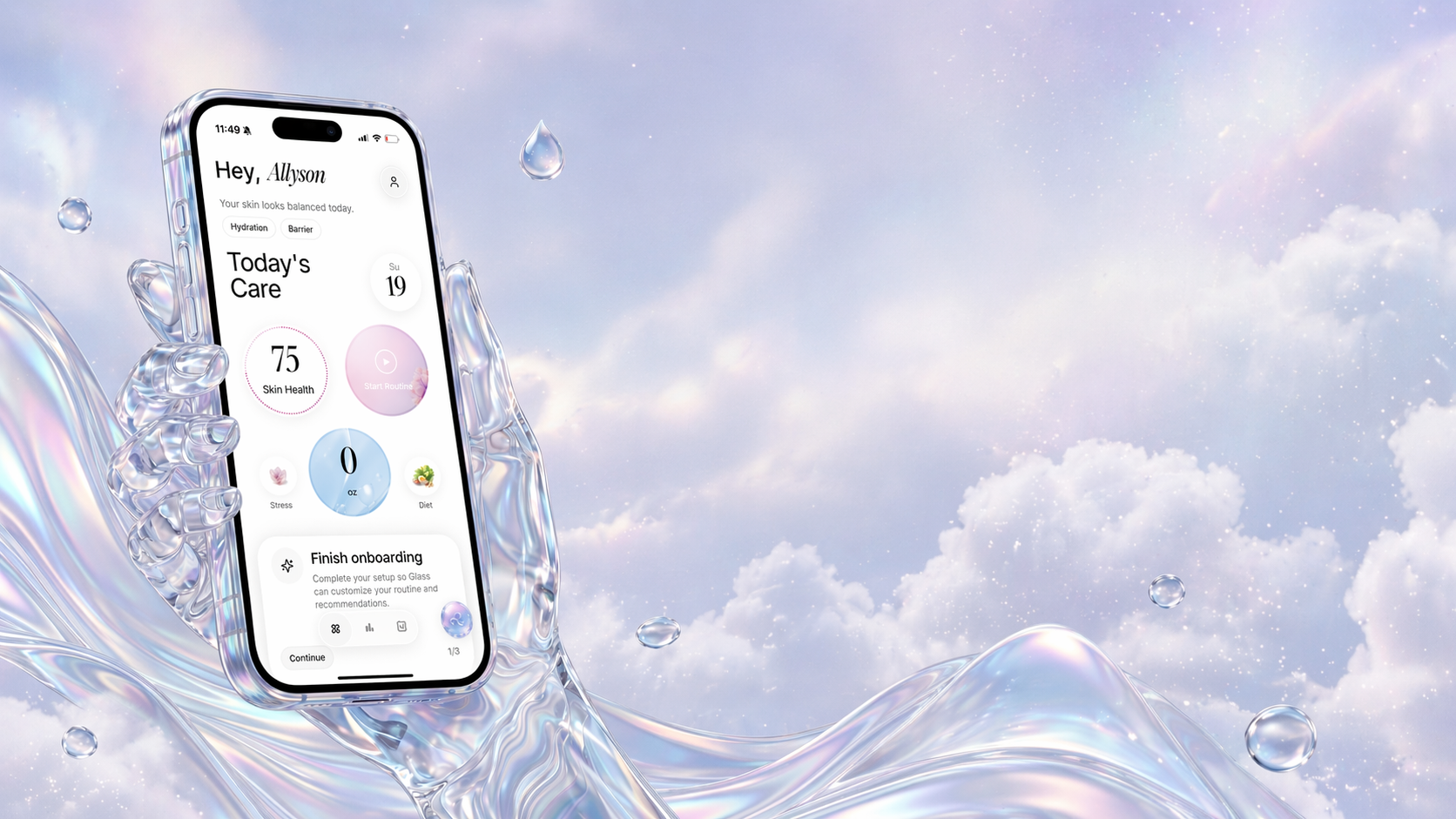
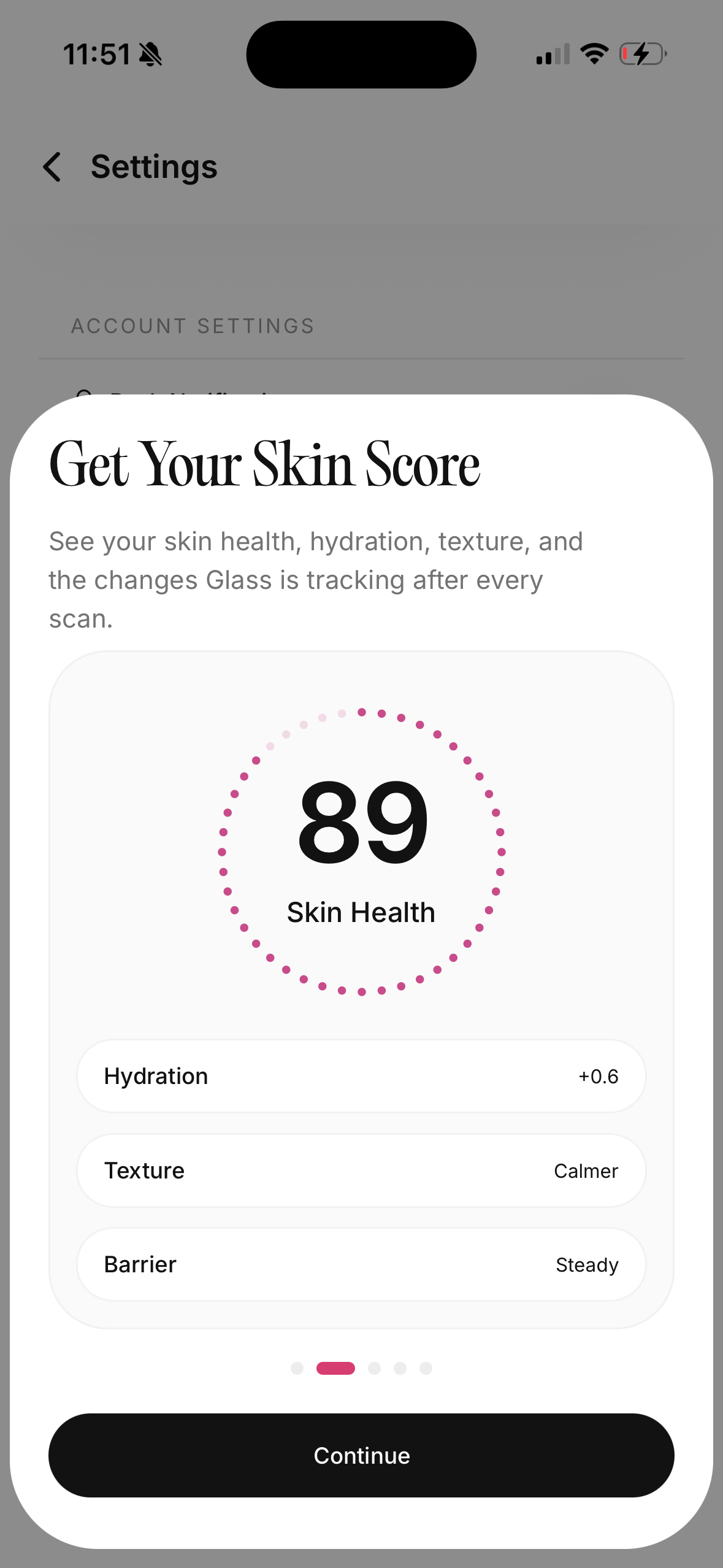
- Glass is the best overall pick if you want free routine structure, product logging, reminders, and progress context in the same place as skin analysis.
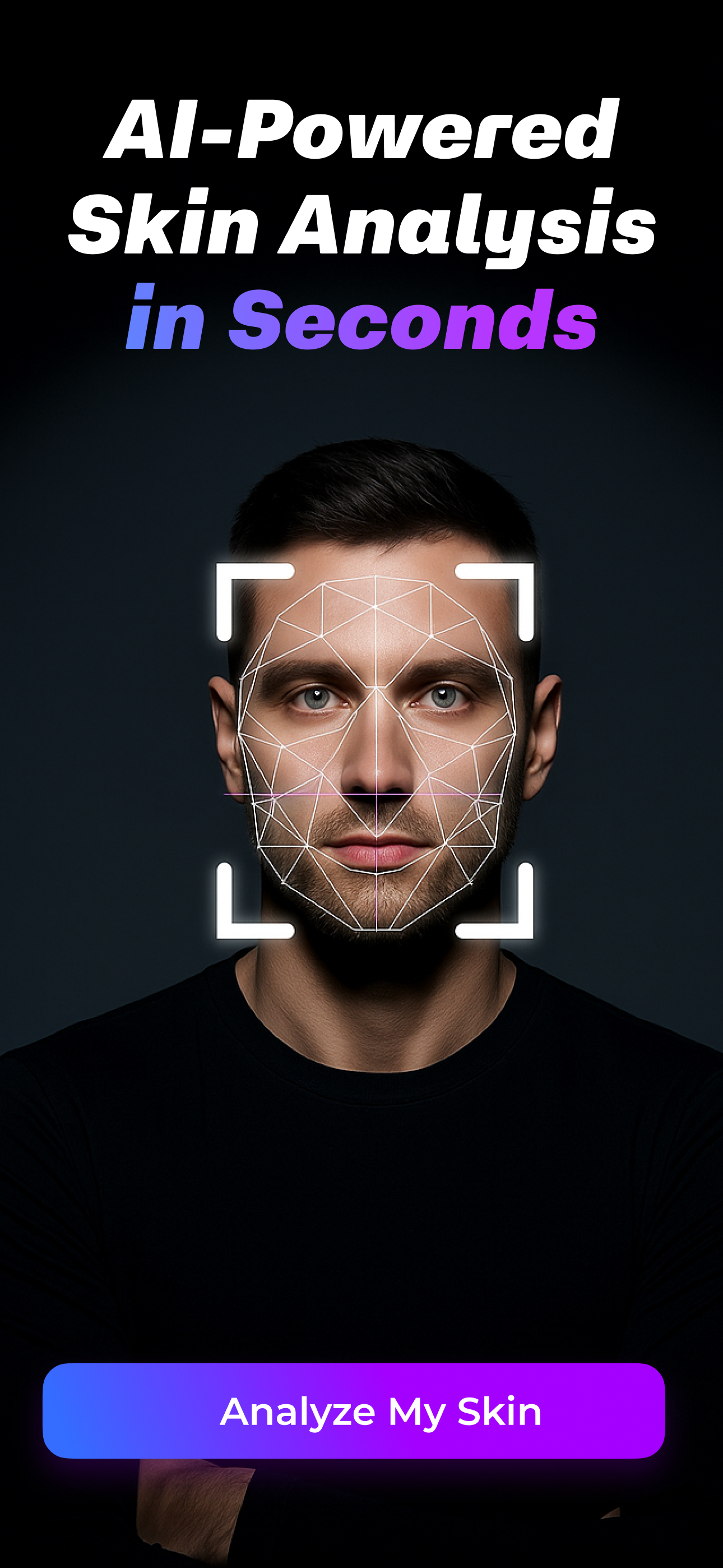
- SkinPal AI is the strongest free-first option if your main goal is repeated scans and watching acne, texture, tone, hydration, and oiliness change over time.
- Lume Skin is the broadest free feature set if you want scanning, product checking, and routines in one app.
- Derma AI is a good fit if you want a more score-and-routine style experience with product scanning included at no cost.
- Qinn makes the most sense if you want a metrics-heavy facial readout fast.
- Glowprint is more of a score-first beauty readout than a serious skincare operating system.
If your real question is not just "scan my face" but "help me build a routine I will actually keep and track what changes," Glass is the strongest place to start.
The 6 apps worth your time in April 2026
| Image | App | Best for | What stands out | What to watch |
|---|---|---|---|---|
 | Glass | People who want skin analysis tied to routines and progress | Free download, routine tracking, product logging, reminders, reports, lifestyle context | App Store listing says scan analysis results require a subscription |
 | SkinPal AI | Readers who want free daily scans and trend tracking | Free AI face scanner, acne/texture/tone tracking, hydration and oiliness tracking over time | More tracking-forward than routine-building-forward |
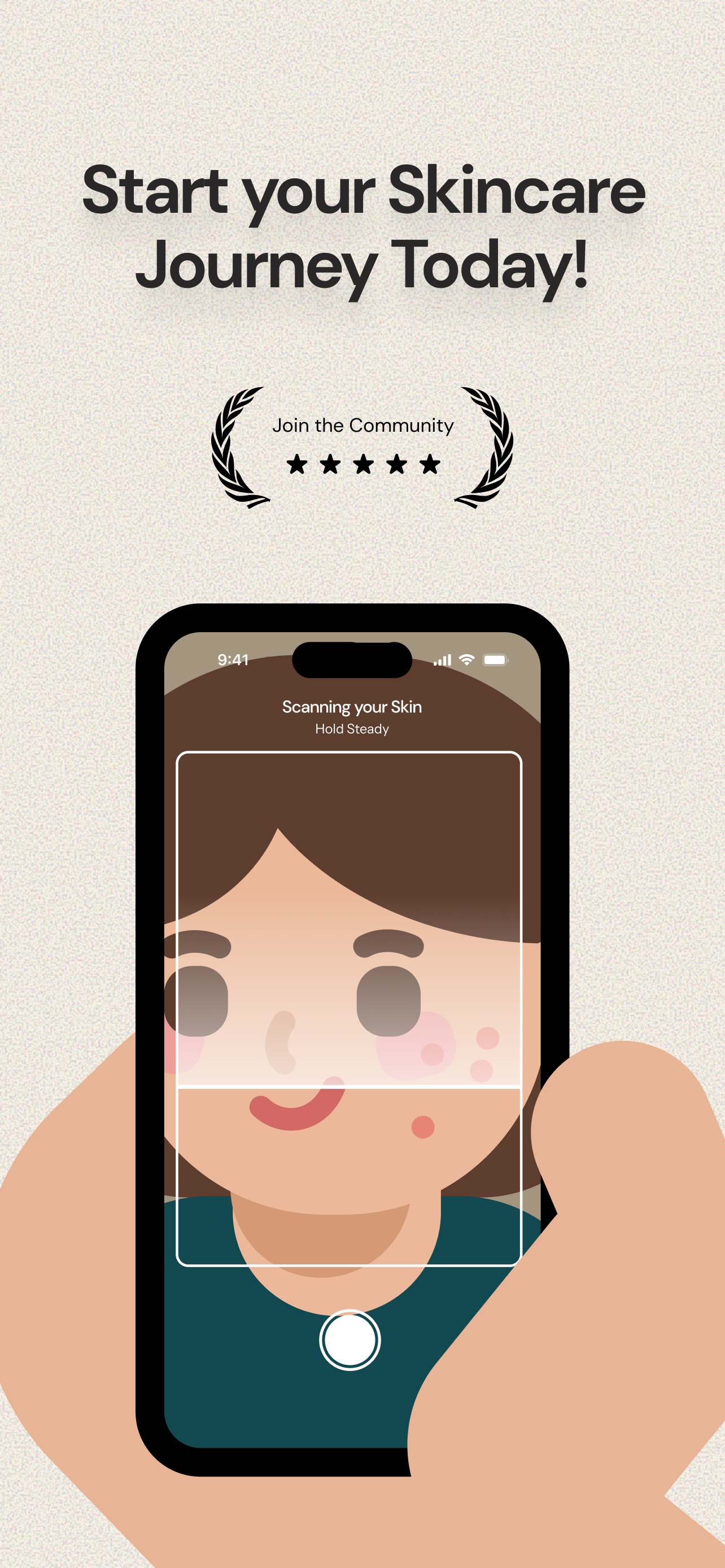 | Lume Skin | People who want the widest free tool set | Core scanning, ingredient checking, and basic routines are presented as free | Feature breadth can turn into feature clutter fast |
 | Derma AI | Users who want a score-first analysis plus routines and product scanning | 9 clinical categories, skin health score, AM/PM routines, product scanning, progress tracking | Public pitch leans hard on scoring, so I would still want proof of long-term usefulness |
 | Qinn | Readers who want a detailed concern-by-concern readout | Hydration, texture, pigmentation, pores, wrinkles, redness, dark circles, acne severity, tone | Strong diagnostic language, but less obvious routine-support depth from the public page |
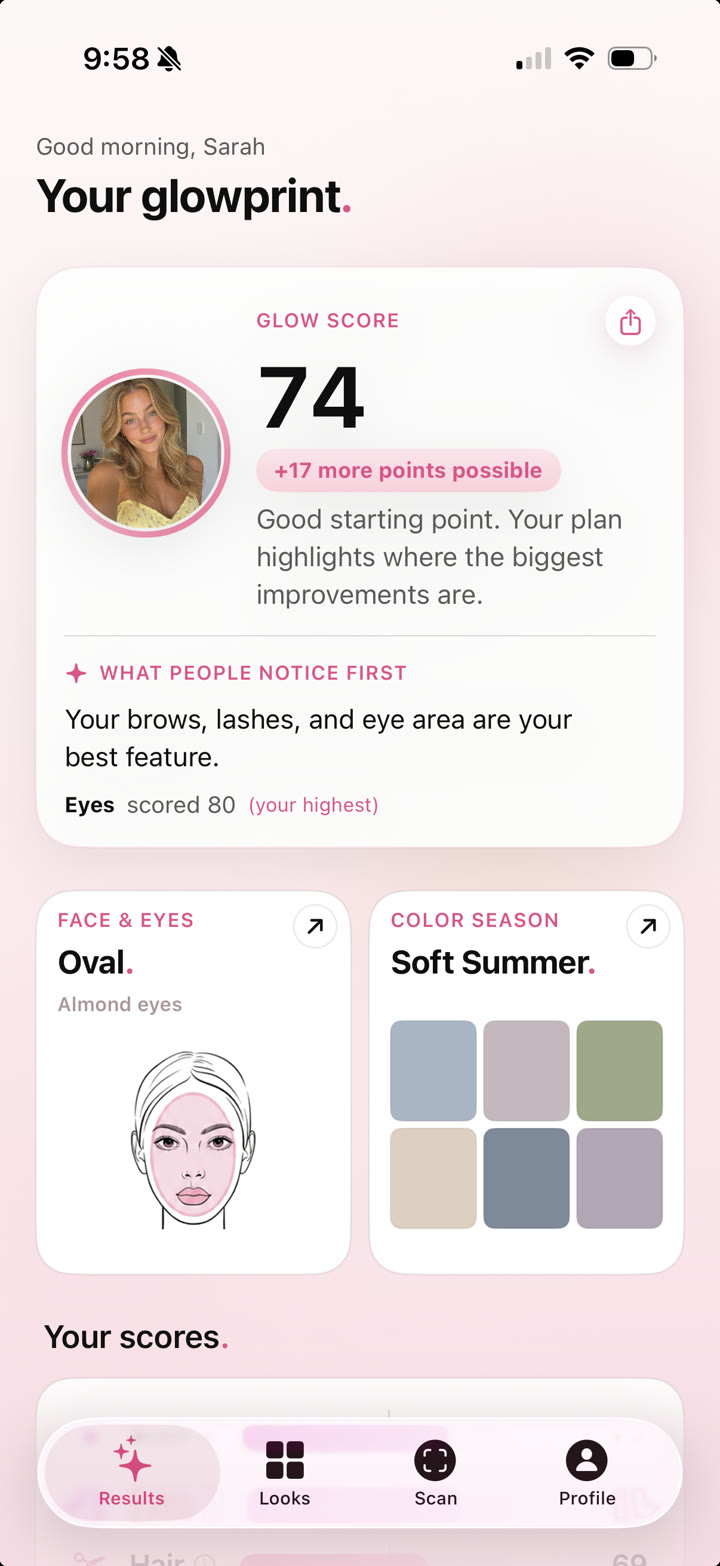 | Glowprint | People who want a quick score-heavy face analysis | Fast results and a visually dramatic report | Feels more like a beauty score app than a calm skincare helper |
What most people actually need from a free skin analysis app
I think this is where the current result set misses the mark.
People say they want a free skin analysis app, but what they usually mean is one of four things:
- they want to know whether their skin is actually changing or they are just reacting to a good lighting day
- they want help building a stable routine before buying more products
- they want to track one or two concerns without turning skincare into a part-time job
- they want something that feels honest, not manipulative
That last one matters more than it sounds.
A lot of these apps lose trust in the same way. They overstate the precision of the scan, throw a huge score at your face, then push you straight toward more products, more scans, more notifications, or more urgency than the situation really calls for.
I would rather use an app that tells me less with more restraint than an app that tells me everything with fake certainty.
That is also why I weighed these options against five questions:
- Is the free tier actually useful?
- Does the app help after the first scan?
- Does it make your routine clearer or more complicated?
- Does it reduce trial and error?
- Does it feel like a skincare tool instead of a vanity toy?
1. Glass is the best free skin analysis app for most people
What I like most about Glass is that it is trying to solve the full loop, not just the selfie moment.
According to the current App Store listing, the app is free to download and includes:
- routine tracking for morning and night
- product logging
- reminders
- photo comparison
- reports
- lifestyle tracking for sleep, stress, water, and diet
That already makes it more useful than a lot of scan-first tools.
The important nuance is that the App Store description also says skin scanning analysis results require a subscription. I think that needs to be said plainly, because too many "free" app roundups bury the catch.
Even with that caveat, Glass still comes out on top for me because it is shaped like a real skincare system. A lot of apps can tell you your skin looks dry or uneven. Fewer apps help you connect that to the routine you are actually following, the products you are actually using, and the habits that might be pulling things in the wrong direction.
That is a better product shape for real skin progress.
If I were trying to improve my skin without making my routine bigger, I would care less about getting one more face score and more about getting one place to:
- keep my routine stable
- log what I changed
- notice if my skin is getting smoother, clearer, or more irritated
- stop guessing every time I have one bad week
That is where Glass feels strongest.
If your main goal is a calmer skincare system rather than a flashy analysis toy, this is the best fit. If you want adjacent reads after this, open best AI skin analysis app (April 2026), best skincare routine app (April 2026), and best skincare routine tracker (April 2026).
2. SkinPal AI is the strongest true free-first option
If your first priority is getting actual skin analysis without immediately running into a paywall, SkinPal AI is one of the clearest options in the field right now.
Its public site is very direct. It positions itself as a free AI-powered skin analysis app for iPhone and Android that tracks:
- acne
- texture
- hydration
- tone
- oiliness
The pitch is simple: scan regularly and stop guessing.
I think that resonates because it matches how people actually talk when they are frustrated with skincare. They do not usually say, "I need a 0-to-100 beauty score." They say things like:
- "I cannot tell if this product is helping."
- "My skin looked better last week and now I do not know why."
- "I keep changing things too fast."
- "I need to see progress more clearly."
SkinPal is built around that kind of problem.
What I like here is that the value proposition is narrow enough to stay useful. It does not pretend to be everything. It feels like a tracking-first app with analysis layered in, not a shopping funnel disguised as skin intelligence.
The tradeoff is that it looks stronger at measurement than routine coaching. If you already know what products you are using and mainly want repeated scans plus trend visibility, SkinPal is a very good choice. If you want more help organizing the routine itself, Glass still has the edge.
3. Lume Skin is the broadest free tool set
Lume Skin is probably the best choice for someone who wants the widest feature list before paying.
Its current public page says the app is free to download and use, with core features such as:
- instant AI skin analysis
- ingredient checking
- basic routines
- progress tracking
The site also highlights privacy language around encryption, on-device processing when possible, and the ability to delete data. That matters in a category where users are literally uploading their face.
This is the kind of app that sounds appealing when your skincare problems are spread across multiple jobs:
- figure out what is going on with my skin
- check whether a product is safe or sensible
- get a routine
- track what changes
That breadth is real value.
It is also the risk.
Feature-heavy skincare apps can start to feel impressive before they feel clarifying. If you tend to get overwhelmed, or if you already have too many products and too many tabs open in your head, a huge menu of features can make skincare feel busier instead of cleaner.
Still, if what you want is "give me the biggest free toolbox," Lume is one of the strongest answers in the current result set.
4. Derma AI is good if you like score-based analysis and product scanning
Derma AI sits in a slightly different lane.
Its public site says it analyzes your facial skin across 9 clinical categories, gives you a 0 to 100 skin health score, builds personalized morning and evening routines, includes product scanning, and tracks improvements over time. It also says the core features are available free.
That makes it a reasonable pick for readers who like structure and want a more obviously graded experience.
Some people really do better with that.
They want a clear score. They want categories. They want a sense of movement. They want the app to tell them whether things are going up or down.
Derma AI looks built for that user.
My hesitation is the same hesitation I have with most score-heavy apps: a number can make the product feel more scientific than it really is. That does not mean the app is bad. It just means the score should only be useful if it helps you make better skincare decisions, not if it just gives you a new thing to obsess over.
If you like seeing your progress quantified and want product scanning in the same experience, Derma AI is a solid option. If you want a calmer, more habit-aware loop, I would still lean Glass or SkinPal first.
5. Qinn looks strongest for detailed concern mapping
Qinn stands out because its public-facing language is more concern-specific than most.
Instead of staying vague, it explicitly talks about reading:
- hydration
- texture
- pigmentation
- pore visibility
- wrinkles
- redness
- dark circles
- acne severity
- skin tone
That kind of breakdown is appealing when you are not asking a broad question like "How is my skin?" and are really asking a narrower one like:
- "Is this redness getting worse?"
- "Am I dehydrated or just dull?"
- "Are my pores actually changing?"
- "Is this an acne problem or a barrier problem?"
That is where Qinn looks sharp.
What I do not see as clearly from the public page is the same level of routine support or habit support that I see from the stronger all-around options. So I would treat Qinn as a better choice for people who want a more diagnostic readout, not necessarily the best option for someone trying to build a lasting skincare system.
If you already have your routine and mainly want a cleaner concern-by-concern read, Qinn is interesting. If you are still trying to stop routine chaos, it would not be my first recommendation.
6. Glowprint is the most visually dramatic, but it is not my first pick for skincare progress
Glowprint is the easiest app here to understand in one glance.
You upload a face photo and get a visually dramatic analysis screen with scores tied to things like:
- skin
- eyes
- hair
- balance
- elegance
- aura
That is exactly why I would rank it last for this keyword.
It is not that the app looks bad. It is that the product shape feels closer to a beauty-score engine than a useful skincare companion.
For someone who wants:
- quick facial feedback
- a visual score
- a fun, shareable result
Glowprint could absolutely scratch that itch.
But if your real goal is fixing acne, calming redness, reducing irritation, building a stable routine, or learning whether your products are helping, I think this style of app becomes less useful fast.
That is the big trap in this category. The more exciting the score, the easier it is to confuse stimulation with help.
What I would choose based on your actual problem
This is the part I wish more app roundups handled directly.
Do not choose based on whichever app sounds smartest. Choose based on the bottleneck you actually have.
If you want the best overall system
Start with Glass.
It is the strongest blend of:
- routine support
- product logging
- habit context
- progress tracking
- skin analysis positioning
If you want the best real free analysis loop
Start with SkinPal AI.
It is the cleanest answer if your question is:
"What can I actually use for free to scan repeatedly and learn what changes?"
If you want the broadest free feature set
Start with Lume Skin.
It gives you the widest toolbox without needing a long explanation.
If you want a score-driven experience
Start with Derma AI.
If you want detailed concern categories
Start with Qinn.
If you mostly want a fast visual readout
Try Glowprint, but do not mistake it for a full skincare system.
The mistakes I would avoid with any skin analysis app
No matter which app you pick, these are the patterns that usually waste the most time:
- changing products after one or two scans
- trusting a dramatic score more than your actual skin behavior
- scanning in wildly different lighting and taking the results too literally
- letting the app make your routine bigger instead of better
- using a skin analysis app without tracking what products you are actually using
That last one is the killer.
A scan without context is just another opinion.
The most useful setup is usually simple:
- Keep your routine stable for a few weeks.
- Track what you are using.
- Scan consistently in similar conditions.
- Change one thing at a time.
- Look for patterns, not drama.
That is also why the winner here is not the app with the most theatrical analysis. It is the app most likely to help you stay steady long enough to learn something real.
FAQ
What is the best free skin analysis app right now?
For most people, the best free skin analysis app in April 2026 is Glass if you care about routines and long-term progress, or SkinPal AI if you want the clearest free-first scanning experience.
Are free skin analysis apps actually accurate?
They can be useful for tracking patterns, but I would not treat them like medical diagnostics. Their best use is trend spotting, routine support, and helping you notice changes more consistently over time.
Which free skin analysis app is best for acne tracking?
SkinPal AI looks strongest for repeated acne and texture tracking. Glass is better if acne is only one part of a broader routine and progress problem.
Which free skin analysis app is best if I want product scanning too?
Lume Skin and Derma AI are the clearest options here based on their current public pages.
Should I use a skin analysis app instead of a dermatologist?
No. These apps are better used as tracking and routine tools, not substitutes for medical care. If you are dealing with persistent acne, painful irritation, worsening pigmentation, or anything that feels more serious than ordinary routine tuning, that is where a dermatologist matters.
If you only remember one thing from this page, remember this:
The best free skin analysis app is not the one that gives the most dramatic score.
It is the one that helps you make fewer bad decisions after the scan.