Benzoyl peroxide is one of the few acne ingredients that can feel both obvious and confusing.
It is obvious because the job is familiar: it is used for acne, especially red and inflamed breakouts. It is confusing because the details decide whether it becomes a useful routine step or the product that makes someone quit acne care for a month. Strength, format, timing, moisturizer, pillowcases, hairline placement, and how many other actives are already in the routine all matter.
In 2026, the best way to think about benzoyl peroxide is not as a heroic emergency product. Think of it as a strong, practical acne ingredient that needs boundaries. It can fit beautifully in a routine, but it does not belong everywhere at once.
Quick answer
Benzoyl peroxide can help acne by reducing acne-associated bacteria and calming inflammatory lesions. It is most useful for red pimples, pustules, and acne-prone areas where inflammation keeps returning. The tradeoffs are dryness, stinging, peeling, irritation, and fabric bleaching.
Start with the gentlest format that matches your acne pattern. Use it on acne-prone zones rather than randomly coating every dry area. Keep the rest of the routine simple. If acne is painful, deep, scarring, widespread, or not improving, bring the pattern to a dermatologist or other qualified clinician.
What benzoyl peroxide is actually for
Benzoyl peroxide is an acne treatment ingredient, not a general skin smoother. Its best lane is inflammatory acne: the red, angry, tender, pus-tipped, or cluster-prone bumps that feel different from quiet texture.
That does not mean it ignores clogged pores completely. Acne types overlap. A pore can start as congestion and then become inflamed. But if your main concern is tiny flesh-colored bumps with almost no redness, benzoyl peroxide may not be the first thing to reach for. A retinoid or salicylic acid discussion may fit that pattern better.
The ingredient becomes easier to use when the job is narrow: reduce the inflamed-breakout burden without destroying tolerance.
Why it is different from an acid
Benzoyl peroxide is often grouped beside salicylic acid because both appear in acne aisles. They do not have the same personality.
Salicylic acid is usually discussed around oil, clogged pores, and exfoliation. Benzoyl peroxide is discussed around inflamed acne, bacteria involved in acne, and antibiotic pairing. It can be drying, but drying is not the intended benefit. Dryness is a side effect to manage.
This distinction helps prevent messy routines. If you already use an exfoliating acid every night, adding benzoyl peroxide daily may turn a manageable acne plan into a barrier problem. If your breakouts are inflamed and recurring, benzoyl peroxide might deserve the main acne slot while exfoliation steps become less frequent.
Strength is not a bravery test
Benzoyl peroxide commonly appears around 2.5%, 4%, 5%, and 10%. A higher number does not automatically mean a smarter plan.
For facial use, many people do better starting low. A lower-strength leave-on product used consistently may be more realistic than a stronger gel that makes the skin burn by day three. Body skin often tolerates more than facial skin, but even chest and back acne can get irritated if the product is too aggressive.
| Strength style | Practical fit | Main caution |
|---|---|---|
| 2.5% leave-on | Acne-prone facial zones, cautious starts | Can still dry and bleach fabric |
| 4% wash | Face or body short-contact use | Needs contact time before rinsing |
| 5% leave-on or wash | More resilient skin | Peeling risk climbs |
| 10% wash | Some body acne routines | Often too harsh for the face |
The best strength is the one your skin can keep using.
Wash, leave-on, and short-contact use
Format changes everything.
A wash is rinsed off. It can be useful for people who want benzoyl peroxide exposure without leaving it on all day or all night. It is also practical for the chest, back, shoulders, and buttocks because coverage is easier in the shower.
A leave-on gel or cream gives longer contact. That can be useful for acne-prone zones on the face, but it also raises irritation and bleaching risk. A thin layer is enough. More product usually means more irritation, not more control.
Short-contact use sits between the two. Some people apply a benzoyl peroxide wash, let it sit briefly while they brush teeth or finish another shower step, then rinse. Always follow the product label and avoid eyes, lips, folds, and freshly shaved or broken skin.
Where it belongs in the routine
Benzoyl peroxide needs a boring neighborhood.
For many routines, it belongs after cleansing and before moisturizer if it is a leave-on product. If it is a wash, it replaces the cleanser step on the days you use it. Sunscreen still belongs in the morning because acne treatments and irritated skin can make sun exposure more punishing.
A simple leave-on night could look like:
- Gentle cleanse.
- Dry skin fully.
- Thin benzoyl peroxide layer on acne-prone zones.
- Moisturizer.
A wash routine could look like:
- Apply benzoyl peroxide wash to acne-prone areas.
- Let it sit briefly if the label allows.
- Rinse thoroughly.
- Moisturize.
The support steps are not decorative. They are what keep the treatment usable.
The fabric-bleaching problem
Benzoyl peroxide can bleach towels, pillowcases, pajamas, collars, headbands, and hairline fabrics. This is not rare. It is one of the most practical reasons people dislike it.
Plan around it from day one:
- use white towels
- let leave-on products dry before lying down
- wash hands after applying
- avoid spreading it into eyebrows or hairline
- keep it away from colored shirt collars
- use older pillowcases during the first weeks
- rinse body washes thoroughly before toweling off
Bleaching does not mean the product is unsafe for skin, but it does mean the routine needs logistics. A product that ruins your favorite pillowcase every week will not stay in your routine.
How to protect the skin barrier
The skin barrier is what lets acne treatment continue. When it is irritated, everything stings: cleanser, moisturizer, sweat, sunscreen, even water. That is usually a sign to reduce the plan, not add more products.
Barrier-friendly benzoyl peroxide use means:
- start two or three times weekly
- avoid daily exfoliation at first
- moisturize before irritation gets severe
- pause scrubs and harsh masks
- skip freshly waxed, shaved, or sunburned areas
- treat dryness as a signal
If peeling is light and the skin feels comfortable, you may be able to continue. If skin burns, cracks, swells, or stays painfully red, stop and get guidance.
What not to stack casually
Benzoyl peroxide can be combined with other acne treatments in clinician-guided plans, but random stacking is where many routines fail.
Be careful with:
- exfoliating acids
- retinoids
- drying sulfur masks
- alcohol-heavy toners
- abrasive scrubs
- multiple acne spot treatments
- prescription acne creams unless your clinician says the pairing is appropriate
This is especially important if you are already using tretinoin, adapalene, tazarotene, trifarotene, or a prescription combination. One strong treatment plus a calm support routine is often more workable than five aggressive steps fighting each other.
Face acne versus body acne
Facial acne and body acne do not always need the same benzoyl peroxide format.
The face has more visible irritation risk and more daily product overlap: sunscreen, makeup, shaving, moisturizers, and actives. Lower strength, lower frequency, or a wash may be easier.
Body acne often involves sweat, friction, tight clothing, backpacks, sports gear, or occlusive fabrics. A benzoyl peroxide wash can be practical because it covers larger areas and rinses away. Use white towels and rinse thoroughly before putting on dark clothing.
If body lesions are painful, boil-like, recurrent in folds, or leave scars, do not assume it is ordinary acne. Ask a clinician.
What improvement can look like
Benzoyl peroxide does not need to make skin peel to be useful. Improvement may look like fewer inflamed pimples, shorter-lived pustules, less clustering, or breakouts that feel easier to calm.
Give a reasonable routine time unless irritation forces you to stop. Acne often changes over weeks, not two applications. During that window, take photos in the same lighting and track frequency. It is hard to judge a routine by memory when acne naturally flares and settles.
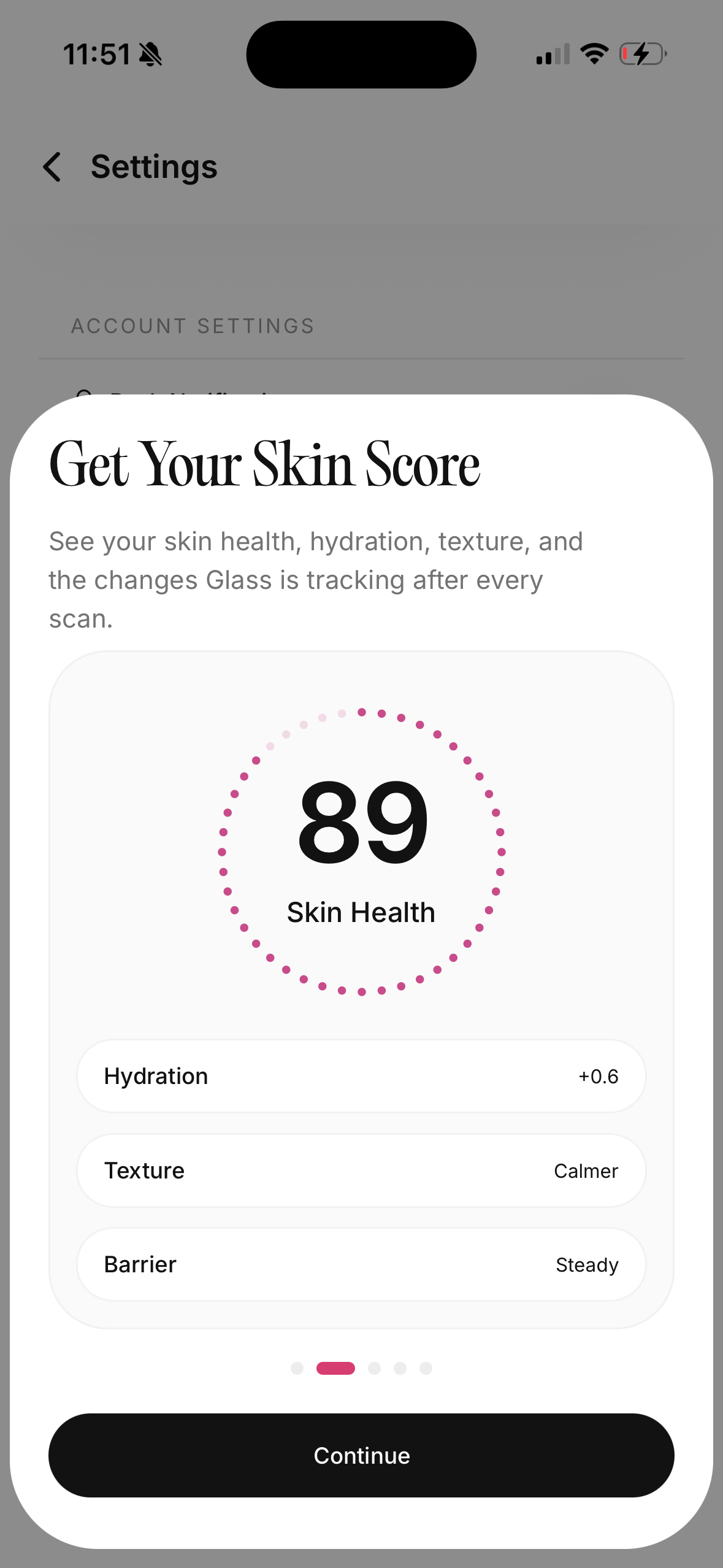
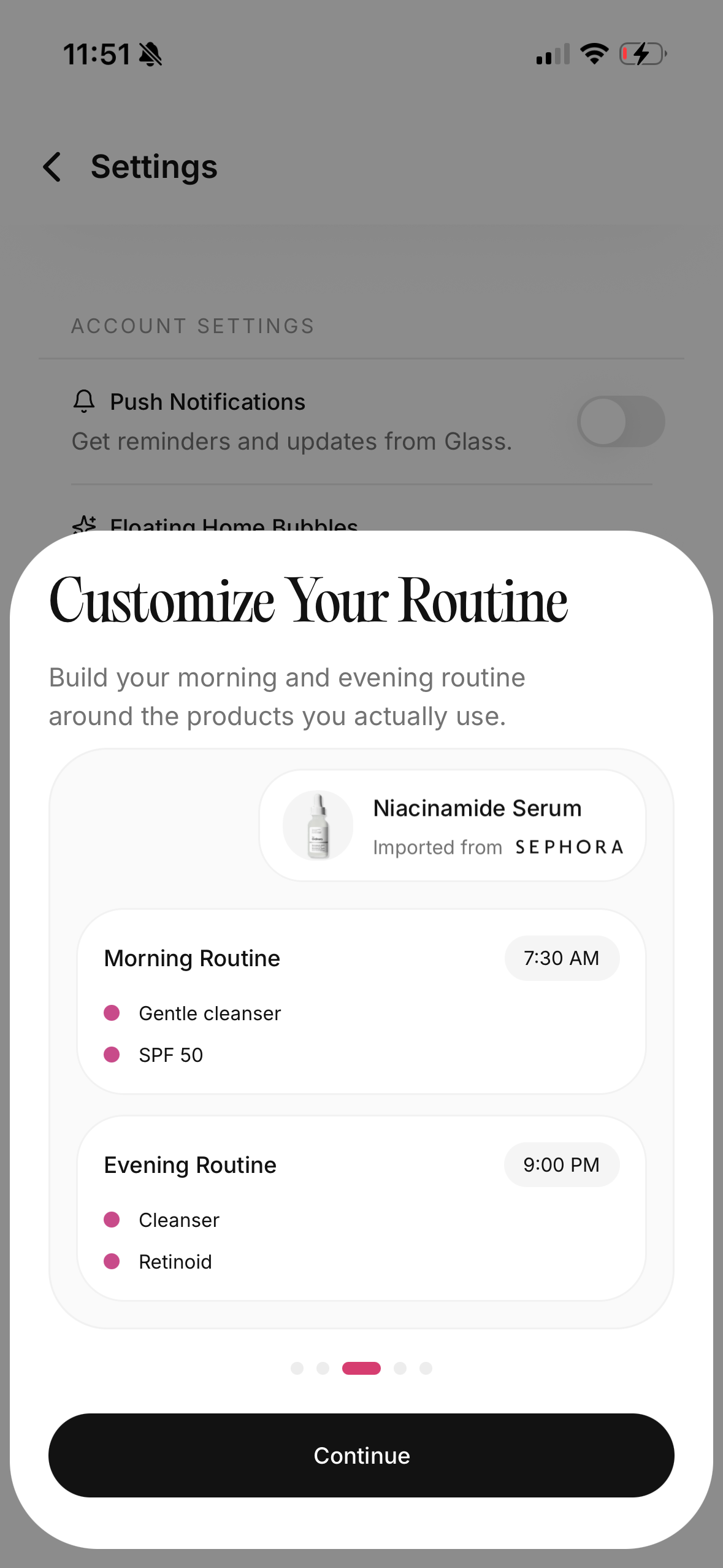
Glass can help here because the routine builder keeps the acne step visible beside cleanser, moisturizer, and sunscreen instead of turning treatment into guesswork.
When it is the wrong tool
Benzoyl peroxide may disappoint when the main issue is not inflamed acne.
It is usually not enough for:
- deep cyst-like acne
- acne causing scars
- sudden severe breakouts
- rash-like bumps
- itchy uniform bumps
- cold sores or blisters
- perioral dermatitis
- rosacea flares
- blackheads without much inflammation
It can also be too irritating for very reactive skin. That does not mean you failed. It means the plan should change.
Questions worth asking a dermatologist
If benzoyl peroxide helps but does not control the pattern, ask better questions:
- Is this inflammatory acne or something else?
- Should I use a wash, leave-on, or prescription combination?
- How often should I use it with my skin type?
- Should I pair it with a retinoid?
- Do I need to stop any exfoliating products?
- What should I do if my skin starts peeling?
- How long should I try this before changing plans?
- Is body acne being driven by sweat, friction, or folliculitis?
The goal is not to collect stronger products. The goal is a routine that matches the acne pattern and can be repeated without constant damage control.
Bottom line
Benzoyl peroxide earns its place when the problem is inflamed acne and the routine respects its strength. Choose the format carefully, start lower than your motivation, moisturize, expect bleaching risk, and keep other actives restrained.
Used that way, it can be a practical part of acne care. Used everywhere, every night, with every other active, it often becomes the reason the whole routine falls apart.