
Your routine should not feel like homework.
It should feel obvious.
Cleanse. Treat. Moisturize. Protect.
Then stop.
The problem is that most bathroom counters do not look that simple anymore. There is a cleanser you bought when your skin felt oily, a toner you bought when it felt dull, a serum you bought when it felt dehydrated, a retinol you keep meaning to use correctly, a sunscreen that pills, and a mask that only comes out when your face starts acting strange.
That is how product order gets messy. Not because you are careless. Because every product came with a promise, but almost none of them came with a place in the week.
I made this checklist for the real version of skincare: mornings when you have seven minutes, nights when you are tired, treatment days when you are tempted to overdo it, and reset nights when your skin needs less ambition and more comfort.
The quick checklist
If you only want the answer, use this.
| Time | Checklist | What not to overthink |
|---|---|---|
| Morning | Cleanse or rinse, hydrating layer if needed, treatment serum if it behaves well under sunscreen, moisturizer if your sunscreen is not enough, broad-spectrum SPF | You do not need every brightening, pore, and glow product before breakfast |
| Night | Remove sunscreen or makeup, cleanse, one treatment lane, moisturizer | You do not need acids and retinol on the same random Tuesday |
| Treatment nights | Cleanse, one active, moisturizer | Keep the rest boring so you can tell what happened |
| Reset nights | Cleanse, hydrate, moisturize | A reset night is not failure; it is maintenance |
| Weekly | Check what your skin repeated, not what it did once | One bad skin day is not a full routine diagnosis |
The best skincare routine checklist is not the longest one. It is the one that tells you what to do, what to skip, and when to leave your face alone.
What belongs in the morning
Morning skincare has one main job: help your skin get through the day.
That means the morning routine should be lighter, more protective, and less experimental than the night routine. I usually think of it as a preparation stack. You are preparing the skin for sunscreen, makeup if you wear it, sweat, weather, indoor air, and a full day of touching your face more than you realize.
A reliable morning checklist looks like this:
- Gentle cleanse or rinse.
- Hydrating layer if your skin feels tight.
- One daytime-friendly serum if it layers cleanly.
- Moisturizer if your sunscreen does not give enough comfort.
- Broad-spectrum sunscreen.
That last step is the one I would protect the most. The American Academy of Dermatology recommends broad-spectrum, water-resistant sunscreen with SPF 30 or higher for daily sun protection, and the FDA still frames broad-spectrum sunscreen as the label that covers both UVA and UVB protection. Everything else in the morning routine should make sunscreen easier to wear, not harder.
If a serum makes your SPF pill, it has lost the argument for morning use.
Move it to night, use less, or pause it.
What belongs at night
Night skincare has a different job. It should remove the day, treat one priority, and help the barrier recover before morning.
That does not mean night needs to be dramatic. A good night routine is usually calmer than the product shelf suggests.
The night checklist:
- Remove sunscreen and makeup if needed.
- Cleanse without stripping.
- Use one treatment lane.
- Moisturize.
- Add a rescue layer only when your skin clearly asks for it.
The phrase “one treatment lane” matters.
If tonight is a retinoid night, it does not also need to be an exfoliating-acid night. If tonight is a salicylic acid night, it probably does not need a peel, a scrub, and a drying spot treatment layered on top. If tonight is a dark spot night, the rest of the routine should support consistency instead of turning your face into a chemistry project.
The skin has to tolerate the routine before it can benefit from it.
My cleanest product-order rule
Use this when you forget everything else:
Cleanse first. Watery products next. Gels and serums after that. Creams near the end. Sunscreen last in the morning.
That rule is not perfect for every formula, but it is good enough for most real routines.
Where people get stuck is usually not cleanser versus toner. It is the middle. Three serums all sound important, so they all get used, and then the routine becomes sticky, irritating, or impossible to troubleshoot.
I would rather see one well-placed serum used consistently than four impressive serums used in a panic.
If your routine has too many middle steps, assign each one a job:
- Hydration: tightness, dullness, dehydration, makeup catching on dry patches
- Oil balance: shine, visible pores, congested feel
- Texture: roughness, uneven feel, slow turnover
- Tone: post-breakout marks, uneven look, dullness
- Barrier support: stinging, redness, flaking, overtreated skin
Then keep the product that solves the current job. Pause the ones that are just there because they sound useful.
The product checklist I would actually use
This is not a shopping list. It is a placement map.
You do not need every product here. The point is to understand which kind of product belongs where, so the routine stops feeling like a pile of good ideas.
| Product type | Example | Image | Best slot | Who it helps most |
|---|---|---|---|---|
| Gentle cleanser | fresh Soy Hydrating Gentle Face Cleanser | 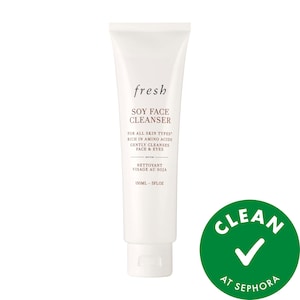 | Morning or night cleanse | Normal, dry, combination, or easily stripped skin |
| Hydrating serum | The INKEY List Hyaluronic Acid Hydrating Face Serum |  | Before moisturizer | Skin that feels tight underneath, even when it looks shiny |
| Lightweight moisturizer | The INKEY List Omega Water Cream Oil-Free Moisturizer + Niacinamide | 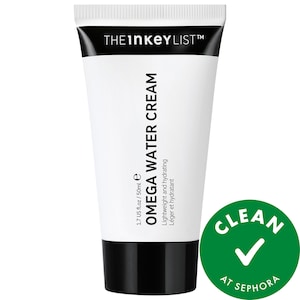 | Morning or night seal | Oily, combination, or sunscreen-sensitive routines |
| Daily sunscreen | Paula's Choice RESIST Youth-Extending Daily Hydrating Fluid SPF 50 | 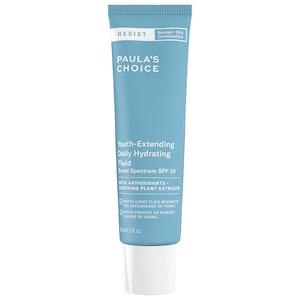 | Last morning step | Anyone who wants a lighter SPF that still behaves like a daily product |
| Retinol lane | Shani Darden Retinol Reform with 1% Encapsulated Retinol | 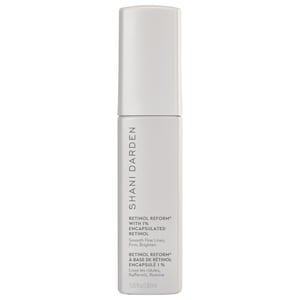 | Night treatment | Texture, tone, and fine-line routines that can move slowly |
| Breakout lane | Dr. Dennis Gross Alpha Beta On The Spot Eliminator 2% Salicylic Acid Acne Treatment Gel | 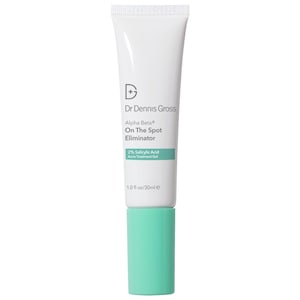 | Targeted night step | People who need spot control without treating the whole face aggressively |
The mistake is buying the table.
The better move is choosing the missing job.
If you already cleanse comfortably, do not replace your cleanser just because a new one looks better. If your sunscreen is reliable, protect that stability. If your moisturizer is the only reason your retinoid is tolerable, it is not boring. It is carrying the routine.
The morning routine checklist by skin situation
Skin type labels are useful, but behavior is better.
I do not care as much whether someone calls their skin oily, dry, normal, or combination. I care what the skin does by noon.
If your skin feels tight by midmorning
Use a gentler cleanse or just rinse, then add a thin hydrating layer before sunscreen. If your sunscreen is matte or mineral-heavy, you may need moisturizer underneath.
Do not keep adding brightening products when the real issue is that your skin starts the day under-hydrated. Dehydrated skin can look dull, textured, and tired even when you are using good ingredients.
If your skin gets shiny fast
Keep the morning stack smaller.
Cleanse lightly, use one thin serum if you need it, then choose a moisturizer-sunscreen pairing that does not feel like two heavy creams fighting each other. Oily skin still needs moisture, but it often needs a lighter shape.
This is where gel creams and fluid sunscreens make sense.
If sunscreen pills
Pilling is usually a routine architecture problem.
Use less serum. Give moisturizer more time to settle. Skip the product that leaves a tacky film. Do not rub sunscreen like you are trying to erase the layers underneath it.
If your SPF pills every time, the morning routine is too crowded or the textures do not like each other.
If makeup separates
Treat your morning skincare like base prep.
You want hydration without slipperiness, moisturizer without a greasy film, and sunscreen that has time to settle. A routine can be technically correct and still be wrong under makeup.
The checklist should serve the day you actually have.
The night routine checklist by problem
Night is where people try to fix everything.
That is exactly why night needs rules.
If texture is the main issue
Choose a retinoid lane or an exfoliation lane. Do not start both at full speed.
Retinoids reward patience. Exfoliating acids reward restraint. Both can be useful, but neither works better because you made the routine more chaotic.
Start with two or three nights a week for the active, then use recovery nights in between. If the skin feels smooth but angry, the routine is not winning.
If breakouts are the main issue
Keep the routine boring enough to read.
Use a gentle cleanse, one breakout treatment, and a moisturizer that does not scare you off. Spot treatments belong on spots. A drying gel all over the face can turn one breakout into a barrier problem.
If acne is painful, scarring, cystic, sudden, or not improving after a real trial, that is a clinician conversation. A checklist can organize a routine, but it should not replace medical care.
If dark marks are the main issue
Morning sunscreen matters as much as night treatment.
This is the part people underestimate. A dark-spot serum at night is fighting uphill if the morning routine is inconsistent with sunscreen. I would rather see a simple brightening routine plus daily SPF than a complicated treatment routine with sunscreen treated like an optional finale.
If irritation is the main issue
Pause the impressive stuff.
Use cleanser, moisturizer, and sunscreen until the skin stops feeling hot, stingy, flaky, or suspicious of everything. Then add one product back at a time.
When your skin is irritated, a boring routine is not unsophisticated. It is the fastest way to hear what your face is trying to say.
My weekly skincare checklist
Daily routines are easier when the weekly rhythm is clear.
Here is the weekly check-in I like:
| Question | What it tells you |
|---|---|
| Did I use sunscreen most mornings? | Whether tone, redness, and dark marks are getting a fair chance |
| Did I complete my night routine most nights? | Whether the problem is product fit or inconsistency |
| Did any product sting repeatedly? | Whether your barrier is asking for a pause |
| Did I use more than one strong active on the same night? | Whether irritation may be self-inflicted |
| Did my skin improve, worsen, or just fluctuate? | Whether you need a change or more time |
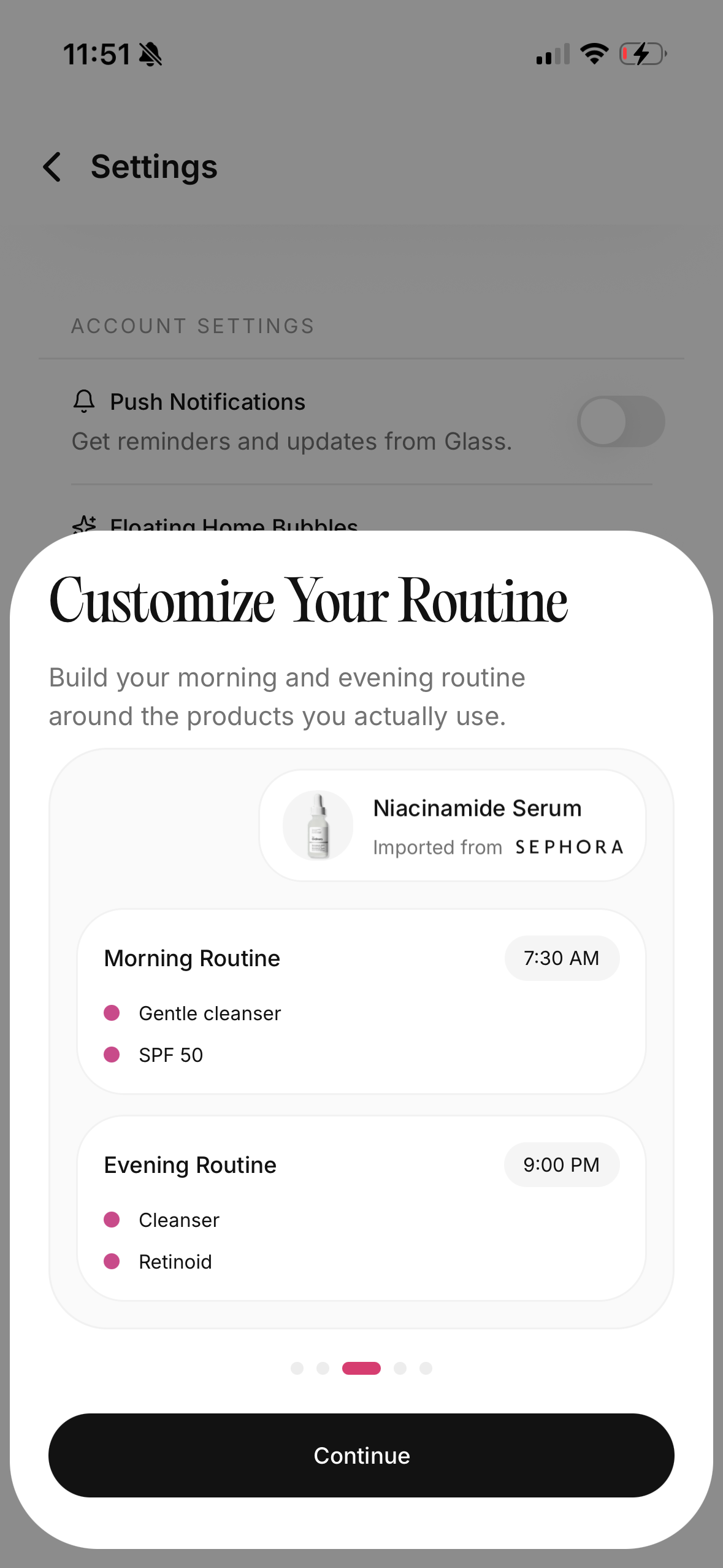
This is where Glass makes the routine calmer.
The app is useful because it turns skincare from memory into a trail. You can log what you used, track your morning and night routine, compare progress over time, and stop rebuilding the whole shelf because one week felt confusing.
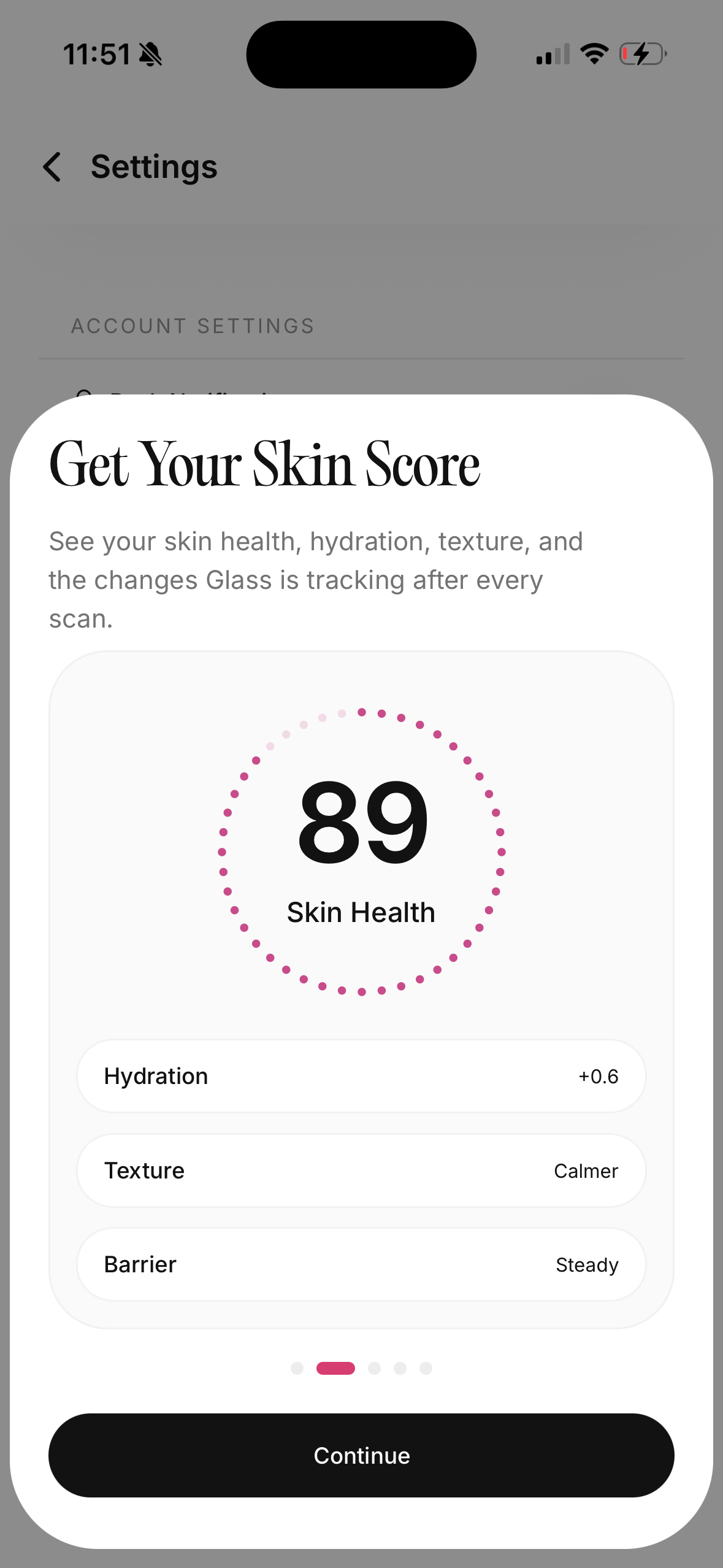
The goal is not perfection. It is pattern recognition.
If your skin gets better when you use three steps consistently, that is information. If your skin gets worse every week you add exfoliation, that is information. If your breakouts happen around the same time each month and not after a certain product, that is information too.
Most people do not need more opinions. They need a cleaner record.
The checklist for adding a new product
This is the part that saves the most money.
Before adding anything, ask:
- What job is this product supposed to own?
- Where does it go: morning, night, treatment night, or reset night?
- What product might it replace?
- What would count as a good result?
- What would make me stop using it?
If you cannot answer those questions, do not open it yet.
New products become expensive when they do not replace anything. They just add noise.
I would introduce one new product at a time for at least a couple of weeks, longer for retinoids and tone-focused products. That gives your skin enough stability to show a pattern. If you add cleanser, serum, moisturizer, and sunscreen in the same weekend, the routine may feel exciting, but the feedback becomes useless.
The checklist for when your routine stops working
Do not start with a haul.
Start with a subtraction.
If your routine suddenly feels wrong, check these first:
- Did you add a new active?
- Did you start using an old active more often?
- Did the weather change?
- Did your sunscreen or makeup start pilling?
- Did you skip moisturizer because your skin felt oily?
- Did you change cleanser?
- Did you treat one breakout like a full-face emergency?
Most routine problems come from pressure, not absence.
The skin gets stripped, then overtreated, then under-moisturized, then covered with more corrective products. The checklist is supposed to interrupt that spiral. It tells you when to act and when to stop acting.
A simple seven-day rhythm
Use this as a starting point, not a law.
| Day | Morning | Night |
|---|---|---|
| Monday | Light routine + SPF | Treatment night |
| Tuesday | Light routine + SPF | Reset night |
| Wednesday | Light routine + SPF | Treatment night |
| Thursday | Light routine + SPF | Reset night |
| Friday | Light routine + SPF | Treatment night only if skin feels calm |
| Saturday | Light routine + SPF | Moisture-focused night |
| Sunday | Light routine + SPF | Check progress and plan the week |
The point is spacing.
Spacing gives your skin room to respond. It also gives you room to notice. If every night is a different experiment, the routine becomes a blur.
What I would ignore
I would ignore any routine that makes you feel like you need ten steps to be serious.
I would ignore any product that only makes sense if you buy three more products around it.
I would ignore the pressure to use an active every night just because the bottle says daily.
I would ignore the idea that oily skin does not need moisturizer.
I would ignore the idea that dry skin needs every hydrating layer available.
I would ignore the perfect shelf and build the repeatable one.
That is the routine that usually works better.
FAQ
What is the correct skincare routine order?
The easiest skincare routine order is cleanser, thin hydrating products, treatment serums, moisturizer, and sunscreen last in the morning. At night, remove sunscreen or makeup first, cleanse, use one treatment if needed, then moisturize.
Do I need a different checklist for morning and night?
Yes. Morning routines should protect and wear well under sunscreen. Night routines should remove the day, treat one priority, and help the skin recover. Trying to make both routines do the same job usually creates clutter.
Should retinol go before or after moisturizer?
Many people use retinol before moisturizer, but sensitive skin may tolerate it better with moisturizer used as a buffer. What matters most is consistency, low frequency at the start, and not stacking retinol with strong exfoliating acids on the same night unless a clinician told you to.
How many skincare products should I use every day?
Most people can start with three to five daily products: cleanser, moisturizer, sunscreen, and maybe one serum or treatment. More products only make sense when each one has a clear job and your skin tolerates the whole routine.
How do I know if my routine is too complicated?
Your routine is probably too complicated if you cannot tell what each product does, if products keep pilling, if your skin is irritated often, or if you keep changing things before any product gets a fair trial.
The bottom line
A skincare routine checklist should make your skin life quieter.
Morning is for protection.
Night is for cleansing, treatment, and recovery.
Treatment nights should be focused.
Reset nights should be respected.
Weekly check-ins should keep you from rewriting the whole routine because of one bad day.
That is the version I trust most in April 2026: a routine simple enough to repeat, clear enough to troubleshoot, and flexible enough to change only when your skin gives you a real reason.
If you want the routine to stop living in your head, use Glass to track the steps, products, and progress together. The calmer record is often what makes the better routine obvious.