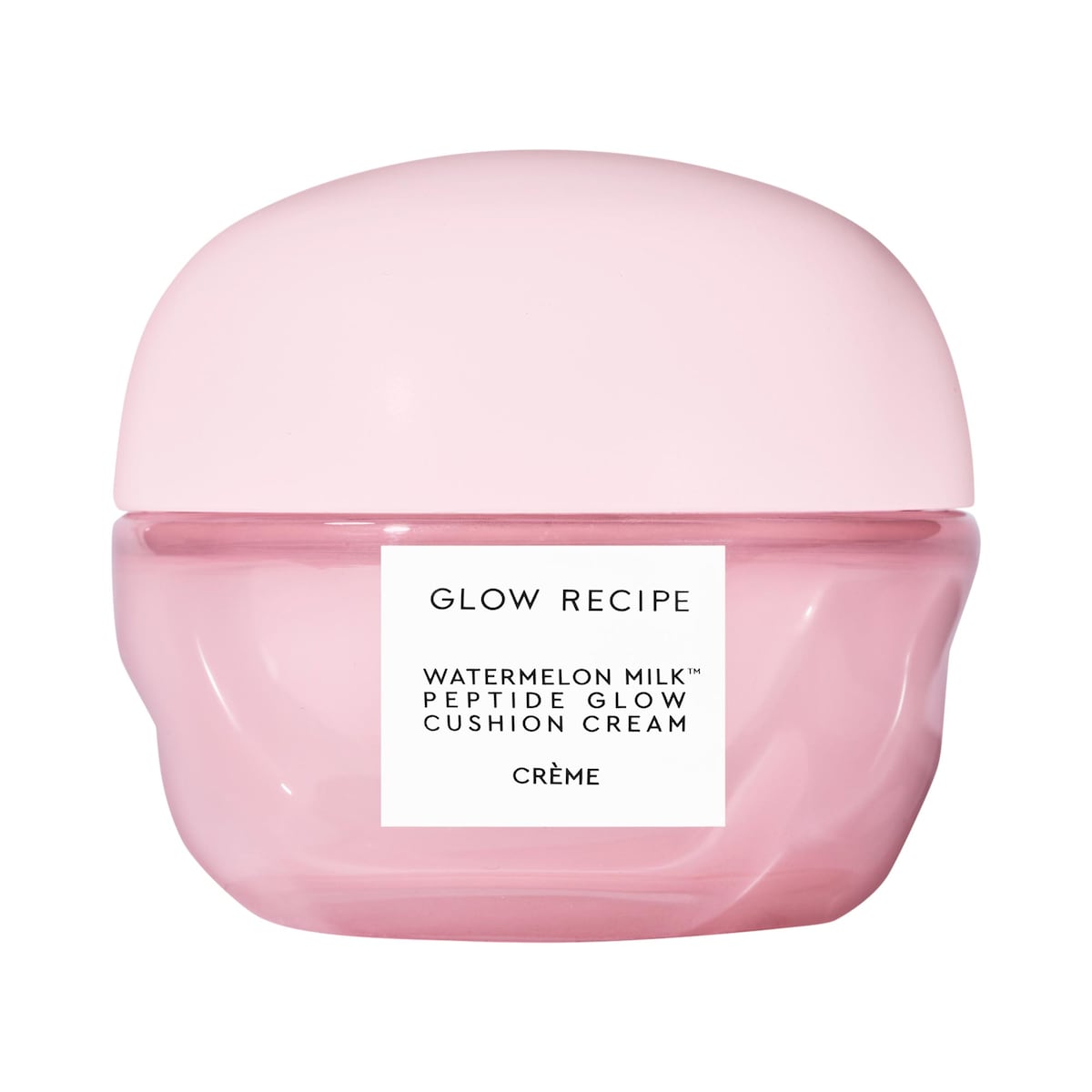
I get why this cream is tempting.
It looks soft. It sounds expensive. It promises that cushioned, bouncy finish people usually want when their skin feels dry, flat, or tired.
But a $40 moisturizer still has to earn its place.
As of May 2026, Glow Recipe Watermelon Milk Peptide Cushion Cream is positioned as a refillable, fragrance-free, peptide-powered moisturizer for dry and sensitive skin. Sephora lists the 1.7 oz / 50 mL jar at $40, with a refill option and the usual auto-replenish discount when available.
That gives me the real question:
Is this a smart moisturizer, or just another pretty jar?
My answer is narrow. That is the only useful kind.
I would look at this cream if my skin wanted plush hydration, a smoother makeup-prep finish, and a richer step that still tries not to feel greasy. I would skip it if my routine already has a barrier cream I love, if rich moisturizers clog me easily, or if I mainly need oil control, acne treatment, or dark-spot correction.
The quick answer
Glow Recipe Watermelon Milk Peptide Cushion Cream makes the most sense for normal, dry, dehydrated, or slightly sensitive skin that wants a soft, dewy moisturizer without jumping straight into a thick balm.
I would not treat it like an active treatment.
I would treat it like a comfort step.
That distinction matters because the product name is doing a lot. Watermelon sounds fresh. Milk sounds soothing. Peptide sounds serious. Cushion sounds expensive. Refillable sounds responsible. All of that can make the product feel more essential than it is.
The better way to read it is simpler:
This is a moisturizer for skin that wants more bounce and comfort from the cream step.
If that is the job you need, it is worth considering. If that is not the job you need, the prettier packaging will not fix the mismatch.
Price and value in May 2026
| Image | Product | Current price signal | Best reason to consider it |
|---|---|---|---|
 | Glow Recipe Watermelon Milk Peptide Cushion Cream | $40 for 1.7 oz / 50 mL on Sephora in May 2026 | Plush hydration, fragrance-free positioning, refillable jar |
 | Glow Recipe Plum Plump Hyaluronic Cream | $40 brand-site signal | Lighter gel-cream hydration when cushion feels like too much |
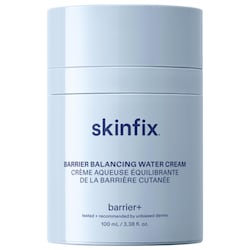 | Skinfix Barrier Balancing Water Cream | Sephora moisturizer alternative | A more straightforward barrier-and-water-cream lane |
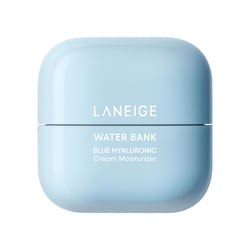 | LANEIGE Water Bank Blue Hyaluronic Cream | Sephora moisturizer alternative | A familiar dry-skin hydration lane with less trend pressure |
The price is not shocking for Sephora moisturizer territory. It is also not cheap.
That means I would judge value by finish and repeatability, not by the ingredient list alone. A moisturizer can have peptides, ceramides, squalane, panthenol, and hyaluronic acid and still be the wrong buy if it sits too heavy, pills under sunscreen, or makes me avoid using it.
The expensive mistake is rarely buying a $40 cream once.
The expensive mistake is buying a $40 cream that turns into shelf decor.
What the formula is trying to do
The official positioning is clear: this is a fragrance-free, peptide-focused moisturizer for dry and sensitive skin that is supposed to deliver long-lasting hydration without heaviness.
That tells me three things.
First, Glow Recipe knows the old criticism. A lot of people love the brand's fruit-forward identity, but plenty of sensitive-skin shoppers get nervous around sensorial skincare. Making this one fragrance-free is not a small detail. It is part of the pitch.
Second, the product is not trying to be a watery gel. The words “milk,” “peptide,” and “cushion” point to a more padded feel. I would expect a cream that gives skin some presence, not something that vanishes like a serum.
Third, the peptide language is supporting the moisturizer story. I would not buy this expecting a night-and-day fine-line change from one jar. I would buy it if I wanted the skin to look smoother because the cream step is making my barrier feel more comfortable and my surface texture look less parched.
That is a much more realistic expectation.
The ingredient story in plain English
Sephora UK’s ingredient listing shows a formula built around water, humectants, emollients, squalane, panthenol, watermelon fruit extract, multiple peptides, ceramide NP, ectoin, sodium hyaluronate, beta-glucan, allantoin, betaine, and vitamin E.
That sounds like a lot because it is a lot.
I would group it this way:
- Hydration support: glycerin, propanediol, polyglycerin-3, sodium hyaluronate, betaine, saccharide isomerate
- Comfort and barrier feel: squalane, panthenol, ceramide NP, beta-glucan, allantoin, ectoin
- Smoother-looking skin support: the peptide network, tocopherol, emollients that soften the surface
- Brand identity: watermelon fruit extract and the milky cushion positioning
That is the more useful read than treating every ingredient like a separate miracle.
For me, the formula says: “I want to make dry or tired skin feel padded, hydrated, and smoother without relying on fragrance.”
That is a real lane.
It is just not every lane.
Who I think will like it most
I would put this cream in front of someone whose skin feels a little under-cushioned.
Not destroyed. Not actively burning. Not breaking out from every product. Just dry enough that lighter moisturizers disappear too fast and leave the face looking flat again by midmorning.
This is the person who says:
- my cheeks feel tight after cleansing
- my makeup looks better when my moisturizer has some cushion
- gel creams feel nice for twenty minutes and then disappear
- heavy barrier balms feel like too much
- I want glow, but I do not want a sticky finish
- fragrance-free matters to me
That shopper has a real reason to compare this cream.
I would also consider it if my current routine is very water-heavy: hydrating toner, hydrating serum, lightweight sunscreen, maybe a thin moisturizer that is not quite enough. In that routine, a cream with more cushion can make the whole stack feel more finished.
Who should probably skip it
I would skip this if my skin is oily and already gets shiny by noon.
Not because oily skin can never use a cream. That is too broad. I would skip it because the whole pitch here leans toward cushion, dew, and comfort. If my problem is that moisturizers already make me feel coated, I would not start with a product that is proud of feeling plush.
I would also skip it if:
- I am acne-prone and rich creams often clog me
- I already own a barrier cream that works
- I need a matte morning base
- my main goal is dark spots, acne, or texture treatment
- I am trying to simplify after irritation
- I mostly want the product because it is new
That last one is the trap.
New products make routines feel exciting. Stable products make skin easier to understand. If my routine is already noisy, I would not add this yet. I would get the basics calm first.
The best routine slot
This is a moisturizer step.
I would use it after serum and before sunscreen in the morning, or after serum as the final cream step at night.
The amount matters.
For morning, I would start with a thin layer. A cushion cream can go from polished to too much fast if the serum underneath is already tacky or the sunscreen on top is already dewy. I would give it a few minutes before SPF and watch for pilling around the nose, cheeks, and jaw.
At night, I would be more generous if my skin felt tight. That is where this product makes more emotional sense to me: a soft, padded last step after cleansing, especially when the skin looks a little tired.
I would not pair it with every active on the same night just because it sounds barrier-supportive. Barrier-supportive does not mean invincible. If I were using retinol or an exfoliating acid, I would keep the rest of the routine boring and let the cream be the comfort layer.
If routine order is the problem, I would keep morning and night skincare routine order open while placing it. If consistency is the problem, how to build a skincare routine you will actually follow is the better next step.
How I would test it for one week
I would not judge this cream from one hand swatch.
A moisturizer lives or dies across several ordinary days. The first application tells me texture. The fourth day tells me whether I actually want to keep using it.
My test would be simple:
Days 1-2: Night only
Use it after a gentle cleanse and one familiar serum. No new exfoliant. No new retinoid. No new toner. The goal is to see whether the cream itself feels comfortable.
Watch for morning skin feel. Does the face feel softer or coated? Do pores look more congested? Does skin feel calm after cleansing?
Days 3-4: Morning under sunscreen
Use a smaller amount and apply sunscreen after it settles. This is where a lot of moisturizers lose me. If the cream makes SPF pill, slide, or look too shiny, it becomes a night-only product.
Night-only can still be useful. It just changes the value.
Days 5-7: Normal routine
Use it in the slot where it performed best. Then decide based on behavior, not mood.
The questions I would ask:
- Did my skin feel less tight?
- Did my face look smoother before sunscreen?
- Did it make makeup easier or harder?
- Did I reach for it without thinking?
- Did I feel any new congestion?
- Did it replace something, or did it just add another step?
That last question is the one that saves money.
The refillable jar is a bonus, not the whole argument
I like refillable packaging when the product is something I actually finish.
I do not like using refillability as a reason to buy something I have not proven I want.
That is how I would treat this jar. The refill system is nice if the cream becomes a repeat purchase. It is not enough to make the first purchase smart by itself.
A refillable product still has to pass the normal tests:
- Does it fit my skin?
- Does it fit my routine?
- Does it fit my budget?
- Do I like using it after the novelty wears off?
If the answer is yes, the refill angle becomes meaningful. If the answer is no, it is just better packaging around the same mismatch.
How it compares to Plum Plump
Glow Recipe already has a $40 moisturizer that many people understand: Plum Plump Hyaluronic Cream.
That makes the comparison useful.
I would think of Plum Plump as the cleaner hydration gel-cream lane. It makes sense when I want bouncy hydration, a lighter feel, and a moisturizer that does not sound as rich.
I would think of Watermelon Milk Peptide Cushion Cream as the more padded comfort lane. It makes sense when I want the cream step to feel a little more substantial, especially on cheeks that get dry, dull, or tight.
The decision is not which name sounds better.
It is this:
Choose Plum Plump if lighter hydration is enough.
Choose Watermelon Milk if your skin wants more cushion.
Where Glass fits into the decision
The hard part is not reading the product page.
The hard part is knowing whether your face actually needed another moisturizer.
That is where Glass is useful. When you track routine steps, skin scans, product changes, and patterns over time, you can stop treating every new cream like a personality test. You can see whether dryness improved after changing the moisturizer, whether breakouts showed up after adding richer products, and whether your “bad skin week” lined up with skipped nights, stress, sleep, or a new active.
That matters with a cream like this because the result can be subtle.
You might not wake up transformed. You might simply notice that your cheeks stop feeling tight, your sunscreen sits better, or your skin looks less flat before makeup. Those are real wins, but they are easier to notice when you are not relying on memory.
My buying rule
I would buy Glow Recipe Watermelon Milk Peptide Cushion Cream if the cream step is currently the weak part of my routine.
That is the cleanest rule.
If my cleanser is stripping, I would fix the cleanser first.
If my sunscreen is greasy, I would fix the sunscreen first.
If my routine is overloaded with actives, I would simplify before adding another polished jar.
But if my routine is already calm and the missing piece is a moisturizer that gives dry or dehydrated skin more softness, bounce, and cushion, this product makes sense.
Not as a miracle.
As a well-placed comfort step.
That is enough.
FAQ
How much is Glow Recipe Watermelon Milk Peptide Cushion Cream?
As of May 2026, Sephora lists Glow Recipe Watermelon Milk Peptide Cushion Cream at $40 for the 1.7 oz / 50 mL size, with a refill option and auto-replenish pricing when available.
Is Glow Recipe Watermelon Milk Peptide Cushion Cream fragrance-free?
Glow Recipe positions Watermelon Milk Peptide Cushion Cream as fragrance-free. That makes it more interesting for sensitive-skin shoppers than some older fruit-forward products, though sensitive skin can still react to products that are technically fragrance-free.
Is it good for oily skin?
I would be careful if my skin is oily. The product is built around cushion, hydration, and a dewy comfort finish. Some oily or combination skin types may like a small night layer, but I would not make it my first pick if shine control is the main goal.
Is it good under makeup?
It could be, especially for skin that looks better with a cushioned moisturizer underneath. I would test a small morning amount first. If it pills under sunscreen or foundation, I would keep it as a night cream instead.
Is it worth $40?
It is worth considering at $40 if it replaces your current moisturizer and solves tightness, dryness, or a flat-looking finish. It is not worth buying just because it is new, refillable, or peptide-focused. The routine fit matters more than the claim stack.