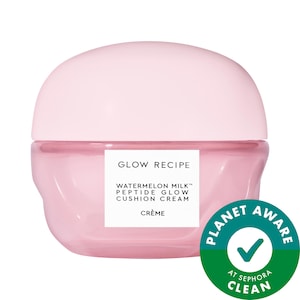
Dry skin has a way of exposing weak moisturizers fast.
The cream feels nice. Then an hour later your cheeks are tight again. Your sunscreen starts catching around the mouth. Foundation looks fine in the bathroom and tired in natural light.
That is the lens I used for Glow Recipe Watermelon Milk Peptide Cushion Cream. I did not care that it sounded cute. I wanted to know if the formula actually made sense for dry skin that needs comfort, not just glow. The answer is yes, with a few clear limits.
Glow Recipe Watermelon Milk Peptide Cushion Cream is good for dry skin if your dryness shows up as tightness, dullness, rough makeup texture, or that annoying feeling where a moisturizer seems to disappear too quickly. The reason is not just that the product is called a cream. It is that the formula has several dry-skin support layers: glycerin, squalane, panthenol, ceramide NP, sodium hyaluronate, beta-glucan, ectoin, phytosterols, and peptides.
That does not make it perfect for every dry-skin routine. Some dry skin needs a lighter moisturizer because it is also acne-prone. Some dry skin needs a heavier occlusive because the barrier is actively cracked or stinging. This cream sits between those two lanes. It is cushiony and comforting, but still designed to be wearable.
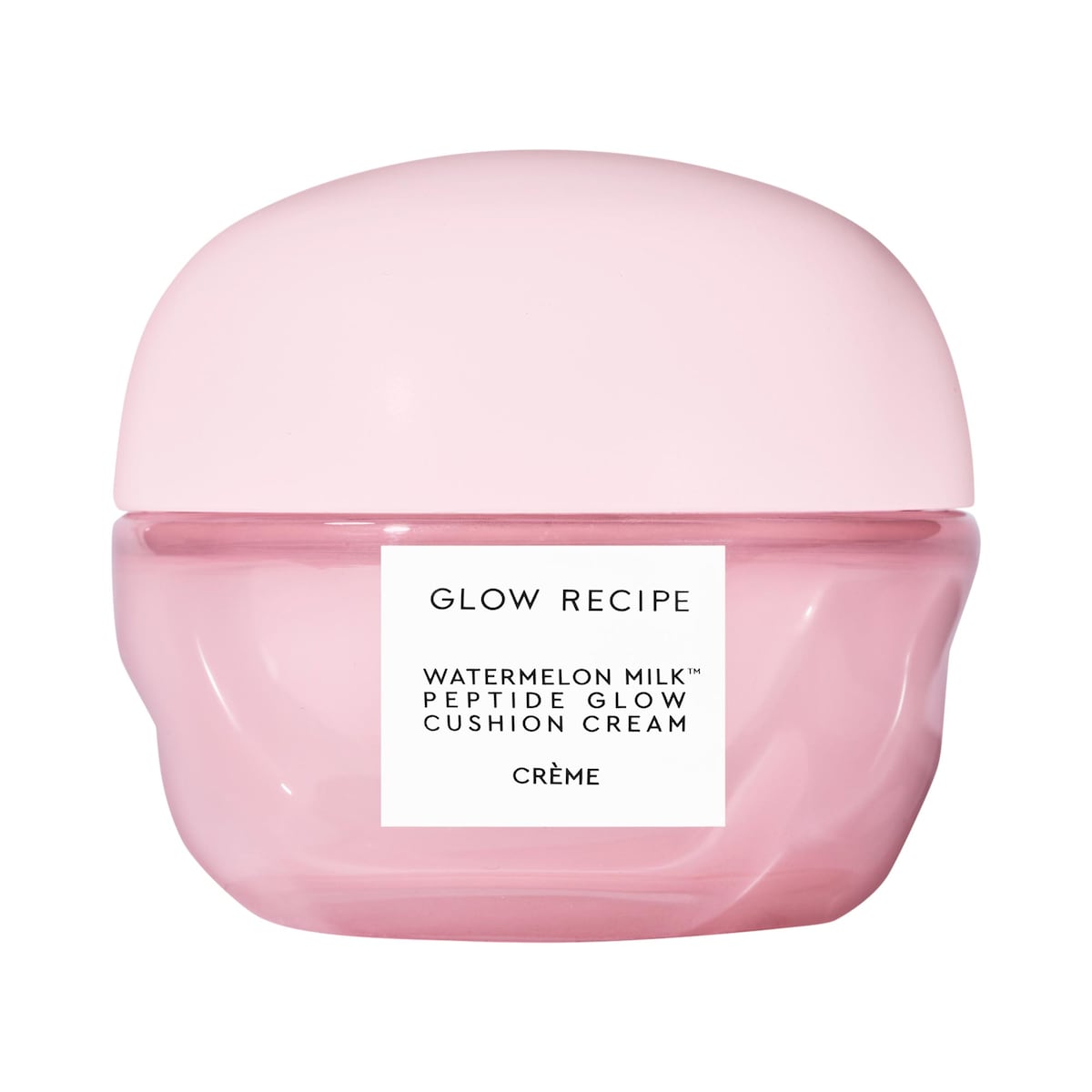
For the product page and ingredient breakdown, start here: Glow Recipe Watermelon Milk Peptide Cushion Cream.
The Short Answer
Yes, it makes sense for dry skin. It is best when dry skin needs a moisturizer that feels richer than a gel cream but less greasy than a balm. It is especially useful for people who want a fragrance-free Glow Recipe moisturizer with barrier support.
It is less ideal if your dry skin also clogs easily from rich textures, or if you need a very plain recovery cream after a severe irritation episode. In that case, test carefully and keep the routine simple.
The way I would phrase it is this: it is not the most minimal dry-skin cream, and it is not the heaviest. It is the polished middle. That middle lane is useful if you want comfort in the morning and a cream that still feels nice enough to reach for at night.
Why Dry Skin Needs More Than Water
Dry skin usually needs two things at the same time: water and a way to hold onto it. A hydrating toner or serum can help with the water side, but if the moisturizer on top is too light, the skin can still feel tight later.
That is the problem this cream is trying to solve. It does not just add watery slip. It adds cushion and emollience. The formula has humectants that pull in hydration, then skin-conditioning ingredients that help the surface feel softer and less stripped.
This is where I see people waste the most money. They keep buying hydrating serums because the skin feels thirsty, but the moisturizer is the weak link. If the top layer is too thin for your skin, the routine keeps leaking comfort. A cream like this is not always more exciting than another serum, but it may solve the problem more directly.
The Formula Pieces That Matter
The most important dry-skin ingredients are not hidden.
Glycerin is one of the most dependable humectants in skincare. Squalane gives emollient softness without feeling like a heavy oil. Panthenol helps with comfort. Ceramide NP and phytosterols support the barrier-lipid story. Sodium hyaluronate adds water-binding hydration. Beta-glucan and ectoin help the formula feel calmer and more supportive when skin is stressed.
The peptide blend is nice, but I would not make peptides the main reason to buy it. For dry skin, the better reason is that the cream gives peptides a comfortable moisturizing base.
Texture On Dry Skin
On dry skin, the texture should feel plush rather than greasy. The cushion finish is important because dry skin often looks worse when a moisturizer is too thin. A thin gel can make the skin feel wet for two minutes, then leave the surface looking just as lined and thirsty as before.
This cream has more body. It can smooth the look of dehydration lines temporarily because the surface is better moisturized. That is not the same as treating wrinkles, but it does make the face look less tight and papery.
Morning Use
For a morning dry-skin routine, use a small amount after serum and before sunscreen. The right amount is usually less than a night application.
A good routine could look like this:
- Gentle cleanse or rinse
- Hydrating serum
- Thin layer of Glow Recipe Watermelon Milk Peptide Cushion Cream
- Sunscreen
- Makeup if you wear it
The key is patience. Let the cream settle before SPF. If you immediately layer sunscreen over a thick amount, the routine can feel too slippery even if the individual products are fine.
Night Use
At night, this moisturizer can be the main comfort step. Dry skin usually does better when the night routine is not overloaded with actives. If you use retinol, acids, vitamin C, and brightening serums in the same week, the moisturizer may get blamed for irritation that is actually coming from the treatment schedule.
Try it on a boring night first. Cleanser, hydrating serum, cream. If your skin wakes up less tight, the cream is doing its job. If you still wake up dry around the mouth and nose, you may need a heavier spot seal over those areas rather than more product everywhere.
Barrier Support Without Overdoing It
This is a barrier-support moisturizer, not a medical barrier reset plan. That distinction matters. If your skin barrier is irritated, the right move is often to reduce products before adding more.
Where this cream helps is in the maintenance phase. It can make a simple routine feel more complete because it includes humectants, emollients, panthenol, ceramide NP, ectoin, and beta-glucan in one step. That is useful when dry skin feels fragile but you still want a product that looks and feels pleasant.
Under Makeup
Dry skin under makeup needs a moisturizer that gives foundation something smooth to sit on. This cream can help because the finish is soft and cushiony. It is not tacky in the way some gripping primers are, but it gives the surface more comfort.
Use less than you would at night. Apply it, wait a few minutes, then apply sunscreen. If foundation pills, reduce the amount of moisturizer first before blaming the formula. Pilling usually comes from too many layers, not one product alone.
In Winter
Winter is where the product makes the most sense. Dry air exposes whether a moisturizer is just pleasant or actually helpful. The cushion texture gives this cream more staying power than a lightweight water gel.
For winter nights, apply it while skin is slightly damp from a hydrating serum. If cheeks still feel rough, add a tiny amount of balm only where needed. That keeps the routine comfortable without turning the whole face into a heavy film.
My winter rule is simple: if a moisturizer cannot get you from morning SPF to late afternoon without that stretched feeling, it is not your real dry-skin moisturizer. It might still be useful in summer or under makeup, but it is not carrying the routine. This cream has a better chance than the lighter watermelon-style products because it has more body.
In Summer
In summer, dry skin may still like it, but the amount should change. A thin layer can work in air conditioning or dry climates. In humid weather, it may be too much for daytime if you layer it with dewy SPF and makeup.
Use it at night or reserve it for dry zones. Dry-combination skin may only need it on cheeks, around the mouth, and under the eyes, while using a lighter moisturizer through the T-zone.
If You Are Dry And Acne-Prone
Dry and acne-prone skin is the hardest lane. You need moisture, but richer products can feel risky. This formula is not automatically wrong for acne-prone skin, but it should be tested slowly.
Use it every other night at first. Keep actives stable. Do not add a new cleanser or exfoliant at the same time. If breakouts appear, look at the full routine before blaming one ingredient. If closed comedones are a pattern for you with richer creams, a lighter barrier moisturizer may be a cleaner choice.
If You Are Dry And Sensitive
The fragrance-free angle is a real advantage. Sensitive skin does not always hate fragrance, but removing fragrance makes testing simpler. The formula also includes several calming-support ingredients that make sense for easily irritated skin.
Still, sensitive skin should patch test. Try it along the jaw or on one cheek for a few nights before full-face use. If your skin is currently burning from everything, simplify with the plainest products you tolerate before adding a new cream.
I would be especially cautious if your skin is in a flare. A good moisturizer can still feel wrong on skin that is already angry. When my routine logic is in recovery mode, I care less about peptides and more about whether cleansing, moisturizing, and sunscreen can happen without stinging.
What It Will Not Do
It will not replace sunscreen. It will not erase fine lines. It will not fix over-exfoliation if you keep exfoliating. It will not make dry skin behave like oily skin or oily skin behave like dry skin.
What it can do is make dry skin feel more comfortable, help the surface look smoother, and give a routine a more supportive moisturizer step.
Best Buying Logic
Buy it if you want:
- A cushiony dry-skin cream
- Fragrance-free Glow Recipe
- Barrier-support ingredients in a prettier texture
- A moisturizer that can work morning or night
- Something richer than a water cream but not as heavy as a balm
Skip it if you want:
- A matte finish
- Oil-control first
- The lightest possible gel
- A very plain recovery cream
- A budget-only moisturizer with no sensorial finish
The Dry-Skin Routine I Would Build Around It
I would keep the routine narrow at first.
Morning: gentle cleanse or rinse, hydrating serum if you already own one, a thin layer of this cream, then sunscreen.
Night: gentle cleanse, the same cream, and nothing else unless your skin is already stable with retinoids or exfoliants.
That may sound too simple, but dry skin often improves when the routine stops trying to do five jobs at once. Once the skin feels steady, then you can add actives back carefully.
Bottom Line
Glow Recipe Watermelon Milk Peptide Cushion Cream is a good dry-skin moisturizer because it solves a real routine problem: dry skin that needs comfort, glow, and barrier support without a greasy finish. It is not the lowest-risk option for every acne-prone shopper, and it may be too rich for oily skin, but for dry and sensitive skin it has a clear reason to exist.
FAQ
Can I use it twice a day?
Yes. Use a thinner layer in the morning and a slightly fuller layer at night.
Does it replace a hydrating serum?
Not always. Very dry skin may still like a hydrating serum underneath. The cream is better at sealing comfort than replacing every hydration step.
Is it good for barrier repair?
It is good for barrier support. For true irritation recovery, pair it with a simplified routine and pause strong actives.