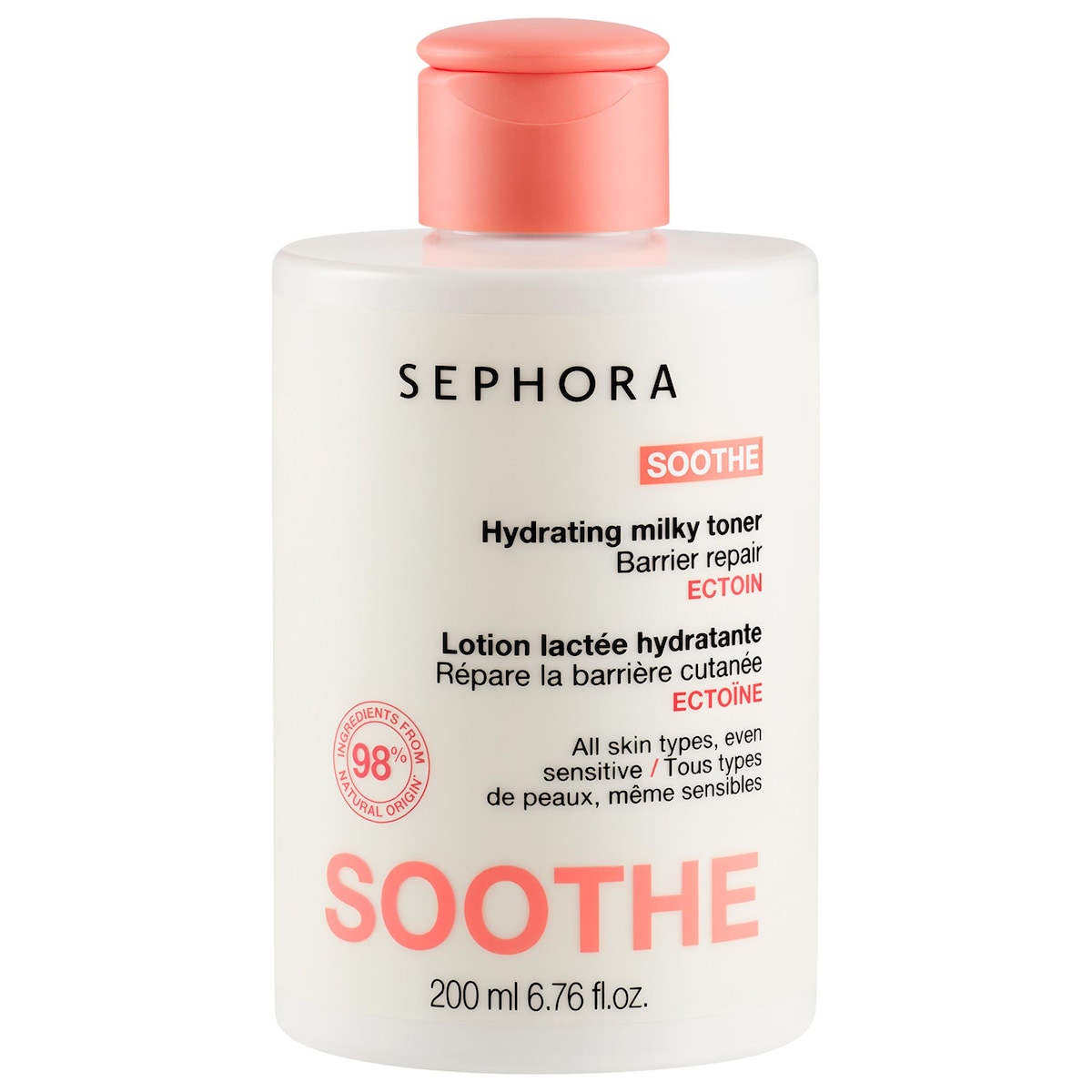
I get why this bottle is tempting.
It is $20.
It looks soft.
It says ectoin.
And if your skin has been feeling tight after cleansing, a milky toner sounds like the gentle middle step you have been missing. Not a harsh toner. Not another serum you have to justify. Just a thin, comforting layer that makes the rest of the routine feel less abrupt.
That is the promise I would actually judge SEPHORA COLLECTION Hydrating Milky Toner by in May 2026.
Not whether it changes your skin overnight.
Not whether it replaces moisturizer.
Not whether it gives the most dramatic glow in one use.
The better question is simpler: does this make dry, tight, red-looking, or easily annoyed skin feel calmer between cleanser and moisturizer?
For the right person, yes. For the wrong routine, it becomes one more watery layer on a shelf that is already too crowded.
The quick answer
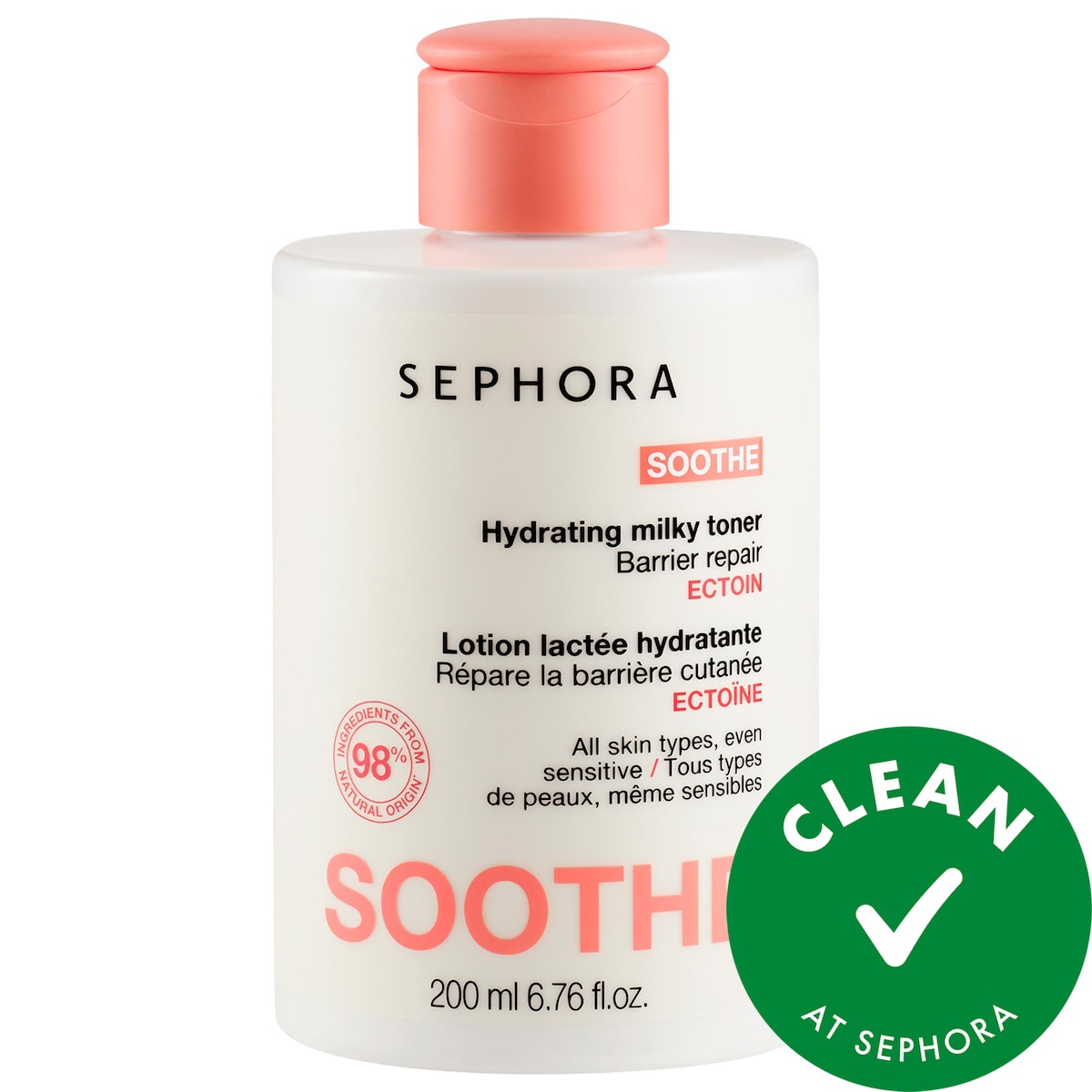
SEPHORA COLLECTION Hydrating Milky Toner is worth considering if your skin feels tight after cleansing, looks a little red before moisturizer, or needs a low-drama hydration layer that does not feel as rich as a cream. It is especially interesting because it gives the milky toner category a more affordable Sephora option.
I would skip it if your routine already has enough hydrating layers, if you are looking for exfoliation or acne treatment, or if your skin is actively burning and needs a very plain recovery routine instead of another new product.
Here is the cleanest read:
| If your skin feels like... | My take on the toner |
|---|---|
| Tight right after cleansing | Worth testing |
| Dry but easily clogged by creams | Useful as a light comfort layer |
| Red-looking but not actively irritated | Could help the routine feel calmer |
| Oily and already using several hydrating serums | Probably redundant |
| Peeling from retinoids or acids | Helpful only if the rest of the routine is simplified |
| Burning, rashy, or reactive to everything | Pause experiments first |
This is a support step. Support steps are underrated, but only when they have a job.
What this toner is trying to be
This is not an old-school stripping toner.
That matters because the word toner still makes some people think of alcohol, cotton pads, and that squeaky clean feeling that tricks you into thinking the skin is fixed because it feels bare.
This product is in the newer milky toner lane. Sephora describes it as a hydrating toner with ectoin that supports the skin barrier while soothing dryness, tightness, and visible redness. The local product data also lists dryness, redness, and uneven texture as the main concern signals.
That tells me the bottle is not trying to clear pores, exfoliate texture, or fade dark spots. It is trying to make cleansed skin feel less thirsty before the rest of the routine goes on.
I like that kind of clarity.
A milky toner is most useful when moisturizer alone is not quite enough, but a richer cream feels like too much. It gives you a thinner first layer. Then moisturizer seals the comfort in.
That is the lane.
The review signal I care about
Sephora shows this as a newer product with a growing review base and customer praise around softness. The local product data has it around a 4.0 rating, which is good but not fake-perfect, and that actually makes the product easier to interpret.
I do not want every review to sound like a miracle. A milky toner should not be a miracle.
The pattern I care about is whether people are using it for the right job: tightness, lightweight comfort, layering, and sensitive-feeling routines that cannot handle another heavy cream.
That is also what the wider milky toner conversation keeps pointing toward. Dermatology and beauty editors often describe this category as a bridge between watery toner and moisturizer: more comforting than a classic toner, less final than a cream. That is exactly how I would use this one.
If you expect it to replace moisturizer, you will probably be disappointed.
If you expect it to make moisturizer work better, the product starts to make sense.
The ingredient story in plain English
The headline ingredient is ectoin.
Ectoin is interesting because it fits the product's promise. It is usually discussed as a stress-protection and barrier-support ingredient, which makes sense in a toner for skin that feels dry, tight, or easily bothered.
But I would not buy this only because one ingredient sounds modern.
The full formula direction matters more. This toner also includes water, glycerin, squalane, propanediol, caprylic/capric triglyceride, sunflower seed oil, panthenol, and other texture and support ingredients. That is why it reads milky instead of watery. It has humectants for water support and light emollient pieces for softness.
That mix is the whole point.
Glycerin helps attract water.
Squalane and triglycerides help the layer feel less bare.
Panthenol is a comfort ingredient I like seeing in support products.
Ectoin gives the formula its barrier-support angle.
None of that means it will work for every face. Ingredient lists do not get the final vote. Your skin does. But on paper, the formula makes sense for a toner that wants to calm the gap between cleanser and moisturizer.
The texture question
Milky toner texture can be confusing if you are used to watery toners.
This kind of product should feel like a very thin lotion. Not cream. Not serum. Not water. A good milky toner leaves skin a little softer and less bare without making the face feel coated.
That is the texture I would want from this Sephora bottle.
If it feels sticky, use less.
If it disappears instantly and your skin still feels tight, apply it to slightly damp skin and follow with moisturizer faster.
If it makes the face shiny under sunscreen, move it to night or use it only on dry zones.
The mistake is treating a milky toner like a splashy water step you can layer five times because it feels gentle. Some people can do that. Most routines do not need it. One layer is the test.
Where it fits in the routine
Use it after cleansing and before serum or moisturizer.
That order matters because it is meant to be a first comfort layer. If you put it after cream, it has nowhere useful to go.
My simplest routine would look like this:
- Cleanser, or just a water rinse in the morning if your skin prefers that.
- Sephora Collection Hydrating Milky Toner.
- Serum only if it has a clear job.
- Moisturizer.
- Sunscreen in the morning.
That is enough.
Do not turn it into a ceremony unless your skin is asking for more. The best use of this toner is boring: cleanse, press it in, moisturize, move on.
Who I would buy it for
I would buy this for someone who keeps saying their skin feels "tight but not exactly dry."
That phrase usually means the routine is missing a comfort layer, or the cleanser is too much, or the moisturizer is sealing over skin that still feels thirsty underneath.
This toner also makes sense if your skin gets a little red-looking after washing but does not necessarily need a thick redness cream. The milky layer can make the transition into moisturizer softer.
I would especially consider it for:
- normal skin that feels tight after cleansing
- combination skin with dry cheeks
- dry skin that hates heavy first layers
- sensitive-feeling skin that wants fragrance-free comfort
- barrier-focused routines that need a light support step
- people who want to test milky toners without spending $40 to $50
That last point is real. The milky toner category can get expensive fast. A $20 entry point is useful if you are still learning whether this texture belongs in your routine.
Who should skip it
Skip it if your routine already has too many hydration steps.
If you use a hydrating essence, hyaluronic serum, peptide serum, rich moisturizer, sleeping mask, and face oil, this toner may not add clarity. It may just make the routine wetter.
Skip it if you want an exfoliating toner. This is not that. If you are trying to treat clogged pores, rough texture, or acne, you need a separate treatment plan.
Skip it if your skin is in a full irritation phase. When your face burns from water, stings from every product, or peels around the mouth, I would not keep adding new "soothing" things just because the label sounds gentle. I would simplify first.
And skip it if you know your skin dislikes squalane or milky textures. A product can be light and still not agree with your face.
How it compares to LANEIGE Cream Skin
This is the obvious comparison.
LANEIGE Cream Skin Milky Toner is the more established plush option. It has the reputation, the bigger comfort identity, and the richer barrier-milk feel.
Sephora Collection is the lower-cost, more direct, easier first test.
| Product | Image | Best role | My read |
|---|---|---|---|
| SEPHORA COLLECTION Hydrating Milky Toner | 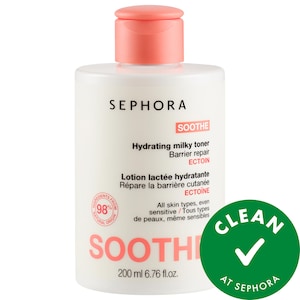 | Affordable comfort layer | Better first test if you are new to milky toners |
| LANEIGE Cream Skin Milky Toner |  | Plush barrier-milk step | Better if dry skin wants more cushion |
| Beauty of Joseon Glow Replenishing Rice Milk Toner | 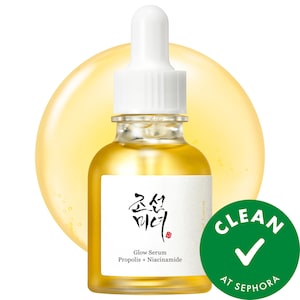 | Glow-focused milky hydration | Better if you want the K-beauty rice-milk lane |
If your skin is very dry, I would still look at LANEIGE first. If your skin is combination, budget-conscious, or easily overwhelmed by rich products, I would start with Sephora Collection.
The cleanest split is comfort versus cushion.
Sephora Collection comforts.
LANEIGE cushions.
Beauty of Joseon leans more glow-routine.
How it compares to moisturizer
This toner is not a moisturizer replacement for most people.
That is the most important expectation to set.
A milky toner can make skin feel better before moisturizer. It can reduce that stripped, papery feeling after cleansing. It can help the next layer spread more comfortably. But if your skin needs a final seal, you still need moisturizer.
This is especially true at night. If you use retinoids, exfoliating acids, benzoyl peroxide, or any treatment that dries you out, the toner may make the routine feel better, but it probably should not be the final step.
Think of it as the layer that says, "do not panic, we are adding comfort now."
Moisturizer is the layer that says, "keep it there."
How I would test it for one week
I would test it without changing everything else.
That sounds boring because it is. Boring tests teach you more.
For one week:
- Keep your cleanser the same.
- Add the toner after cleansing.
- Keep your moisturizer the same.
- Do not add a new serum, mask, or exfoliant at the same time.
- Watch tightness, redness, shine, pilling, and small bumps.
If your skin feels more comfortable but not heavier, that is a good sign.
If sunscreen layers better because the skin is less dry underneath, that is a good sign.
If you get new bumps in your usual clog zones, scale back or stop.
If nothing changes, you may not need the step.
That last result is not failure. It is useful information. Some routines are already hydrated enough.
Morning or night?
I would try it at night first if your skin is reactive.
Night testing gives you fewer variables. No sunscreen. No makeup. Less pressure for the finish to be perfect.
Once it behaves at night, try it in the morning under sunscreen. That is the real daytime test. A toner can feel lovely alone and still be annoying if it makes sunscreen pill or makeup slide.
For dry skin, morning and night may make sense.
For combination skin, night plus dry zones in the morning may be enough.
For oily skin, I would be more selective. Use it where the skin feels tight, not automatically everywhere.
The biggest mistake with milky toners
The biggest mistake is expecting them to be dramatic.
Milky toners are quiet products. That is why I like them when they are used well. They do not need to sting. They do not need to tingle. They do not need to make the skin peel to prove something happened.
They are supposed to make the routine feel more comfortable and more repeatable.
That is not a small thing. A routine you can repeat calmly usually beats a routine that looks impressive and irritates you by day four.
But quiet products can also become excuses to buy more. If you already have comfort, you do not need to keep adding comfort.
Where Glass fits
Glass is useful here because milky toner results can be subtle.
You may not notice the difference in one mirror check. You may notice that your cheeks feel less tight after cleansing. You may notice sunscreen sits better. You may notice you stop adding extra moisturizer at noon. You may notice nothing, which is also worth knowing.
Use Glass to log the start date, routine slot, and whether you used it morning, night, or both. Take progress photos in the same light once or twice a week if you are watching redness or texture. Do not take ten photos a day. That turns a support product into a stress project.
If your broader routine is confusing, pair this with morning and night skincare routine order or how to build a skincare routine you will actually follow. If you are comparing the category, Sephora Collection Hydrating Milky Toner vs LANEIGE Cream Skin is the cleaner next read.
The point is not to track forever. It is to stop guessing.
My bottom line
SEPHORA COLLECTION Hydrating Milky Toner is one of the more sensible $20 skincare launches to look at if your routine needs a light comfort layer.
I would buy it for tightness, mild visible redness, barrier-support layering, and a softer post-cleanse feel. I would not buy it for exfoliation, acne treatment, dark spots, or as a full moisturizer replacement.
The product makes the most sense when you use it narrowly: after cleansing, before moisturizer, one layer, with the rest of the routine stable.
That is where it can earn its place.
Not by being dramatic.
By making the routine easier to keep.
Useful product and skin-care references: Sephora Hydrating Milky Toner, Sephora Collection Hydrating Milky Toner product page, Cleveland Clinic on toner basics, and AAD dry skin relief guidance.
FAQ
Is Sephora Collection Hydrating Milky Toner a moisturizer?
Not for most people. Treat it as a hydration and comfort layer after cleansing, then follow with moisturizer if your skin needs a final seal.
Is it good for sensitive skin?
It may be a reasonable option for sensitive-feeling skin that wants fragrance-free comfort, but sensitive skin varies. Patch test and avoid adding it during a flare where everything burns.
Can oily skin use it?
Yes, but use it selectively. Oily skin can still feel dehydrated, especially after cleansing or acne treatments. Start with one thin layer and watch shine, congestion, and sunscreen layering.
Is it better than LANEIGE Cream Skin?
It depends on the job. Sephora Collection is the more affordable, lighter first test. LANEIGE is the more plush, cushiony barrier-milk option for skin that wants more comfort.
Can I use it with retinol?
Yes, it can sit before moisturizer on retinol nights if your skin tolerates it. If retinol is causing peeling or burning, simplify the routine and consider reducing frequency rather than adding more layers.