Bumps on the forehead that are not obvious pimples are frustrating because they do not give clear instructions.
They may not be red. They may not hurt. They may not come to a head. They may sit under the skin like texture, appear in a uniform field, or look like tiny hard grains that refuse to move. Treating all of them like acne can help some patterns and worsen others.
This guide is a differential and reset map. The goal is to sort what the bumps resemble, remove the most common forehead irritants, and avoid turning texture into inflammation.
Quick answer
Forehead bumps that are not obvious pimples may be closed comedones, milia, folliculitis, irritation, heat rash, product buildup, sweat-related bumps, or barrier damage from over-exfoliation. A gentle two-week reset can help you see whether the bumps are product-related or irritation-related.
See a clinician if bumps are painful, rapidly spreading, infected-looking, blistering, crusting, associated with swelling or fever, or not improving despite a careful reset.
Start with what they do not do
Not-pimple forehead bumps often do not behave like inflamed acne. They may not throb. They may not form whiteheads. They may not drain. They may not respond to spot treatments. That behavior is useful.
Ask:
- Are they skin-colored or red?
- Are they itchy?
- Are they hard and tiny?
- Are they all the same size?
- Are they mainly near the hairline?
- Did they start after a new product?
- Did they worsen after exfoliation?
These clues matter more than the exact label at first.
Closed comedones
Closed comedones are clogged pores under the skin. On the forehead, they often look like small flesh-colored bumps that show most in side lighting. They may cluster where sunscreen, hair products, makeup, sweat, or occlusive moisturizers sit.
They are acne-related, but they are not the same as angry red pimples. They usually need consistency, not squeezing. A retinoid or salicylic acid may help some people, but starting too aggressively can irritate the forehead and make texture look worse.
If this pattern fits, simplify the routine first, then introduce one clog-focused active slowly.
Milia
Milia are tiny firm cyst-like bumps filled with keratin. They often look like small white or skin-colored beads under the surface. They do not pop like pimples, and trying to squeeze them can damage the skin.
Milia can appear around the eyes, cheeks, and sometimes forehead. Heavy creams, skin trauma, or natural tendency can play a role, but they can also appear without an obvious reason.
If you suspect milia, avoid picking. A dermatologist or trained professional can remove persistent milia safely. At-home digging is not worth the mark it can leave.
Folliculitis-like bumps
Folliculitis on the forehead can look like many small similar bumps, sometimes itchy or tender, often around hair follicles. It may flare with sweat, hats, helmets, hair products, or occlusive skincare.
If bumps are very uniform and itchy, or if standard acne treatment keeps failing, consider that this may not be ordinary clogged pores. A clinician can help distinguish types of folliculitis and choose appropriate treatment.
At home, reduce sweat trapping, wash hats and headbands, keep hair products off the forehead, and avoid heavy occlusive layers.
Irritation and barrier bumps
Over-exfoliation can create forehead texture that looks like tiny bumps. The skin may feel tight, shiny, rough, warm, or sting with products that used to be fine. This can happen after too many acids, retinoids, scrubs, cleansing brushes, masks, or drying acne treatments.
When the barrier is irritated, more exfoliation is not the answer. Pause actives. Use a gentle cleanser, moisturizer, and sunscreen. Avoid scrubs and peels. Give the skin time to stop reacting.
If the bumps calm during a barrier reset, the problem was not a lack of exfoliation. It was too much.
Hairline clues
The forehead sits directly under hair products. Conditioner, leave-in cream, gel, oil, dry shampoo, edge control, hairspray, and heat protectant can all migrate onto the skin.
Bumps near the hairline or temples often point to hair contact. Try keeping styling products off the forehead, washing the hairline after applying products, changing pillowcases, and tying hair back during workouts. Rinse conditioner thoroughly so it does not sit on the forehead after showers.
Do not assume a face product is the culprit if the bumps form a neat hairline band.
Sweat, hats, and helmets
Sweat trapped under a hat, helmet, headband, or scarf can create bumps that are not classic pimples. Heat, pressure, and moisture can irritate follicles and the skin barrier.
Wash headwear that touches the forehead. Let helmets dry. Use clean headbands. Rinse the forehead after sweaty workouts. Avoid leaving sunscreen, sweat, and hair product layered together for hours.
If you cannot shower right away, at least rinse or gently wipe the forehead and reapply sunscreen if needed.
The two-week reset
For two weeks, make the forehead routine plain.
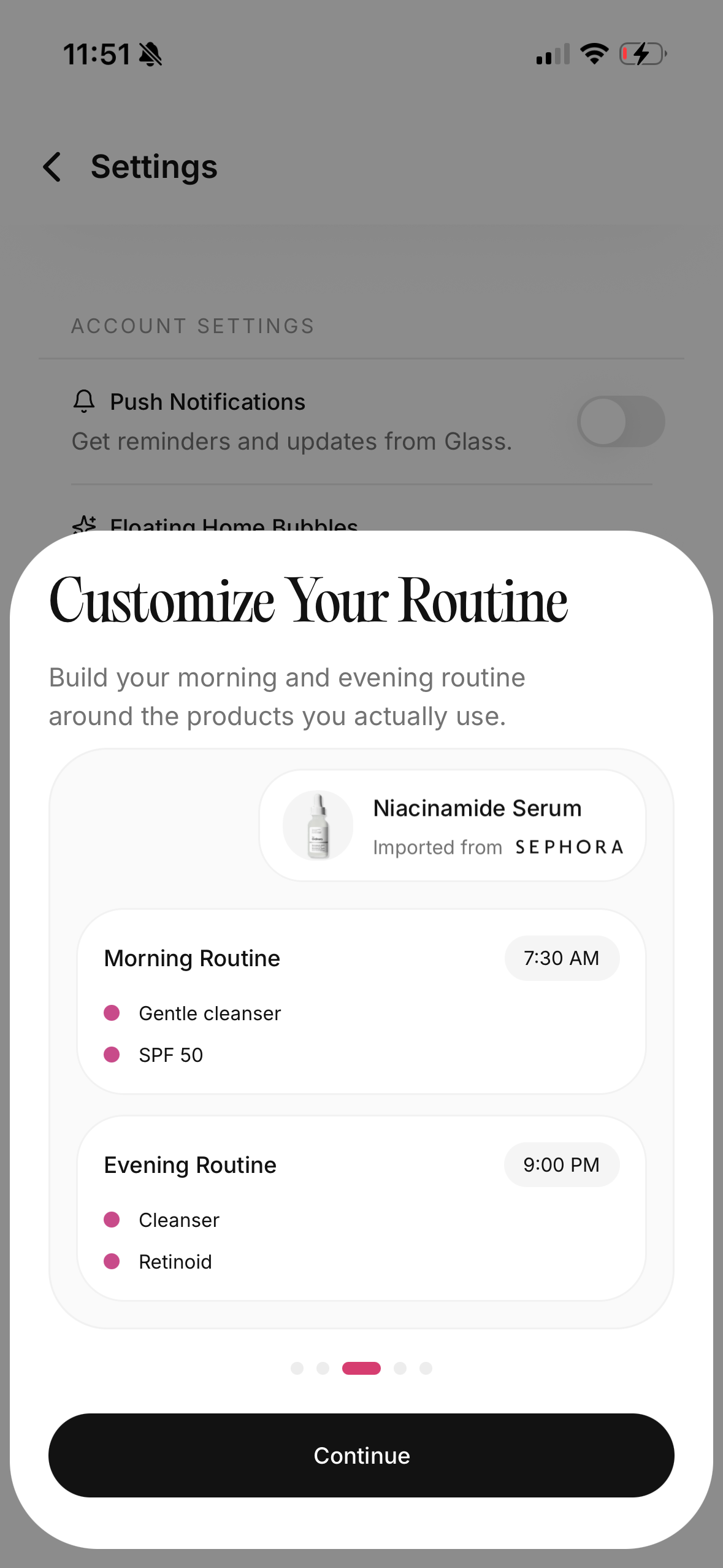
Morning: gentle cleanser or rinse, lightweight moisturizer if needed, sunscreen that does not sting.
Evening: gentle cleanse to remove sunscreen and product residue, moisturizer, no scrubs, no masks, no new actives.
Hair: keep leave-in products off the forehead, rinse the hairline, change pillowcases, clean hats and headbands.
The goal is not to solve every bump in two weeks. It is to see whether new bumps slow down when irritation and residue are reduced.
How to reintroduce actives
After the reset, choose based on the bump type.
For closed comedones, consider one slow clog-focused active such as salicylic acid or adapalene if your skin tolerates it. For barrier bumps, keep rebuilding before adding actives. For suspected milia, do not squeeze; consider professional removal if persistent. For itchy uniform bumps, consider medical advice rather than guessing.
Introduce one product at a time. Use it a few nights a week at first. Keep moisturizer and sunscreen steady.
What not to do
Do not scrub texture with physical exfoliants. Do not squeeze bumps that have no head. Do not add three acids because the bumps are small. Do not use dandruff shampoo or antifungal products on the face without understanding irritation risk and ideally getting guidance if the diagnosis is unclear.
Do not keep testing new sunscreens, primers, hair oils, and acne treatments every few days. Constant change makes the forehead unreadable.
Red flags
Get medical care if bumps are painful, rapidly spreading, blistering, crusting, oozing, associated with swelling, fever, eye-area symptoms, or severe irritation. Also get help if bumps persist for months, leave scars, or significantly affect confidence.
Forehead texture is common, but persistent or unusual bumps still deserve a real evaluation.
How to describe them
When asking for help, describe the bumps by behavior:
"They are tiny and skin-colored."
"They itch and are all the same size."
"They started after a new hair product."
"They got worse after exfoliating."
"They are hard white bumps that do not pop."
Those details help more than saying "not pimples" alone.
Lighting can exaggerate texture
Forehead bumps often look worse in side lighting, car mirrors, bathroom spotlights, or phone cameras held close to the face. That does not mean the bumps are imaginary. It means texture is being amplified by light and angle.
Use consistent lighting when judging progress. Check once or twice a week, not ten times a day. If the bumps are flatter, less itchy, less red, or fewer in number, that counts even if side lighting still shows texture.
This helps prevent over-treatment. Many forehead resets fail because the skin is improving slowly while the person keeps adding products in response to harsh lighting.
Sunscreen during a reset
Do not remove sunscreen from the routine just because the forehead is bumpy. Sun exposure can worsen irritation marks and make the skin more reactive. The better move is to use a formula your forehead tolerates and cleanse it off well at night.
If every sunscreen seems to worsen bumps, test one variable at a time: texture, water resistance, fragrance, tint, makeup layered over it, and removal. A dermatologist can help if sunscreen reactions are persistent or rash-like.
When the scalp is part of it
Sometimes forehead bumps are connected to scalp issues. Dandruff, scalp oil, styling buildup, and sweat can move down to the hairline. If you also have an itchy, flaky, or oily scalp, mention that when seeking care.
Do not automatically put scalp treatments on your face. Some are irritating near the eyes and forehead. The useful step is recognizing that the forehead and scalp share a border, so hairline bumps may need both skin and scalp context.
A reset should feel calmer
A good reset does not have to make every bump disappear quickly, but the skin should feel less reactive. Less stinging, less tightness, less redness, and fewer new bumps are useful signs. If the forehead feels angrier after simplifying, the remaining product or diagnosis may need a closer look.
Bottom line
Bumps on the forehead that are not obvious pimples need sorting, not force. They may be clogged pores, milia, folliculitis, product buildup, sweat irritation, or barrier damage. Start with a plain reset and hairline cleanup, then choose one next step based on how the bumps behave.
If the bumps are painful, spreading, infected-looking, or persistent, get care. Clearer skin starts with a clearer category.