Breakouts around the mouth are rarely just about one pimple.
They show up in a zone where several routines collide: dental care, lip care, sunscreen, makeup, masks, shaving, food, saliva, and acne treatment. If you treat the whole area like a stubborn chin breakout, you can accidentally turn a few bumps into a dry, burning, red pattern.
The better question is not "Which stronger product should I add?"
The better question is "Which boundary is failing?"
This guide is about perioral-pattern breakouts: bumps around the mouth that may be acne, may be irritation, and may need a different reset than the rest of your face.
Quick answer
Breakouts around the mouth can come from acne, lip products, toothpaste, masks, shaving, retinoid irritation, topical steroid rebound, or a dermatitis-like pattern. If the area is small-bumpy, rashy, burning, flaky, or worse after acne products, stop escalating and simplify.
Use a gentle routine, keep lip products on the lip, brush before washing your face, avoid steroid creams unless prescribed for that exact location, and keep retinoids and strong actives away from the lip border. See a clinician if the rash persists, burns, spreads, crusts, blisters, drains, or keeps recurring.
Pattern first, product second
A single chin whitehead is one problem. A ring of small bumps around the mouth is another.
Look for the shape of the breakout. Is it mostly under the lower lip? Around both corners? Along the smile lines? In the nostril-to-mouth folds? Does it spare the immediate lip edge? Does it burn more than it hurts?
Pattern matters because acne, irritation, and perioral dermatitis-like eruptions can overlap in the same neighborhood. If you only count bumps, you may miss the thing that keeps triggering them.
Acne around the mouth
Acne around the mouth tends to look like clogged pores, whiteheads, inflamed bumps, or deeper pimples on pore-bearing skin. It may connect with chin and jaw acne. It may flare with cycle timing, sweat, heavy makeup, or product buildup.
An acne pattern often tolerates a steady acne routine, but the mouth area still needs careful placement. Strong treatments can drift into corners and lip tissue, where they sting and crack.
If the bumps are acne-like, choose one active rather than layering several. More irritation does not equal faster clearing.
Perioral-pattern clues
Perioral dermatitis is a clinician-diagnosed condition, but some clues should make you think beyond acne.
Watch for:
- many tiny bumps instead of a few distinct pimples
- redness, flaking, tightness, or burning
- bumps around the mouth, nose, or eyes
- worsening with heavy creams
- worsening or rebound after topical steroid creams
- acne treatments making the area raw
- a rash-like pattern that keeps returning
If this sounds familiar, a dermatologist can help. Repeatedly adding stronger acne products may keep the area irritated.
Toothpaste boundaries
Toothpaste touches the mouth area twice a day. That sounds obvious, but it is easy to forget when blaming skincare.
Foam can sit below the lower lip and in the corners. Whitening products can sting. Mouthwash can splash and dry the skin. Some people notice irritation with certain flavoring or foaming ingredients.
Try brushing before cleansing. Rinse well. Then wash the mouth area gently so residue does not sit under moisturizer or sunscreen. Do not stop needed dental care because of skin bumps, but do reduce facial-skin exposure to dental products.
Lip product boundaries
Lip balm, gloss, oil, SPF, liner, lipstick, and overnight masks can migrate beyond the lip. For some people, that means clogged pores. For others, it means irritation.
For a reset:
- use one plain balm
- apply it only to lip tissue
- avoid plumping, minty, cinnamon, fragranced, or flavored products
- remove lip makeup fully at night
- replace old applicators
- avoid sharing products during active sores
The goal is not to hate lip balm. It is to stop coating the skin around the mouth all day.
Mask and friction boundaries
Masks, scarves, sports straps, instrument mouthpieces, and frequent tissue use can keep this area inflamed.
Friction is especially important when skin is already dry or treated with actives. A mask rubbing over retinoid-irritated corners can turn mild bumps into a larger rashy zone.
Use clean masks. Let the skin dry before covering it. Wash reusable masks with fragrance-free detergent if you suspect irritation. If you wear a mask for long stretches, keep the routine under it simple and low-slip.
Retinoid boundaries
Retinoids can be useful for acne-prone skin, but the mouth corners are common irritation zones. Product migrates while you sleep, and the corners crack easily.
If you use a retinoid, keep it away from the lip surface and corners unless your clinician gave specific directions. Some people use a bland moisturizer as a buffer around the mouth before applying retinoid elsewhere. Follow your product directions and medical guidance.
If the rash started after increasing retinoid frequency or applying closer to the mouth, pull back rather than adding more actives.
The topical steroid boundary
Steroid creams can calm some rashes, but around the mouth they deserve caution. Perioral dermatitis-like eruptions can worsen, rebound, or become harder to interpret after unsupervised steroid use.
Do not keep applying hydrocortisone around the mouth because it briefly makes redness quieter. If a steroid cream was prescribed, use it exactly as directed for the condition it was prescribed for. If the bumps return when you stop, tell a clinician.
That history can change the plan.
A two-week reset
For two weeks, make the mouth area boring.
Morning:
- gentle rinse or cleanser
- light moisturizer if needed
- non-stinging sunscreen on facial skin
- plain balm on lip tissue only
Evening:
- brush first
- cleanse gently after brushing
- moisturize lightly
- skip new serums, scrubs, peels, and heavy masks
- keep actives away from the lip border
If you use prescriptions, ask before stopping them. The reset is for nonessential irritants and confusing extras.
Where acne actives still fit
If the pattern is clearly acne, acne care is not forbidden. It just needs boundaries.
Salicylic acid can help clogged pores. Benzoyl peroxide can help inflamed acne but can irritate and bleach fabric. Azelaic acid may fit blemish-prone redness for some people. Retinoids can help longer-term acne patterns.
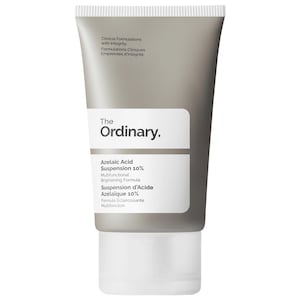
A product like The Ordinary Azelaic Acid belongs on intact facial skin, not the lip surface, mouth corners, open sores, or raw rash.
If one lip bump is part of it
A single sore on the lip border should not be swallowed into a general mouth-breakout plan.
If there is tingling, clustered blisters, crusting, recurrence in one exact spot, or symptoms after intimate contact, avoid picking and get medical guidance. Glass has separate guides for pimple on lip and zit on lip because a lone lip lesion has different safety questions than a rash around the mouth.
When to get care
See a clinician or dermatologist if you have:
- painful blisters or recurring sores
- spreading redness or warmth
- pus, drainage, or honey-colored crust
- fever
- swelling around lips or face
- eye involvement
- severe burning or cracking
- rash that persists after simplifying
- worsening after steroid cream
- deep painful acne that scars
Mouth-area rashes can waste weeks when treated as the wrong thing.
Rebuilding after the reset
When the area calms, reintroduce one thing at a time.
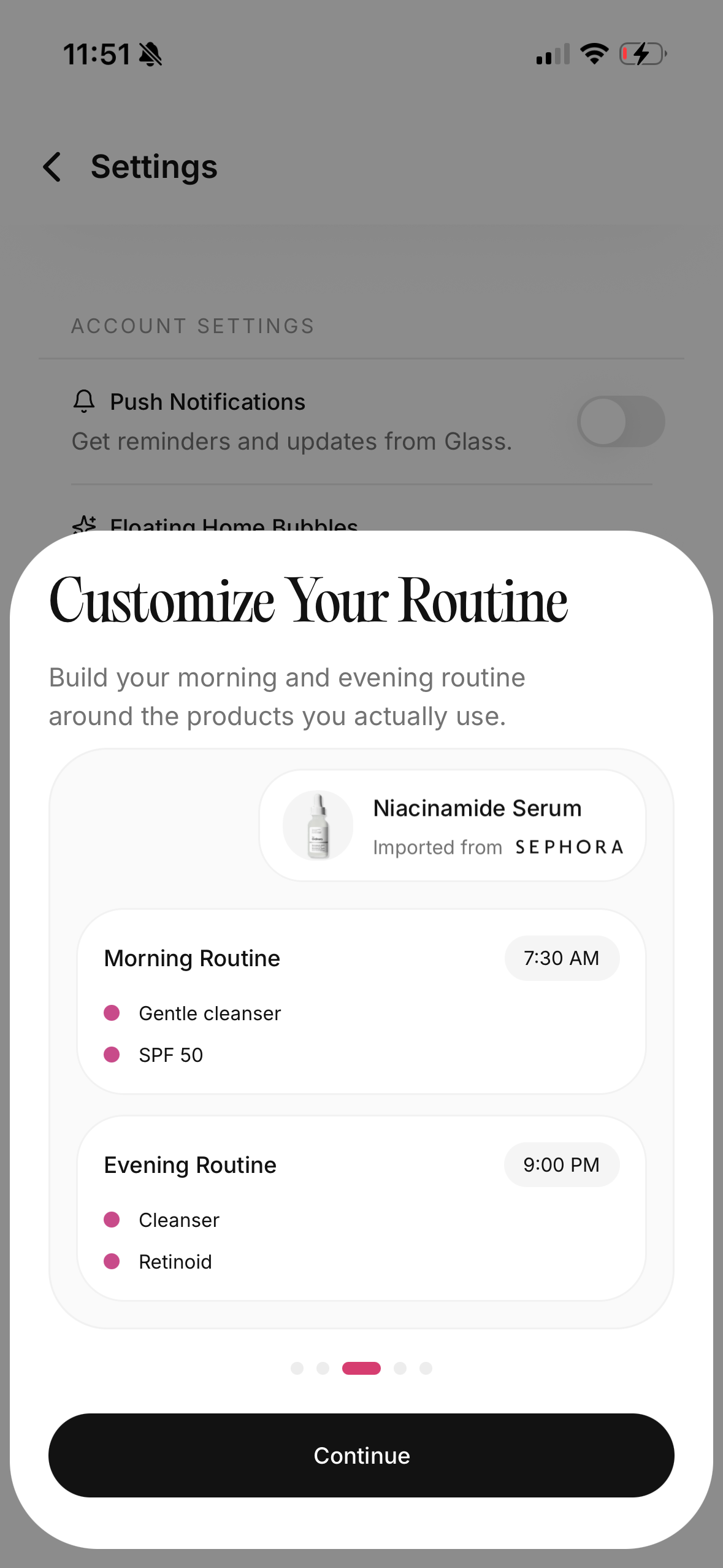
Add back lipstick, sunscreen, retinoid frequency, balm, mask habits, or dental changes slowly enough that you can read the reaction. If you restart everything in one week, you are back to guessing.
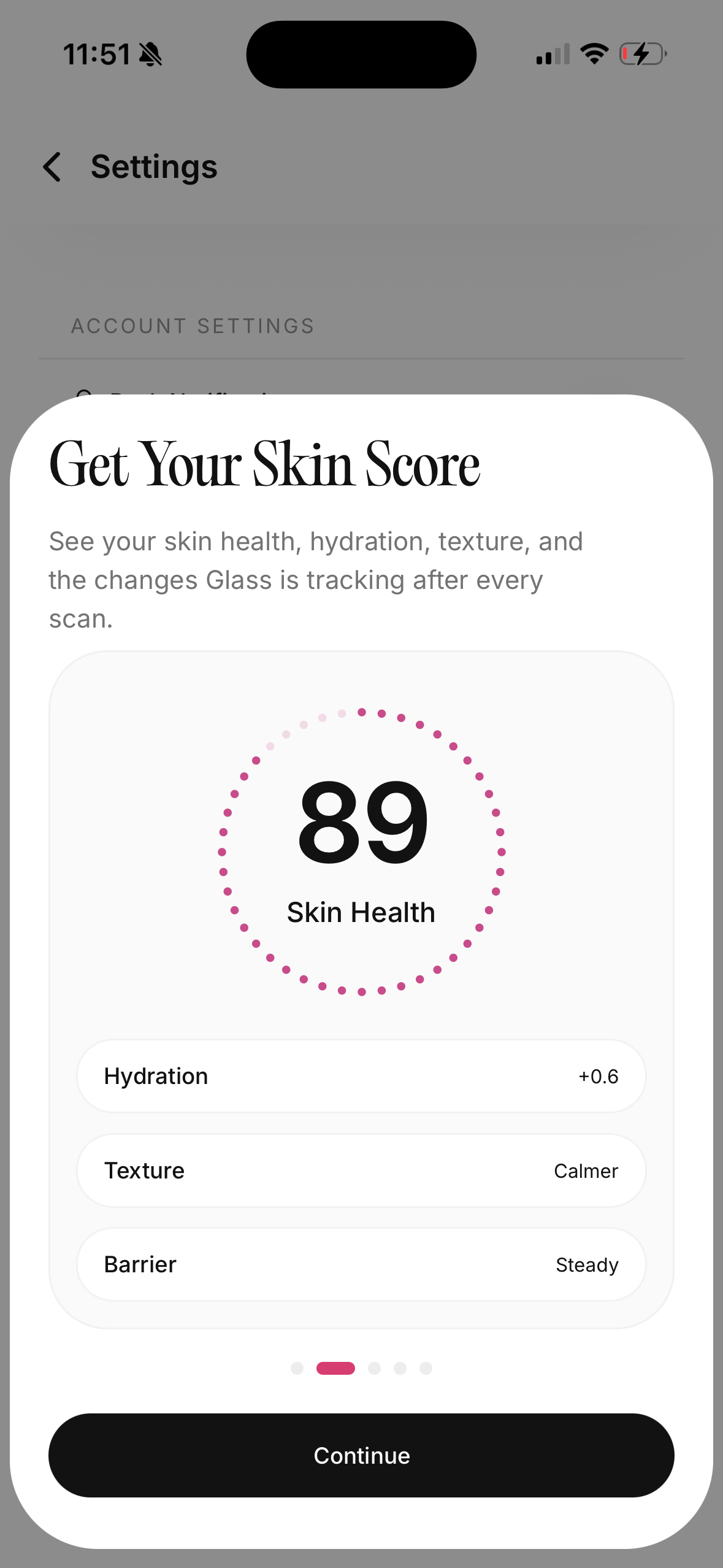
In Glass, log mouth-area triggers separately from cheek or forehead acne. A toothpaste-linked rash and a hormonal chin breakout should not share the same explanation.
If the reset makes it worse
A reset should feel calmer, not hotter.
If the area burns more, spreads, crusts, or becomes painful even after removing obvious irritants, do not keep waiting just to finish the two weeks. Some rashes need prescription care, and some infections or sores should be evaluated sooner.
Also check whether the reset accidentally added a new problem. A new sunscreen, new cleanser, or new "plain" balm can still irritate. The simplest routine is only useful if the products are tolerated.
If acne and irritation overlap
Mouth-area breakouts are often mixed.
You might have hormonal chin acne plus irritated corners from retinoid drift. You might have clogged pores from balm plus burning from toothpaste residue. In that situation, treating everything as acne can make the irritation worse, while treating everything as irritation can leave true acne unmanaged.
Separate the zones. Keep acne treatment on the chin or external facial skin. Protect the corners and lip border. If you cannot separate the pattern, that is a good reason to ask a dermatologist.
Bottom line
Breakouts around the mouth need boundaries: toothpaste, lip products, masks, retinoids, and steroid creams all have their own ways to irritate this zone.
Simplify before escalating. Keep actives on intact facial skin only. Avoid unsupervised steroid creams around the mouth. Get care if the pattern burns, spreads, crusts, blisters, drains, persists, or keeps coming back.