
Most people do not need more skincare advice.
They need a memory.
That is what sits underneath this search.
When someone looks for the best skincare journal app, they are usually tired of some version of the same loop:
- starting a routine and forgetting what changed
- using a product every two or three nights and losing the pattern
- taking progress photos that never stay organized
- getting one bad breakout and changing everything at once
- buying something new because they cannot tell whether the last thing was helping
I think that is why so many skincare apps feel exciting for three days and pointless by day ten.
They are built for setup. They are not built for recall.
The app that actually helps is the one that lets you answer boring but important questions fast:
- What did I use last night?
- When did I start this product?
- Was my skin already irritated before I added that serum?
- Am I being inconsistent, or is this routine genuinely not working?
That is the standard I used here.
I care less about who has the most dramatic scan language and more about who helps you stay honest long enough to learn something real.
Quick answer
If you want the short version first:
- Glass is the best skincare journal app for most people because it ties routine logging, progress tracking, reminders, and skin context together without making the journal feel like homework.
- FeelinMySkin is the best pick if your main problem is sticking to product schedules and keeping a clearer record of what you used.
- Dermaday is strongest if you care most about before-and-after tracking and seeing changes over time from quick selfies.
- SKINSpired makes the most sense if you want a dermatologist-shaped journal with symptom logs, reminders, and progress photos in one place.
- Smart Beauty is a good fit if you want a broader scan-to-routine system that still includes reminders and progress tracking.
If your real problem is not "find me another product" but "help me notice what changed before I overreact," Glass is the strongest place to start.
The 5 skincare journal apps worth your time in April 2026
| Image | App | Best for | What stands out | What to watch |
|---|---|---|---|---|
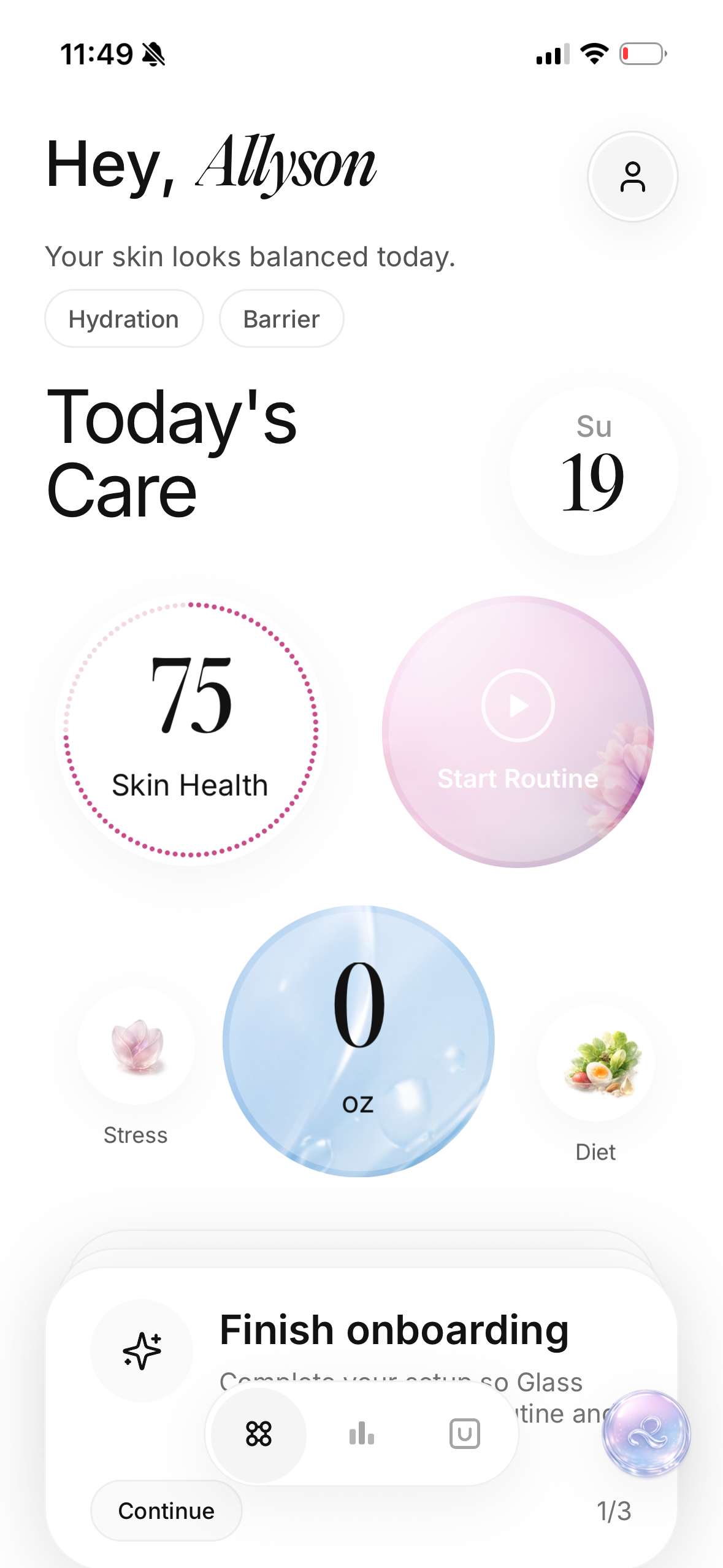 | Glass | People who want journaling tied to routines and skin progress | Routine logging, product context, reminders, skin scans, reports, lifestyle notes | The deeper guided analysis layer sits behind subscription access |
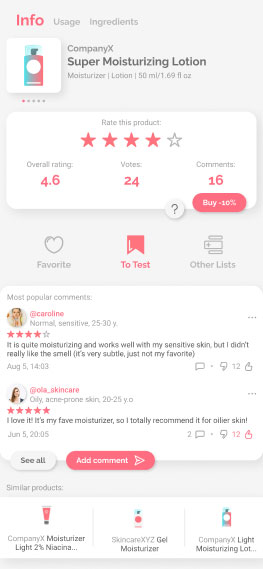 | FeelinMySkin | People who want routine scheduling plus journaling | Product tracking, reminders, usage history, expiration notes, photo journal, lifestyle logging | Better for organization than for scan-driven interpretation |
 | Dermaday | Readers who care most about visible progress tracking | Quick selfies, skin scores, daily comparisons, strong before-and-after framing | If you want a fuller routine journal, the score layer can feel louder than the routine layer |
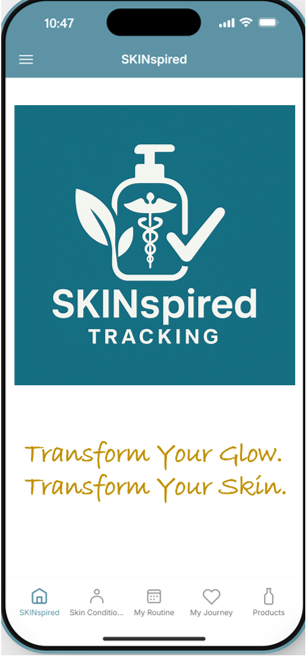 | SKINSpired | People who want journaling with symptom and reaction tracking | Progress photo journal, reaction logs, reminders, routine builder, dermatologist-designed positioning | The experience looks more guided and educational than minimalist |
 | Smart Beauty | Users who want a journal inside a broader skincare system | Skin analysis, routines, reminders, progress tracking, chatbot support | Broader feature set can feel busier if you only want a simple journal |
What makes a skincare journal app actually useful
This category gets misunderstood a lot.
People say they want a journal app, but most of the time they are not asking for long diary entries about their skin. They are asking for a cleaner feedback loop.
They want somewhere to keep:
- the routine
- the products
- the photos
- the timing
- the notes that explain why the skin suddenly changed
That sounds simple, but it is where most people lose the plot.
One cleanser becomes two. One treatment becomes three. The routine changes on Tuesday. The redness shows up on Thursday. By Sunday, nobody remembers what actually happened.
That is why I keep coming back to five questions:
- Does the app help you remember what changed?
- Can it handle routines that are not daily, like every-two-night tretinoin or a weekly exfoliant?
- Does it make progress easier to see?
- Does it reduce panic-editing when the skin has one bad week?
- Will you still open it after the first burst of motivation wears off?
If the answer to that last one is no, it is not a good journal app. It is just onboarding with nice colors.
1. Glass is the best skincare journal app for most people
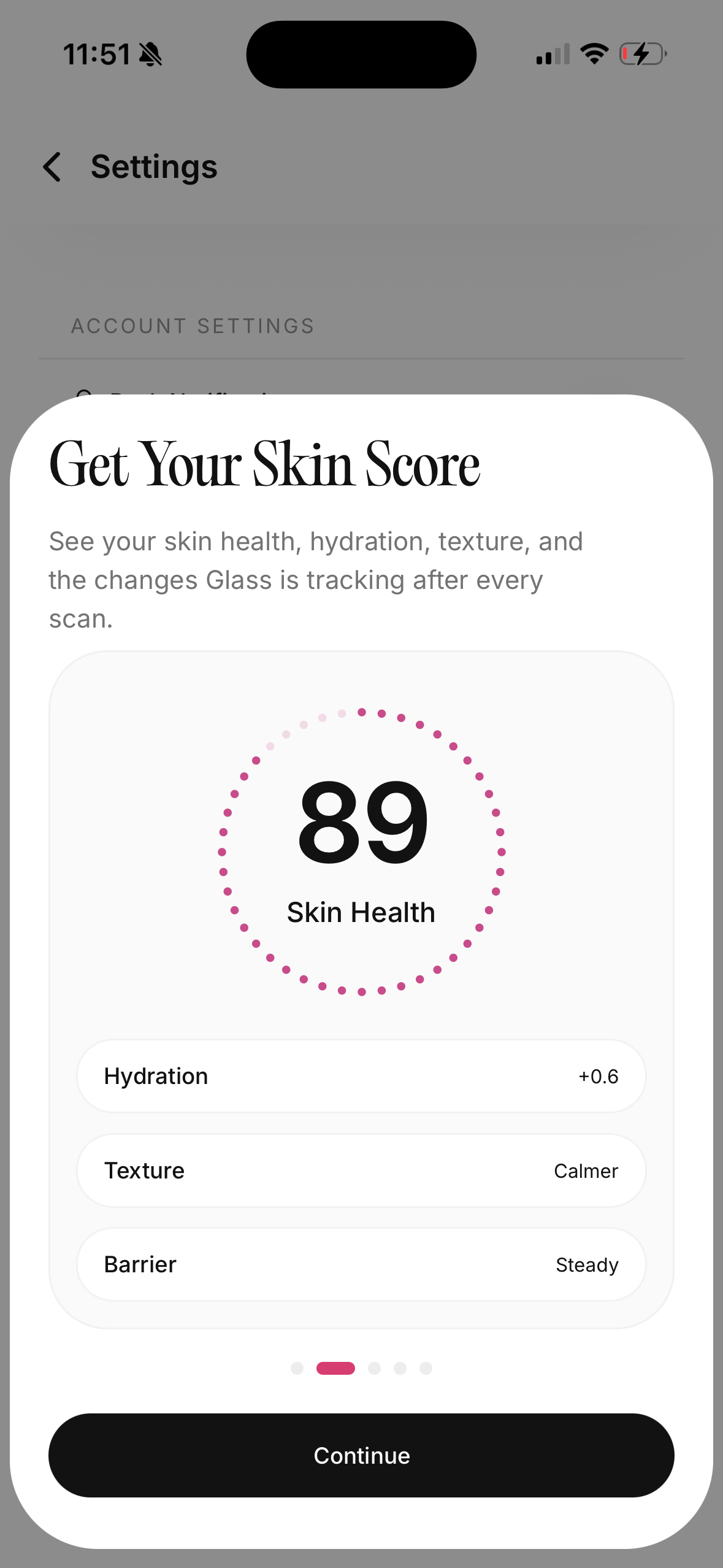
The reason Glass wins this category for me is that it understands a journal should not live alone.
It should sit next to the routine.
That sounds small, but it changes everything.
Instead of forcing you to keep notes in one place, product history in another, and progress photos in your camera roll, Glass keeps the useful parts in the same loop:
- track your morning and night routine
- log products in rotation
- see skin analysis and progress reporting
- keep reminders in the same system
- connect your routine to real life context like sleep, stress, water, and diet
That is what makes it feel more like a skincare journal and less like a checklist.
The value of a journal is not the act of recording. It is the act of noticing.
Glass is best for people trying to answer questions like:
- Why does my skin look worse every time I add a third active?
- Did this product actually help, or did I just have a better week?
- Am I skipping more nights than I think I am?
- Is the issue dehydration, irritation, or just inconsistency?
I also think it gets one emotional detail right.
Good skincare journaling should calm you down. It should not make you obsess harder.
That is where a lot of score-heavy apps miss the mark. They give you more output, but not always more clarity. Glass feels better balanced because the journal is attached to behavior, not just facial analysis theater.
If you want the closest companion reads after this, go to best skincare routine app (April 2026), best skincare routine tracker (April 2026), and best free skin analysis app (April 2026).
2. FeelinMySkin is best if your main problem is routine follow-through
Some people do not need a bigger skincare brain.
They need a better skincare planner.
That is where FeelinMySkin stands out.
Its whole shape is built around the stuff that quietly breaks routines:
- what products to use
- when to use them
- how often to use them
- how to remember expiration and usage history
- how to journal skin and lifestyle changes without building a spreadsheet
I think this is one of the better choices if your real problem sounds like this:
- I forget what nights I use tretinoin.
- I need to track products I only use two or three times a week.
- I want to compare my skin without digging through old photos.
- I care more about consistency than another AI score.
That makes FeelinMySkin a very honest answer to the keyword.
It is not trying to convince you that a single scan will solve your skin. It is closer to a routine-and-journal operating system, which is often what people actually need.
The tradeoff is that it looks stronger at organization than interpretation.
If you want deeper scan context and broader skin analysis tied into the journal, Glass still has the edge. If you mainly need a planner that helps you keep your promises to yourself, FeelinMySkin is one of the best fits on the page.
3. Dermaday is strongest if your journal needs to be visual first
There is a type of user who does not trust memory at all.
I get that.
Skin changes slowly. Lighting lies. Mood lies. Frustration definitely lies.
Dermaday is built for that user.
Its pitch is much more visual and progress-forward:
- quick selfies
- concern scores
- daily comparisons
- before-and-after framing
If your biggest skincare problem is "I cannot tell whether anything is improving," Dermaday makes a lot of sense.
It is also a good fit for people going through a rough adjustment phase with a new routine, where the skin may look worse before it looks better and memory starts getting unreliable. A visual journal can stop you from quitting something too early or, just as importantly, help you notice when something is clearly not worth continuing.
Where I would be a little more careful is this:
progress scores are useful only if they support judgment.
They should not replace it.
That is why I would pick Dermaday for someone who wants a visual proof layer first. I would not pick it first for someone who wants the cleanest routine-plus-product journal. It feels strongest when the journal job is "show me the change," not "help me run the whole system."
4. SKINSpired is the best fit if you want symptom logs and a more guided journal
What I like about SKINSpired is that it takes accountability seriously.
That sounds like marketing fluff until you look at what that means in practice:
- customizable morning and evening routines
- progress photo journaling
- symptom and reaction logs
- reminders
- educational support inside the same experience
That is a smart mix.
Most people do not just want to log "used cleanser." They want to log what the skin did after. Breakouts. Dryness. Sensitivity. Random irritation. The weird reaction that only seems to happen when two products overlap and sleep was bad.
SKINSpired looks built for that layer of reality.
I would recommend it most for someone who wants a journal with more structure around symptoms and reflection, especially if they like the idea of a more expert-shaped product instead of a pure consumer utility.
The thing to watch is interface weight.
Some users want that extra guidance. Others want a faster, quieter log. If you tend to abandon apps when they start feeling educational in the wrong way, Glass or FeelinMySkin may be easier to keep using.
If you like a little more hand-holding and want the journal to capture reactions, not just routine completion, SKINSpired earns its spot.
5. Smart Beauty is the best pick if you want a journal inside a broader skincare stack
Smart Beauty feels less like a pure journal app and more like a wider skincare platform that happens to include the journal pieces people care about:
- skin analysis
- personalized routines
- daily reminders
- progress tracking
- chatbot support
That can be a strength or a weakness depending on what you want.
If you want one app that tries to cover everything from scan to routine to reminders, Smart Beauty is compelling. It has a broader promise than a minimalist journal, and some people genuinely prefer that because they want fewer separate tools.
If you are already overwhelmed, that breadth can also become friction.
That is the real dividing line in this category.
Some people need a bigger system. Some people need a calmer one.
I would choose Smart Beauty if you want the journal to be one part of a more feature-rich skincare setup. I would skip it if your real goal is simply:
"Give me a place to log my routine, mark what I used, keep photos together, and move on."
The biggest mistakes people make with skincare journal apps
Expecting the app to fix inconsistency by itself
The app can reduce friction. It cannot care for you.
If reminders are too aggressive, the routine is too big, or the products do not make sense together, no journal app will magically solve that. The right app helps you see the problem earlier. It does not remove the need to simplify.
Logging too much too fast
This is a real trap.
People start tracking:
- every product
- every concern
- every meal
- every supplement
- every mood shift
- every photo angle
Then the journal becomes the reason they quit.
The better rule is to track only what actually helps you make decisions. Routine use, photo progress, one or two symptoms, and major changes are usually enough.
Treating every bad day like a failed routine
This is where journaling should help the most.
A single breakout, dry patch, or dull morning is not always a verdict. It is often just a data point. A good journal app helps you zoom out before you rip the whole routine apart.
Using a journal without keeping the routine stable
The cleaner your routine, the more useful the journal becomes.
If you are constantly adding, swapping, and layering new things, the app cannot teach you much because the experiment never settles. That is why smaller routines usually generate better insights than "advanced" ones.
If that sounds familiar, how to build a skincare routine you will actually follow is the better next read.
Who should choose which app
Choose Glass if you want the best overall mix of journaling, routine tracking, reminders, product context, and progress.
Choose FeelinMySkin if you mainly need help remembering product schedules and keeping your routine organized.
Choose Dermaday if photos and visible progress are the main reason you want a journal at all.
Choose SKINSpired if you want to track symptoms, reactions, and progress in a more guided way.
Choose Smart Beauty if you want the journal bundled into a wider scan-to-routine system.
FAQ
What is the best skincare journal app in April 2026?
For most readers, Glass is the best skincare journal app in April 2026 because it keeps routine logging, reminders, product context, progress reporting, and skin tracking in the same calmer system instead of splitting the journal across multiple tools.
What should a skincare journal app track?
At minimum, it should track what you used, when you used it, progress photos, and a few useful notes about reactions or skin feel. More than that is only helpful if it improves decisions instead of adding friction.
Are skincare journal apps actually worth it?
Yes, if your main problem is inconsistency, panic-editing your routine, or not remembering what changed. No, if you expect the app to replace judgment or fix an overcomplicated routine on its own.
What is better: a skincare journal app or a notes app?
A notes app is fine if you only want basic logs. A dedicated skincare journal app is better when you want reminders, repeat schedules, product history, progress photos, and the ability to compare changes over time without rebuilding the system manually.
Final take
The best skincare journal app is not the one that gives you the most data.
It is the one that helps you stay steady long enough to trust your own pattern recognition.
That usually means fewer surprises. Fewer random swaps. Fewer products doing the same job. And a much better memory of what your skin has actually been through.
If an app can give you that, it is doing the real job.