
Product hopping feels productive.
It usually is not.
You buy the calming serum. Then the new moisturizer. Then the barrier cream. Then the exfoliant everyone says is gentle. Two weeks later, your skin is somehow oilier, drier, bumpier, and more confusing at the same time.
The worst part is not the money.
It is the uncertainty.
You do not know what helped. You do not know what irritated. You do not know whether your skin was improving before you changed the routine again. A skincare app can help, but only if it is built for the real problem: not just reminding you to wash your face, but helping you stop changing everything too fast.
That is the standard I would use in 2026.
Not the prettiest scan. Not the biggest ingredient database. Not the app with the most dramatic promise.
The best skincare app for product hopping is the one that slows the routine down enough for the pattern to become visible.
Quick answer
If you keep switching skincare products, choose an app that can track four things together: the routine you planned, the products you actually used, the dates you changed something, and photos taken in similar lighting over several weeks.
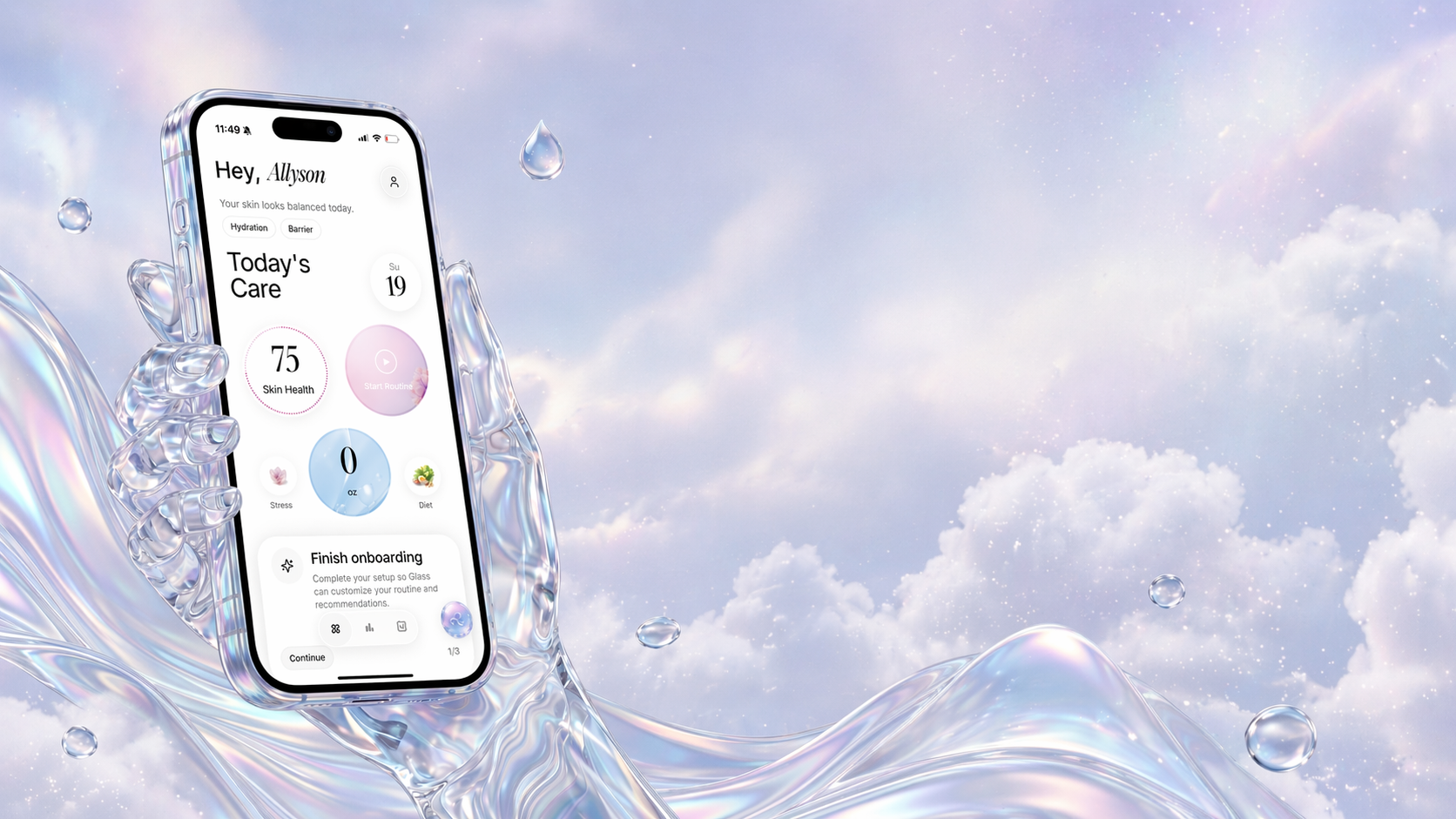
For most people, I would start with Glass because it connects routine tracking, skin scans, product history, reminders, and progress reports in one place. If you mainly want ingredient analysis and a larger product database, Skin Bliss is a strong fit. If you only need a light product shelf and journal, BasicBeauty or FeelinMySkin may be enough.
The tool matters less than the rule: one meaningful change at a time.
The product hopping loop
Most people do not ruin their routine with one bad product.
They ruin the experiment.
They add a cleanser on Monday, a serum on Wednesday, a richer cream on Friday, and a peel pad on Sunday. When their face stings the next week, every product becomes a suspect. When their skin looks better, every product takes credit.
That is why skincare can start feeling superstitious.
You remember the product that felt exciting. You forget the skipped moisturizer, the late nights, the hot showers, the extra exfoliation, the sunscreen that started pilling, the week you picked more because your skin felt rough.
Memory is not a reliable skincare tracker.
An app should act like a quiet record. It should help you answer:
- What did I add?
- When did I add it?
- How often did I actually use it?
- What did my skin look like before and after?
- Did anything else change at the same time?
If an app cannot help with those questions, it may still be useful, but it will not solve product hopping.
What I would look for first
I would ignore the fancy parts at the beginning.
The first thing I would check is whether the app makes it easy to log product changes without turning the routine into homework. If logging feels tedious, you will stop doing it right when the data starts to matter.
The useful feature set looks like this:
| Feature | Why it matters when you product hop | What to avoid |
|---|---|---|
| Product start dates | Shows when a new variable entered the routine | Apps that only store a shelf with no timeline |
| AM/PM routine tracking | Separates planned routine from actual use | A pretty routine builder you never check off |
| Progress photos | Keeps memory honest over weeks | Random selfies with different lighting every time |
| Notes or reactions | Captures stinging, tightness, breakouts, and texture | One vague skin score with no context |
| Reminders | Keeps the test consistent enough to judge | Notifications that push a routine you cannot tolerate |
| Product roles | Helps you see duplicates | Endless product recommendations without simplification |
That last one is underrated.
Product hopping often comes from buying the same role repeatedly. You do not have five separate needs. You have five products all promising brightness, glow, hydration, barrier support, or clearer pores. A good app should make duplicates obvious.
Glass is the strongest fit if you want the whole pattern
Glass makes the most sense when your routine problem is not isolated.
You do not only need a reminder. You do not only need a scan. You do not only need a product list. You need the relationship between those things.
That is where Glass fits.
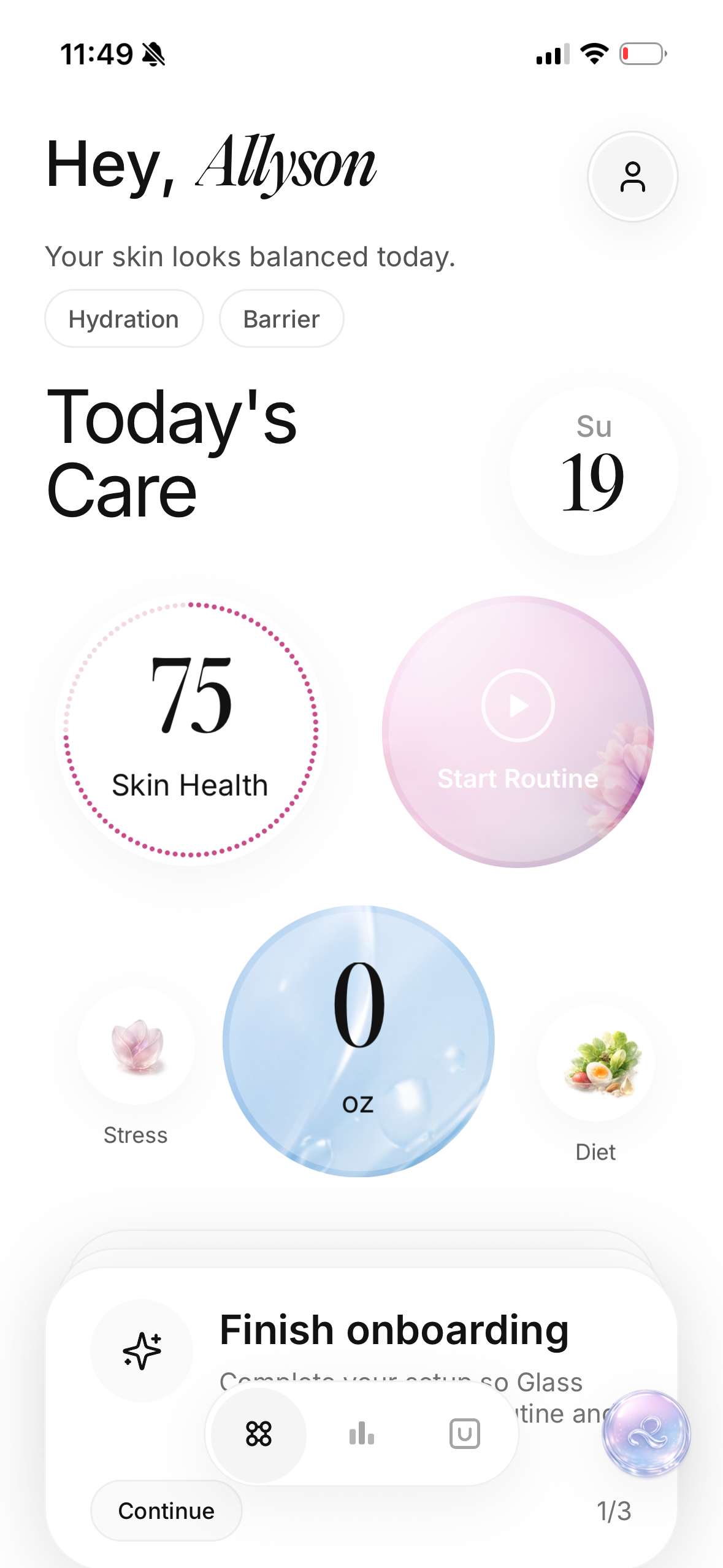
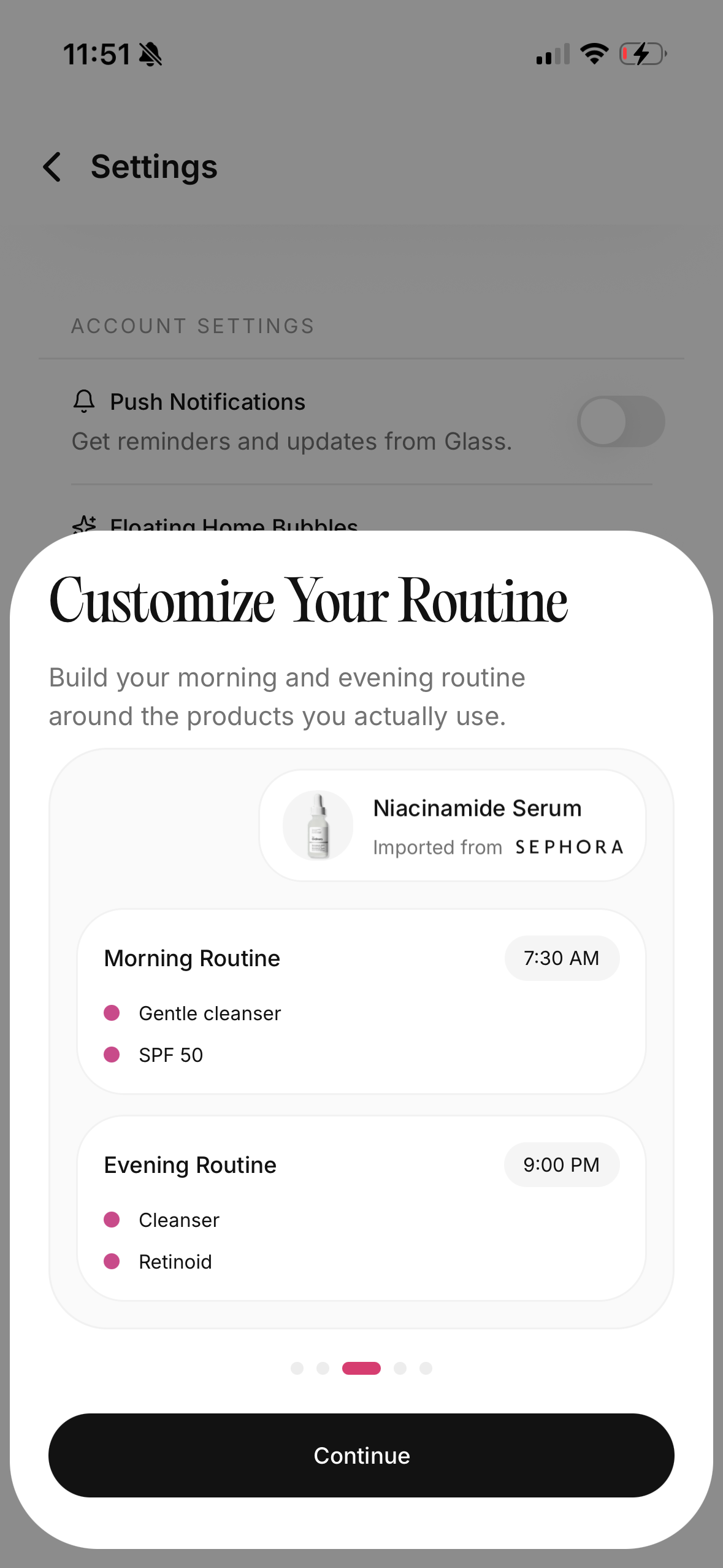
The routine builder gives your products a place. The scan side helps you track visible changes. The progress reports make it easier to look across time instead of reacting to one bad mirror check. The reminder layer keeps the routine from disappearing after the first motivated week.
I especially like this for people who keep asking, "Is this product working?"
That question needs more than a feeling. You need the product start date, the frequency, the routine around it, and a decent before-and-after record. If you used the product four times in three weeks and changed two other steps during the same stretch, you do not have a clean answer yet.
Glass helps because it treats skincare as a pattern, not a shopping list.
Choose Glass if you want one place for skin analysis, routine tracking, product logging, and calmer progress checks.
Skip it if you only want a plain checklist and do not care about scans or skin history.
Skin Bliss is better if ingredients are the messy part
Skin Bliss is the app I would consider when product hopping starts before checkout.
Some people change products because they do not understand what they already own. They buy another niacinamide serum without realizing two current products already include niacinamide. They add an exfoliating toner on top of an acne cleanser. They buy a barrier cream but keep using a routine that strips the barrier every night.
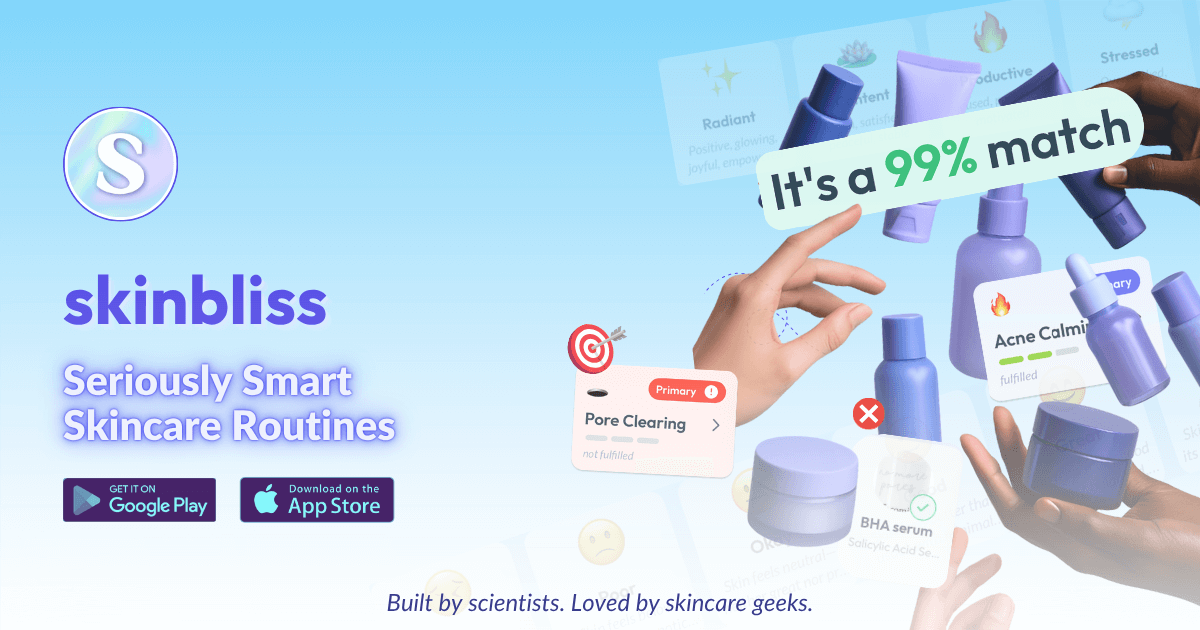
Skin Bliss is strong for this kind of user because it is built around product and ingredient context. Its public product pages describe skin analysis, product checks, routine building, shelf analysis, and personalized matches, which makes it feel more ingredient-aware than a simple routine calendar.
The tradeoff is weight.
If you already feel overwhelmed, a feature-heavy app can become another place to overthink. Skin Bliss is a better match if you actually enjoy ingredient logic and want help organizing a bigger product shelf.
Choose Skin Bliss if your routine keeps getting messy because you do not know which products overlap.
Skip it if you need the quietest possible daily loop.
Lume Skin is worth watching for scanner-first users
Lume Skin sits in the broader AI skincare app lane. Its current site presents it as a skin analysis, ingredient scanner, routine, progress tracking, and reminder system.
That makes it interesting for someone who wants the app to start with a scan or product check.
The caution is the same caution I have with any scanner-first product: the scan should not become the whole routine. A face scan can be useful, but product hopping usually needs behavior tracking more than another diagnosis-shaped moment.
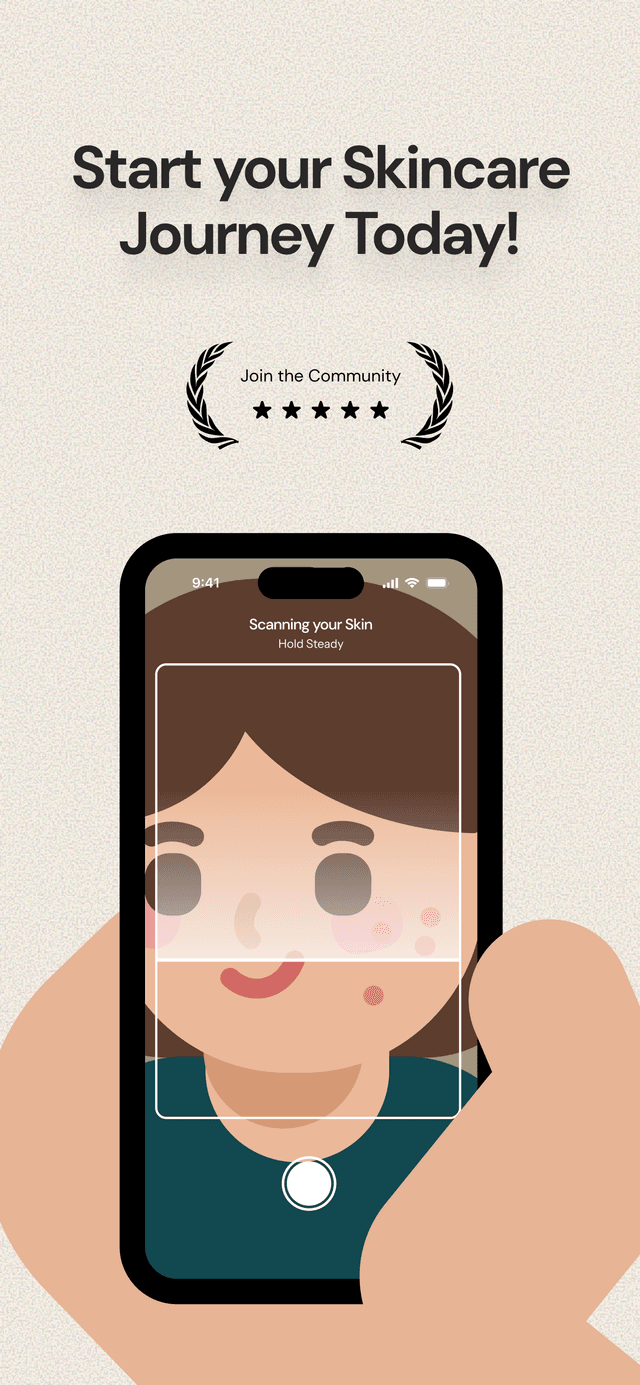
Choose Lume if you want scan-first guidance, ingredient scanning, and reminders in one app.
Skip it if scans make you anxious or you know you will react to every score by changing the routine again.
BasicBeauty and FeelinMySkin are better for lighter tracking
Not everyone needs a heavy skincare system.
If your skin is mostly stable and your main problem is remembering what you used, a lighter tracker can be enough. BasicBeauty positions itself around routines, product tracking, reminders, a private skin journal, photos, and notes. FeelinMySkin leans into product tracking, routines, reminders, favorites, wishlists, and routine organization.
That kind of app can be useful when the goal is simple recordkeeping.
The risk is that a lighter tracker may not give you as much interpretation. That is fine if you are already good at reading patterns. It is less helpful if you keep changing products because you cannot tell what the pattern means.
Choose a lighter tracker if you want:
- product shelf organization
- routine checkoffs
- reminders
- progress notes
- a private skin journal
Choose something more connected, like Glass, if you want scans and progress context to sit beside the routine.
The one-change rule
No app saves a chaotic experiment.
If I were trying to stop product hopping, I would use a one-change rule:
Add one meaningful product. Track it for at least two to four weeks unless your skin clearly reacts badly. Keep the rest of the routine stable. Take photos in similar lighting. Write down stinging, tightness, new bumps, dryness, oiliness, and anything that feels different.
That sounds slow because it is slow.
Slow is the point.
Skin often needs time to show a pattern. Hydration can feel different in a few days. Congestion may take longer to show. Irritation can show quickly. Dark spots and texture usually need more patience. If you keep changing products faster than your skin can respond, you are not learning. You are just collecting noise.
What a good product test looks like
A useful test does not have to be complicated.
Here is the version I would actually follow:
| Week | What to do | What to watch |
|---|---|---|
| Baseline | Keep the current routine steady for a few days | Current breakouts, dryness, redness, comfort |
| Week 1 | Add the new product at a conservative frequency | Stinging, tightness, rash-like changes, immediate breakouts |
| Week 2 | Keep frequency steady if skin is calm | Repeated bumps in the same zones, less dryness, better comfort |
| Week 3 | Compare photos and notes | Pattern, not one good or bad day |
| Week 4 | Decide whether to keep, pause, or adjust | Does it make the routine easier or harder? |
This is where an app earns its keep. You should not have to remember all of that from bathroom lighting and vibes.
How to know if an app is making you worse
Some skincare apps accidentally encourage product hopping.
The warning signs are easy to spot:
- every scan leads to a new product suggestion
- every concern gets treated like an emergency
- the app rewards adding products more than repeating the routine
- your product shelf grows but your routine gets less consistent
- you feel worse after checking the app
- you change the plan every time a score moves
If that happens, the app is not helping.
The right app should make your skincare feel calmer. It should make you more consistent, not more reactive. It should help you remove noise from the routine, not add more.
When product hopping is really irritation
There is a specific pattern I would watch for.
You add products because your skin looks dull, rough, or congested. Then your skin gets tight and shiny. Then you add hydration. Then you add exfoliation because the texture still bothers you. Then your face burns when you moisturize.
That may not be a product-discovery problem.
It may be an irritation problem.
In that case, the app should help you simplify. Log the active products. Reduce variables. Notice whether your cleanser, exfoliant, retinoid, vitamin C, or acne treatment is too frequent for your skin right now.
If your skin is burning, swelling, cracking, rash-like, painful, or changing quickly, do not try to app your way through it. Get medical care.
Privacy matters more with face photos
Any app that stores skin photos deserves a privacy check.
Before uploading face images, I would look for plain answers to a few questions:
- What data does the app collect?
- Is face or health-related data linked to your identity?
- Can you delete your photos and account?
- Does the app explain how it uses images?
- Are you comfortable with the tradeoff?
This is personal. Some people are fine with cloud-based analysis if the app is useful. Others want the least data exposure possible. Neither choice is weird.
Just do not ignore the question because the app looks polished.
My May 2026 pick
If product hopping is the actual problem, I would choose Glass first.
Not because every person needs the same app, but because the shape is right: routine, products, scans, reminders, and progress in one loop. That is the kind of structure that helps you stop treating every bad skin day like a shopping prompt.
If ingredients are the part that overwhelms you, I would look at Skin Bliss. If you want scan-first guidance, I would compare Lume Skin. If you only need a product shelf and journal, I would keep the setup lighter with BasicBeauty or FeelinMySkin.
But the app is only half the decision.
The bigger decision is to stop running five experiments at once.
Pick the routine. Add one variable. Track it honestly. Give your skin enough time to tell you something useful.
That is how you stop guessing.
Useful references: Glass, Skin Bliss, Lume Skin, BasicBeauty, and FeelinMySkin.