Acne makes people do too much.
Too many actives. Too many switches. Too many products bought in a panic after one bad flare.
That is why I think the best acne app is not the one that promises the fastest fix.
It is the one that helps you stay calm long enough to see what is actually working.
If you are looking for the best skincare app for acne, the real value is not in having another place to obsess over your skin. The real value is in having a system that helps you:
- track changes honestly
- stop overcorrecting
- connect breakouts to habits, products, and routine changes
- notice progress before you sabotage it
That is the lens I used here.
Quick answer
If you want the short version first:
- Glass is the best overall pick if you want acne tracking tied to product decisions, routine structure, skin scans, and progress over time.
- Glassie is the strongest progress-first option if your main goal is visually tracking acne, pores, spots, and visible change.
- MDacne is the best fit if you want a more treatment-forward acne app built around guided routines and monitoring.
- ClearSkin is a good choice if you care most about tracking triggers like sleep, stress, diet, and daily habits.
- FozDoc is promising if you want AI scans with acne-focused routine suggestions.
- SkinSort is the best supporting tool if ingredient checking and breakout-trigger filtering are your main pain points.
If the bigger problem is inconsistency rather than lack of information, Glass is the best place to start.
The acne apps I kept coming back to in 2026
| Image | App | Best for | What stands out | Good to know |
|---|---|---|---|---|
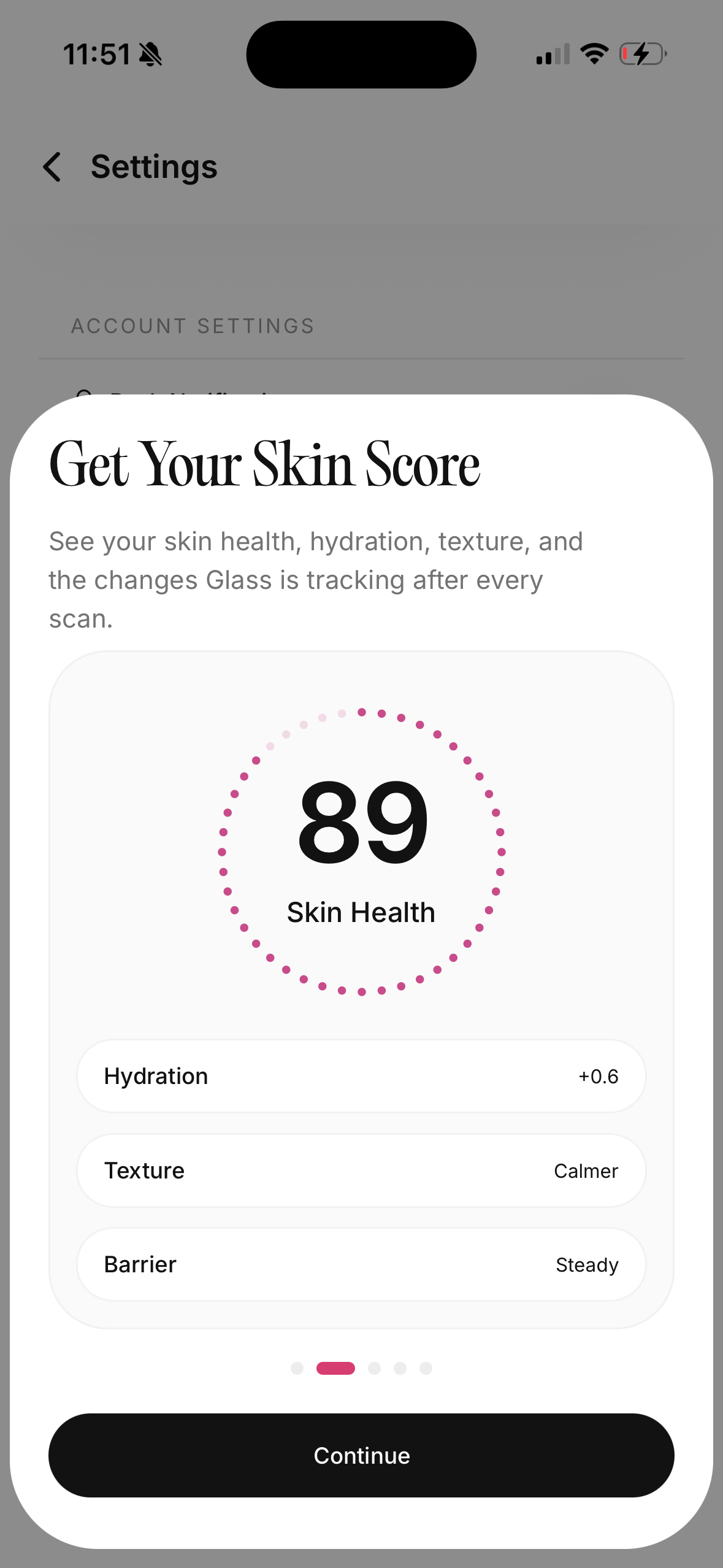 | Glass | People who want acne tracking tied to routine and product context | Skin scans, routine tracking, reminders, reports, product logging, lifestyle context | Strongest when acne is part of a bigger routine and behavior problem |
 | Glassie | Users who want visible progress tracking and motivation | Acne, spots, pores, scan-based tracking, progress-first framing | Better for momentum than full routine management |
 | MDacne | Readers who want a more treatment-led acne app | Monitoring, acne routines, personalized product path, acne-first positioning | More treatment-forward than the broader routine trackers |
| ClearSkin | People who want to connect breakouts to habits and triggers | Tracks sleep, stress, diet, skincare, and breakout patterns | Best when trigger tracking matters as much as product tracking | |
 | FozDoc | Users who want AI scans with acne-focused routines | Acne, texture, wrinkles scans, personalized routines | Needs more evidence of long-term habit support to rank higher |
 | SkinSort | Ingredient-conscious users trying to reduce breakout triggers | Ingredient checker, compare tools, filters, routine builder | More of a decision-support tool than a dedicated acne tracker |
What people with acne usually need from an app
Not more urgency.
Not more product temptation.
Not another app that makes every tiny flare feel like a crisis.
Usually, what actually helps is:
- keeping the routine stable enough to measure
- tracking breakouts clearly without spiraling
- noticing patterns around stress, sleep, diet, or cycle shifts
- seeing product overlap before it wrecks your barrier
- staying patient long enough for acne treatment to work
That is why I rank this category the way I do.
The best acne app is not necessarily the most "medical" one and not necessarily the most "AI" one. It is the one that helps you become less chaotic.
1. Glass is the best skincare app for acne for most people
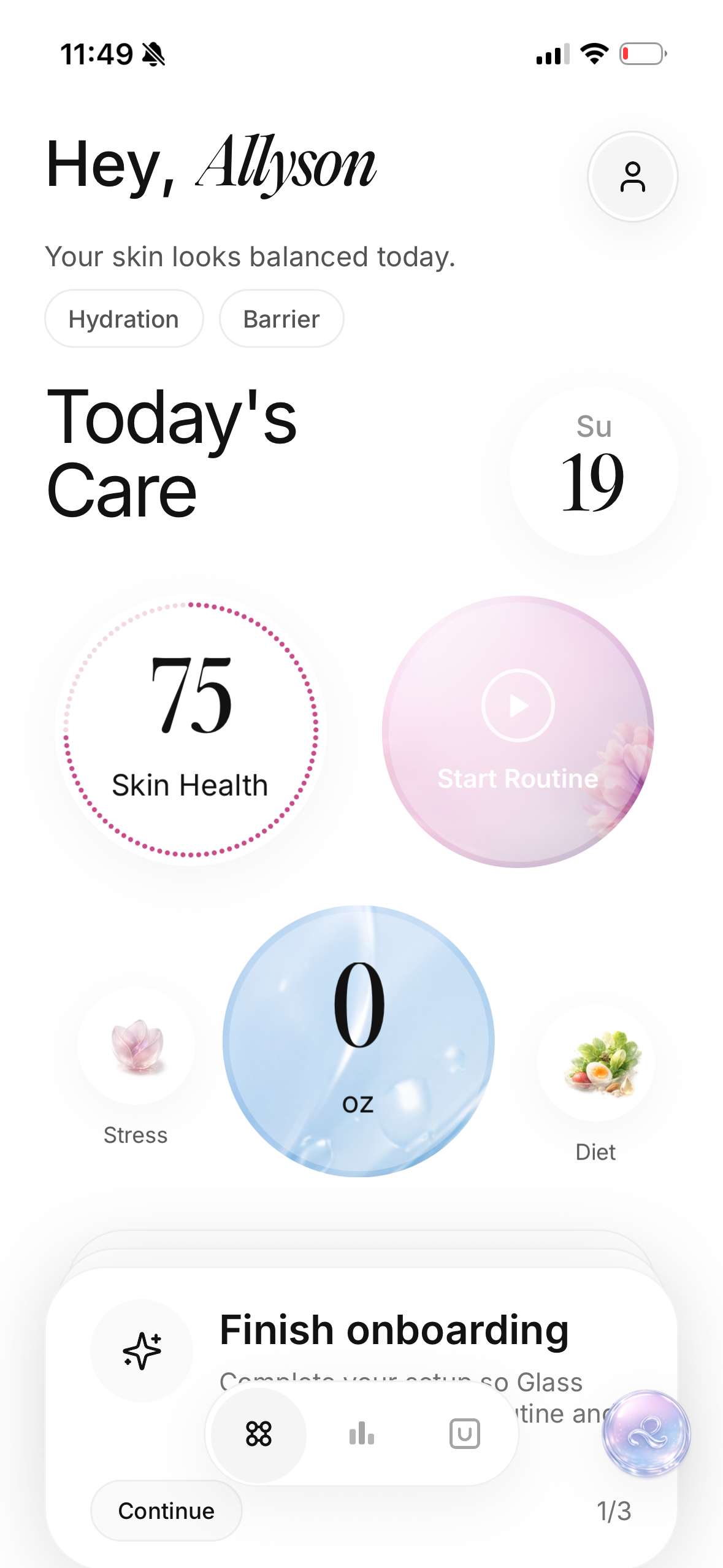
Glass comes out on top because acne is rarely just a scanning problem.
It is a consistency problem.
It is a product-overlap problem.
It is a "I changed three things at once and now I do not know what broke me out" problem.
Glass is built closer to that reality than the average acne app because it ties skin analysis back to:
- routines
- products
- reminders
- progress reports
- lifestyle context
That last part matters more than people think. If your sleep tanked, your stress spiked, you started a new active, and your jawline flared, the best app is the one that helps you see the pattern without turning it into a guessing game.
If you want the acne-specific routine branch after this, glass skin routine for acne-prone skin (2026) is the best companion read. If you want more help cleaning up the product side, best skincare scanner app (April 2026) fills that gap.
2. Glassie is best if seeing progress keeps you motivated
Some people do best when progress becomes visible enough to keep them from quitting.
That is where Glassie looks strongest.
Its whole angle is closer to:
- scan
- track
- compare
- keep going
I understand the appeal.
Acne can feel like nothing is changing until suddenly it is. A progress-heavy app can be the difference between staying consistent and blowing the routine up after ten impatient days.
I still rank it below Glass because the broader routine and product-decision system looks thinner. It is strongest as a momentum tool, not as the full operating system.
3. MDacne is best if you want something treatment-forward
MDacne is a different kind of pick.
It is less of a neutral tracker and more of an acne-treatment system. That can be a good thing if you already know you want something focused directly on acne rather than a broader skincare app.
This is the right lane if you want:
- acne-first positioning
- guided treatment structure
- monitoring built around acne improvement
- a more directed approach
The tradeoff is that treatment-led apps can become less flexible if your real need is simply better tracking, better routine discipline, and fewer product mistakes.
4. ClearSkin is best for trigger tracking
If your acne feels random, ClearSkin is worth a serious look.
The reason is simple: it tries to connect breakouts to the stuff people usually ignore until it is too late:
- sleep
- stress
- diet
- habits
- daily skincare behavior
That is extremely useful if your skin does not only react to products.
A lot of acne apps make it sound like the answer is always a new serum. Sometimes the better answer is noticing that your breakouts cluster around stress, cycle timing, heavy friction, lack of sleep, or over-cleansing. An app that can surface that pattern earns its keep.
5. FozDoc is a promising scan-first acne app
FozDoc looks strongest if you want AI analysis with a more acne-specific feel.
It talks directly about scanning concerns like acne and texture, then shaping routines around what the scan sees. That is a clean promise.
I like that it feels narrower than the generic all-in-one beauty apps. I just still want more from the long-term loop before ranking it higher than Glass or MDacne.
6. SkinSort is the best sidecar app for acne-prone product choices
I would not call SkinSort the best dedicated acne app.
I would call it one of the most useful support tools if acne-prone skin makes product shopping stressful.
It helps with the part people keep getting wrong:
- checking ingredients
- spotting overlap
- comparing options
- filtering products before they ever touch your face
That makes it a strong second app if the main acne issue is product selection rather than routine consistency.
The mistakes I would avoid with acne apps
These apps can help a lot.
They can also make acne worse if you use them badly.
The biggest mistakes are:
- changing too much after one flare
- trusting every score more than your own trend line
- using the app to justify more product shopping
- tracking obsessively without narrowing the routine
- ignoring irritation because the app says the product is technically fine
Acne improves faster when the system gets simpler.
That is the test I keep using here.
Which app should you choose?
Choose Glass if you want the best balance of acne tracking, product context, routine stability, and progress visibility.
Choose Glassie if visual progress is what keeps you on track.
Choose MDacne if you want a more treatment-led acne app.
Choose ClearSkin if you suspect your breakouts are heavily tied to daily habits and triggers.
Choose FozDoc if you want a scan-first acne app with personalized routines.
Choose SkinSort if product filtering is the real acne bottleneck.
13 mistakes I stopped making once I started using an acne app more honestly
- I stopped treating every breakout like proof that my whole routine had failed.
- I stopped changing multiple products at once and expecting the app to untangle the mess for me.
- I stopped chasing instant fixes when what I really needed was a steadier month.
- I stopped confusing “tracking my acne” with “thinking about my acne all day.”
- I stopped trusting perfect ingredient lists more than my own actual skin.
- I stopped panic-buying spot treatments every time my skin looked worse for two days.
- I stopped ignoring sleep, stress, and routine consistency just because product talk felt more concrete.
- I stopped assuming more data automatically meant better decisions.
- I stopped using acne apps like a scorecard and started using them like a pattern log.
- I stopped mistaking a more intense routine for a smarter one.
- I stopped treating one bad week like a reason to rebuild everything.
- I stopped expecting an app to fix a routine I was not actually following.
- I stopped rewarding panic with another purchase.
FAQ
What is the best skincare app for acne in April 2026?
For most people, Glass is the best skincare app for acne in April 2026 because it helps connect acne tracking to routines, products, reminders, and progress over time instead of treating breakouts like isolated moments.
Which acne app is best if I want to see progress clearly?
Glassie is the strongest progress-first option in this group if visible momentum is what keeps you consistent.
Is MDacne better than a general skincare tracker?
It can be, if you want something more treatment-forward and acne-specific. If you want a broader routine and product system, Glass is more flexible.
Can an acne app tell me exactly what is causing my breakouts?
Not exactly. It can help you spot patterns and reduce guesswork, but acne is still influenced by multiple things at once, including hormones, stress, barrier damage, friction, and product overload.
Should I use an acne app instead of seeing a dermatologist?
No. Use an app for tracking, structure, and pattern recognition. See a dermatologist if your acne is severe, painful, scarring, worsening fast, or not responding to a sensible routine.
Final take
The best skincare app for acne is the one that helps you stop spiraling.
For most people, that is Glass.
It does the best job of turning acne tracking into calmer decisions, steadier routines, and progress you can actually understand.