I did not need more skincare advice.
I needed a memory.
That is the real problem behind this search.
When someone looks for the best skin care tracker app, they are usually stuck in some version of the same loop:
- trying a product for ten days and forgetting what changed on day three
- taking progress photos that never stay organized
- missing two nights and then overcorrecting the next four
- layering too many actives because nothing feels measurable
- buying something new because the last thing never got a fair test
That is why most skincare apps feel exciting at setup and forgettable a week later.
They help you start. They do not help you remember.
On April 22, 2026, I reviewed the current public-facing pages shaping this space, including Skin Bliss, SKO, Glowly, FeelinMySkin, and Smart Beauty’s skincare progress tracker page. I also looked closely at current user pain points that keep repeating around product overlap, missed nights, weak photo history, and not knowing what actually moved the needle.
That matters because most pages in this category still lean too hard on the shiny part:
- AI scans
- routine builders
- streaks
- personalized advice
- ingredient checks
Some of that is useful.
But if an app cannot answer these questions fast, it is not a great tracker:
- What did I use last night?
- When did I start this product?
- Was my skin already irritated before I added that acid?
- Am I being inconsistent, or is this routine actually not helping?
That is the standard I used here.
Quick answer
If you want the short version first:
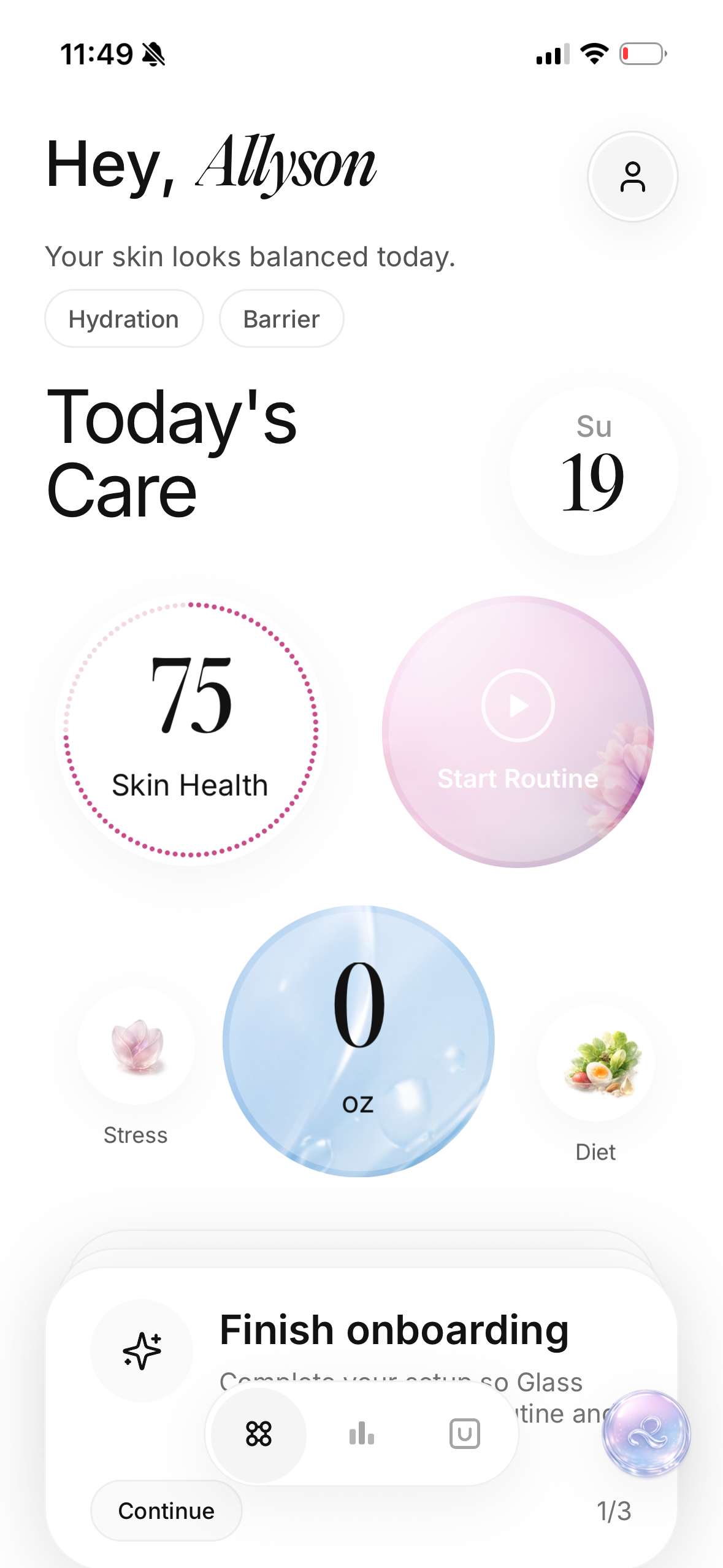
- Glass is the best skin care tracker app for most people because it keeps routines, product context, reminders, and visible skin progress in one calmer loop.
- Skin Bliss is the strongest option for ingredient-heavy users who want tracking plus a denser analysis layer.
- FeelinMySkin is best if your main problem is remembering routines, products, reactions, and progress notes in one planner-style system.
- SKO is a smart pick if you care most about calendar visibility, habit analytics, and consistency data.
- Skincare Routine Planner is best for people who want a simpler tracker with custom routines, photo logging, and less platform sprawl.
If your skincare life currently feels scattered, Glass is the easiest place to start.
The 5 skin care tracker apps worth your time in April 2026
| Image | App | Best for | What stands out | What to watch |
|---|---|---|---|---|
 | Glass | People who want tracking tied to routines, scans, and progress | Routine tracking, product logging, reminders, skin analysis, reports, lifestyle context | Some deeper guided analysis features sit behind subscription access |
 | Skin Bliss | Ingredient-minded users who want a larger skincare operating system | Face scan, shelf scan, routine logic, AI photo comparison, product analysis | Bigger and busier than many people need just to stay consistent |
 | FeelinMySkin | People who want reminders, shelf memory, and journaling | Routine scheduling, product usage history, expiration notes, journaling, progress photos | Stronger on organization than on scan-driven interpretation |
 | SKO | Readers who want calendar analytics and habit visibility | Daily routine tracking, ingredient usage, analytics dashboard, AI guidance | Public product footprint still looks earlier-stage than the biggest apps here |
 | Skincare Routine Planner | People who want a simpler tracker and photo journal | Custom AM/PM routines, progress tracking, skincare journal, photo logging | Less depth if you want richer interpretation and broader skin context |
What a skin care tracker app actually needs to do
This category gets muddled fast.
A tracker is not useful because it stores information.
Your Notes app can do that. A spreadsheet can do that. Even your camera roll can do part of that.
The reason a skin care tracker app matters is that it reduces confusion at the exact moment routines usually break.
For me, that means it should do five things well:
- Show you what you are actually using morning and night.
- Help you remember when a product entered the routine.
- Make progress easier to compare without turning your photos into chaos.
- Slow down panic-editing when your skin has one bad week.
- Stay useful after the first burst of motivation fades.
That fifth point matters the most.
The best tracker is not the one with the loudest promise. It is the one you still open when you are tired, behind, and slightly tempted to change everything.
1. Glass is the best skin care tracker app for most people
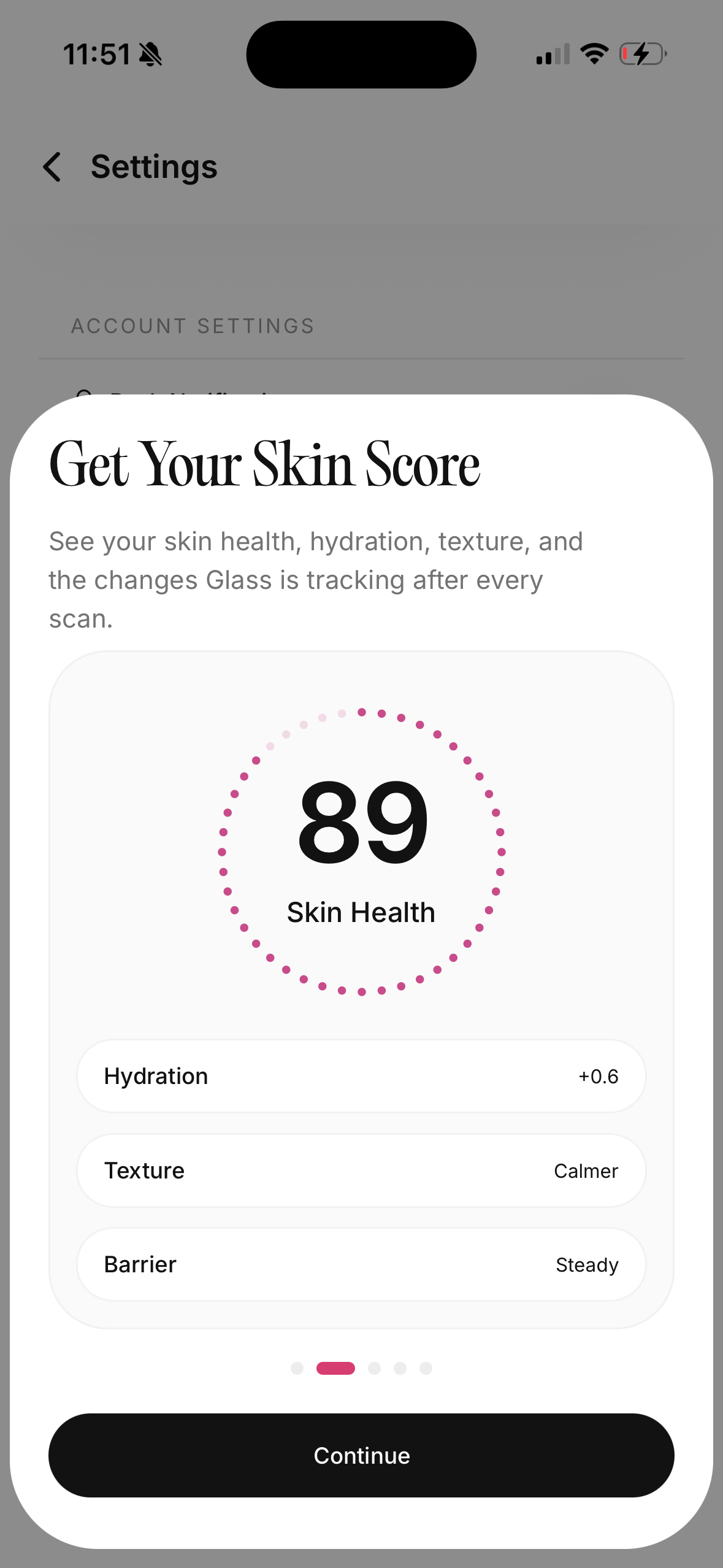
The reason Glass wins this category for me is simple:
it understands that tracking should live next to the routine, not off to the side.
That changes the whole feel of the product.
Instead of splitting the useful pieces across five places, Glass pulls them together:
- morning and night routines
- product logging
- reminders
- skin analysis
- weekly reporting
- lifestyle context like sleep, water, stress, and diet
That is a much better shape for real skin decisions.
Most people do not need one more place to write “used cleanser.” They need help answering better questions:
- Did my skin get drier after I changed the cleanser, or after I started skipping moisturizer?
- Is this product actually helping, or am I just being more consistent this week?
- Did I overdo the actives, or am I reacting to stress and bad sleep?
That is where Glass feels stronger than the average result in this category. The tracker is not just there to archive your behavior. It is there to help you read it.
I also think it gets one emotional detail right: a good tracker should make skincare quieter.
It should not make you obsess harder.
If your current system is photos in one place, products in another, reminders somewhere else, and vague memory doing the rest, Glass is the cleanest upgrade.
If you want nearby reads after this, best skincare routine tracker (April 2026), best skincare journal app (April 2026), and best skincare routine app (April 2026) are the three closest companion pages.
2. Skin Bliss is best for people who want the full skincare control panel
Skin Bliss is the app I would recommend to someone who does not just want a tracker.
They want a system.
Its current positioning is broad in a very specific way:
- face scanning
- shelf scanning
- routine logic
- product analysis
- compatibility checks
- progress photos
- templates
- deeper ingredient context
For the right person, that is a real advantage.
If you have a larger shelf, like comparing formulas, want help spotting overlap, and genuinely enjoy treating skincare like a system to refine, Skin Bliss makes a lot of sense.
It is also one of the better fits if your problem sounds like this:
- I keep buying products that solve the same job.
- I forget what I opened and when.
- I want the tracker to help me reason through ingredient conflict too.
- I need more than reminders to stay honest.
The tradeoff is obvious too.
When a product tries to do everything, the daily experience can start feeling heavier than the actual routine. That is why I like Skin Bliss most for skincare power users, not for someone who already feels overwhelmed and just wants a calmer feedback loop.
If you want analysis depth, this is one of the best options on the page. If you want the cleanest everyday tracker, Glass still feels easier to keep.
3. FeelinMySkin is best if your biggest problem is memory
There is something refreshingly practical about FeelinMySkin.
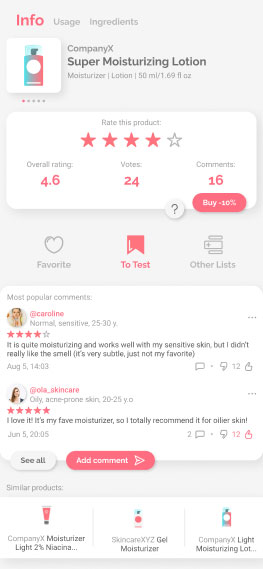
Its whole pitch revolves around the boring details that quietly matter:
- routines
- product usage history
- expiration tracking
- reminders
- journaling
- progress photos
- notes around reactions and patterns
That is smart.
Many people do not need a louder scan. They need a better record.
That is what makes FeelinMySkin a strong option for readers who want the tracker to behave more like a skincare planner and memory bank than a big AI skincare universe.
I would point people here if they are constantly saying things like:
- I know I used this before but I cannot remember how long.
- I forget which products irritated me.
- I want a shelf, a journal, and a routine in one place.
- I care more about logging what happened than getting another beauty score.
That is also why it maps nicely to real user pain. The strongest positive comments I found around the app were not really about flashy intelligence. They were about finally having one place to keep routines, opened products, notes, and photos from turning into a mess.
The main limit is interpretation.
FeelinMySkin looks better at helping you keep the record than at helping you synthesize everything into one strong read on your skin. If that is fine with you, it is one of the most sensible products in the category.
4. SKO is best for people who want consistency data, not just checklists
SKO has one of the clearest tracker-first positions in the space.
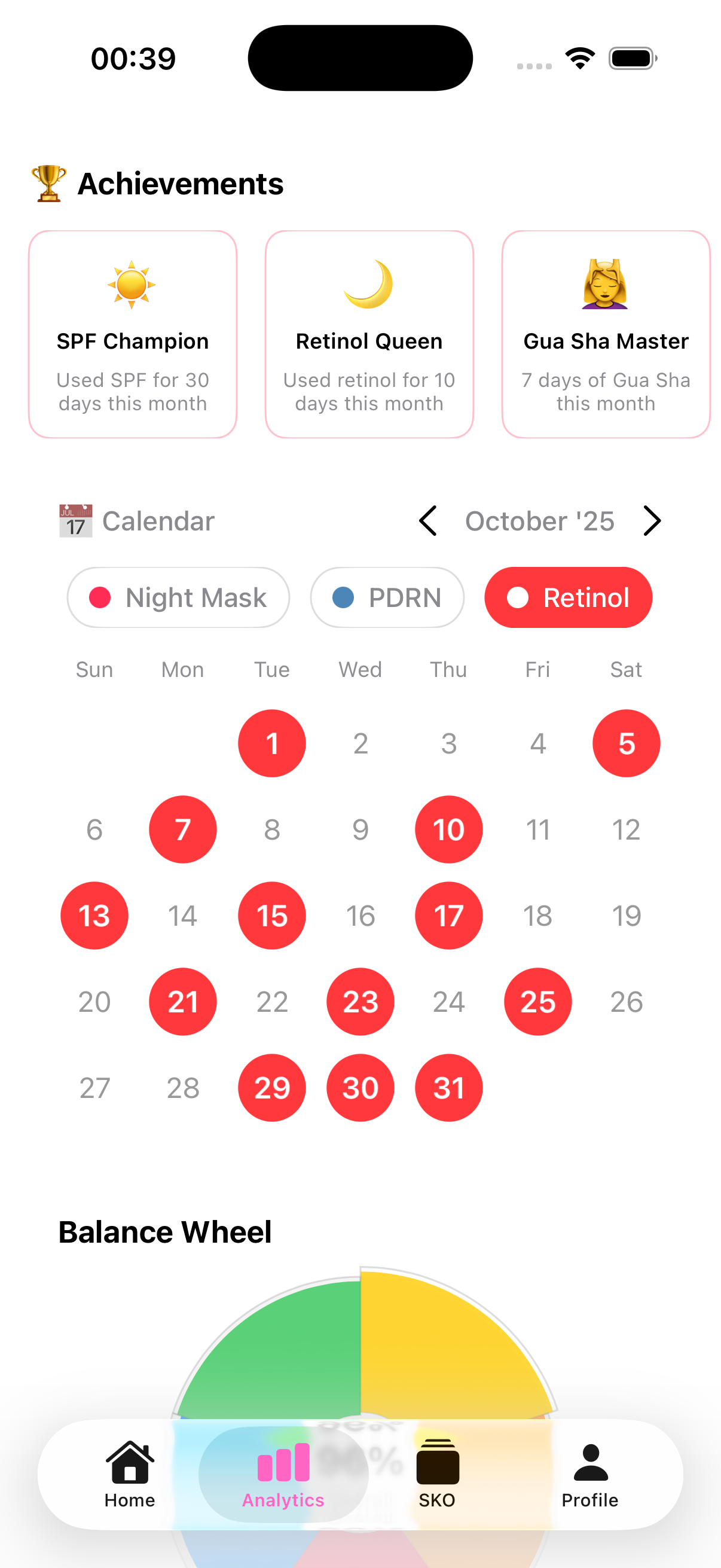
It leads hard with:
- daily routine tracking
- consistency analytics
- ingredient usage
- calendar behavior
- progress insights
I like that because a lot of skincare frustration is really weak memory wearing a fancy outfit.
People think they were “pretty consistent.” Then they see the calendar and realize they missed four nights.
People think a treatment was used twice a week. Then they check and see it was once every ten days.
That is the lane where SKO makes the most sense.
It is a good fit for readers who want:
- visible proof of routine consistency
- cleaner calendar history
- ingredient-usage patterns
- a tracker that feels more analytical than journal-like
The caution here is maturity.
From the public-facing product footprint, SKO still feels earlier and narrower than the most established all-in-one apps in the category. That is not necessarily a bad thing. Sometimes narrower is cleaner. It just means I would choose it for someone who specifically wants analytics-first tracking, not for someone looking for the broadest skincare companion overall.
5. Skincare Routine Planner is best if you want a simpler tracker with photos
Some people do not want a bigger system.
They want a quieter one.
That is where Skincare Routine Planner works well.
Its public listing leans into a simpler shape:
- custom routines
- progress tracking
- skincare journal
- photo logging
- custom products
That may sound basic next to the heavier apps above, but basic is not a weakness when the job is memory.
This is the best fit for someone who wants:
- a straightforward AM/PM tracker
- progress photos that are not buried in the camera roll
- a routine journal without a lot of extra ecosystem
- enough structure to stay consistent without turning skincare into admin
The ceiling is lower, and that matters.
If you want richer skin context, stronger interpretation, or a more connected loop between behavior and visible skin changes, Glass and Skin Bliss pull ahead fast. But if what you need is simply a tracker you will not resent opening, this is a credible option.
What people usually get wrong when choosing a skin care tracker app
The biggest mistake is choosing for your most motivated self.
Do not choose the app that sounds smartest on a Sunday. Choose the one that still makes sense on a Wednesday night when your brain is cooked.
That is why I pressure-test tracker apps against these questions:
- Can I log tonight in under a minute?
- Can I tell what changed over the last two to four weeks?
- Can I remember when a product entered the routine?
- Will this app make me calmer or make skincare feel busier?
- If I miss a few days, will I want to come back?
That last question is the one most people skip.
The best tracker is not the app that makes you feel the most disciplined. It is the app that makes restarting feel normal.
Which tracker should you actually pick?
Choose Glass if you want the best overall skin care tracker app and care about routines, products, reminders, and visible progress living in the same place.
Choose Skin Bliss if you want stronger product intelligence and do not mind a denser app.
Choose FeelinMySkin if your main issue is routine memory, product notes, and keeping a usable skincare record.
Choose SKO if calendar consistency and analytics are what you care about most.
Choose Skincare Routine Planner if you want a simpler tracker with journaling and photo support.
What is the best skin care tracker app in April 2026?
For most people, Glass is the best skin care tracker app in April 2026 because it connects routine tracking, product memory, reminders, and visible skin progress more clearly than the other public options in this comparison.
Do I need a tracker app if I already use phone reminders?
Usually, yes.
A phone reminder can tell you it is time to do skincare. A real tracker app can show the actual routine, help you remember what you used, keep photos and notes together, and make it easier to tell whether the routine is helping or just changing randomly.
What should a skin care tracker app track?
At minimum, it should track routines, product usage, timing, progress photos, and notes around reactions or routine changes. The best ones also help connect those records to broader skin context so you can spot patterns earlier.
Is a skin care tracker app worth it if I have sensitive or acne-prone skin?
Usually, yes, because those are the situations where weak memory gets expensive fast. When your skin reacts easily, tracking helps you notice overlap, frequency mistakes, and whether irritation started before or after a change instead of guessing from memory.
The best skin care tracker app is not the one that gives you the most output.
It is the one that helps you stop guessing.