The first scan feels convincing.
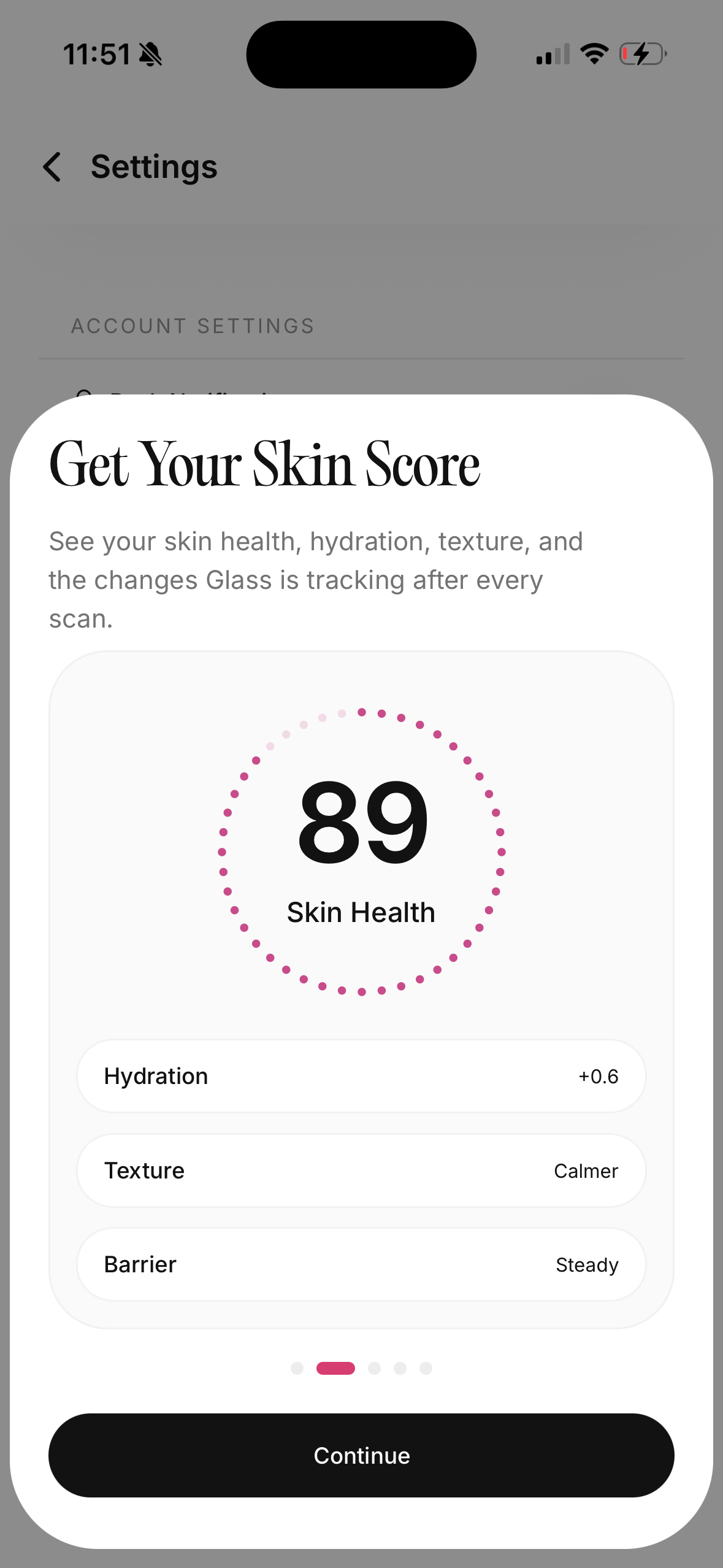
Your face appears on the screen. The app draws lines, scores your skin, names a few concerns, and suddenly the messy thing you have been staring at in the mirror looks organized.
That can feel helpful.
It can also make you do something dumb.
I do not trust an AI skin analysis app because it gives me a number. I trust it only when the number helps me make a calmer decision than I would have made without it.
That is the rule I use in May 2026.
The quick answer
AI skin analysis apps can be useful for tracking visible patterns, comparing photos over time, and turning a messy routine into something easier to review. They are not reliable enough to treat as diagnosis tools, and they should not make you change products every time your score moves.
The best way to use one is simple: take scans in similar lighting, track the routine around the scan, and judge trends over weeks instead of reacting to one morning.
If an app helps you do that, it is useful.
If it makes you stare at pores and panic-buy a serum, it is hurting the job.
Why skin scores feel more certain than they are
Skin is visual, so a camera-based score feels like it should be objective. That is the trap.
A photo is not just your skin. It is your skin plus bathroom lighting, camera angle, distance from the lens, sleep, hydration, sunscreen residue, makeup, temperature, irritation, and the tiny difference between taking the scan at 7:00 a.m. or 11:30 p.m.
That does not make scanning useless. It means the scan needs context.
If your app says your skin looks more red today, that may be real. It may also be the lighting. It may be that you exfoliated last night. It may be that you slept badly. It may be that your cleanser is finally too much for your barrier. A good app does not pretend those possibilities disappear.
This is why I care less about the single score and more about the loop around it.
The app should help you answer:
- Did the same concern show up in similar lighting more than once?
- Did it change after a routine change?
- Did it improve when you stopped adding products?
- Did your skin feel different, or did the photo just look different?
- Did the app make the next step clearer?
That last question matters most.
The accuracy problem no one wants to say plainly
Most skin analysis apps are strongest at surface-level pattern recognition.
They can often help label visible concerns like redness, uneven tone, shine, texture, dark spots, dryness cues, or acne-like areas. They can help you compare one photo to another. They can make progress feel less imaginary when your skin changes slowly.
That is useful.
But there is a gap between "this photo appears to show redness" and "this is why your skin is inflamed." There is a bigger gap between "this mark looks darker" and "this is the exact condition causing it." A phone app does not know your medical history, medication use, allergies, hormones, sun exposure, or whether a changing spot needs professional care.
So I treat AI skin analysis as a tracking layer, not a verdict.
That mindset keeps the app in its lane. It also makes the app more useful, because you stop demanding the wrong kind of certainty from it.
The May 2026 rule I use before trusting a scan
I trust a scan only when three things line up.
First, the photo conditions are close enough. Same room, similar light, clean skin, similar time of day, same camera distance. It does not need to be a studio setup. It just needs to be boring and repeatable.
Second, the result matches what I can see or feel. If the app says irritation is up and my skin also stings when I moisturize, I pay attention. If the app says hydration is worse but my skin feels normal and the lighting changed, I do not rush to change the routine.
Third, the trend repeats. One scan is a note. Three or four scans under similar conditions are a pattern.
That is the rule:
Same conditions. Real-world match. Repeated trend.
Without those three, the scan is interesting but not actionable.
A useful app should slow you down
The best skin analysis app is not the one that makes the most dramatic claim. It is the one that keeps you from changing five things at once.
Most skincare problems become harder when you react too fast. You see texture, so you add exfoliation. Then your skin gets tight, so you add a richer moisturizer. Then you break out, so you switch cleanser. Two weeks later, you have no idea what helped, what hurt, or what was just a normal fluctuation.
A good app should interrupt that spiral.
It should make the boring plan easier:
- Take a baseline scan.
- Log the products you already use.
- Keep the routine steady.
- Add only one new product at a time.
- Compare weekly scans, not hourly moods.
- Review the trend before changing the routine again.
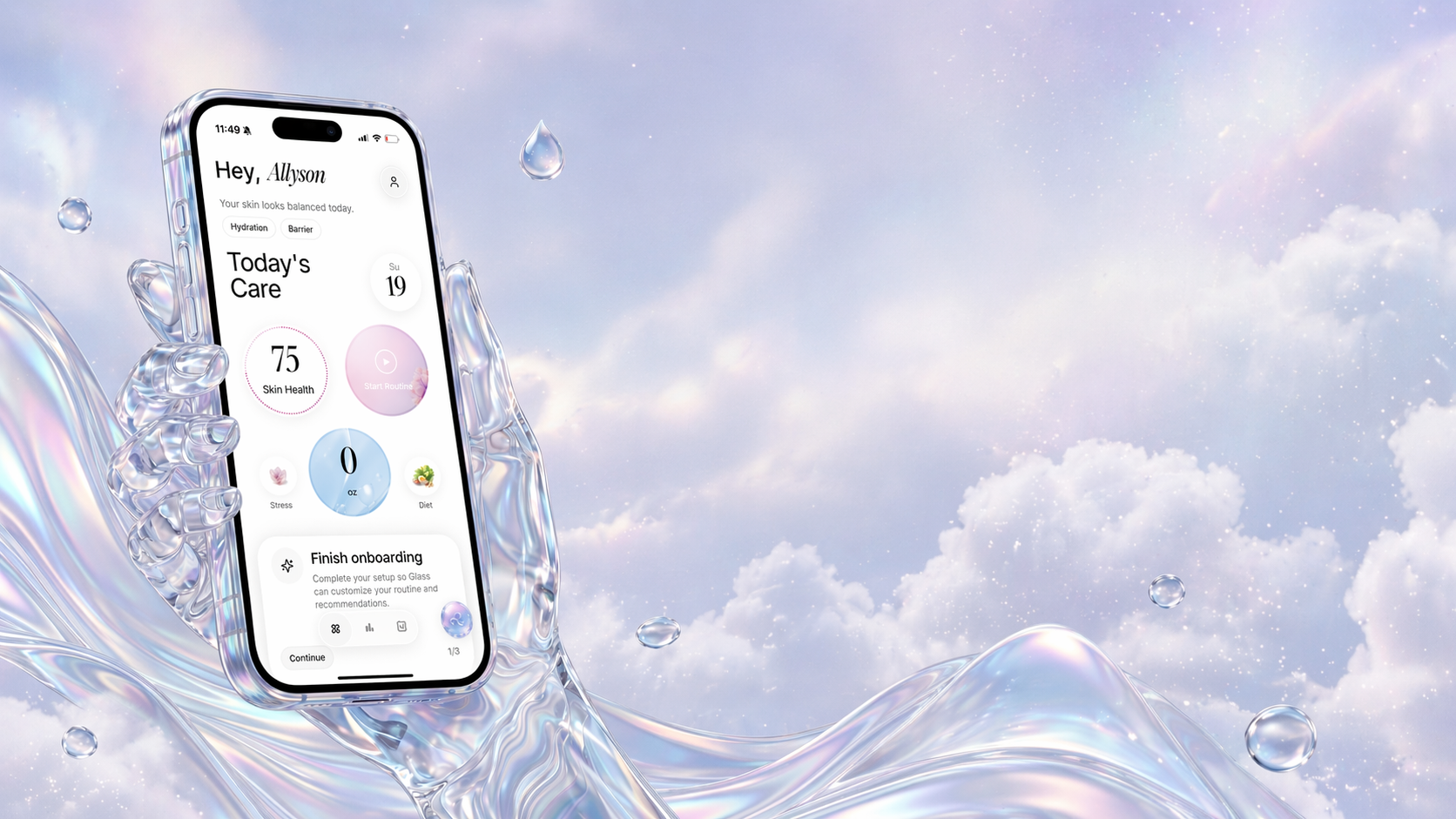
That is where Glass is useful. The scan does not sit by itself. It sits near your routine, products, reminders, and progress history.
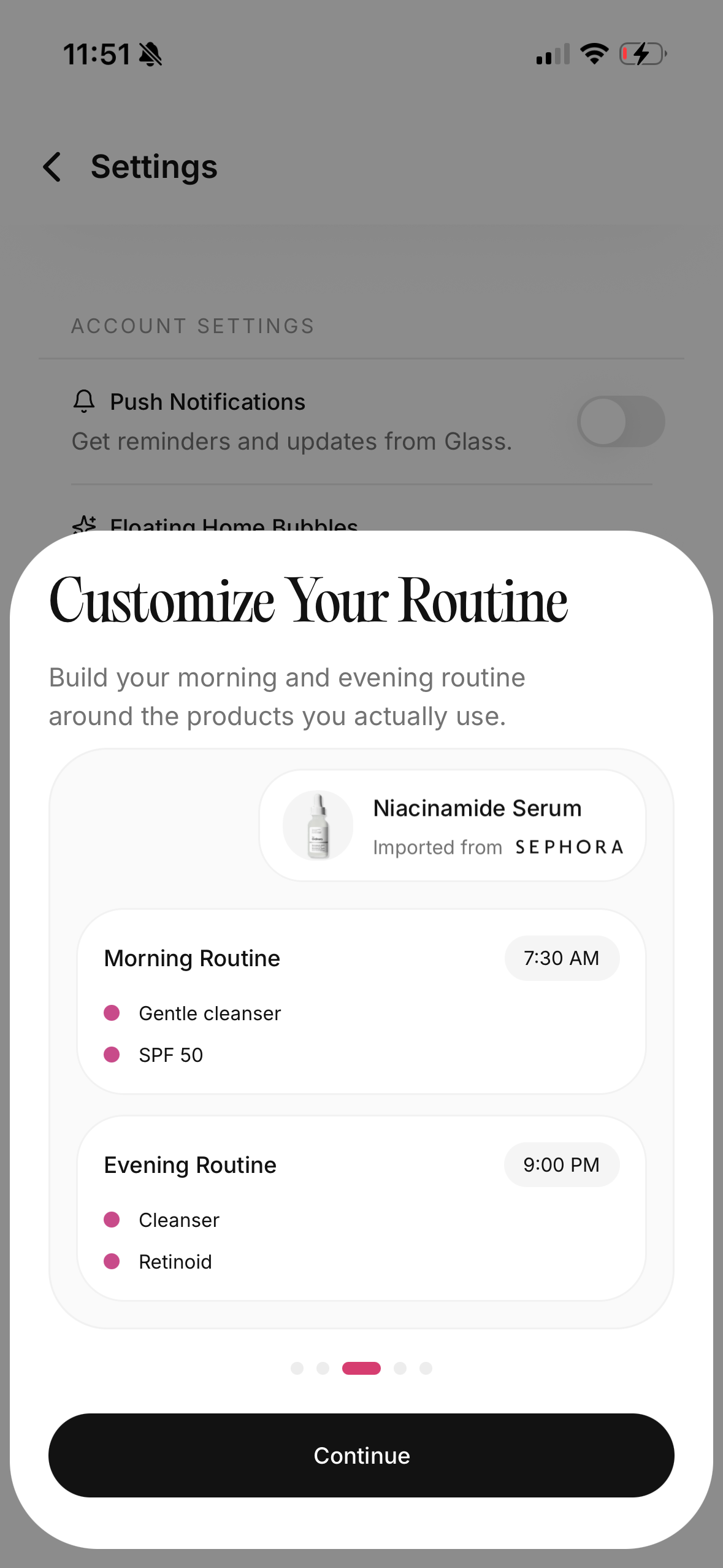
That structure matters more than people think. A skin score without the routine around it can become another reason to guess. A skin score beside your actual routine can become a record.
When I would trust an AI skin analysis app
I would trust one for pattern tracking.
If your skin has looked more congested for three weeks and the app is showing the same shift in similar lighting, that is useful. It does not tell you the whole cause, but it tells you the concern is probably not only in your head.
I would trust one for consistency.
If the app makes you take progress photos the same way, log your routine, and avoid changing everything at once, it is doing real work. Most people do not need more skincare theories. They need a cleaner record.
I would trust one for product timing.
If you add a new vitamin C serum on May 1 and irritation starts showing up in your scans and notes on May 5, you have a better reason to pause and review. That does not prove the serum is bad. It gives you a useful clue.
I would trust one for habit awareness.
Sometimes the scan is not the hero. The reminder is. The routine checkoff is. The progress photo is. The note that you skipped moisturizer three nights in a row is. Those small records can explain more than a single AI label.
When I would ignore the scan
I ignore a scan when the photo quality is clearly different.
Harsh overhead light can exaggerate texture. Warm evening light can soften redness. A closer camera angle can make pores look more dramatic. If the setup changed, I do not treat the score like a truth bomb.
I ignore a scan when it pushes me toward urgency without enough evidence.
Skincare rarely rewards panic. If an app makes you feel like every small change requires a new product, step back. Your skin is not a dashboard that needs constant correction.
I ignore a scan when my skin feels fine and the result does not repeat.
One weird score is just one weird score.
I also ignore cosmetic app guidance when the issue feels medical. Painful cysts, spreading rashes, infection-like swelling, bleeding, rapidly changing spots, severe acne, or anything that worries you beyond routine skincare deserves proper care. An app can help you document what changed, but it should not replace a clinician.
The app comparison I would make now
If you are choosing between apps, I would not start with the prettiest scan screen. I would start with the job you need done.
| App | Image | Best for | Accuracy question I would ask |
|---|---|---|---|
| Glass | | People who want scans tied to routine tracking and product context | Does the scan help me make fewer routine changes? |
| Skin Bliss | 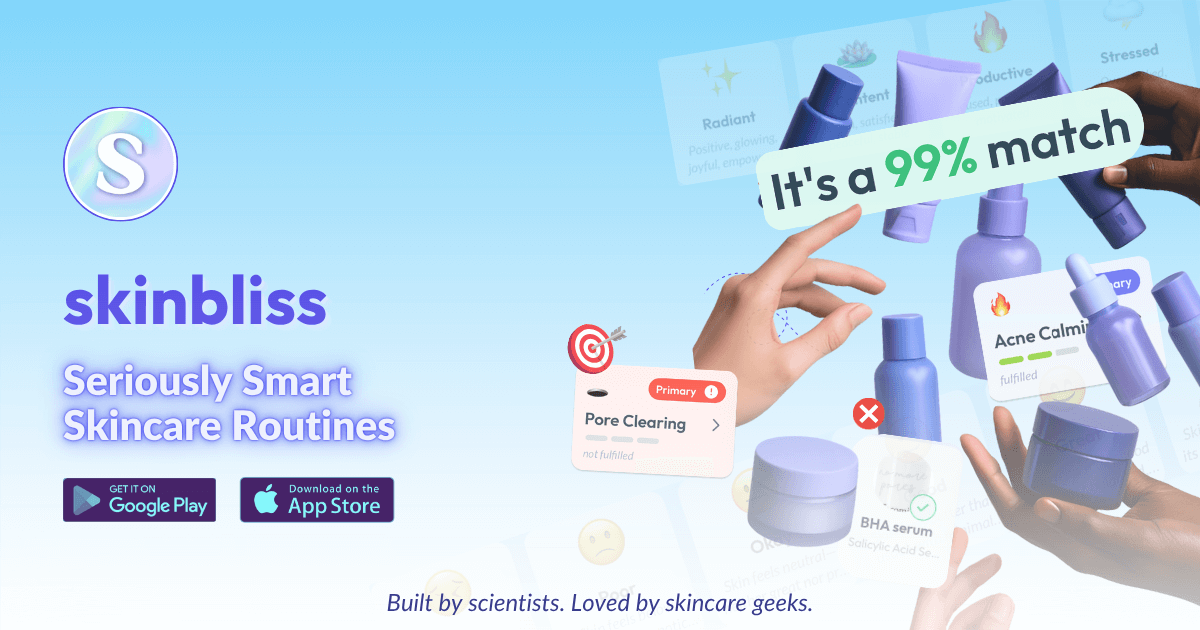 | Ingredient-heavy users who want a broader shelf and routine system | Does the depth clarify my shelf or make me overthink it? |
| Lume Skin | 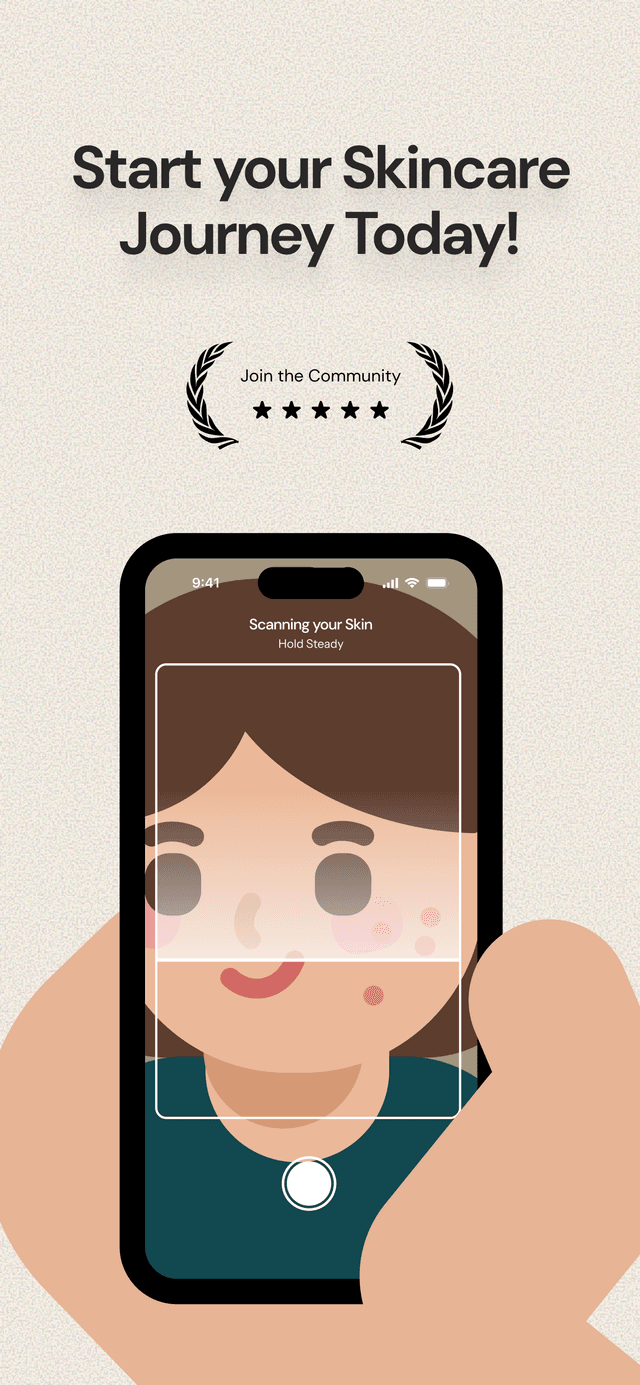 | People who want skin scanning, product scanning, chat, and reminders in one app | Does the broad feature set still give clear next steps? |
| OnSkin | 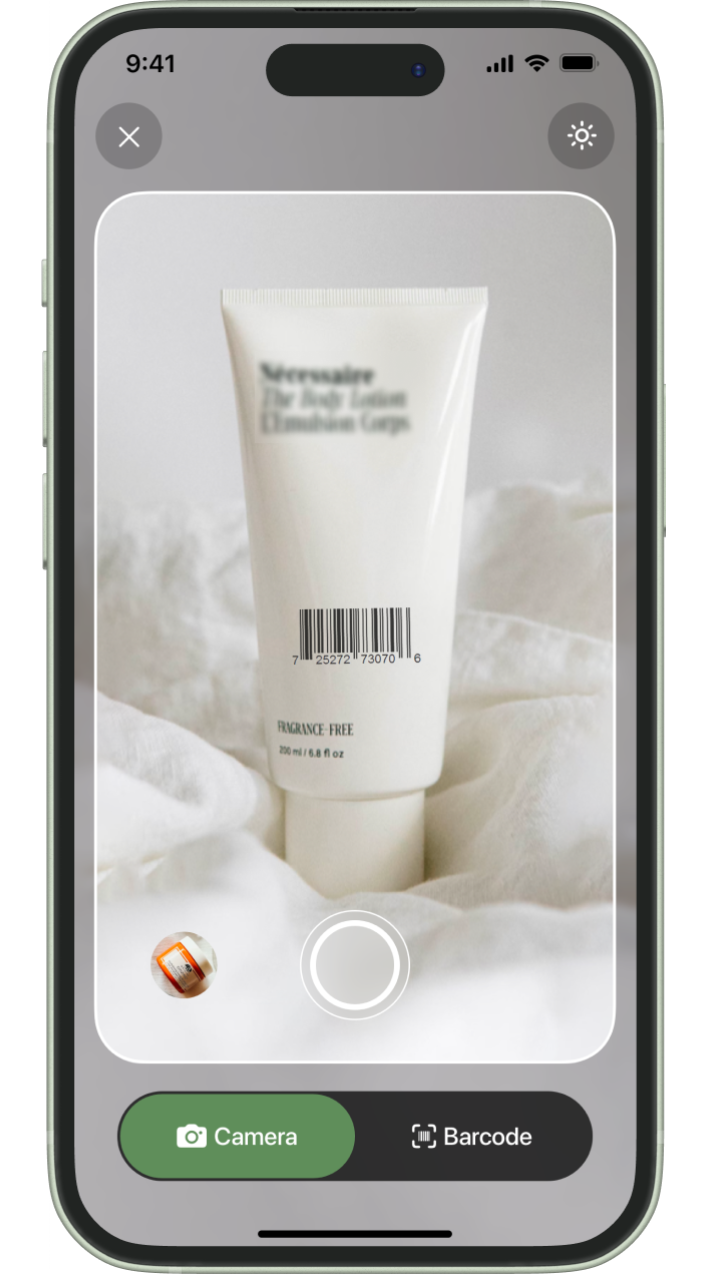 | Shopping-first users who want product and ingredient checks | Does product scanning answer my actual routine problem? |
| SkinSort |  | Comparison shoppers and ingredient filter people | Does comparing formulas help me decide, or keep me stuck? |
The winner depends on the problem.
If you want the scan to connect to routine behavior, start with Glass. If you want a large ingredient and product system, Skin Bliss is worth comparing. If you want breadth, Lume belongs on the list. If you are standing in a store deciding between products, OnSkin or SkinSort may be more directly useful.
But no app gets a free pass just because it uses AI.
The question is not "does it analyze my face?" The question is "does it help me make a better skincare decision with less chaos?"
How to set up scans so the results mean something
Do not scan randomly.
Pick one setup and make it boring.
Use the same bathroom or bedroom. Face the same direction. Avoid direct sun, colored lighting, heavy shadows, and mirror glare. Clean your lens. Pull hair away from your face. Take the scan before makeup and before applying shiny products. If you use sunscreen in the morning, scan before sunscreen or keep that detail consistent.
Then choose a rhythm you can keep.
For most people, weekly scans are better than daily scans. Weekly scans reduce noise. They also stop you from treating every small skin mood as a crisis.
If you are actively testing a new product, I like this rhythm:
- baseline scan before the product
- one scan after seven days
- one scan after fourteen days
- one scan after twenty-eight days if the product is still tolerated
That gives you enough space to notice direction without turning your face into a project.
The routine log matters more than the score
The scan tells you what the camera noticed. The routine log tells you what changed.
That is why I would rather use a slightly simpler app with a good routine record than a flashy analyzer with no context.
Your log should answer:
- What cleanser did I use?
- Did I moisturize morning and night?
- Did I use sunscreen?
- Did I exfoliate?
- Did I start or stop an active?
- Did anything sting?
- Did I use the product long enough to judge it fairly?
This is where people usually lose the thread. They remember the product they bought. They forget the routine around it.
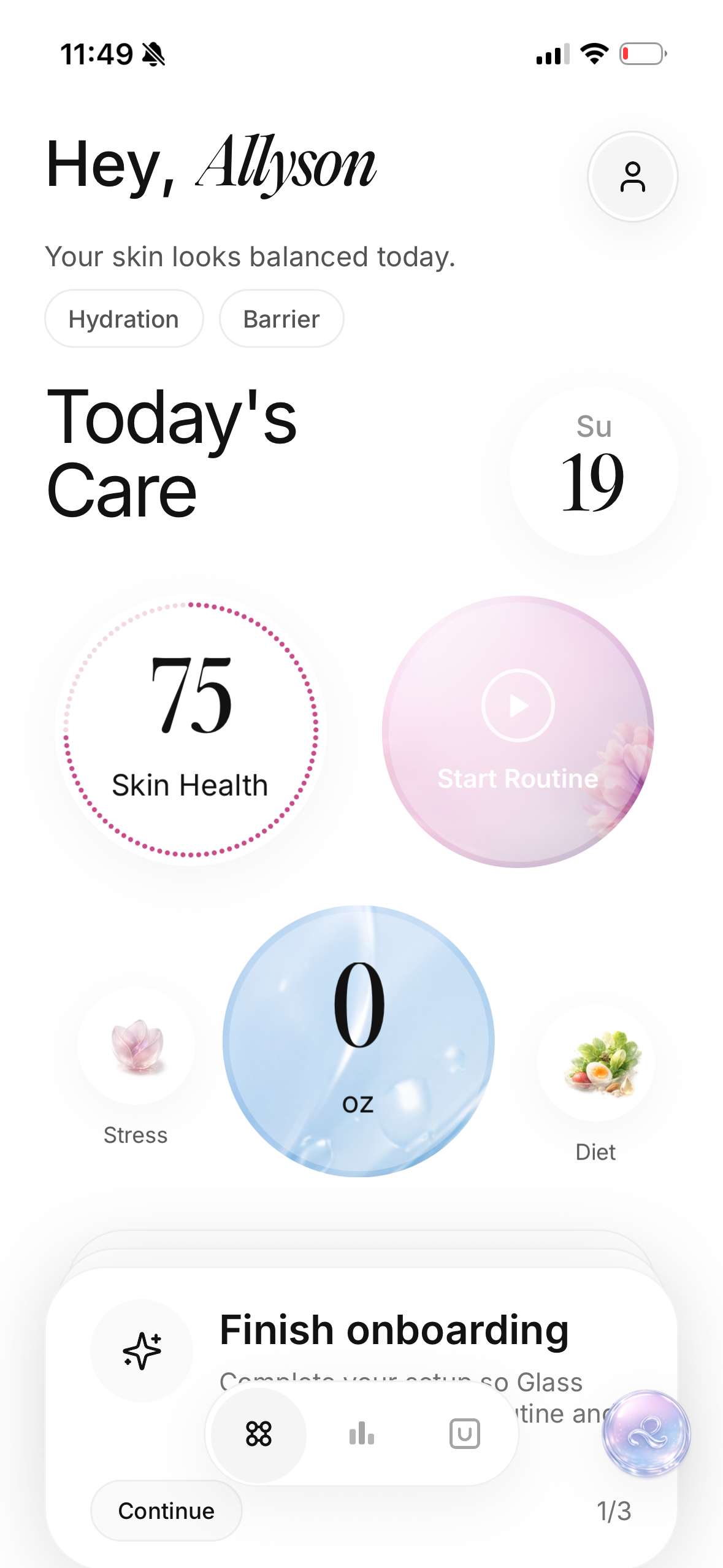
If your app can keep the routine visible, the scan becomes more grounded. You are not just asking whether your skin changed. You are asking what changed around your skin.
What a good result looks like
A good result is not always a higher score.
Sometimes the best result is that your skin feels calmer, your routine has fewer steps, and you stopped switching products every week. Sometimes the app helped you realize your "bad skin week" lined up with skipping moisturizer, not needing a stronger treatment. Sometimes it showed that your dark marks are fading slowly even though day-to-day mirror checks made you impatient.
That is what I want from this category.
Not perfection.
Better pattern recognition.
Privacy should be part of the decision
Face photos are high-trust data.
Before using any AI skin analysis app, read the App Store privacy section or privacy page. Look for plain language about what is collected, whether images are stored, how data is used, whether data is linked to you, and how deletion works.
If the privacy explanation feels vague, that matters.
I would not upload skin photos to an app just because the screenshots look polished. A good skincare app should earn trust before it asks for your face.
The biggest mistake is treating the app like a dermatologist
An app can help with routine tracking, visible skin changes, product decisions, and progress photos.
It should not diagnose you.
The American Academy of Dermatology has clear patient guidance around acne, irritation, sunscreen, and when to seek care. That kind of medical judgment is not the same as an app score. If your skin concern is painful, worsening, unusual, spreading, or emotionally heavy enough that you feel stuck, use the app as a record and get proper help.
That is not anti-technology. It is just honest.
The best use of an AI skin analysis app is not replacing professional care. It is making your everyday routine easier to understand before you get to that point.
My final take
AI skin analysis apps are accurate enough to be useful when you use them as trend tools.
They are not accurate enough to run your routine on autopilot.
The difference is everything.
Use the scan to notice patterns. Use the routine log to understand context. Use weekly photos to avoid overreacting. Use product tracking to stop changing too many variables at once.
If the app helps you stay calmer, more consistent, and more honest about what changed, it is worth using.
If it makes you more anxious, more impulsive, or more likely to buy another product before the last one had a fair chance, it is not helping.
That is why I still prefer a routine-aware app like Glass for most people. The scan is useful, but the record around the scan is what makes it trustworthy.
For the broader comparison, read best AI skin analysis app, best skincare scanner app, and I compared skin analysis apps in May 2026. If your real issue is routine stability, how to build a skincare routine you will actually follow is the better next move.
Useful references: AAD on acne-prone skin moisturizer, AAD on safely exfoliating at home, and Apple App Privacy Details.