A pimple in the nose is a phrase people use for several different problems.
It might be a normal pimple on the outside of the nose. It might be a sore bump at the nostril rim. It might be just inside the nostril near a hair follicle. It might be deeper, where you feel pressure but cannot see much.
Those are not the same situation.
This guide is the map. It helps you decide which nose location you are dealing with, what is safe to do at home, and when the nose location changes care from ordinary acne treatment to medical caution.
Quick answer
If the bump is on the outside of the nose, use gentle facial-acne care and avoid squeezing. If it is at the nostril rim or just inside, avoid acne products, use warm compresses from the outside, consider saline for dryness, and do not pick or pluck.
If the bump is deeper, persistent, bleeding, blocking breathing, causing visible swelling, draining pus, recurring, or paired with fever, severe headache, eye swelling, vision changes, or spreading redness, get medical care.
Start with the location map
"In the nose" can mean:
- outside bridge or tip
- oily side of the nose
- crease beside the nostril
- nostril rim
- just inside the nostril
- deeper internal passage
External bumps can often be treated like facial acne. Rim and just-inside bumps need gentler care because the tissue is more delicate. Deep, persistent, or airway-related bumps should be examined.
Location does not diagnose the cause, but it tells you which mistakes to avoid.
Outside nose acne
The outside of the nose is part of the T-zone for many people. It has oil, pores, sunscreen buildup, makeup residue, glasses pads, sweat, and frequent touching.
An external pimple may look like a whitehead, blackhead, red bump, or deeper tender spot. It may cluster where sunscreen collects or where glasses sit.
For external acne, gentle cleansing, careful spot treatment, and sunscreen can make sense. Squeezing still is not worth it, especially on the nose where swelling is visible.
Nostril rim bumps
A bump at the nostril rim often comes from friction and small hairs.
Frequent nose blowing, allergies, tissue rubbing, plucking nose hairs, dry air, and masks can irritate the doorway. The bump may look pimple-like but behave more like an inflamed follicle or sore.
For the rim, shift from acne mode to irritation mode: warm compress outside, soft tissues, no plucking, no digging, and no acne acids at the opening.
Just-inside nostril bumps
Just inside the nostril, the tissue is moist, sensitive, and easy to injure. You may feel the bump when pressing the side of the nose or blowing.
Do not use cotton swabs to investigate. Do not apply salicylic acid, benzoyl peroxide, retinoids, alcohol, peroxide, or essential oils. Use saline if dryness is part of the problem, and apply warmth from the outside.
If pain worsens, swelling becomes visible, pus drains, or the bump keeps returning, call a clinician.
Deeper inside-nose symptoms
A deeper bump or sore is harder to judge at home.
Get it examined if it:
- blocks breathing on one side
- bleeds repeatedly
- feels firm rather than tender
- does not improve
- keeps returning in the same place
- comes with chronic sinus symptoms
- causes facial swelling
- is not clearly a skin bump
Do not keep probing deeper to figure it out. An exam is safer than repeated irritation.
Acne versus follicle irritation
Acne and follicle irritation can both look like pimples.
External acne is more likely with oily skin, clogged pores, product buildup, and other breakouts. Follicle irritation is more likely around nostril hairs, after hair removal, with friction, or during a runny-nose week.
The treatment boundary is the nostril opening. Acne products can be considered on external facial skin if tolerated. They should not be pushed into the nostril.
The safe care plan by location
For outside nose acne:
- cleanse gently
- use a familiar acne product only on external skin
- avoid squeezing
- remove sunscreen and makeup thoroughly
- moisturize if dry
For rim or inside-nostril bumps:
- warm compress from outside
- saline if dry
- soft tissues
- no plucking
- no digging
- no face-acne products inside
For deep, persistent, or worsening symptoms:
- stop home experiments
- call a clinician
Product buildup around the nose
The nose collects product easily. Sunscreen gathers in creases. Foundation cakes around nostrils. Moisturizer migrates from cheeks. Balm can travel upward while sleeping. Glasses pads hold oil and residue.
Better removal helps more than harsh scrubbing.
At night, cleanse around the nose with fingertips. Rinse the creases well. Pat dry. If makeup or water-resistant sunscreen is stubborn, use a gentle first cleanse before your normal cleanser, but stop if your skin becomes tight or raw.
Products for external nose acne
External nose acne may tolerate ingredients used elsewhere on the face.
A salicylic acid cleanser can help oily, clogged areas for some people. Kiehl's Acne Treating and Cleansing Face Wash with Salicylic Acid fits that external-face category. Azelaic acid can be useful for blemish-prone redness as part of a routine.
The rule is strict: external facial skin only. Do not turn a face product into a nostril product.
Hair removal and nose bumps
Hair removal around the upper lip, nostril edge, or nose can trigger bumps.
Plucking nose hairs is especially irritating because it pulls from a sensitive follicle. Shaving over the nose crease can also create friction. Strong acids right after hair removal may sting and worsen irritation.
Use clean tools, avoid treating active bumps, and stop hair removal while a sore bump is healing. If every session causes pustules or painful swelling, ask a dermatologist about the pattern.
Infection red flags
Get urgent care if a nose bump comes with:
- fever
- rapidly spreading redness
- severe headache
- eye swelling
- eye pain
- vision changes
- trouble moving the eye
- confusion
- feeling seriously ill
These symptoms are uncommon with a simple pimple, but they change the risk level. The central face is not a place to ignore clear worsening.
When to schedule care
Schedule medical advice for:
- increasing pain
- pus or repeated crusting
- visible swelling of the nose tip or side
- recurring bumps in the same nostril
- repeated bleeding
- one-sided blockage
- no improvement after a few days of gentle care
- diabetes, immune suppression, pregnancy, or medical devices touching the area
Do not reuse old antibiotics or someone else's ointment. The cause and location matter.
Preventing repeat nose bumps
Prevention depends on location.
For outside acne, remove sunscreen and makeup well, clean glasses pads, and avoid heavy products in the creases. For nostril-rim irritation, use soft tissues, avoid plucking, manage allergies with guidance, and consider saline for dryness.
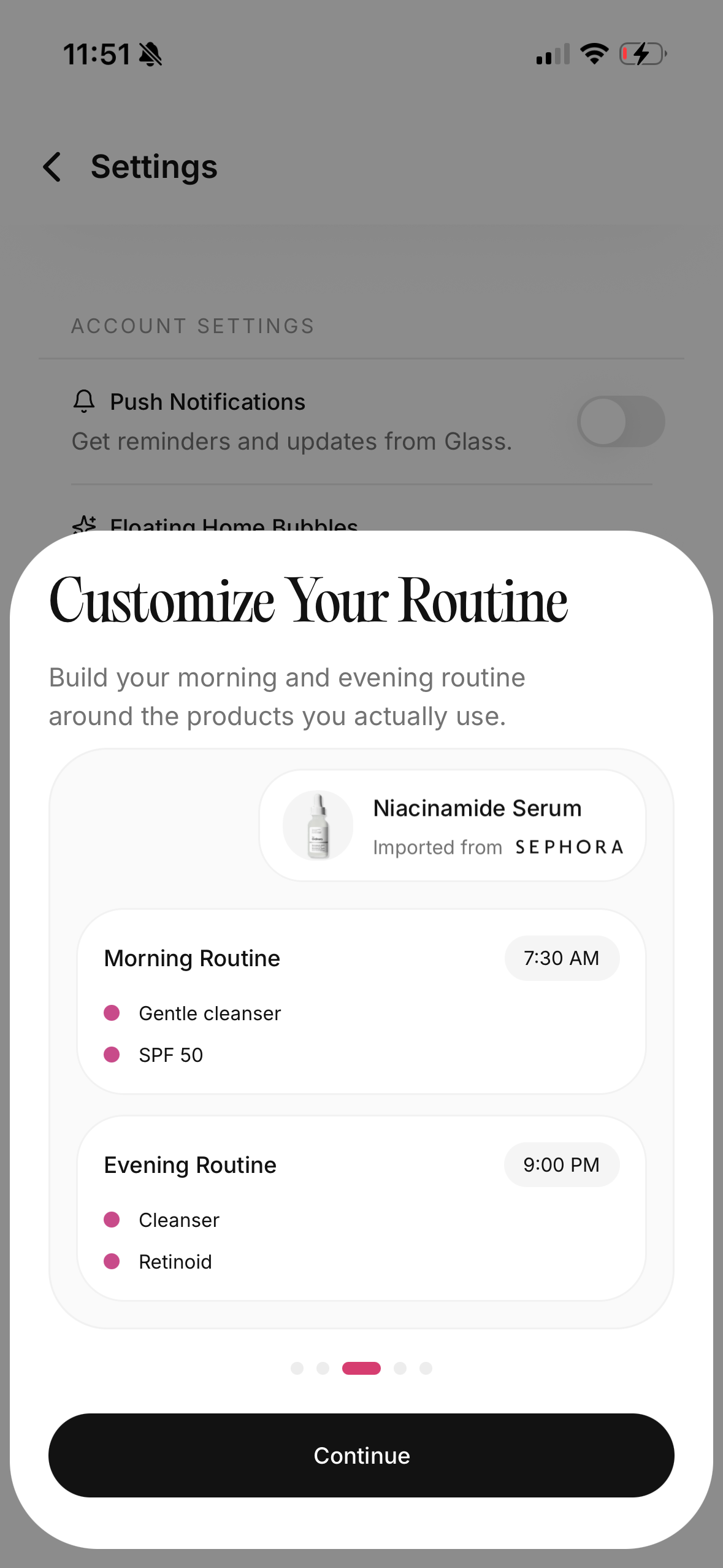
In Glass, track the exact zone: outside nose, crease, rim, or inside. A new sunscreen breakout is different from a nostril sore during allergy season.
If the nose tip swells
Swelling changes the stakes.
A small external pimple may make one spot tender. Visible swelling of the nose tip, nostril side, or bridge can mean deeper inflammation or infection is involved. Do not squeeze to relieve pressure. Do not try to drain it at home.
If swelling is increasing, painful, hot, or paired with redness spreading across the face, get medical care promptly.
If glasses or sunscreen are the trigger
Some nose bumps are mechanical and predictable.
Glasses nose pads trap oil and pressure in the same place every day. Sunscreen can collect under the pads and in the nostril creases. If bumps cluster there, clean the pads, remove sunscreen thoroughly at night, and consider whether the product is too heavy for that area.
This is different from an inside-nostril sore. Keep the fix external: cleaning, fit, lighter layers, and gentle removal.
If you are deciding which article fits
Use the location names plainly.
Outside nose acne belongs in the external-acne bucket. A sore at the nostril doorway fits nostril-rim care. A tender bump just inside one nostril needs inside-nostril caution. A deeper hidden bump, breathing change, repeated bleeding, or firm internal spot needs clinician evaluation.
The more internal the problem is, the less useful normal acne treatment becomes.
If you are tempted to drain it
Pressure relief sounds logical when the nose throbs, but draining at home can make the swelling worse and create a wound in a sensitive area.
If the bump is external and has a clear whitehead, let it settle or drain on its own rather than forcing it. If it is internal, do not try to drain it at all. Painful pressure, visible swelling, or pus is a reason for medical advice, not bathroom tools.
Bottom line
A pimple in the nose needs a location-based plan.
External nose acne can be treated gently as facial acne. Nostril rim and just-inside bumps need warm compresses, saline support, and hands-off care. Deep, persistent, bleeding, blocking, swollen, draining, feverish, headache-related, or eye-related symptoms need medical care.
The nose changes the rules. Treat the location first.