
Retinol is easy to start badly.
I know the pattern.
You buy the bottle because your skin looks textured, tired, uneven, or more lined than it did last year. You use it with the confidence of someone who has read enough product pages to feel prepared. Then your face gets tight. The corners of your mouth flake. Sunscreen stings the next morning. Suddenly the routine that was supposed to make your skin smoother has made every other product feel suspicious.
That is the point where most people make the routine more complicated.
I think the better move is the opposite.
A good retinol night routine in April 2026 should be boring enough to repeat and careful enough to keep your barrier from becoming the main problem. Cleanse gently. Hydrate lightly if your skin needs it. Apply retinol on the right nights. Moisturize like you mean it. Use sunscreen the next morning. Stop stacking exfoliating acids, harsh cleansers, and brightening serums on the same night just because they all promise glow.
The goal is not to feel your routine working.
The goal is to wake up with skin that looks a little steadier than it did last week.
Quick answer
If I were rebuilding a retinol night routine tonight, I would use this order:
- Remove makeup or water-resistant sunscreen if needed.
- Cleanse with a gentle, non-scrubby cleanser and lukewarm water.
- Pat dry and wait until the skin no longer feels damp.
- Apply a light moisturizer first if you are dry, sensitive, or new to retinol.
- Apply a pea-size amount of retinol or retinal to the face, avoiding eyelids, nostril creases, and mouth corners.
- Finish with moisturizer.
- Use retinol two or three nights per week at first, not every night.
- Use SPF 30 or higher the next morning.
That is the clean version.
The part that saves people is knowing when to buffer, when to skip, and when to stop blaming the retinol for a routine that was already too aggressive.
The routine I would actually use
I would not build a retinol night around ten products.
Retinol already asks something from the skin. The rest of the routine should make that ask easier to tolerate.
| Step | Product lane | What it should do | What I would avoid |
|---|---|---|---|
| First cleanse, optional | Balm, oil, micellar water, or milk cleanser | Remove makeup and stubborn sunscreen without scrubbing | Wiping until the skin feels hot |
| Cleanse | Gentle gel, cream, milk, or low-foam cleanser | Leave skin clean but not squeaky | Alcohol-heavy, gritty, mentholated, or "deep clean" cleansers |
| Buffer, optional | Light moisturizer or calming gel-cream | Reduce sting if retinol hits too hard | A thick greasy layer if you want maximum retinol contact |
| Treatment | Retinol, retinal, adapalene, or prescription retinoid | Support texture, pores, acne, fine lines, and uneven tone over time | Using more than a pea-size amount because you are impatient |
| Moisturize | Cream or lotion with humectants, ceramides, peptides, squalane, panthenol, or glycerin | Keep the routine comfortable through the night | Skipping moisturizer because oily skin "doesn't need it" |
| Morning non-negotiable | Broad-spectrum SPF 30+ | Protect the skin while you are using a more active night step | Treating sunscreen as optional because retinol was used at night |
This is where I think most retinol advice gets too vague. "Use moisturizer" is technically true, but it does not tell you whether to moisturize before retinol, after retinol, or both.
The honest answer is: it depends on what your skin can tolerate and what result you are optimizing for.
Retinol before or after moisturizer
If your skin is resilient and you have used retinol before, retinol after cleansing and before moisturizer is the cleanest order. You cleanse, dry your face, apply the retinol, then moisturize.
If your skin is dry, reactive, new to retinol, or already slightly irritated, moisturizer before retinol can be the difference between staying consistent and quitting after four nights. That first moisturizer layer acts like a buffer. It can make the active feel less sharp on the skin.
There is a tradeoff.
A full sandwich, meaning moisturizer, retinol, moisturizer, can be more comfortable. It may also soften the impact of the retinoid. Newer discussion around moisturizer layering has started separating the "open sandwich" from the full sandwich: either a light moisturizer before retinol or a moisturizer after retinol, instead of burying the active between two heavy layers every time.
That matches how I would think about it in real life:
- If you are new or peeling, use a sandwich for a while.
- If you are calm but cautious, try an open sandwich.
- If you are tolerating retinol well, use retinol first and moisturize after.
The point is not to win an argument about order. The point is to keep the skin calm enough that retinol can become a long-term habit.
The dry-face rule matters
This is one of the least exciting rules and one of the most useful.
Do not apply retinol to damp skin unless your product specifically tells you to. Damp skin can make products spread faster and feel stronger. That can be great for a hydrating serum. It can be annoying with retinol.
I like this sequence:
- Cleanse.
- Pat dry.
- Wait a few minutes until the skin feels dry, not wet or tacky.
- Apply retinol or buffer first if needed.
- Moisturize.
You do not need to stand in the bathroom for thirty minutes waiting for a perfect absorption window. You just need to avoid applying retinol onto wet skin and then wondering why your face feels spicy.
The American Academy of Dermatology's basic cleansing guidance is still the right foundation here: gentle cleanser, lukewarm water, fingertips instead of scrubbing tools, and moisturizer when skin is dry or itchy. That advice sounds simple because it is. Retinol routines fail when the simple parts get ignored.
How often I would use retinol at first
I would not start nightly.
I know some people can. I also know many people cannot, and they usually do not find out until their skin is already irritated.
My default ramp looks like this:
| Week | Frequency | What I am watching for |
|---|---|---|
| Week 1 | 2 nights | Burning, tightness, unusual redness, flakes around the mouth or nose |
| Week 2 | 2 to 3 nights | Whether moisturizer fixes dryness by morning |
| Week 3 | 3 nights | Whether texture feels smoother without more sensitivity |
| Week 4 | 3 to 4 nights only if calm | Whether the routine still feels repeatable |
That is slower than the impatient version.
It is also more realistic.
Retinoids are not only "anti-aging" ingredients. A clinical review of topical retinoids describes their use across acne, photoaging, texture, and pigment concerns, while also making the irritation pattern clear: dryness, peeling, redness, and local irritation are common problems when the skin does not tolerate the pace. That is exactly why frequency matters.
Consistency beats intensity here.
Two calm retinol nights every week for three months will usually teach you more than seven aggressive nights followed by a two-week barrier repair apology.
What to pair with retinol
The best retinol partners are not glamorous.
They are supportive.
I want:
- a gentle cleanser
- a moisturizer I trust
- sunscreen I will actually wear
- maybe one hydrating layer if my skin gets tight
That is enough.
Hydrating ingredients like glycerin, hyaluronic acid, panthenol, beta-glucan, ceramides, peptides, and squalane can make the routine feel easier. They are not competing with retinol. They are helping the skin tolerate the plan.
What I would not pair on the same night, at least while starting:
- glycolic acid
- lactic acid
- salicylic acid leave-ons
- peel pads
- strong vitamin C
- benzoyl peroxide unless your dermatologist or product directions say the pairing is appropriate
- aggressive scrubs
- new masks you have never tested before
That does not mean those ingredients are bad. It means retinol night is not the night to prove how many actives your skin can survive.
Product lanes I would consider
I would shop this routine by job, not by hype.
One cleanser. One retinoid lane. One moisturizer. One sunscreen for the morning. A hydrating layer only if your skin genuinely needs it.
| Product | Image | Best routine role | Who it makes sense for | Who should skip it |
|---|---|---|---|---|
| Beauty of Joseon Green Plum Refreshing Cleanser | 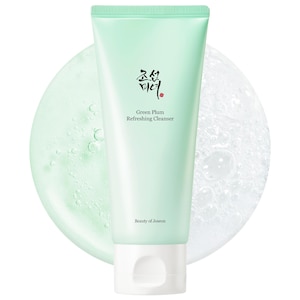 | Gentle cleanse | People who want a soft reset before retinol | Anyone who already owns a gentle cleanser that leaves no tightness |
| AESTURA ATOBARRIER365 Cream Moisturizer | 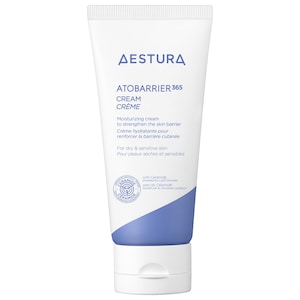 | Barrier cream | Dry or sensitive skin that needs a calmer retinol setup | Oily skin that dislikes richer creams |
| LANEIGE Cream Skin Milky Toner | 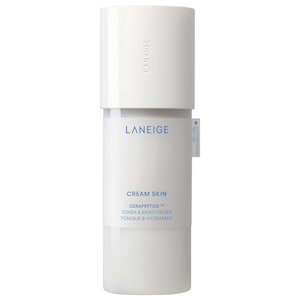 | Optional hydration prep | Skin that feels tight before moisturizer | Anyone whose routine already feels too layered |
| Torriden DIVE IN 5D Hyaluronic Acid Serum | 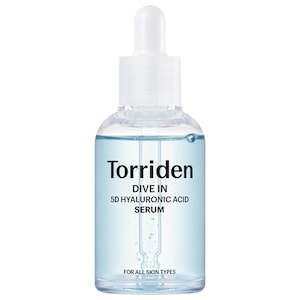 | Lightweight hydration | Dehydrated skin that looks flat or crepey | Skin that needs more cream, not more serum |
| Shani Darden Retinol Reform | 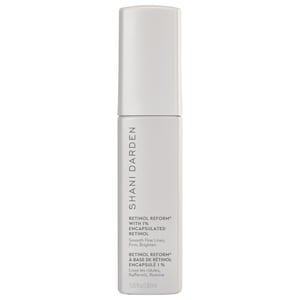 | Retinol treatment | People ready for a dedicated retinol step | Beginners who want the gentlest possible first month |
| Paula's Choice Clinical PRO Retinaldehyde Dual-Retinoid Treatment | 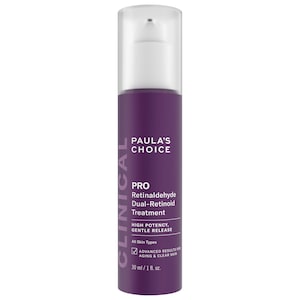 | Retinal treatment | Experienced users who want a stronger-feeling lane | Reactive skin that has not tolerated basic retinol yet |
| Skinfix Triple Lipid-Peptide Cream | 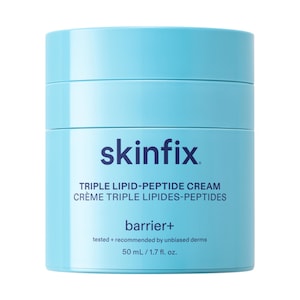 | Recovery moisturizer | Peeling, tight, treatment-tired skin | Anyone who breaks out from richer occlusive creams |
| innisfree Daily UV Defense SPF 50 |  | Morning protection | People who need an easy daily sunscreen after retinol nights | Anyone who needs a mineral-only formula |
The product is not the strategy.
The order is the strategy.
If you already own a gentle cleanser, a retinol you tolerate, and a moisturizer that keeps your skin comfortable, you do not need to replace everything. You need to put the pieces in a routine that stops fighting itself.
When sandwiching makes sense
I would sandwich retinol when the skin is giving clear signs that direct application is too much:
- stinging that lasts beyond the first few minutes
- peeling around the mouth or nose
- tightness the next morning
- sunscreen suddenly burning
- moisturizer no longer feeling like enough
- a history of quitting retinol every time you start
The full sandwich is simple:
- Apply a thin layer of moisturizer.
- Wait a few minutes.
- Apply a pea-size amount of retinol.
- Apply another layer of moisturizer.
For many people, that is the difference between "I cannot use retinol" and "I can use retinol twice a week."
Once the skin is calm for a few weeks, I would consider simplifying. Maybe moisturizer after retinol is enough. Maybe a light moisturizer before retinol is enough. Maybe direct application works now because your skin has adjusted.
The routine should evolve with your tolerance.
When sandwiching is not the best answer
Sandwiching is not a license to overdo retinol.
If you use too much product, apply it nightly from the beginning, keep exfoliating on the same nights, and ignore morning sunscreen, moisturizer cannot save the routine.
I also would not use a full heavy sandwich forever if the skin no longer needs it and your goal is stronger retinoid performance. Comfort matters. Contact matters too. That is why I like treating sandwiching as a tool, not an identity.
Use the gentler version when you need it.
Earn your way toward the simpler version.
What peeling actually tells me
Peeling is not proof that retinol is working better.
It usually tells me the routine is moving faster than the skin can handle.
Some early dryness can happen. That does not mean you failed. But if your face is tight, shiny, flaky, and suddenly angry at products it normally tolerates, I would pause retinol and rebuild the base for a few nights.
The reset is boring:
- gentle cleanse
- moisturizer
- sunscreen in the morning
- no exfoliating acids
- no new brightening serum
- no retinol until the skin feels normal again
If the reaction looks swollen, itchy, rashy, spreading, or severe, that is not a "push through it" situation. That is where a dermatologist makes more sense than another routine tweak.
The morning after retinol matters
Retinol night does not end at bedtime.
The next morning has one job: protect the work.
Use a gentle cleanse or rinse if your skin likes it. Moisturize if needed. Apply sunscreen. The AAD recommends looking for sunscreen with SPF 30 or higher, broad-spectrum protection, and water resistance. If you are acne-prone, "non-comedogenic" is a helpful label. If sunscreen stings, fragrance-free mineral options with zinc oxide or titanium dioxide may be easier to tolerate.
This is the part people skip because it feels separate from the retinol.
It is not separate.
If you are using a nighttime active to improve tone, texture, dark marks, or early signs of aging, the morning routine is what keeps you from undoing half the effort.
How I would fit retinol into a full week
I like a weekly rhythm more than a nightly guessing game.
Here is the version I would use for a beginner:
| Night | Routine |
|---|---|
| Monday | Gentle cleanse, buffer if needed, retinol, moisturizer |
| Tuesday | Gentle cleanse, moisturizer only |
| Wednesday | Gentle cleanse, hydrating layer, moisturizer |
| Thursday | Gentle cleanse, buffer if needed, retinol, moisturizer |
| Friday | Gentle cleanse, moisturizer only |
| Saturday | Gentle cleanse, moisturizer only, optional recovery mask if already tolerated |
| Sunday | Gentle cleanse, retinol only if the week was calm |
That schedule gives the skin room to answer.
If Monday and Thursday feel easy for two or three weeks, Sunday can become a third retinol night. If Monday makes your face peel by Wednesday, you do not need a stronger moisturizer first. You need fewer retinol nights.
The mistakes I would stop making first
The biggest mistake is using retinol like an exfoliating mask.
More is not better.
Faster is not smarter.
The second mistake is trying to fix retinol irritation with more actives. If the skin is peeling, I do not add glycolic acid because texture looks rough. I do not add vitamin C because tone looks dull. I do not add a clay mask because the face feels congested. I calm the routine down first.
The third mistake is changing too many things at once. If you start a new cleanser, new retinol, new moisturizer, and new sunscreen in the same week, you will not know which product caused the problem. Add retinol to a routine that already feels stable.
The fourth mistake is putting retinol too close to fragile zones. I keep it away from eyelids, the corners of the nose, and the corners of the mouth. Those spots tend to punish sloppy application first.
The fifth mistake is quitting too early because the routine was badly designed. Retinol is not supposed to be a dare. It is supposed to be a repeatable habit.
Where Glass makes this easier
This is exactly the kind of routine that benefits from tracking.
Not obsessive tracking.
Useful tracking.
With Glass, I would log retinol nights, recovery nights, dryness, peeling, breakouts, and sunscreen consistency so I could see the pattern instead of guessing from memory. The routine builder helps keep morning and night steps separate. The skin scan and reports make it easier to notice whether the skin is actually improving over time or just cycling between irritation and repair.
That matters because retinol progress is slow enough to be easy to misread.
You need a way to know whether your skin is adjusting, whether the routine is too aggressive, and whether the same mistake keeps happening every Sunday night.
My final retinol rule
Retinol should make the routine more disciplined, not more chaotic.
If the routine gets calmer, more consistent, and easier to read, retinol can be useful. If the routine becomes a pile of actives, emergency moisturizers, and morning sunscreen panic, the problem is not that your skin is impossible.
The system is too loud.
Start with two nights.
Use less than you want to.
Moisturize more seriously than you think you need to.
Protect your skin the next morning.
Then wait long enough for the routine to tell the truth.
FAQ
Should I use retinol before or after moisturizer?
Use retinol before moisturizer if your skin tolerates it well. Use moisturizer before retinol, or moisturizer before and after retinol, if you are new, dry, sensitive, or peeling. The best order is the one that lets you stay consistent without irritating your barrier.
How long should I wait after retinol before moisturizer?
You usually do not need a long wait unless your product directions say so. I like waiting until the retinol no longer feels wet or slippery, then applying moisturizer. If waiting makes you skip moisturizer, moisturize sooner.
Can I use hyaluronic acid with retinol?
Yes, if your skin likes it. I would use a hydrating serum before moisturizer on non-irritated skin, or keep the routine even simpler if your face is already stinging. Hydration should make retinol easier, not add another sticky layer you hate.
Can I use vitamin C in the morning and retinol at night?
Many people separate them that way. I would not start both in the same week if your skin is reactive. Get retinol stable first, then decide whether vitamin C adds enough value to your morning routine.
What should I do if retinol makes my sunscreen sting?
Pause retinol for a few nights and rebuild with cleanser, moisturizer, and sunscreen only. If sunscreen keeps stinging, try a fragrance-free mineral formula and avoid applying it over broken or freshly irritated skin. If burning, swelling, itching, or rash persists, get medical advice.
Is peeling normal with retinol?
Some early dryness can happen, but heavy peeling is not a badge of progress. It usually means your frequency, amount, formula, or supporting routine needs to calm down.