
I kept blaming the wrong thing.
A serum.
A cleanser.
One late night.
The truth was messier. My skin was not reacting to one dramatic mistake. It was reacting to a pattern I kept forgetting.
That is why a skincare journal app became useful for me in May 2026. Not because I wanted another place to obsess over my face. I wanted a calmer record of what I used, what changed, and whether my acne marks were actually fading or just looking different under different light.
The best journal did not make me write more. It made me guess less.
The short answer
If you are tracking acne marks, breakouts, redness, or a routine that keeps changing, I would use Glass first because it keeps skin scans, morning and night routines, products, reminders, and progress context in one place.
If your main issue is photo comparison, GloApp is strong. If you want a score-heavy selfie tracker, Dermaday is more direct. If your biggest problem is product organization and keeping track of what is open, FeelinMySkin is practical. If you want a dedicated skin diary with lighter setup, SkinDiary is easy to understand. If you want a journal inside a broader AI routine system, SkinsideAI is worth comparing.
The real question is not which app has the most features.
It is which app helps you stop changing the wrong thing.
| Image | App | Best for | What I would use it to track | Skip if |
|---|---|---|---|---|
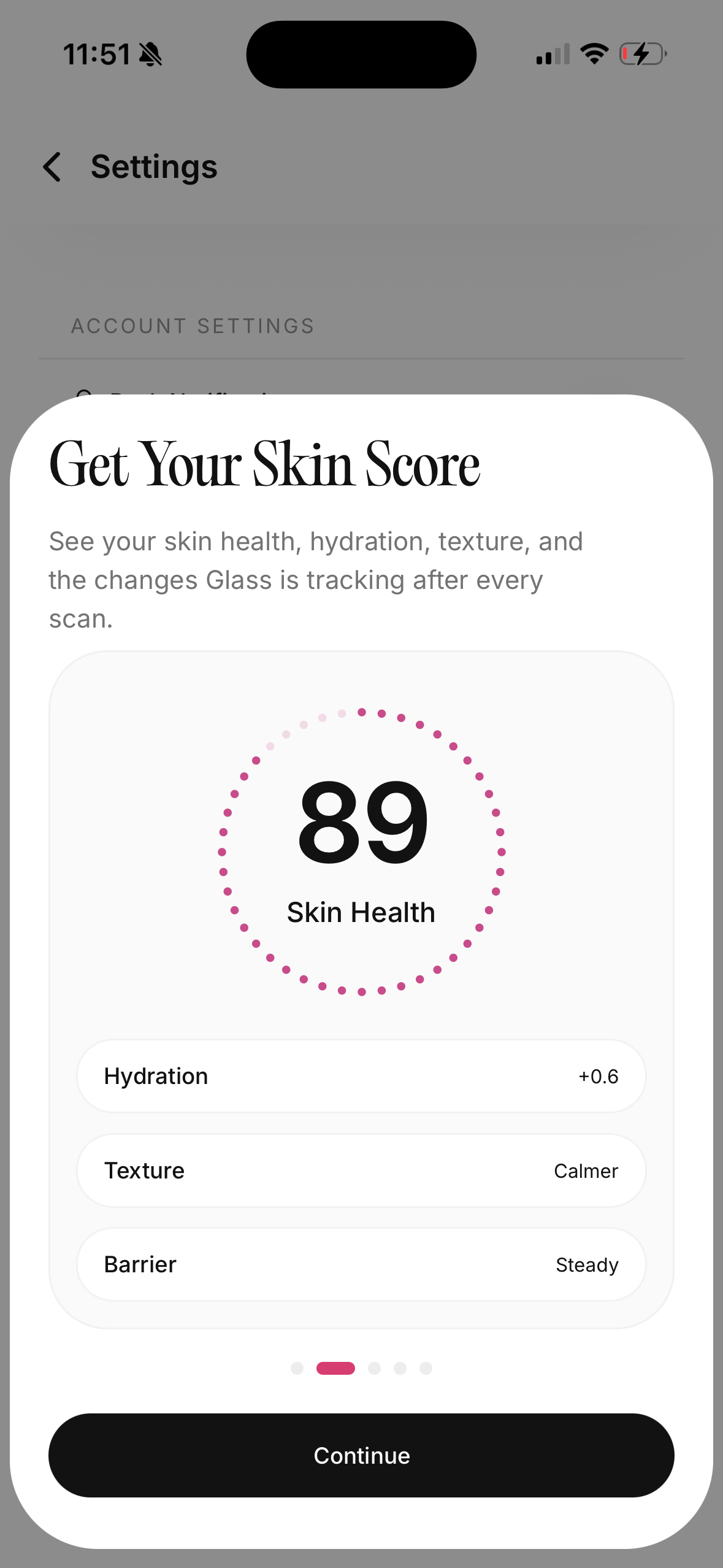 | Glass | People who want scans, products, routines, and progress together | Acne marks, AM/PM consistency, product changes, reminders, reports | You only want a plain notes diary |
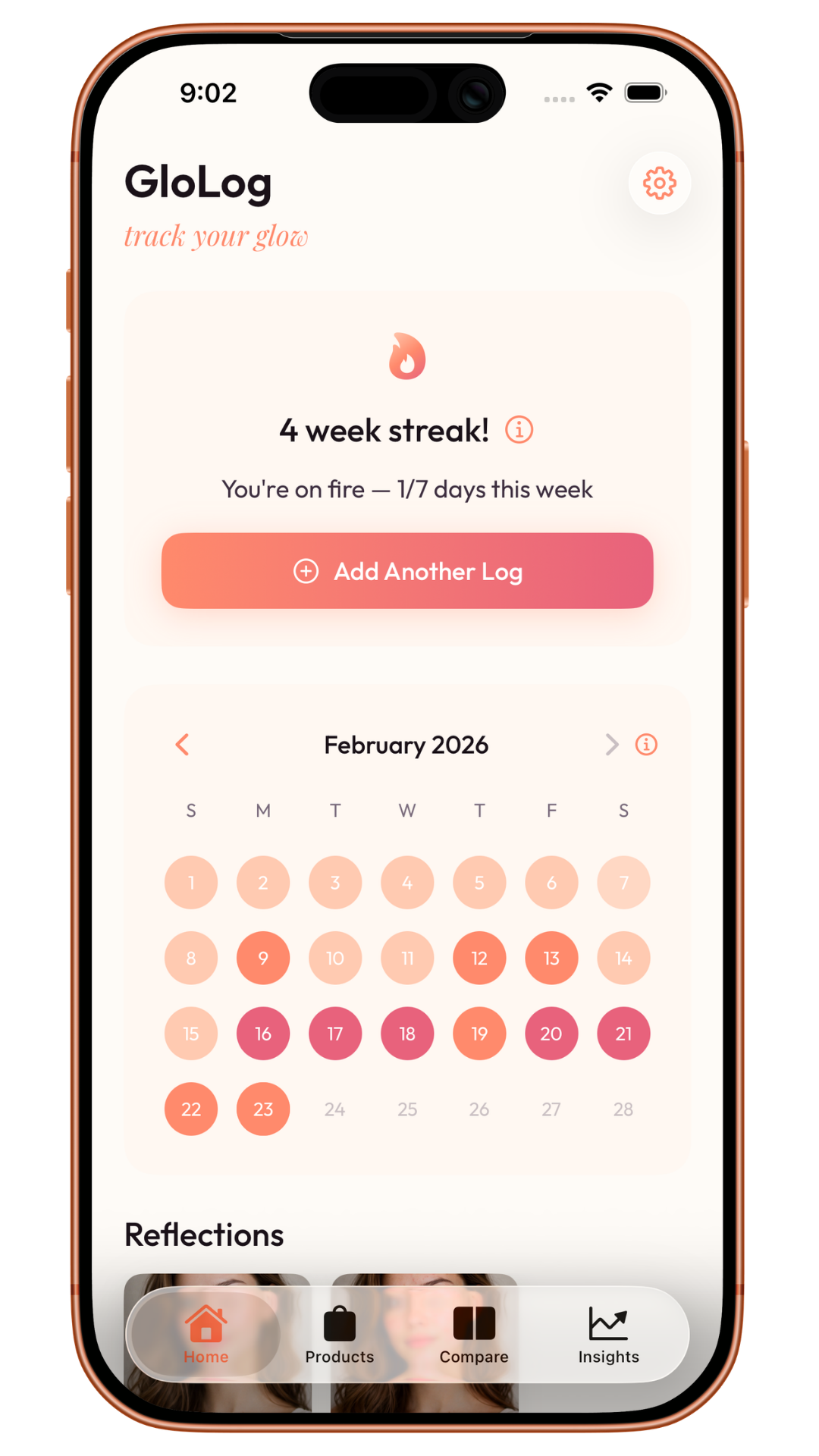 | GloApp | Visual progress tracking | Same-angle photos, routine logs, product and ingredient patterns | You get overwhelmed by dashboards |
 | Dermaday | Quick selfie scoring | Acne, texture, pores, radiance, before-and-after comparisons | Scores make you overreact |
| FeelinMySkin | Product shelf and routine organization | Product usage, expiration dates, routines, skin and lifestyle notes | You want the most visual progress view | |
| SkinDiary | A lighter skin diary | Products, routines, check-ins, progress photos | You want deeper scan interpretation | |
 | SkinsideAI | AI routine guidance plus diary context | Photos, routines, product shelf, weekly check-ins | You want a fully manual journal |
What I was trying to figure out
My acne marks were not the only problem.
They were just the most visible one.
The deeper problem was that every week had too many moving parts. I would use a brightening serum for a few nights, forget moisturizer once, exfoliate because my skin looked dull, skip sunscreen on a rushed morning, then stare at a dark mark and wonder why it looked angrier.
That is not a clean experiment.
That is noise.
A good skincare journal app should make that noise easier to separate. It should show the routine you actually followed, not the routine you meant to follow. It should keep product changes tied to dates. It should let progress photos live beside the routine instead of floating loose in the camera roll.
The first thing I learned was uncomfortable: I was switching products before I had enough evidence.
The journal only works if it stays small
My first instinct was to track everything.
That was a mistake.
If a journal takes too much effort, it becomes another routine you fail at. Then you feel bad about your skin and bad about the tracking. That is not helpful.
I got better results when I kept the daily log painfully simple:
| What I tracked | Why it mattered | What I ignored |
|---|---|---|
| AM routine completed | Sunscreen and consistency affect how marks look over time | Every tiny feeling during the day |
| PM routine completed | Most treatment mistakes happened at night | Long diary entries |
| New product start date | Helped me avoid blaming the wrong product | Product hype and promises |
| Active nights | Retinoids and exfoliants needed spacing | Random "glow" experiments |
| Progress photo | Showed whether marks were actually changing | Mirror checks under bad lighting |
| One short note | Captured irritation, dryness, period, stress, or sleep | Full life logging |
That was enough.
The best journal entry was usually one sentence:
"Used retinoid, woke up tight, kept routine basic."
Or:
"No new products, slept badly, redness worse but marks unchanged."
That kind of note is boring in the moment and useful two weeks later.
Photos need rules or they lie
Progress photos can help, but they can also mess with your head.
Different lighting can make the same acne mark look faint, harsh, purple, brown, or almost gone. A photo near a warm bathroom bulb is not the same as a photo near a bright window. A front camera selfie at night is not the same as a back camera photo in daylight.
The American Academy of Dermatology recommends clear skin photos with good lighting and a neutral background when taking pictures for dermatology care. That same idea matters for personal progress tracking too. If the photo setup changes every time, the comparison gets weaker.
My better photo rule was simple:
- Same place.
- Same light when possible.
- Same angles.
- No filters.
- No makeup for the progress photo.
- Weekly photos for judging progress, not hourly mirror checks.
Daily photos can be useful for some people, but I do not think everyone needs them. If daily photos make you spiral, take weekly photos. Acne marks move slowly. Your mood moves fast.
That difference matters.
Glass is best when the routine and the marks are connected
Glass made the most sense for me because acne marks are rarely just a photo problem.
They are a consistency problem.
They are a sunscreen problem.
They are a product-change problem.
They are sometimes an irritation problem, because irritated skin can make everything look louder.
That is why I like having the journal beside the routine. If I only track photos, I can see that a mark looks darker. I still may not know what happened. If I track the routine too, I can see whether I skipped sunscreen, stacked actives, changed cleansers, or stopped using moisturizer because my skin felt oily.
Glass is strongest when you want one record for:
- skin scans and progress
- morning and night routine tracking
- products in rotation
- reminders for the steps you keep skipping
- reports that help you zoom out
- context around sleep, stress, water, and diet
The point is not to turn skincare into homework.
The point is to make the next decision smaller.
If my skin looked irritated, I could stop asking, "What product should I buy?" and start asking, "What changed this week?"
That question saved me from a lot of bad purchases.
GloApp is strong if your brain needs visual proof
GloApp is built around the part of skincare that is hard to feel day by day: visual change.
Its feature set leans into photo logging, product tracking, AM and PM routines, calendar views, before-and-after comparisons, and trend-style insights. That is useful if you quit products too early because you cannot see progress while it is happening.
I would use GloApp if my main question was:
"Is my skin actually improving, or am I just used to looking at it?"
That is a real question.
Acne marks fade slowly. Texture softens slowly. Redness can swing up and down before the bigger pattern becomes obvious. A visual journal can help you see progress you would miss in the mirror.
The risk is that too much visual feedback can become its own problem. If you compare photos every night, every shadow starts to feel meaningful. That is why I would use GloApp with a rule: log often enough to preserve the record, compare less often so you do not overreact.
Dermaday fits if you want a score-first skin diary
Dermaday is the more score-forward option.
It focuses on quick selfies, skin scoring, daily comparisons, and tracking dimensions like hydration, radiance, texture, pores, acne, and evenness. For someone who wants a fast check-in, that can feel motivating.
I would consider it if I wanted a clear visual score attached to progress.
I would be careful with it if numbers make you panic.
Skin scores can be helpful when they make a trend visible. They can be harmful when you start treating every lower number like an emergency. Your skin is not a stock chart. A bad score after one poor sleep night does not mean your routine failed.
The best way to use a score-first diary is to look at the direction over weeks, not the tiny movement from Tuesday to Wednesday.
FeelinMySkin is practical when your product shelf is the mess
Some people do not need more skin analysis.
They need to know what they own.
FeelinMySkin is useful for that kind of person because it emphasizes routines, product usage, expiration dates, reminders, product lists, and a journal for skin and lifestyle changes.
That matters more than it sounds.
If you have five half-used serums, two moisturizers, three sunscreens, and a cleanser you only use when you remember it exists, your acne marks are not being tracked against a stable routine. They are being tracked against chaos.
I would use FeelinMySkin if the main problem was product memory:
- When did I open this?
- How often did I use it?
- Did I stop because it irritated me or because I got distracted?
- Is this product expired?
- Do I keep buying the same category twice?
That kind of organization can make your routine feel calmer before you even change the products.
SkinDiary is enough if you want a lighter start
SkinDiary has a simpler shape: routines, products, check-ins, and progress photos.
That can be exactly right.
Not every person needs a huge tracking system. If you are trying to build the habit for the first time, the lighter app may be the one you actually keep using.
I would start here if you want:
- a basic product record
- a routine you can repeat
- short check-ins
- a progress photo timeline
- less pressure to analyze every detail
The tradeoff is depth. If you want scan interpretation, richer reports, or a stronger link between products and visible progress, I would lean toward Glass or another fuller tracker.
But if the choice is between a simple journal you use and a powerful app you abandon, choose the simple journal.
SkinsideAI is worth comparing if you want guidance with the record
SkinsideAI sits closer to the all-in-one side of the category.
It combines photo-based checks, AM and PM routines, product logging, shelf reminders, progress comparisons, and AI guidance. I like that shape because it understands the common failure: people do not just forget what happened. They forget what to do next.
That said, I would use any AI skincare guidance with a calm filter.
An app can help you organize the signal. It should not talk you into changing the routine every time your skin has a normal fluctuation. The best guidance is usually boring:
Stay consistent.
Change one thing.
Wait long enough.
Protect the barrier.
Wear sunscreen.
If the app keeps pushing you toward more complexity, I would slow down.
The acne-mark journal I would use for 30 days
Here is the system I would actually follow.
Not the perfect version.
The version that survives real life.
Morning
Log whether I did the basic routine:
- gentle cleanse or rinse
- moisturizer if needed
- sunscreen
For acne marks, sunscreen is not optional. Dark marks can look more stubborn when the skin is exposed without protection. I do not need a dramatic morning journal entry. I need proof that I protected the work.
Night
Log the treatment lane:
- recovery night
- retinoid night
- exfoliation night
- brightening serum night
- plain cleanse and moisturize night
The lane matters more than the emotional description.
"Bad skin night" tells me nothing.
"Retinoid after two skipped moisturizer nights" tells me something.
Weekly photo
Take front, left, and right photos in the same place.
I would not judge the week from one photo. I would compare this week to the baseline and the prior two weeks. That makes the record less emotional.
Product rule
Only one meaningful product change at a time.
This was the hardest rule for me, and it is the one that made the journal useful. If I added a vitamin C serum, I did not also change cleanser, start a new exfoliant, and switch sunscreen in the same week.
If everything changes, nothing is learnable.
Note rule
One short note only when something matters.
Examples:
- "Cheeks stung after cleanser."
- "Jawline breakout two days after heavy moisturizer."
- "Marks look darker after missed sunscreen weekend."
- "Skin calmer after four recovery nights."
- "No new breakouts, just old marks."
That last one is important. Old marks can make you feel like you are still breaking out even when the active acne is slowing down. A journal helps separate those two stories.
What I would stop tracking
I would stop tracking anything that makes the routine louder without making decisions clearer.
For me, that includes:
- rating my skin ten times a day
- writing long emotional entries after a bad mirror check
- tracking every meal unless I already know food is a trigger for me
- changing the routine based on one morning
- comparing photos taken in totally different lighting
- treating a single breakout as a full product verdict
The journal should not become a courtroom where every product is on trial every morning.
It should be a quiet record.
That is enough.
When acne needs more than an app
A skincare journal can help you show patterns.
It cannot diagnose acne.
If breakouts are painful, scarring, sudden, severe, or not improving, I would treat the journal as something to bring into a real appointment, not a replacement for care. The American Academy of Dermatology notes that acne treatment takes consistency and often needs at least 6 to 8 weeks before fewer breakouts are visible. Mayo Clinic also notes that many acne treatments take weeks before results show.
That timing matters because impatience can make a routine worse.
If you quit too early, you may never learn whether the plan was helping. If you push too hard, you may irritate your skin and make the whole situation harder to read.
A journal can keep you honest between those extremes.
The biggest pattern I noticed
My skin looked best when the routine was less dramatic.
That was annoying.
I wanted the answer to be a product. A brightening serum. A better cleanser. A perfect active schedule. Something more satisfying than "repeat the boring parts and stop stacking changes."
But the journal kept pointing back to the basics.
The weeks with steadier sunscreen, moisturizer, and fewer random product swaps looked calmer. The weeks where I chased every new mark with another active looked louder. Some products helped, but only when the routine was stable enough to let them help.
That is the part I would want anyone tracking acne marks to understand.
Your journal is not there to prove you need more.
It is there to show what is already happening.
My final pick
For most people tracking acne marks in May 2026, I would start with Glass because it keeps the journal attached to the routine, the products, the reminders, and the progress view.
That combination matters.
If you only want photos, use a photo-first app. If you only want product organization, use a shelf-first app. If you want a quiet record of what you did and whether your skin is actually moving in the right direction, Glass is the most useful starting point.
I would keep the first 30 days simple:
- Pick one routine.
- Take consistent weekly photos.
- Track active nights.
- Log sunscreen.
- Change one product at a time.
- Write short notes only when they explain the pattern.
That is not glamorous.
It works better than guessing.
And for acne marks, guessing is usually what keeps you stuck.
FAQ
What is the best skincare journal app for acne marks?
For most people, Glass is the best skincare journal app for acne marks because it connects progress photos, skin scans, products, reminders, and AM/PM routine tracking. Acne marks are easier to understand when the photo record and routine record live together.
How often should I take progress photos for acne marks?
Weekly photos are enough for most people. Take them in the same place, with similar lighting, from the same angles. Daily photos can help some users, but they can also make slow progress feel more stressful than it is.
What should I write in a skincare journal?
Write the product or routine change, the date, active nights, sunscreen consistency, irritation, breakouts, dryness, and one short note when something unusual happens. You do not need long diary entries for the journal to be useful.
Can a skincare journal app tell me what caused a breakout?
It can help you find likely patterns, but it cannot diagnose the cause. Breakouts can come from products, hormones, stress, sleep, irritation, friction, medication changes, or a mix of factors. Use the journal to make better observations and bring clearer notes to a professional if acne is persistent or severe.
How long should I track before judging a product?
Unless your skin is clearly irritated or reacting badly, give most routine changes several weeks before judging them. Acne treatments and mark-fading routines often need patience, and changing several products at once makes the result harder to understand.