Barrier Butter sounds simple.
That is the trap.
A product can be called butter and still not behave like the jar of thick cream you already own. It can feel rich but not quite occlusive enough for some people. It can be fragrance-free and still bother skin that clogs easily. It can be loved by dry-skin people and still be too much for an oily chin.
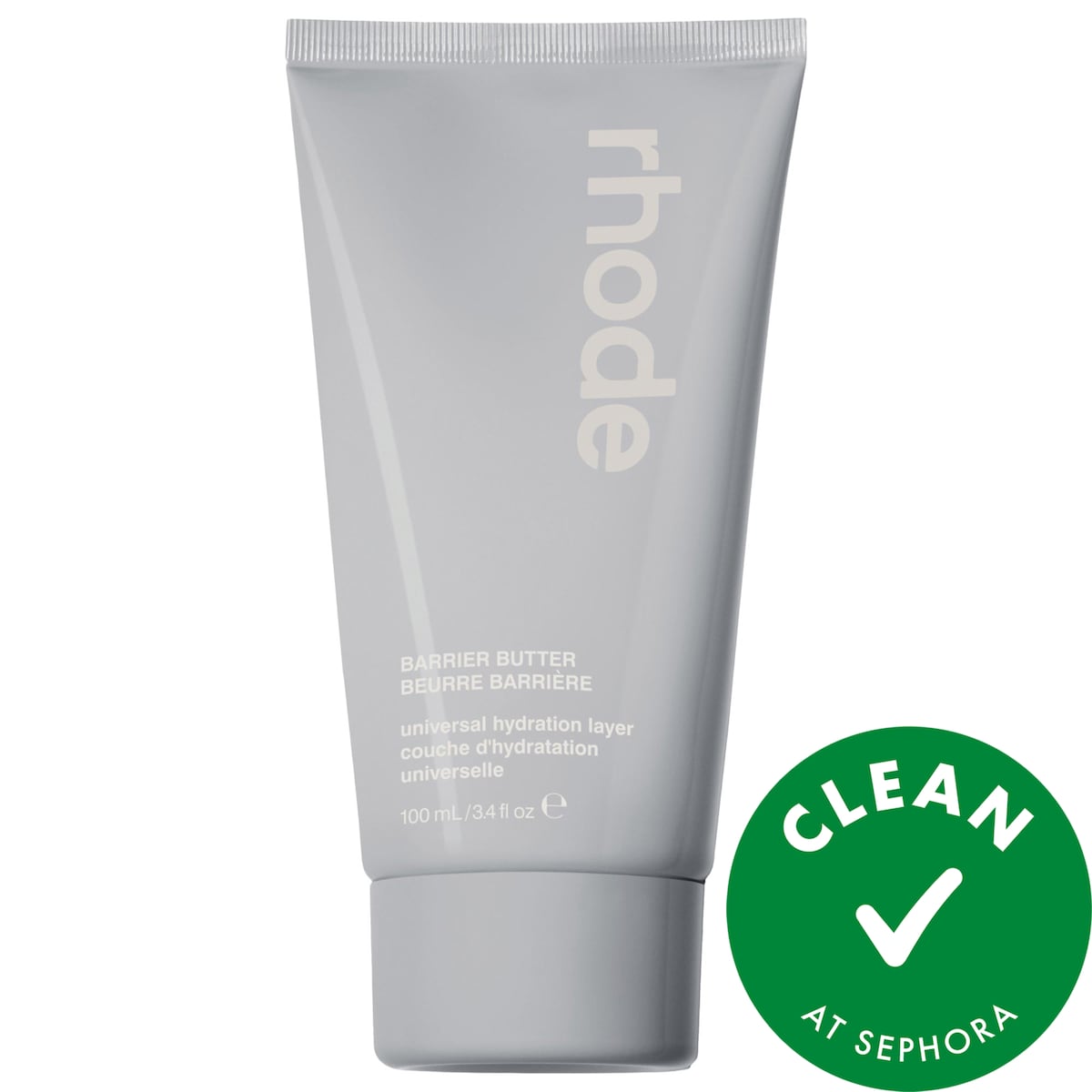
That is how I would look at Rhode Barrier Butter Intensive Moisture Balm in May 2026. Not as a celebrity product. Not as a miracle barrier fix. As a final-layer moisture balm that needs to earn a very specific spot.
As of May 2026, Sephora lists Rhode Barrier Butter at $22 to $36, with a rating around 4.04 from about 474 reviews. The product is positioned as an intensive moisture balm for deep hydration, a softer feel, and moisture sealing for up to 24 hours. Rhode also frames it as a last sealing step at night or a multipurpose dry-spot balm for the face and body.
My short read: I would consider it if my skin feels dry, tight, flaky, wind-stressed, or under-cushioned at night. I would be more careful if my skin is very acne-prone, if balmy products sit on top of my face, or if I need a light daytime moisturizer under sunscreen.
The quick answer
Rhode Barrier Butter makes the most sense as a night sealing step for dry, normal-dry, sensitive-feeling, or weather-stressed skin that wants more cushion than a normal moisturizer. I would not treat it like a lightweight day cream.
That distinction matters.
If you buy it expecting a rich final layer, it has a clear job. If you buy it expecting one product to hydrate like a serum, moisturize like a cream, seal like an ointment, sit under makeup, calm every reaction, and never clog anyone, you are asking it to be too many things at once.
| Detail | Rhode Barrier Butter |
|---|---|
| Product page | Glass product page |
| Price in May 2026 | $22 to $36 |
| Sephora signal | About 4.04 stars from about 474 reviews |
| Best role | Final moisture balm at night or on dry patches |
| Texture lane | Rich balm-cream, not a weightless gel |
| Strongest fit | Dry, tight, flaky, or barrier-stressed skin |
| Main caution | Can be too heavy for skin that clogs from richer emollients |
| Fragrance note | Listed as fragrance-free |
I would think of it as a comfort layer first.
The mistake is judging it like a serum. A balm does not need to disappear instantly to be useful. It needs to make dry skin feel protected without turning the whole routine into a greasy film.
Why this product is confusing
Rhode already has Barrier Restore Cream.
That makes people ask a reasonable question: is Barrier Butter a moisturizer, a sleeping mask, a slugging step, or a body balm?
My answer is boring but useful: it depends on your skin. For very dry skin, Barrier Butter may work like the main night moisturizer. For skin that needs water first, it may work better over a lighter hydrating layer. For combination skin, it may belong only on dry zones. For oily skin, it may be more useful on hands, elbows, or flaky patches than on the whole face.
That is not a flaw by itself. Multipurpose products always need boundaries.
The boundaries here are texture, timing, and where your skin gets congested.
What the formula is trying to do
The formula reads like a moisture-balm structure with several support lanes.
The first part of the ingredient list includes water, C13-15 alkane, butylene glycol, C15-19 alkane, caprylic/capric triglyceride, glycerin, synthetic beeswax, and texture-building emulsifiers. In plain language, that tells me the product is trying to combine water-binding hydration with a richer, sealed-in balm feel.
Then the comfort ingredients show up:
| Ingredient lane | What I notice |
|---|---|
| Hydration | Glycerin, butylene glycol, polyglutamic acid, sodium hyaluronate, hyaluronic acid, hydrolyzed hyaluronic acid, tremella |
| Barrier feel | Panthenol, ceramide NP, murumuru seed butter, synthetic beeswax, emollient alkanes |
| Soothing support | Bisabolol, panthenol, ginger root extract |
| Softening and finish | Caprylic/capric triglyceride, trioctyldodecyl citrate, isosorbide dicaprylate |
| Fine-line cosmetic story | Peptides and hydration that can make dryness lines look softer |
That is a sensible mix for a product that wants to feel richer than a standard moisturizer.
It is not the same as a plain petrolatum ointment. It is also not the same as a watery gel cream. It sits between those worlds: more elegant than a basic ointment, more sealing than a lotion, and more texture-heavy than a daily gel.
The texture question
This is the part I would care about most.
Barrier Butter is not the product I would reach for when I want the face to feel bare after thirty seconds. It is the product I would reach for when my cheeks feel like they need a blanket.
That makes it more useful at night.
At night, a richer finish is easier to tolerate. You are not layering sunscreen, skin tint, powder, or a full day of facial movement over it. You can let the balm sit where it needs to sit. You can also use it strategically: full face if you are dry everywhere, cheeks only if the T-zone gets congested, around the mouth if retinoids make that area flaky, hands and elbows if your face does not want it.
Morning is less forgiving. If you put too much under sunscreen, the layers may feel crowded. If your SPF already has a rich base, Barrier Butter may push the whole routine into shine. If makeup separates, the problem may be amount, wait time, or product mismatch.
I would not judge the product from one heavy morning layer. I would test it at night first.
Who I think will like it most
I would put Rhode Barrier Butter in front of someone who says:
- my skin feels tight after moisturizer
- my cheeks get dry by morning
- my barrier feels tired from retinoids or weather
- I want a fragrance-free night layer
- I like rich textures but hate plain ointment
- I need something for face and dry body patches
- my routine has hydration, but it does not feel sealed in
That last point is the cleanest use case.
Sometimes the skin does not need another active. It needs the water and comfort you already applied to stay put longer. If your hydrating serum feels nice for twenty minutes and then your face gets tight again, a final-layer balm can make more sense than buying another serum.
If your whole routine is already active-heavy, Barrier Butter may be most useful as the boring part. It can be the step that makes the rest of the week more tolerable.
Who should skip it
I would skip Barrier Butter on the face if rich balms usually clog me.
That does not mean the formula is bad. It means my skin has a pattern. Some faces do poorly with heavier emollients, waxy textures, or products that leave a sealed finish. If that is you, do not let the fragrance-free label talk you out of your own history.
I would also skip or limit it if:
- my skin is oily and already comfortable
- my breakouts are concentrated where balms tend to sit
- I need a fast-absorbing morning moisturizer
- I hate feeling product on my face
- I am using several new products at once
- my skin is rashy, swollen, hot, or actively reacting
- I need medical care for eczema, dermatitis, or infection symptoms
For eczema-prone or very reactive skin, the National Eczema Association listing is a useful trust signal, but it is not a personal guarantee. Sensitive skin still has to patch test.
Barrier Butter versus Barrier Restore Cream
I would separate the two by job.
Rhode Barrier Restore Cream is the easier daily moisturizer idea. It makes more sense when you want comfort but still need a conventional cream step.
Rhode Barrier Butter is the richer sealing idea. It makes more sense when a normal moisturizer is not enough, especially at night.
| If your skin says... | I would start with... |
|---|---|
| I need a daily moisturizer | Barrier Restore Cream |
| I need more cushion at night | Barrier Butter |
| My sunscreen already feels heavy | Barrier Restore Cream |
| My cheeks feel dry by morning | Barrier Butter |
| I want one light morning cream | Barrier Restore Cream |
| I want a dry-patch balm for face and body | Barrier Butter |
The two can exist in the same routine, but I would not start both at the same time. Start with the one that solves the bigger problem.
How I would test it for a week
I would test Barrier Butter like a final layer, not like a new full routine.
For the first week, I would keep the cleanser, serum, and treatment steps stable. Then I would add Barrier Butter only at night.
| Night | Test |
|---|---|
| 1 | Use a pea-size amount on cheeks and around the mouth |
| 2 | Repeat only where skin felt better, not everywhere by default |
| 3 | Try full face only if the first two nights felt comfortable |
| 4 | Skip the T-zone if shine or bumps appear |
| 5 | Use over a hydrating serum if tightness still returns |
| 6 | Use on hands, elbows, or dry body patches too |
| 7 | Decide whether it solved a real dryness problem |
I would watch four signals: morning tightness, new bumps, pillow transfer, and whether the face feels calmer or just coated.
That last distinction is important. Coated skin is not always comfortable skin. If your face still feels tight underneath a shiny layer, you may need more water-binding hydration before the balm, not more balm.
Where it fits with retinoids
Barrier Butter makes sense around retinoid routines, but I would use it carefully.
If retinol or a prescription retinoid makes the corners of the mouth, cheeks, or nose creases flaky, a richer final layer can help those areas feel less punished. I would still avoid smearing a heavy balm directly over a strong active on skin that is already burning.
My safer night order would be:
- Gentle cleanse.
- Hydrating serum or simple moisturizer if already tolerated.
- Retinoid only if it is a planned retinoid night.
- Barrier Butter as a small final layer where dryness shows up.
If the skin is stinging, peeling hard, or looking shiny and raw, I would reduce active frequency before trying to solve everything with more product.
For routine order, morning and night skincare routine order is the better companion read.
Under makeup, I would be conservative
Rhode mentions a dewy skin-prep trick with Glazing Milk under makeup. I would still be cautious.
Barrier Butter can make dry skin look smoother, especially when makeup usually grabs onto flakes. But there is a fine line between dewy prep and too much slip. If you use a full night amount in the morning, foundation may move, sunscreen may feel crowded, and the face may look shiny faster.
If I wanted to try it under makeup, I would do this:
- Use less than I think I need.
- Apply only on dry zones.
- Wait before sunscreen.
- Wait again before base makeup.
- Avoid layering it under an already-rich sunscreen.
For most people, I would keep Barrier Butter as the night product and use a lighter morning moisturizer.
Body use may be the underrated part
The face gets all the attention, but body use may be where Barrier Butter becomes easier to justify.
Hands, elbows, knees, shins, and dry patches often tolerate richer balm textures better than acne-prone facial zones. If the product is too heavy for your T-zone, it does not have to become a failed purchase. It can still be useful where dry skin is less dramatic and less breakout-prone.
I would especially consider it after showers, during dry weather, or when hands feel stripped from frequent washing. Apply while skin still has a little softness from cleansing, then let the balm do the sealing work.
How I would use Glass with it
This is exactly the kind of product I would track in Glass.
Add Rhode Barrier Butter as a night moisturizer or final balm step. Then track the boring things for two weeks: tightness, flakes, irritation, new bumps, shine, and whether makeup looks better or worse the next morning.
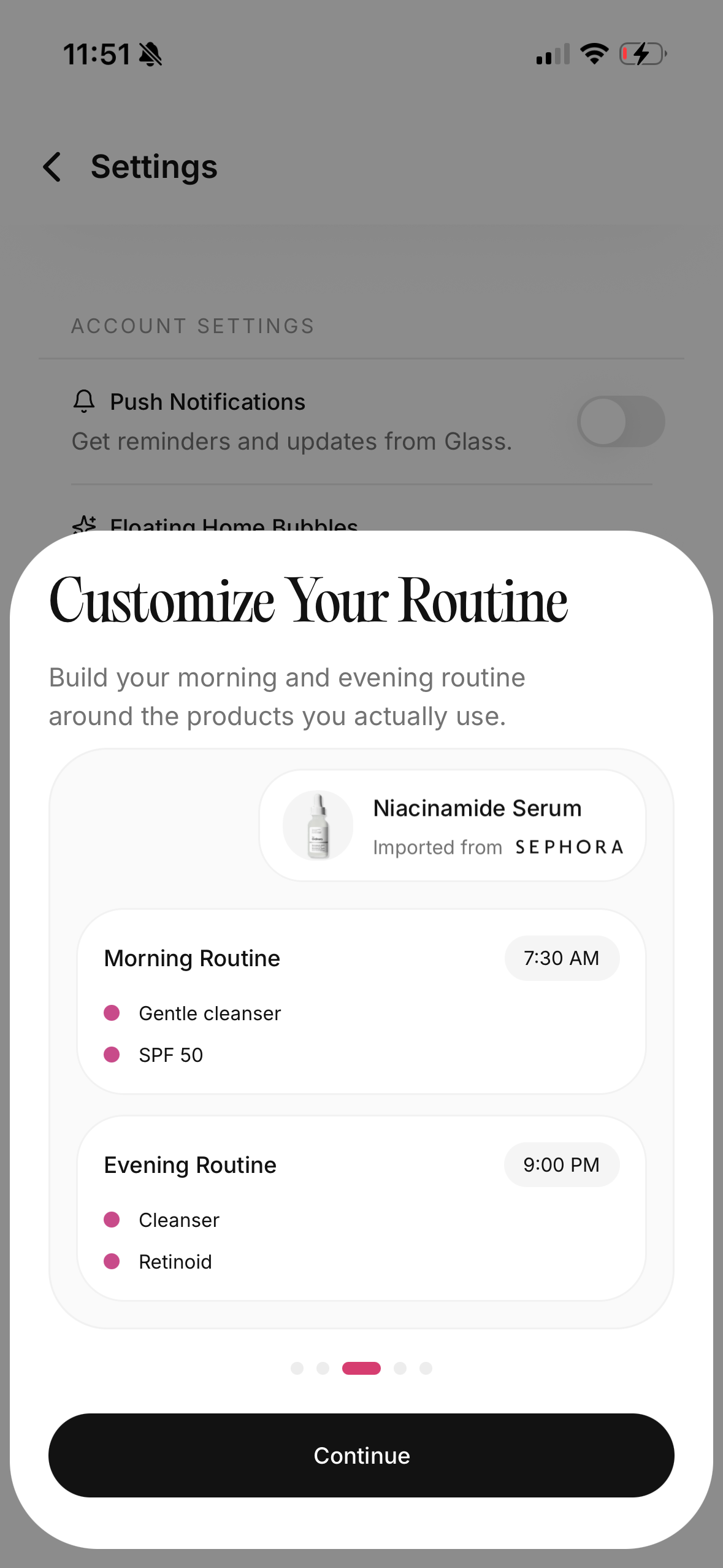
The point is not to obsess over every pore. The point is to separate a product that feels nice on night one from a product that actually improves the routine.
If your main issue is consistency, best skincare routine tracker is more useful than another impulse moisturizer. If your skin feels tight even after cream, I fixed tight skin after moisturizer goes deeper on that pattern.
The review signal I would trust
A 4.04 average is useful, but the number is not the whole story.
For Barrier Butter, I would read reviews by skin type and use case:
- dry skin using it at night
- sensitive skin using it after a stable routine
- acne-prone skin watching for bumps
- people using it on body dry spots
- people comparing it with Barrier Restore Cream
- people using it under makeup
That is where the real answer lives. A dry-skin person in winter and an oily-skin person in humidity are not reviewing the same product experience.
If I saw a review saying it felt too heavy, I would believe that person for their skin. If I saw another saying it saved their dry cheeks, I would believe that too. Rich products divide people because skin context changes everything.
My verdict
Rhode Barrier Butter is worth considering if your routine needs a richer, fragrance-free final layer for dryness, tightness, flakes, or night comfort.
I like the role. The formula has a real hydration-and-comfort story: glycerin, panthenol, polyglutamic acid, hyaluronic acid forms, tremella, ceramide NP, bisabolol, murumuru seed butter, and emollients that make sense for a balm. I also like that the product is not pretending to be a barely-there gel.
The catch is the same thing that makes it useful: it is rich.
I would buy it for dry skin, night use, dry patches, or a routine that needs sealing. I would not buy it as a universal daytime moisturizer, an acne-safe guarantee, or a replacement for medical care when the skin is truly inflamed.
Barrier Butter is at its best when you give it one clear job: make dry skin feel less exposed.
FAQ
Is Rhode Barrier Butter good for dry skin?
Yes, dry skin is the clearest fit. It is best used as a richer night layer or on dry patches when a normal moisturizer does not feel like enough.
Is Rhode Barrier Butter fragrance-free?
Rhode and Sephora position Barrier Butter as fragrance-free. Sensitive skin can still react to fragrance-free products, so patch testing is still smart.
Can I use Barrier Butter under makeup?
You can try it in a very small amount on dry zones, but I would not use a full night layer under makeup. It is more naturally a night or dry-patch product.
Is Barrier Butter better than Barrier Restore Cream?
Barrier Butter is better if you need a richer sealing step. Barrier Restore Cream is better if you want a more conventional daily moisturizer.
Can acne-prone skin use Rhode Barrier Butter?
Some acne-prone people may tolerate it, but I would be careful. Use a small amount, avoid clog-prone zones first, and stop if new bumps line up with use.
Useful references: Rhode Barrier Butter, Sephora Barrier Butter listing, National Eczema Association product listing, and AAD moisturizer guidance for acne-prone skin.